





























Pairing ideas with Chrysosplenium
5 inspiring pairing ideas!
Contents
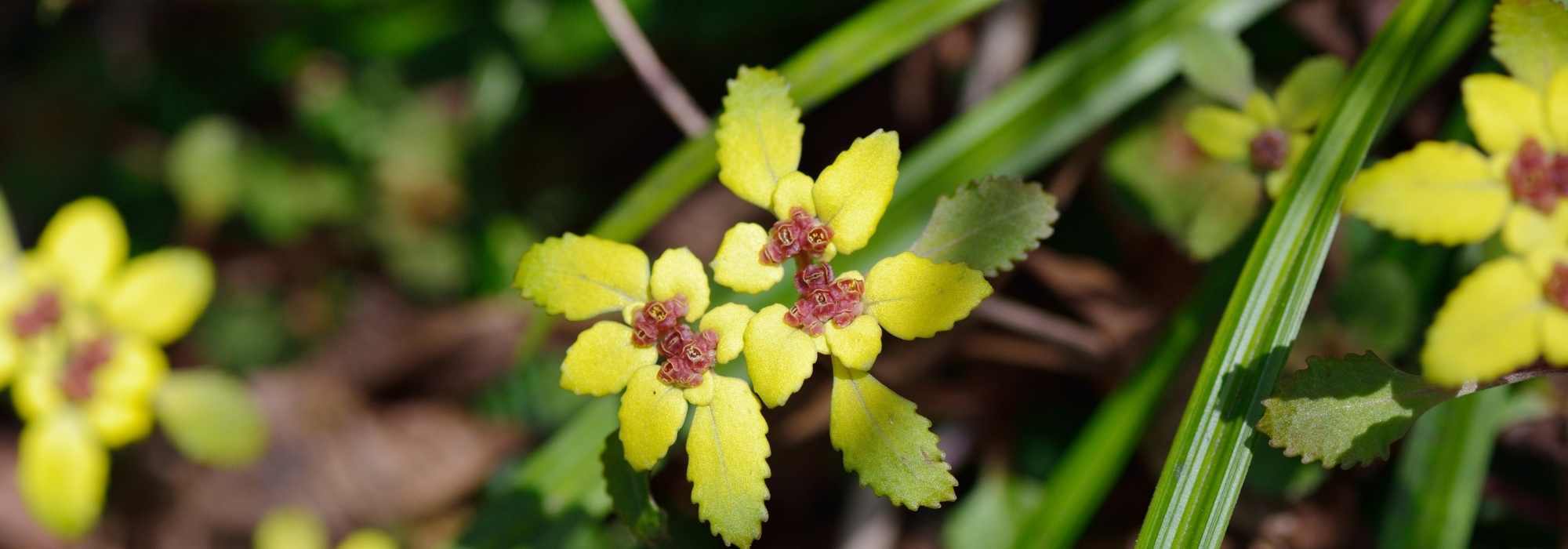
With its vibrant green evergreen foliage and predominantly yellow spring flowering, Chrysosplenium or Dorine is a very interesting groundcover perennial that adds a bright touch to the shaded and damp areas of a garden. It quickly forms small, carpet-like clumps that remain attractive even in winter in shade gardens, wet soils, between large stones near a waterfall, on the banks of a pond, in cool rockeries, or in a fresh woodland.
Very hardy and non-invasive, it thrives in any cool soil out of direct sunlight.
It easily pairs with other plants that, like it, enjoy cool conditions to create fresh and attractive scenes all year round.
Discover our 5 ideas to showcase this luminous groundcover!

In a damp woodland atmosphere
Chrysosplenium are a valuable groundcover for adding a bright touch to shaded areas. As they prefer very dense shade to full sun, which makes them disappear, they will find an ideal environment in woodlands. Indeed, they enjoy sheltered spots away from strong sunlight and remain cool, like understoreys. They will spread quite quickly over time, forming a carpet. In this dim and humid atmosphere, you should favour fresh colours and various shades of green in the foliage.
They can be paired with other creeping plants such as Houttuynia cordata, creeping bugle or Asarum. They also create beautiful combinations with other fresh shade perennials, such as certain varieties of ferns, like Adiantum aleuticum ‘Imbricatum’, a lovely dwarf capillary with a very graphic appearance.
Pair them with slightly taller perennials at their feet, such as Hosta ‘Delta Dawn’ with its large chartreuse-gold and cream leaves, or Matteuccia struthiopteris, a large and beautiful fern, enchanting in woodlands.
The Brunnera macrophylla ‘Green Gold’, spring bulbs, daffodils or jonquils (Narcissus triandrus ‘Thalia’ for example), Barrenwort (Epimedium stellulatum ‘Wudang Star’), familiar plants of the understorey, will exceptionally brighten this environment of tangy foliage. The Primula vialii ‘Alison Holland’ will take over the flowering, offering large conical spikes of white-yellow flowers in summer.
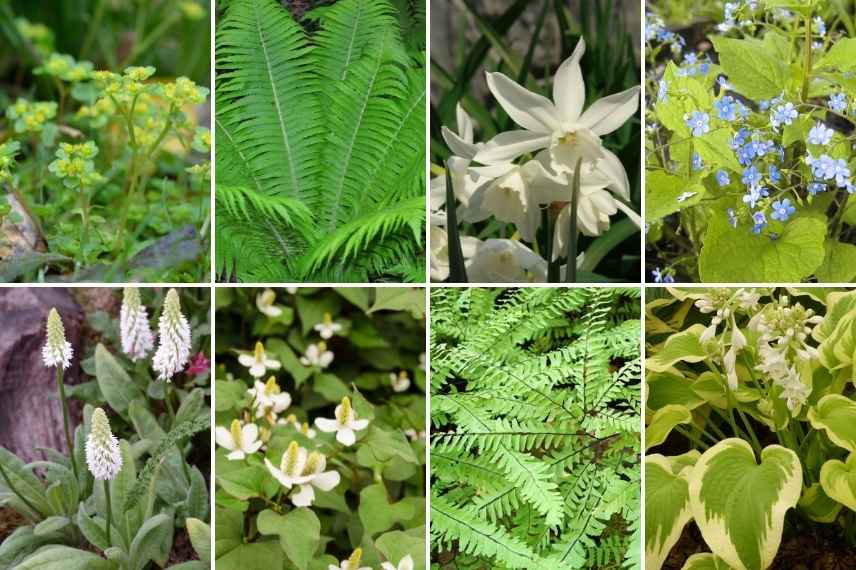
Chrysosplenium oppositifolium, Matteucia struthiopteris, Narcissus triandrus ‘Thalia’, Brunnera macrophylla ‘Green Gold’, Primula vialii ‘Alison Holland’, Houttuynia cordata, Adiantum aleuticum ‘Imbricatum’ and Hosta ‘Delta Dawn’
To dress the banks of a water feature
The Chrysosplenium thrives in cool or moist, even waterlogged, soil. For this, choose the Chrysosplenium alternifolium, also known as “Golden Rock Cress,” which particularly enjoys the edges of springs and streams. It is ideal for enhancing a very wet area of the garden and works wonderfully in a water garden, by a stream, among large stones near a waterfall, and so on.
On the banks of a pond or marsh, paired for example with Trollius pumilus planted in large drifts, it will dress the base of perennials for wet banks. The spectacular Ligularia stenocephala ‘The Rocket‘, for instance, with its long spikes of golden yellow flowers all summer long, creates a decidedly exotic effect. A Lysichiton camtschatcensis, a plant resembling a giant arum, will contribute to this fantastic atmosphere. Alongside them, some blue-flowered plants will look stunning, such as Iris foetidissima.
If the size of your pond allows, you can plant a Gunnera manicata in the background to create a lush scene.
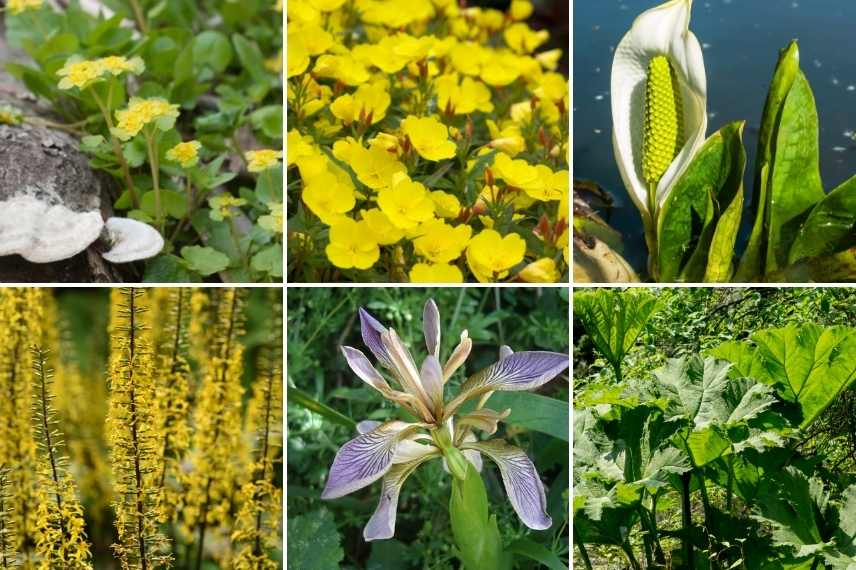
Chrysosplenium, Trollius pumilus, Lysichiton camtschatcensis, Ligularia, Iris foetidissima, and Gunnera manicata
Discover other Chrysosplenium
View all →
Available in 1 sizes
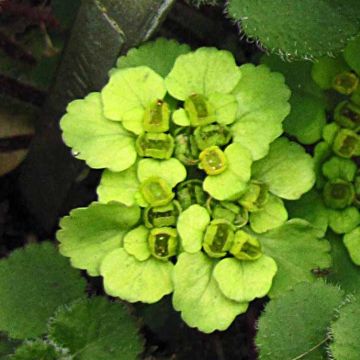
Available in 1 sizes
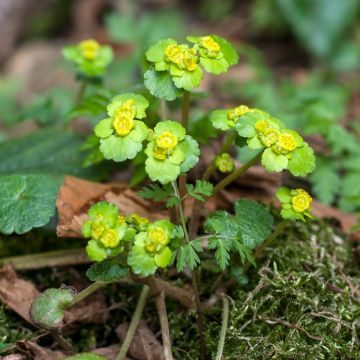
Available in 1 sizes
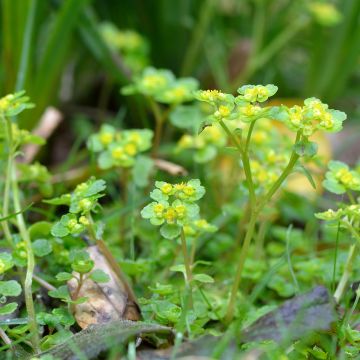
Available in 1 sizes
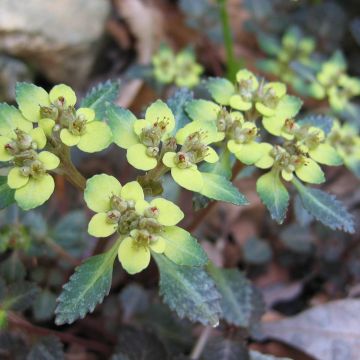
Available in 1 sizes
At the edge of the path
Dorine grows in small, carpet-like clumps and provides an interesting evergreen base to highlight paths and walkways in a naturalistic garden. In a damp border, plant alongside it the Equisetum scirpoides or dwarf Japanese horsetail, which will bring beautiful verticality and graphic interest. For an even bolder style, also consider Hakonechloa macra ‘Aureola’, a grass with a bamboo-like appearance, or Carex oshimensis ‘Everest’.
The Ophiopogon planiscapus ‘Nigrescens’ with its black leaves will add contrast to this refreshing and bright composition.
Consider a few perennials that will take over the flowering, such as Tradescantia andersoniana ‘Sweet Kate’, an astonishing Virginia ephemeral made up of golden ribbons and intense blue flowers, and the hardy geraniums for shade that will add rhythm to the border. You can intersperse some spring bulbs (muscari, primroses, or daffodils) to brighten this composition earlier in the season.
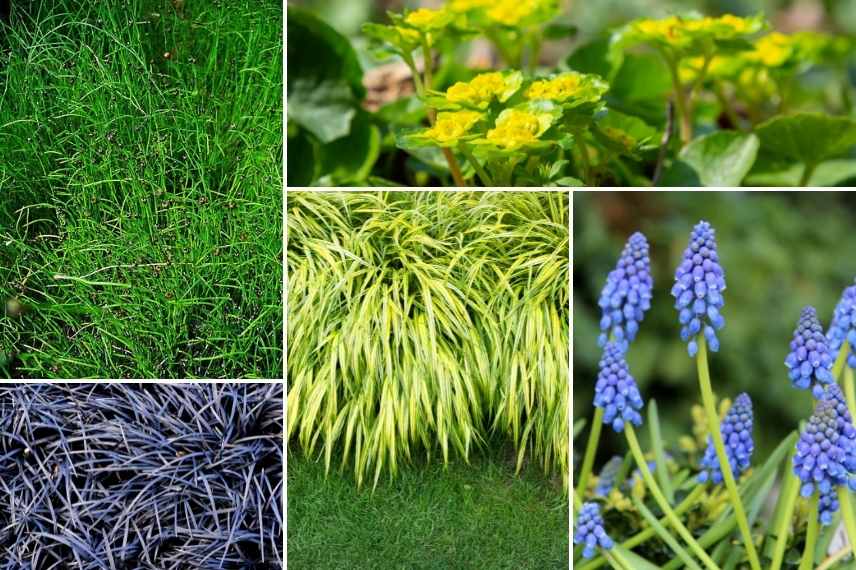
Chrysosplenium at the top right, accompanied by Equisetum scirpoides, Ophiopogon planiscapus ‘Nigrescens’, Hakonechloa macra ‘Aureola’, and muscari
Read also
10 plants to create a shady rockeryIn a cool shady rockery
Dorines are perfect for creating delightful fresh scenes in shaded rockeries. Create a lush green carpet by combining the Chrysosplenium davidianum with the ‘Helxine soleirolii, a semi-evergreen groundcover that resembles moss and, like it, enjoys humid environments, along with Sagine subulata ‘Pine Green’ and the remarkable Gunnera magellanica, a dwarf and groundcover species of Gunnera.
Choose taller plants that will stand out against this green carpet while creating beautiful contrasts in texture; a Hosta ‘Auguste Moon’ with golden-green leaves, and evergreen grasses like Carex morrowii ‘Ice Dance’ with its bright foliage, which will add a lot of lightness to the lush leaves of the hosta.
Accent the scene with small Mertensia virginica, featuring their sky-blue flowers in spring, bulbs of Fritillaria meleagris, with their purple checkered bells or Trollius ‘Lemon Queen’, with its globose lemon-yellow flower buds. These lovely blooms will be beautifully highlighted by their spring-green foliage.
Choose perennial or bulbous plants with successive flowering to keep this area attractive across multiple seasons.
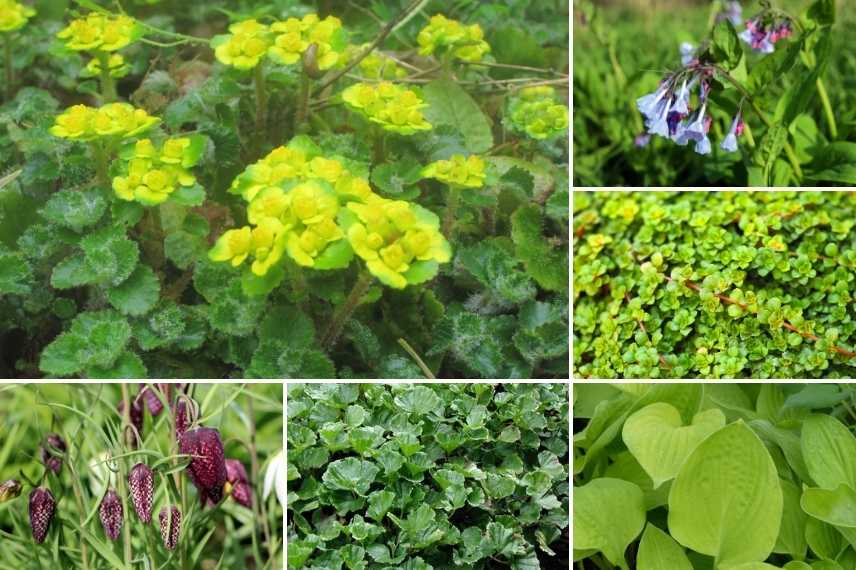
Chrysosplenium davidianum, Mertensia virginica, Helxine soleirolii, Fritillaria meleagris, Gunnera magellanica and Hosta
In a shady border
Place large feathery specimens at the back of the border: Astilbes (‘Professor van der Wielen’), Filipendula ulmaria ‘Variegata’ or Filipendula ulmaria, are ideal for creating a lush, airy, and wild backdrop. They produce feathery white flower spikes in summer. The surprising Thalictrum (x) petaloideum ‘Ghent Ebony’ can also be a great addition with its unique brown foliage and feathery cream-white flowering from mid-May to early July.
Plant your dorines at the edge of the border; they will form a persistent, original, and bright groundcover, alongside Heucheras or tiarellas, perhaps in contrasting or matching shades. All three will welcome the delicate flowering of Elf Flowers, Bleeding Hearts, and Astrantias. Also consider the hardy geranium nodosum, an excellent shade geranium with lavender-blue flowers, a shade that can provide a lovely complement.
Add a graphic touch to this fresh border with clumps of Japanese grass, or complete the scene with Polystichum tsus-simense, an elegant small-sized fern, almost dwarf-like with dark green, black-veined persistent fronds.
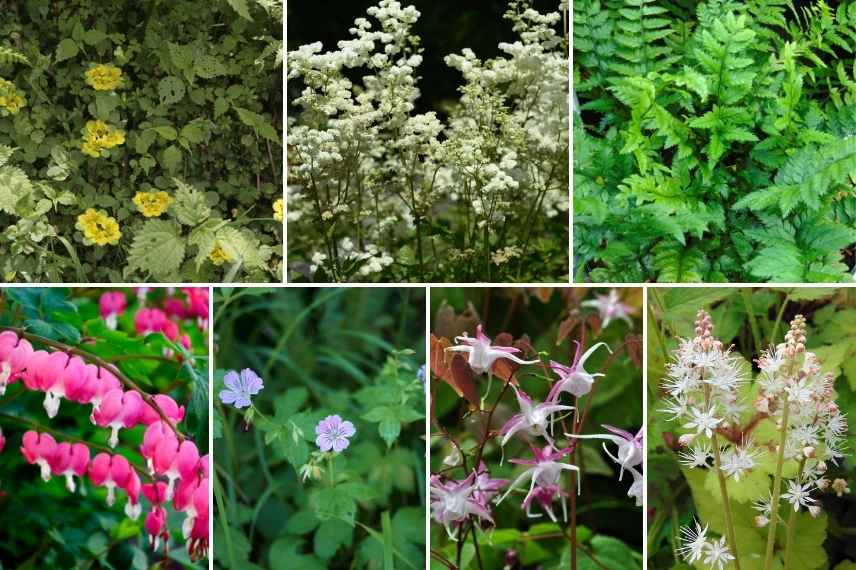
Chrysosplenium davinianum, Filipendula ulmaria, Polystichum tsussimense, Bleeding Heart, hardy geranium nodosum, Epimedium, Tiarella ‘Running Tiger’
- Subscribe!
- Contents
Comments