





























Pairing ideas with Galega
6 successful pairing ideas
Contents
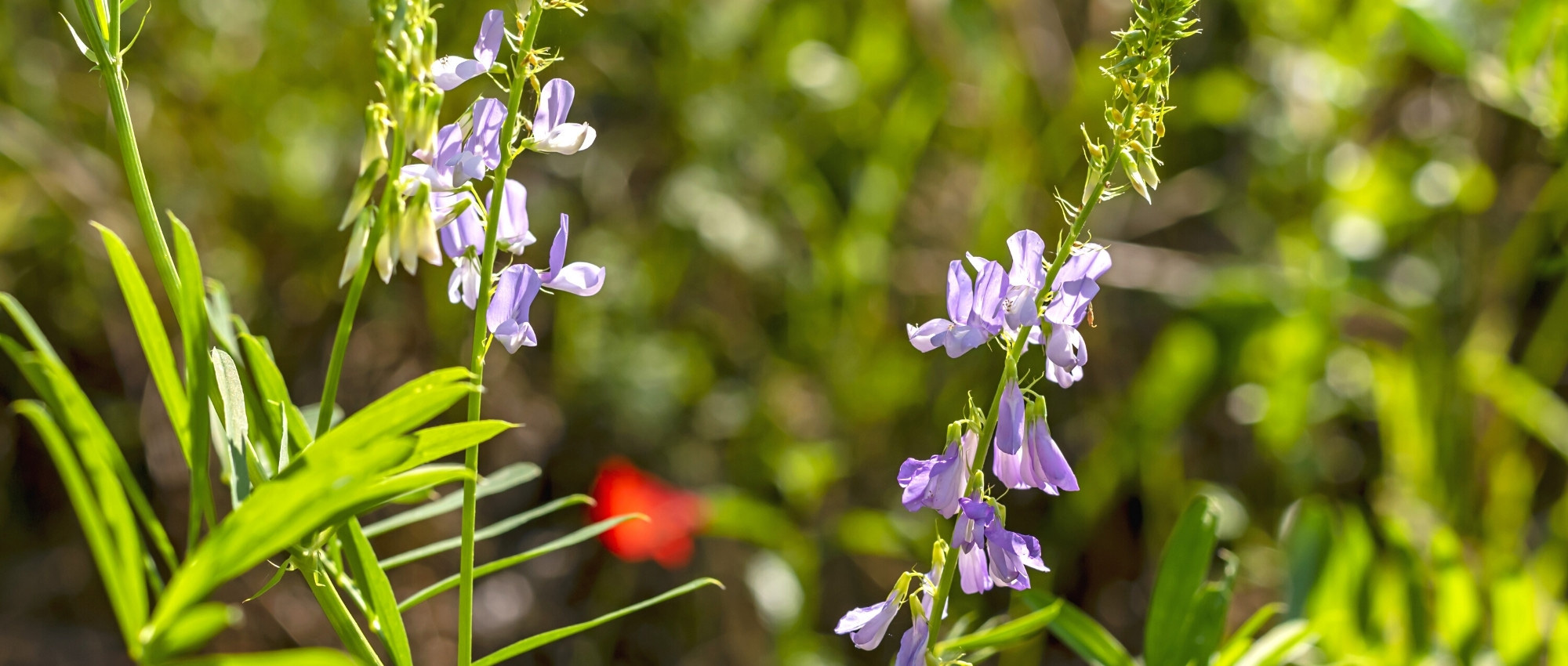
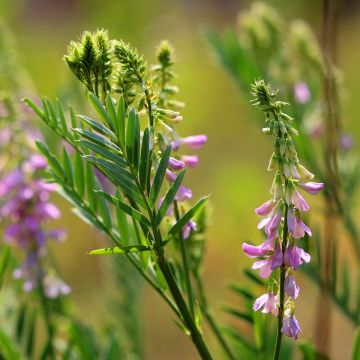
Galega is a beautiful hardy perennial that produces (depending on the variety) clusters of white, mauve, blue, or pink pea-like flowers in spring or summer. Its finely divided foliage, featuring soft green or bluish leaflets, is also appreciated. In the garden, Galega thrives in full sun, or partial shade, in fresh, rich soil. It is quite hardy, able to withstand temperatures as low as -20 °C. This plant is very easy to grow, grows quickly, and tends to spread. With its light and delicate flowering, Galega is ideal for cottage gardens and naturalistic settings! However, it will also find its place in colourful borders, mixed-borders, romantic gardens, or cottage gardens. Discover our 6 best ideas and inspirations for pairing Galega!

In a naturalistic garden
With its wildflower appearance, flexible and unstructured habit, fine foliage, and pea-like flowers, Galega is perfect for cottage and naturalistic gardens! Pair it with other wildflowers that grow spontaneously in France, such as poppies, cornflowers, and knautias. Opt for plants with a flexible habit, featuring delicate flowers atop long floral stems, creating a light and airy effect. Consider, for example, Buenos Aires verbenas or hastate verbenas, penstemons, veronicastrums, and achilleas. Don’t forget the butterfly-shaped flowers of Gaura lindheimeri! Discover the Cephalaria gigantea, a giant scabious (it can reach 2 m tall!) that bears cream to pale yellow flower heads, very bright. Finally, grasses are essential in this style of garden: resembling wild grasses, they create a true meadow effect while adding movement! Opt for pennisetums, stipas, and molinies, for example.
Explore our inspiration page “Naturalistic Garden” and our advice sheet “10 Emblematic Perennial Plants for Naturalistic Gardens”
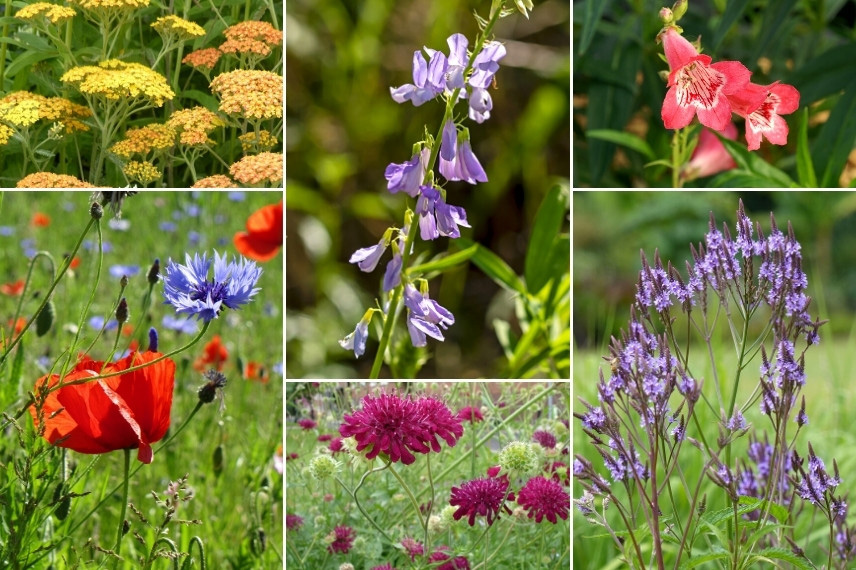
Achillea ‘Terracotta’, Galega officinalis, Penstemon ‘Souvenir d’Adrien Régnier’, Poppy and cornflower, Knautia macedonica, and Verbena hastata
Read also
Galega: planting, growing, and careIn a cottage garden
The cottage garden, of English origin, features irregular shapes and abundant flowerbeds, making it ideal for showcasing an old stone house. The flowerbeds are a mix of flowers, lush foliage, vegetables, and herbs, sometimes accompanied by a few fruit trees. With its soft flowering hues and generous foliage, Galega will fit perfectly into this garden style! We particularly recommend the Galega orientalis, with blue flowers, but you can also choose Galega hartlandii ‘Alba’, which has white flowers. Plant it alongside Oriental poppies, German irises, and alliums. Also discover Phlox divaricata ‘White Perfume’, which offers beautiful pure white star-shaped flowers from May to July, pleasantly scented. You can also incorporate baptisias, or indigo lupins, which bear flowers grouped in long upright spikes, usually blue. For decorative foliage, focus on ferns, hostas, lady’s mantle, and heucheras. Finally, don’t hesitate to add a few vintage-style decorative elements, favouring materials like stone, wood, or wrought iron.
Discover our inspiration page “Cottage Garden” and our selection of perennials for cottage gardens.
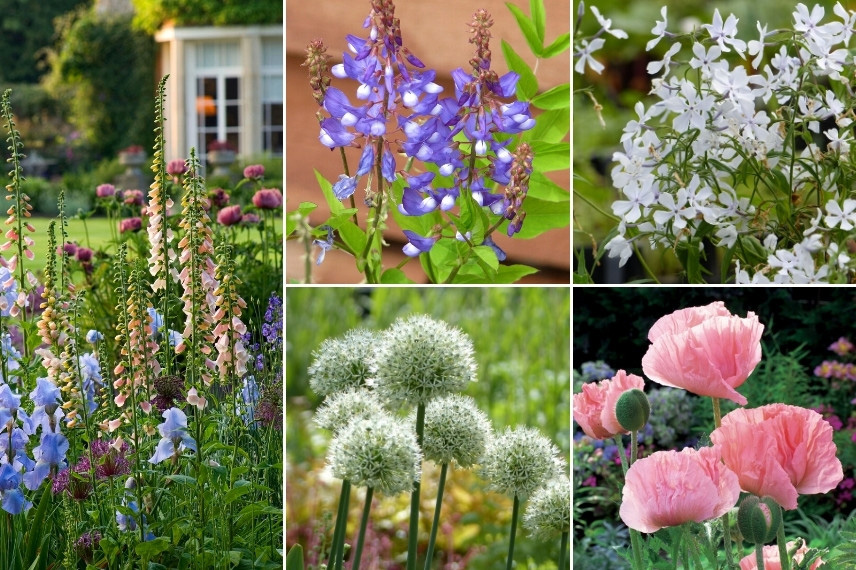
Scene with Iris ‘Jane Phillips’, Digitalis ‘Suttons Apricot’, and Papaver orientale ‘Patty’s Plum’ (photo MAP – The Old Rectory, Haselbech), Galega orientalis (photo peganum), Phlox divaricata ‘White Perfume’, Allium stipitatum ‘Mount Everest’, and Papaver orientale ‘Helen Elisabeth’
Discover other Galega
View all →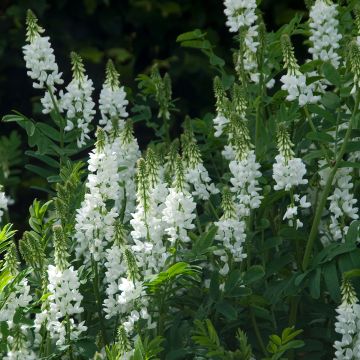
Available in 1 sizes
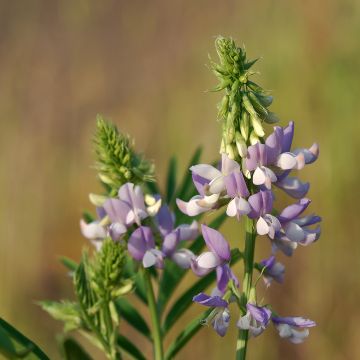
Available in 1 sizes
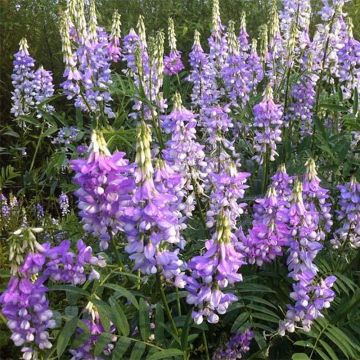
Available in 1 sizes
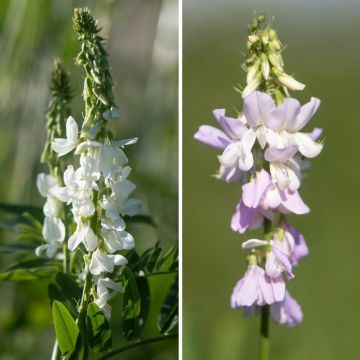
Available in 0 sizes
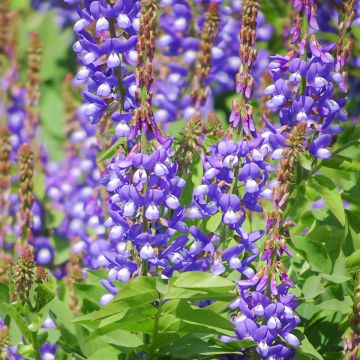
Available in 1 sizes
Available in 1 sizes
In a romantic garden
With their humble and delicate flowering, Galega are perfect perennials for dressing the base of roses! Take the opportunity to create a romantic garden, featuring roses and peonies as the centrepieces. For example, choose the ‘Albertine’ climbing rose, with crumpled double flowers in soft pink, which you can train to climb on an arch or pergola. Plant at its base the Galega hartlandii ‘Alba’, which produces beautiful white flowers. Alongside them, add weigelas and deutzias. Enjoy the silver, finely cut foliage of wormwoods and the wooly foliage of Stachys byzantina. Their silver hue will reflect the light to create a soft and luminous effect! Also discover the stunning flowering of the carnation Dianthus plumarius ‘Scent First Tickled Pink’, which has the added benefit of offering a pleasantly fragrant bloom. To enhance this romantic atmosphere, feel free to add decorative elements such as pots, stone or wrought iron sculptures, lanterns, and lighting that highlight the plants… You can also set up a garden lounge or a bench that invites you to sit and enjoy this soft and soothing ambiance!
Our inspiration page “Romantic Garden”
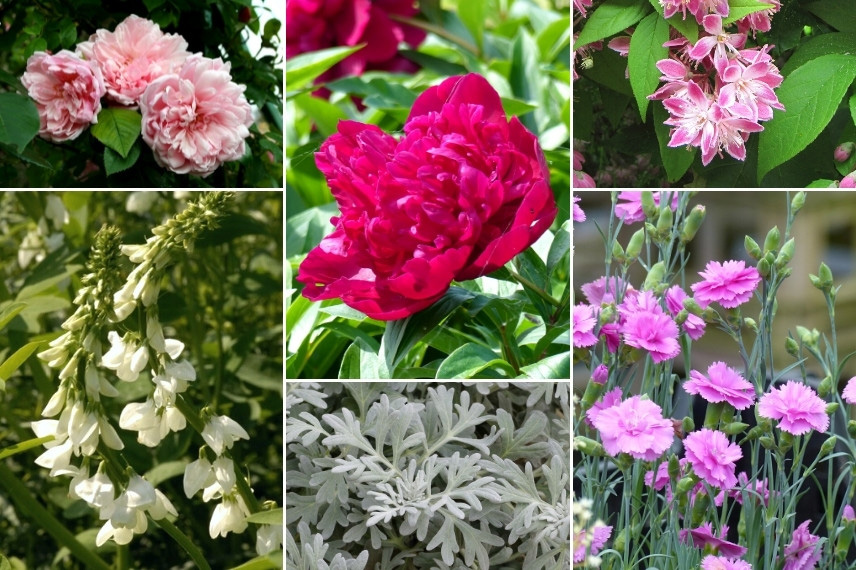
‘Albertine’ rose (photo Spedona), Paeonia lactiflora ‘Inspecteur Lavergne’, Deutzia ‘Strawberry Fields’, Galega hartlandii ‘Alba’ (photo W. Erhardt), Artemisia stelleriana ‘Silver Brocade’ and Dianthus plumarius ‘Scent First Tickled Pink’
In a mixed border, with bulbs and perennials featuring colourful flowering.
Compose with Galega for a vibrant flower bed! Take advantage of its gentle flowering in pastel tones to bring lightness to a very colourful display. Indeed, bright shades, particularly red and orange, can feel overwhelming and dominate the space: incorporating some softer, lighter blooms will create a more airy and pleasant arrangement. You can thus add a few Galega officinalis plants alongside Persicaria amplexicaulis ‘Alba’ (which also offers delicate flowers!), within a bed composed of the exuberant blooms of dahlias, lilies, cannas, and crocosmias. Also consider echinaceas, achilleas, asters, monardas, and agastaches. Discover the lovely yellow flowers with black centres of Rudbeckia fulgida ‘Goldsturm’. You will achieve a bed full of vitality!
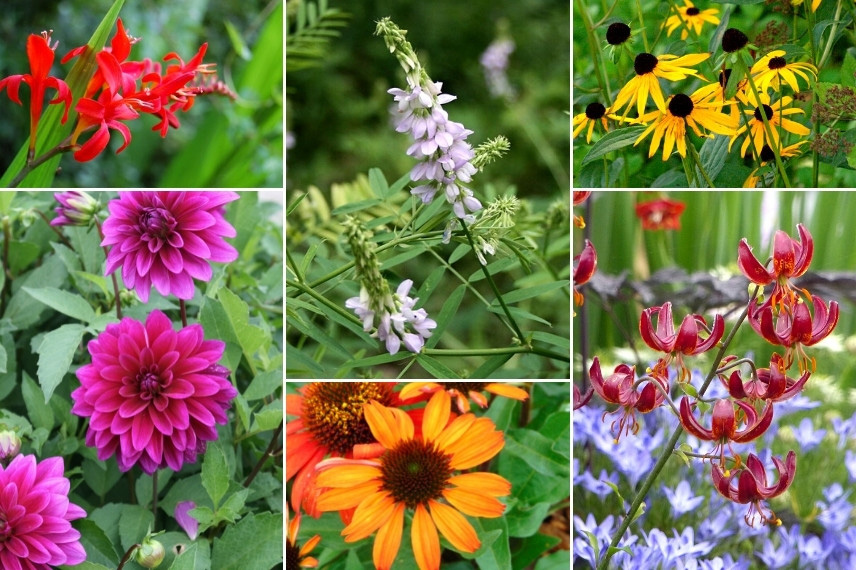
Crocosmia ‘Lucifer’ (photo Vicky Brock), Galega officinalis (photo Franz Xaver), Rudbeckia fulgida ‘Goldsturm’ (photo Manuel), Dahlia ‘Le Baron’, Echinacea ‘Sunseekers’ and Lilium martagon ‘Claude Shride’
In a vicar's garden or physic garden
Galega has medicinal properties and can easily be integrated into a vicar’s garden alongside other useful plants. Once confined to cloister gardens in abbeys, vicar’s gardens are simply utility gardens that bring together medicinal plants, aromatic herbs, vegetables, fruit trees, and flowers. They are organised into beds defined by low trimmed hedges (for example, boxwood) or wooden or wattle borders. Plant alongside Galega medicinal plants such as common sage, comfrey, chamomile, agrimony, and St John’s wort. For vegetable plants, favour heritage vegetables: parsnips, orache, cardoon, pattypan… Also include some flowers such as hollyhocks, marigolds, lady’s mantle, and foxgloves.
Discover our advice sheets “Designing a Vicar’s Garden” and “7 Perennial Plants and Biennials for Vicar’s Garden”
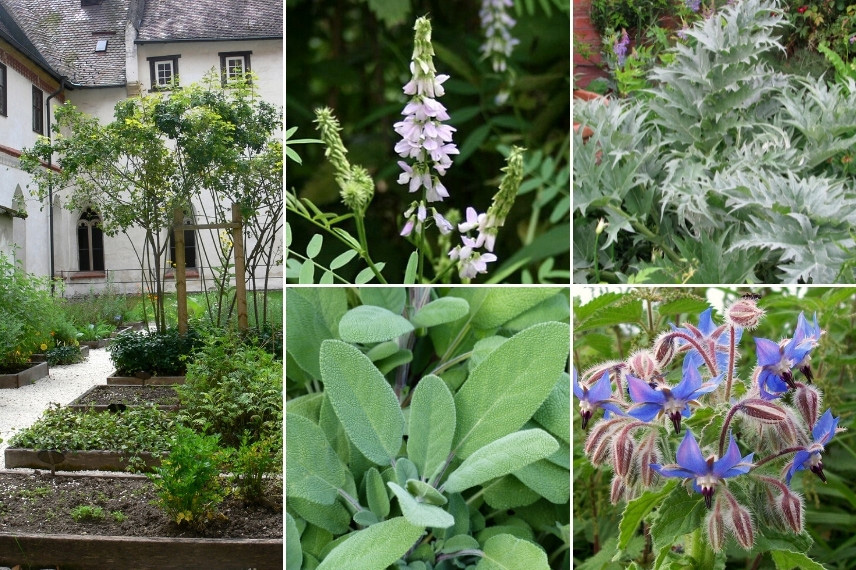
The Abbey Garden of Blaubeuren, Germany (photo Andreas Praefcke), Galega officinalis (photo Franz Xaver), Cynara cardunculus (photo peganum), Salvia officinalis ‘Grower’s Friend’ and borage
To play with colour contrasts!
The Galega orientalis bears beautiful blue flowers; highlight them by pairing them with orange blooms! Indeed, these two shades are complementary, as blue and orange are opposite each other on the colour wheel. Thus, they enhance each other and create a lovely relief effect when combined! Enhance the blue hue by planting alongside the Galega hardy geraniums, nepeta, sages, baptisias, Iris sibirica, and Allium caeruleum. In contrast, integrate into the bed ‘Totally Tangerine’ avens, ‘Harvest Moon’ oriental poppies, Hemerocallis fulva, and Asian buttercups.
In the same vein, you can create a stunning chiaroscuro effect by pairing the white flowers of Galega hartlandii ‘Alba’ with plants that stand out due to their particularly dark foliage or blooms: dark brown, purple, chocolate… For example, choose ‘Black Lace’ elder, the hazel Corylus maxima ‘Purpurea’, the Ophiopogon planiscapus ‘Nigrescens’, the heuchera ‘Obsidian’, and the agapanthus ‘Black Magic’. This will give you a graphic and modern atmosphere!
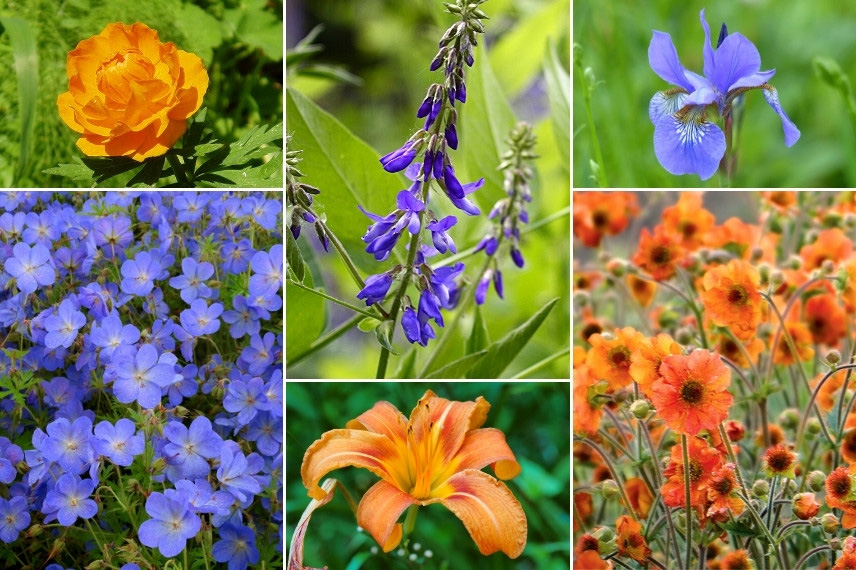
Trollius asiaticus, Galega orientalis, Iris sibirica ‘Caesar’s Brother’, Geranium ‘Johnson’s Blue’, Hemerocallis fulva, and Geum ‘Totally Tangerine’
To learn more:
- To find out everything, browse our complete sheet on Galega: planting, growing, and care
- Subscribe!
- Contents
![[plant1="Galega officinalis" plant2="Rosa 'Graham Thomas'"]
In your garden, consider planting **Goat's Rue** alongside **Graham Thomas Rose** for a beautiful combination.](https://en.promessedefleurs.eu/blogwp/wp-content/uploads/2022/08/Associer-le-Galega.jpg "Associate the Goat's Rue")
Comments