





























Bicolour hellebores: 7 varieties to discover
The most beautiful varieties for a winter-flowering garden
Contents
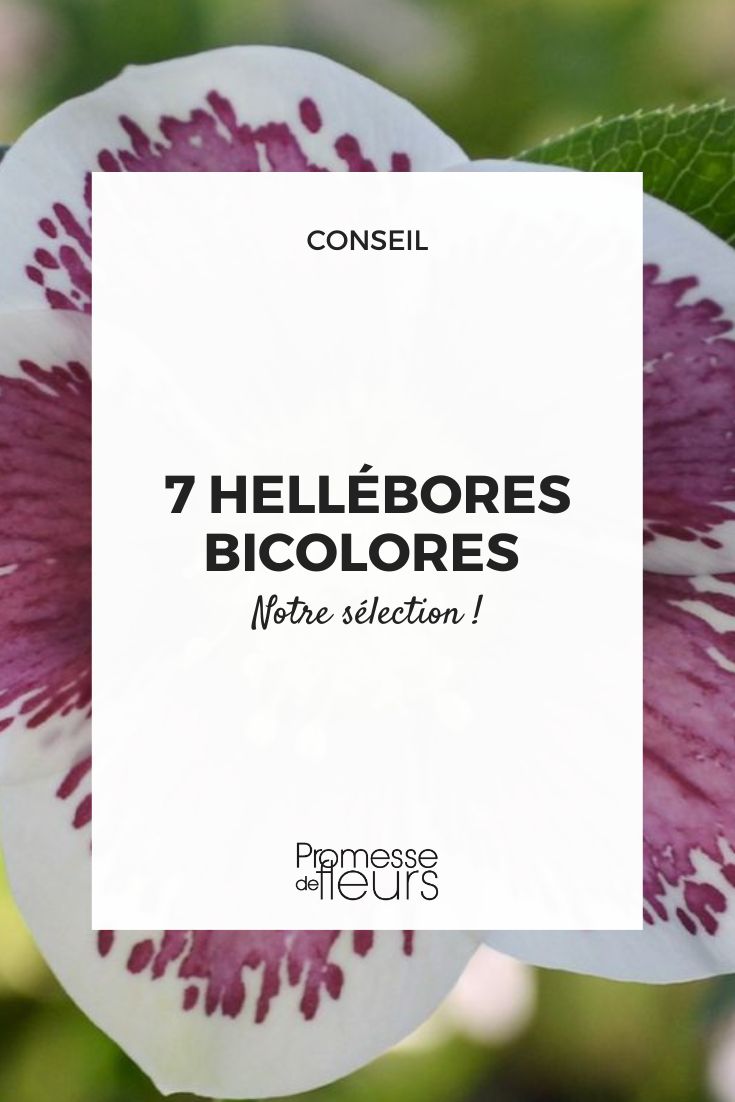
Hellebores, also known as ‘Christmas roses’, are prized for their elegant winter flowering. They are planted in shady locations, generally at the foot of trees alongside flowering bulbs and woodland plants. White, green, pink, purple, black or variegated, they bring striking colours to a garden or balcony at a time when flowers are scarce. Discover our selection of bicoloured hellebores that will gracefully brighten your garden or balcony.

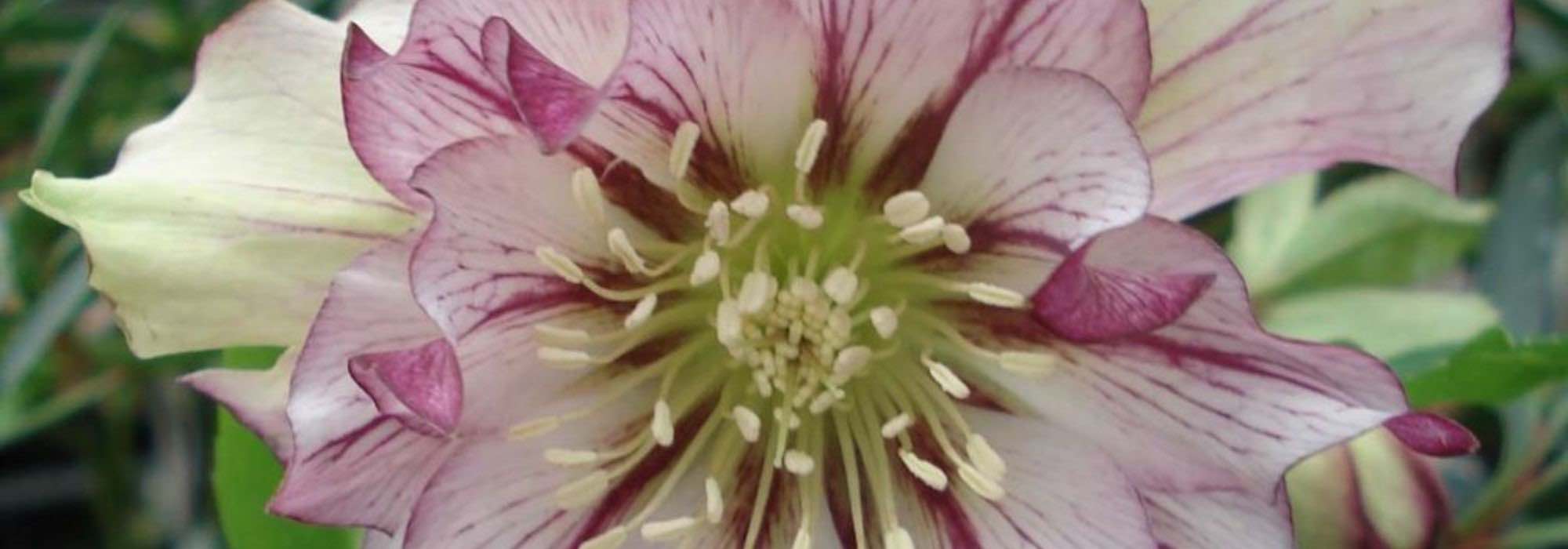
Oriental hellebore 'Double Picotée', cream-coloured double flowers veined with pink
The Helleborus orientalis ‘Double Picotee’ produces double flowers in a creamy colour, adorned at the centre with a delicate ruffle of veined petals edged in pink. Robust, this perennial plant is ideal for brightening shaded gardens during winter. The variety ‘Double Picotee’ forms a compact clump about 40 cm across, with evergreen palmate leaves that are slightly dentate. From January to March, it produces flowers 5 to 7 cm in diameter, with cream and pink petals, which dry out, taking on faded hues. Hardy, the Oriental hellebore withstands temperatures down to -15°C. Native from north-west Turkey to the Caucasus and north-east Greece, it grows naturally up to 2,000 m in altitude, often in humus over calcareous subsoils. Once established in the garden, avoid moving it as it does not like being transplanted.
Planted in groups, it draws the eye even more. Its winter flowering pairs well with other woodland plants such as Pieris, wood anemones and violets.
Read also
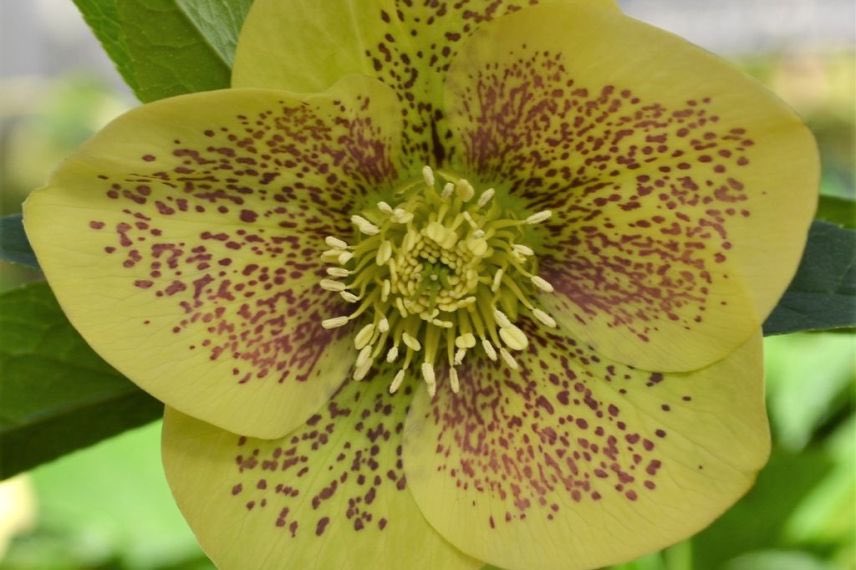
The most beautiful winter floweringsThe oriental hellebore 'ViV Serafina', yellow flowers speckled with red
The oriental hellebore ‘ViV Serafina’ offers a bicolour yellow flowering, maculate with red, which lights up the garden from November to December. This Christmas rose, robust and disease-resistant, prefers coolness and shade. With its evergreen, dark green and divided foliage, it forms compact borders, 35 to 45 cm high, suitable for the garden or for pot cultivation. Its large flowers with circular yellow petals speckled with red and adorned with a centre of golden stamens create a striking contrast with the dark foliage. Hardy, it tolerates temperatures down to around −15 °C. Plant it in rich, well-drained and not too dry soil, then do not move it.
This hellebore allows the creation of attractive borders all year round. Planting at the back, combined with other varieties of hellebores with staggered flowering and different colours, as well as ornamental fruit-bearing bushes, such as the European spindle, offers a magical winter tableau in a garden.
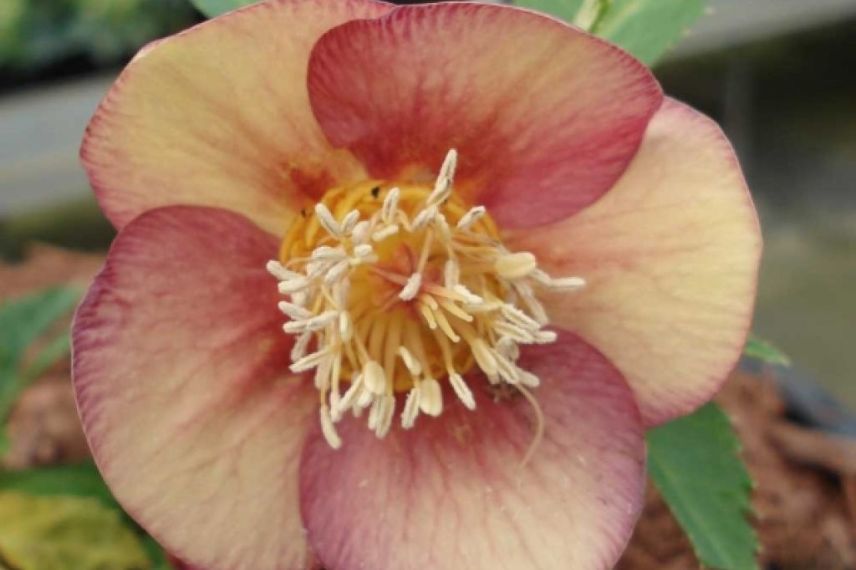
The oriental hellebore 'Fuchsia' with a yellow centre, in soft colours
The Oriental hellebore Fuchsia with yellow centre rewards us, from February to April, with its flowers in soft pale fuchsia pink and apricot orange, offering delightful shades of peach and salmon. It forms a clump of dark green evergreen foliage about 50 cm tall at maturity. The decorative leaves are palmate and slightly dentate. Its flowers open in a single cup shape and measure 5 to 7 cm in diameter. Hardy down to −15°C, it is planted in shade or partial shade, and once established it does not like to be moved.
In a border or in a container, pair this hellebore with other purple-coloured hellebores, such as the Oriental hellebore ‘ViV Patrizia’. It can be used to create beautiful and original cut flower arrangements.
Read also
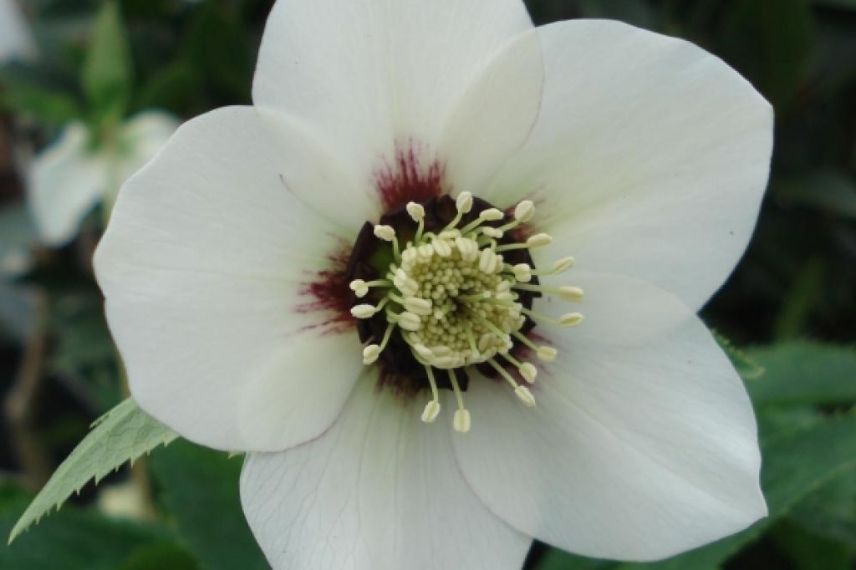
Hellebores: 7 successful pairing ideasThe white eastern hellebore with a red centre, an immaculate white accented with purple
With its immaculate white flowers accented at the centre by a row of small purplish-red petals, the white oriental hellebore with red centre brightens the shady corners of the garden and the balcony. The single, cup-shaped flowers, 5 to 7 cm in diameter, are delicately nodding. It blooms in the heart of winter, from February to April, when vegetation is often still dormant. Its palmate, slightly dentate leaves are dark green and reach up to 40 cm in height. Evergreen, they provide a leafy backdrop in all seasons. This hellebore is hardy down to −15 °C.
It pairs perfectly with dark-coloured hellebores as well as spring bulbs.
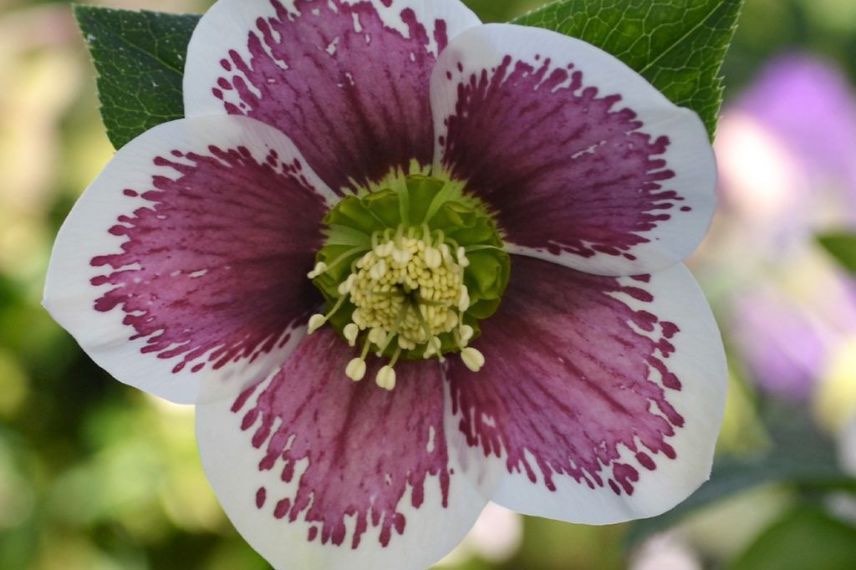
Oriental hellebore 'ViV Antonella', white and deep purple
The oriental hellebore ‘ViV Antonella’ blooms in January and February with striking flowers whose white petals are adorned with large dark purple spots. At the centre, a heart of yellow stamens emerges. It forms a clump of deeply divided, dark green leaves reaching 50 cm in height. Its very decorative foliage remains evergreen in winter. It prefers cool soils and shaded spots. Hardy down to −15 °C, it can be planted in all regions of France.
In a flowerbed, pair it with a spindle tree Euonymus fortunei ‘Emerald’n gold’, whose yellow-and-green variegated foliage will contrast with the hellebore’s dark leaves.
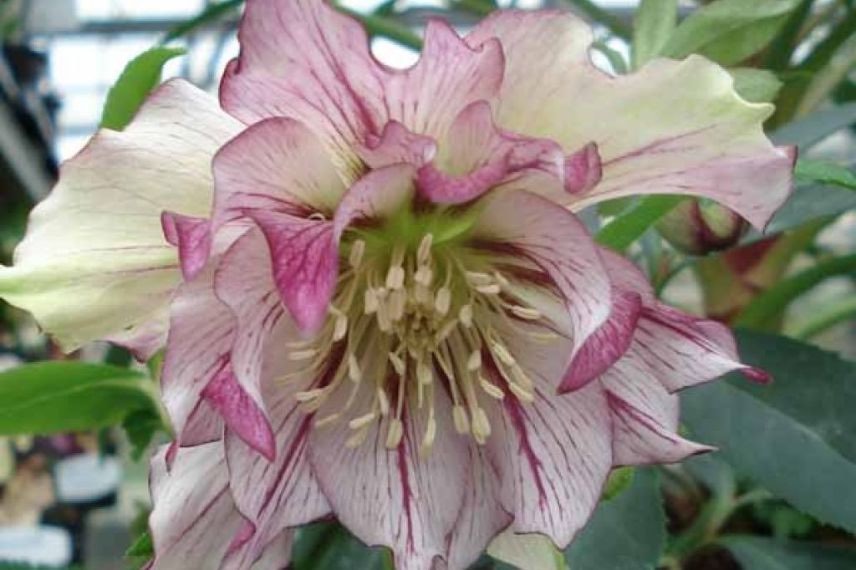
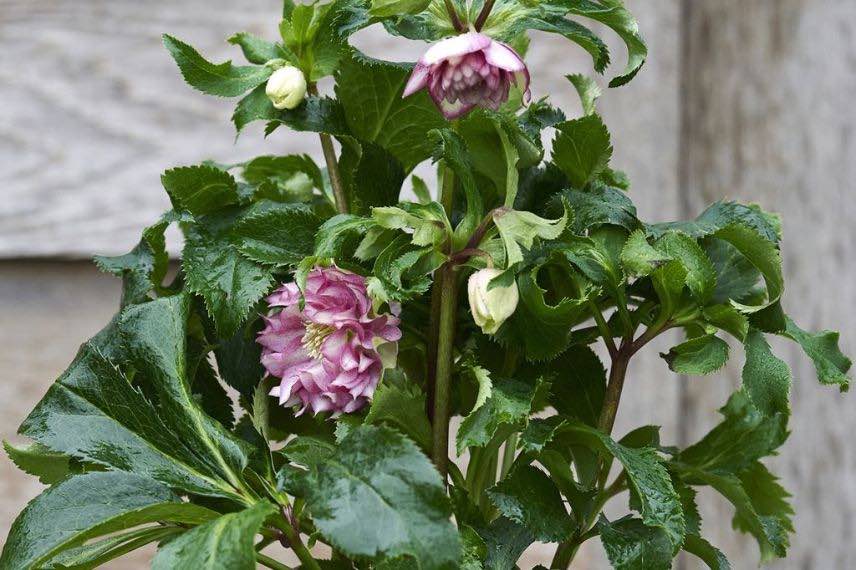
Oriental hellebore 'ViV Stefania', double white and pink flowers
40 cm tall, the oriental hellebore ‘ViV Stefania’ is a compact, floriferous and colourful plant that flowers from November to December. Its dark green, evergreen foliage is adorned with double flowers blending white and deep pink colours. The petals are undulating and the flower centres are adorned with cream-white stamens. Easy to grow, it thrives in any type of soil provided it remains moist in summer and is sheltered from scorching sun. It is also hardy down to -15 °C.
To create a romantic border or container, plant it alongside cyclamen coum and Caucasian forget-me-nots. You can also pair it with other bicolour hellebores in refined colours, such as the oriental hellebore ‘Double Picotée’ and the oriental hellebore ‘ViV Serafina’, to create a small bed of original and precious flowers.
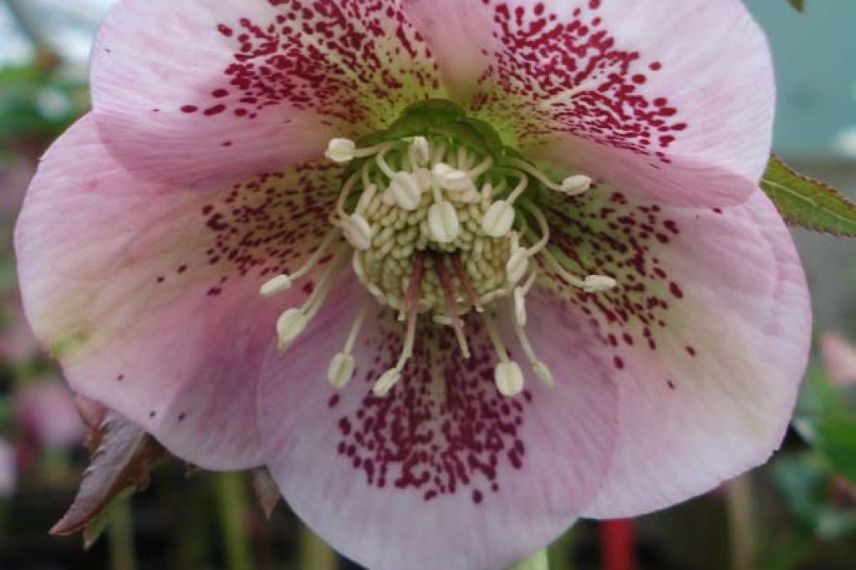
The Oriental hellebore 'Rose guttatus', light pink flowers speckled with purple
The Oriental hellebore ‘Rose guttatus’ offers a charming display from February to April. Its flowers come in various shades of pink, from pale pink to bright pink, punctuated with deep purple ranging to almost black at their centre. Its flowers, 6 cm in diameter, are striking at this time of year. They appear on a 40 cm high cushion of foliage, dark green and evergreen. It is hardy down to −15 °C.
Plant it in groups at the foot of trees and pair it with conifers and snowdrops to create a striking and graceful display.
For further information
Discover our full range of hellebores, as well as our complete guide on growing and planting hellebores.
- Subscribe!
- Contents
Comments