





























Choosing a Judas Tree: Buying Guide
To find the ideal variety!
Contents
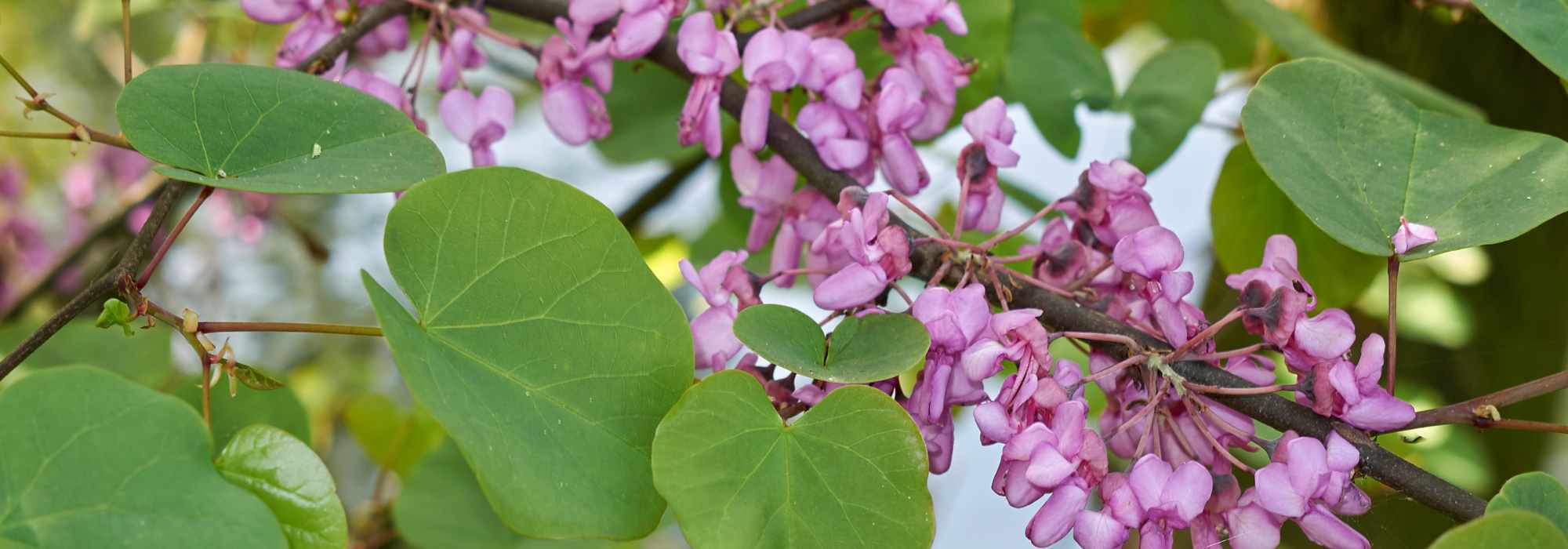
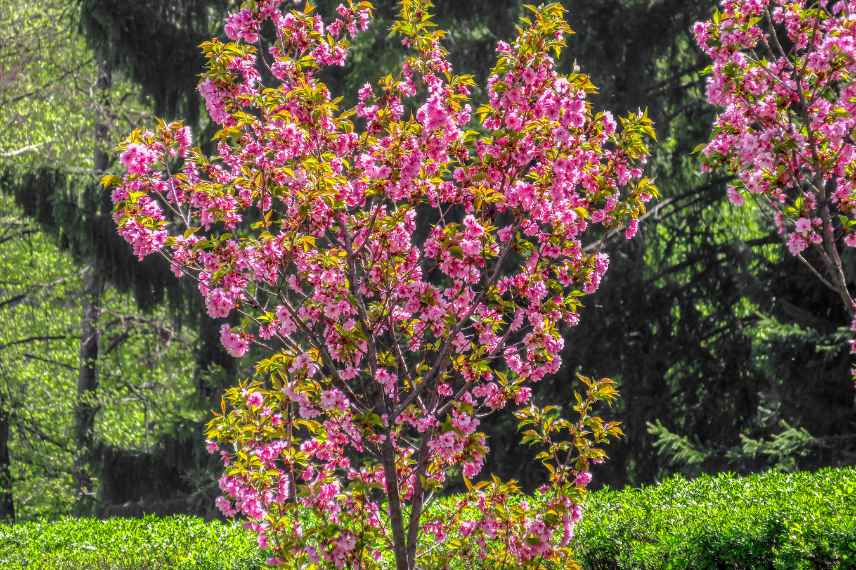
The Judas tree or Cercis is a small tree or bush with a remarkable bushy habit known for its particularly abundant spring flowering and its colourful foliage that changes throughout the seasons. In spring, it delights us with its purple-pink or white flowers that emerge in tight clusters on the still naked branches. Heart-shaped leaves then appear. With its compact size ranging from 2 to 10 metres in height and its weeping or twisted forms, the Cercis offers a wide variety of uses and fits into all gardens. It can be planted throughout France, as it is quite hardy. It is a very accommodating tree that tolerates air pollution and drought well once established. Easy to grow, it accepts partial shade and thrives in various soils.
Whether it’s flower or foliage colour, hardiness, size, or dimensions, follow our guide to find the ideal Judas tree for your garden!
And, discover our wide range of Cercis.

Choose the Judas Tree according to the flowering period
The Judas Tree captivates with its spectacular spring flowering, which blooms from March to June, depending on the climate, directly on the naked branches, even on the trunk before the leaves appear. Cercis have the rare characteristic of being cauliflorous (flowers grow on the trunk) and reward us with an early flowering. They are remarkable bushes due to the abundance of flowers that sometimes create an impressive tuft on the trunk and branches, almost entirely covered in blooms. Melliferous, they delight pollinators early in the season. Most bloom in April-May, but some earlier varieties start flowering as early as March, including:
- The Cercis canadensis ‘Heart of Gold’, which displays, in March-April, its fresh pink to violet blooms heralding spring.
- The Cercis canadensis ‘Melon Beauty’, spectacular with its purple-pink flowers that bloom early in spring, directly on the branches.
- The Cercis canadensis ‘Ruby Falls’, dazzling from March with its flowers that sprinkle the trunk and bare branches with lavender-pink pea-like blooms.
There are also varieties with later flowering that are equally generous, such as:
- The Cercis canadensis ‘Golden Falls’ which stands out with its violet-pink flowers in clusters all along the branches in May-June.
- The Cercis siliquastrum which blooms in April-May, in a violet-pink hue.
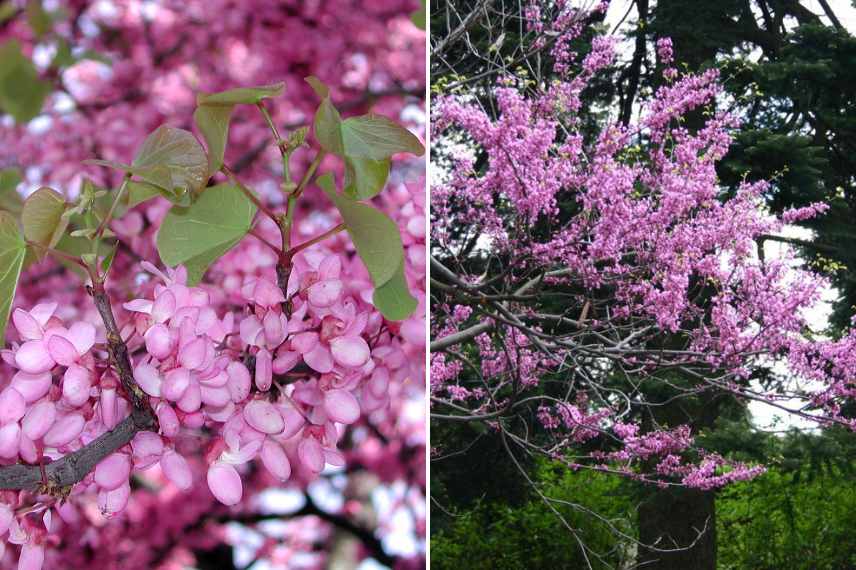
Cercis siliquastrum and Cercis canadensis ‘Melon Beauty’
Choosing the Judas Tree Based on Flower Colour
The flowers of the Judas Tree come in fresh and vibrant colours, varying in intensity. They are primarily found in two main colours: cyclamen pink or white.
Judas Trees with Pink Flowers:
- The Cercis Canadensis ‘Pink Pom Pom’s’ features flowers that burst forth in dark pink pom-poms resembling small roses.
- The Cercis chinensis ‘Avondale’ offers a flowering display of small cherry pink or bright pink flowers, in a very vivid shade.
Judas Trees with White Flowers:
- The Cercis Canadensis ‘Royal White’ stands out with its abundant and spectacular pure white flowering touched with yellow-green at the base of the flowers.
- The Cercis Canadensis ‘Vanilla Twist’, reveals an abundant white spring flowering that contrasts intensely against its black trunk.
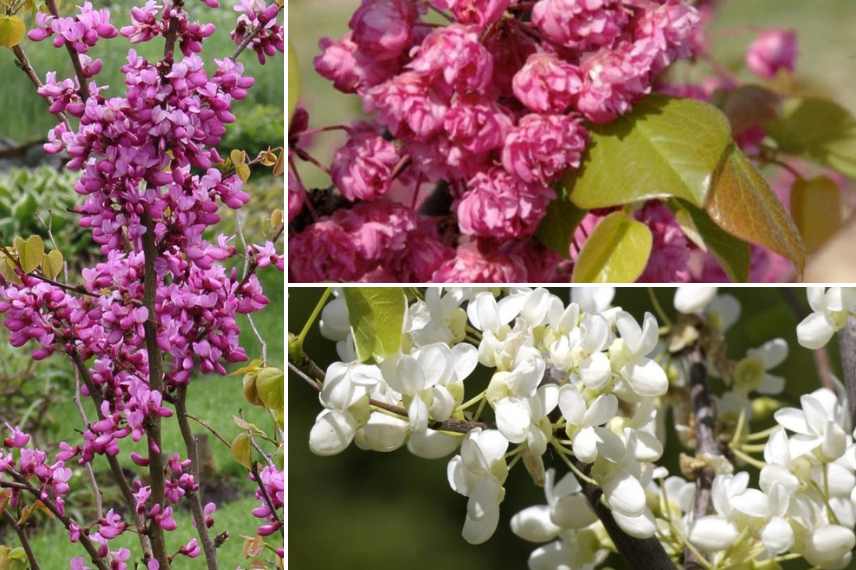
Cercis chinensis ‘Avondale’, Cercis canadensis ‘Pink Pom Pom’s’ and Cercis canadensis ‘Royal White’
Discover other Cercis
View all →
Available in 1 sizes
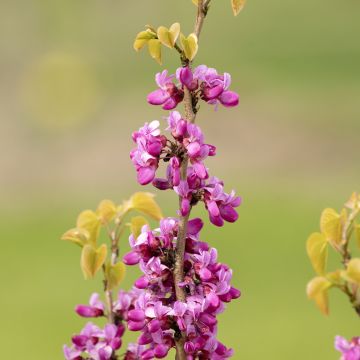
Available in 4 sizes
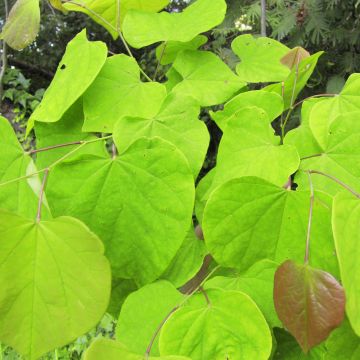
Available in 1 sizes
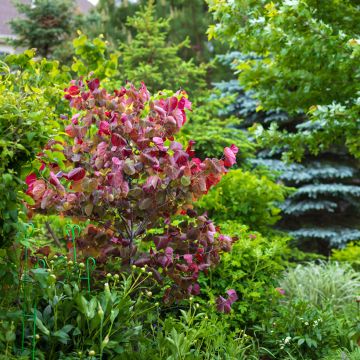
Available in 2 sizes
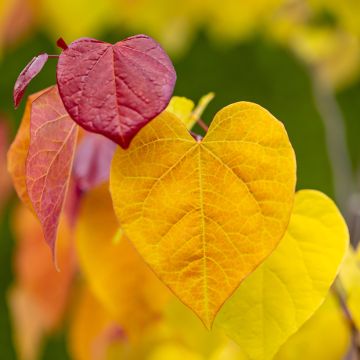
Available in 2 sizes
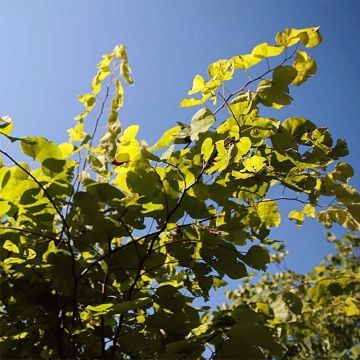
Available in 2 sizes
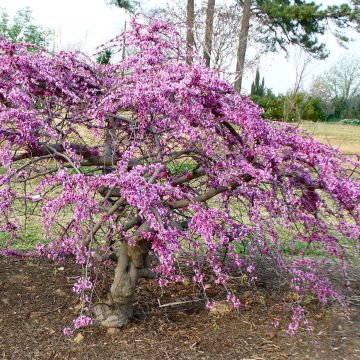
Available in 1 sizes
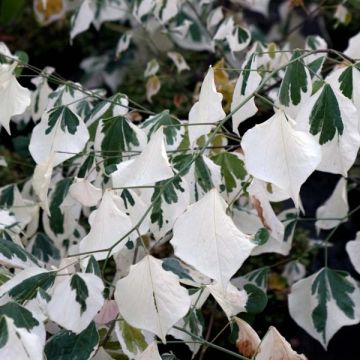
Available in 1 sizes
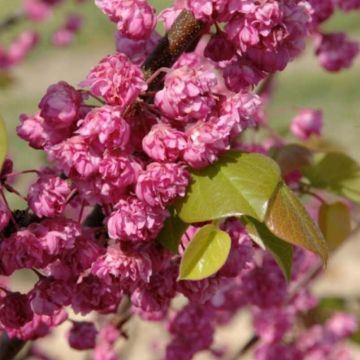
Available in 1 sizes
Available in 2 sizes
Choosing the Judas Tree Based on Leaf Colour
When thinking of Cercis, it is inevitably their sublime foliage that comes to mind. It offers an interesting diversity. Although deciduous, it provides a remarkably bright spectacle throughout the beautiful season, displaying stunning autumn colours. The Cercis canadensis, commonly known as the Canada Redbud, has given rise to numerous varieties with varied flowering and foliage colours.
Yellow or Golden Leafed Judas Trees
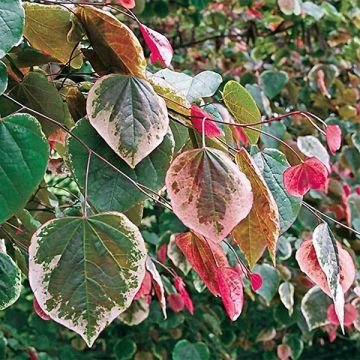
Cultivars with yellow or golden foliage bring a lot of brightness to the garden. The Cercis canadensis ‘Golden Falls’ attracts all eyes with its foliage tinged with orange that turns to golden yellow and then to lemon green in autumn. Similarly, Cercis canadensis ‘Heart of Gold’ is adorned with red foliage at bud burst turning to golden yellow and then chartreuse in summer, while the young bronze shoots of Cercis canadensis ‘Melon Beauty’ quickly turn to golden yellow and then chartreuse in summer as well. ‘The Rising Sun’ is a recent variety with exceptionally bright foliage, combining orange, golden, and lemon shades in summer.
Judas Trees with Changing Foliage
There are a few varieties of Cercis whose foliage offers changing and multicoloured reflections throughout the seasons, particularly in autumn.
- The Cercis siliquastrum, more common, has changing leaves that emerge blue-green in spring and turn golden yellow in autumn.
- The Cercis canadensis ‘Eternal Flame’ is a delight with its foliage that blazes in the garden from spring to autumn. Throughout the season, its leaves successively change from dark red to orange, to golden yellow, and then to chartreuse before falling.
Judas Trees with Variegated Foliage
Variegated foliage brings contrast and brightness to shrub beds. They wonderfully illuminate a somewhat shaded corner of the garden. The Cercis canadensis ‘Alley Cat’ has young shoots that emerge coloured pink and then turn to soft green splashed with white marbling until autumn, when the Cercis canadensis ‘Silver Lining’ is one of the few shrubs with white variegation capable of withstanding the sun! The Cercis canadensis ‘Carolina Sweetheart’ stands out with its unique and changing attire, transitioning from pink-red at bud burst to an unprecedented variegation. Its large leaves are randomly maculate with green, orange, pale yellow, and violet-pink tones.
Judas Trees with Purple Foliage
Shrubs with purple foliage enhance the garden with their dark silhouette. With their deep colour, they can transform a too-plain bed or play on contrasts. In the sun, their leaves will take on a more pronounced colour and appear almost black.
The large heart-shaped leaves of the Cercis canadensis ‘Forest Pansy’ burst forth in spring with a purplish red, then colour to shiny purple-red before turning yellow in autumn. The Cercis canadensis ‘Red Force’ is dressed in even more pronounced purple foliage until autumn, when it adorns itself with lovely orange-red tones. ‘Ruby Falls’ displays shiny purple in spring that matures to dark green in summer, while ‘Merlot’ showcases a remarkable shiny red-purple foliage, turning dark green in autumn.
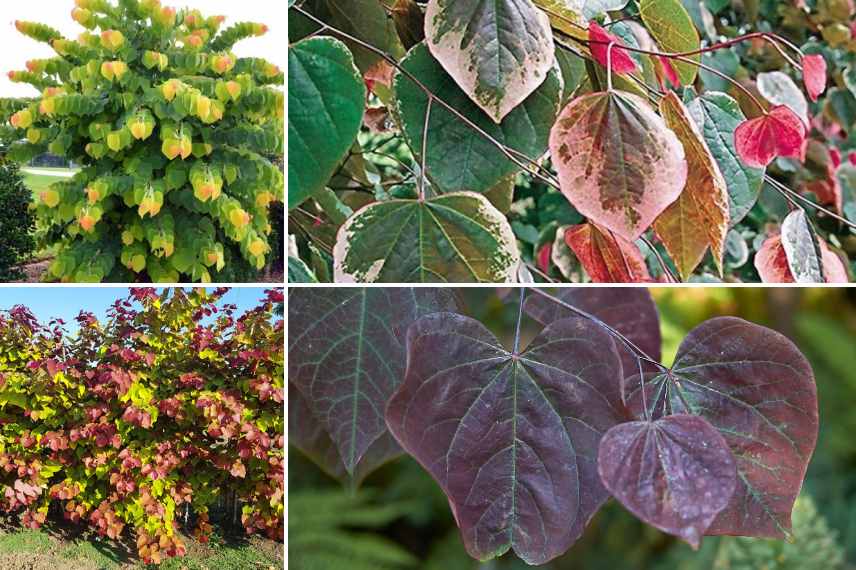
From top left to bottom right: Cercis canadensis ‘The Rising Sun’, Cercis canadensis ‘Carolina Sweetheart’, Cercis canadensis ‘Eternal Flame’, and Cercis canadensis ‘Forest Pansy’
Read also
8 umbrella-shaped treesChoosing the Judas Tree Based on Size
Les Arbres de Judée for a small bushy growth of 2 to 10 m high, and exhibit a naturally very ramified habit, with a twisted trunk and branches. In the early years, they can grow 3 m in 4 years, after which growth slows down. Some with more moderate development are well suited for pot cultivation or small spaces.
The Largest Varieties of Cercis
They can be planted, for example, in a free hedge, in a grove. They will be particularly highlighted when isolated to add character to modest-sized gardens or as a backdrop in a border alongside other bushes.
- Cercis siliquastrum forms a large upright bush that will reach 8 to 10 m in height and 4 to 5 m in width when mature.
- Cercis Canadensis ‘Red Force’ forms a tree with a fairly upright habit of 5 m high in 10 years, with an approximate spread of 3 m.
- Cercis canadensis ‘Heart of Gold’ becomes a small tree with a rounded habit, as wide as it is tall, reaching 4.50 m in height and width.
- Cercis canadensis ‘Forest Pansy’ is a variety with a bushy habit that reaches 5 m in height with a width of 3 m, under normal growth conditions.
- The variety ‘Royal White’ reaches about 6 m high in 10 years, spreading widely to 4 m or more in width.
The Smallest Cercis
Their reduced size and compactness are particularly interesting in small gardens. They are also perfectly suited for container cultivation, on a balcony or terrace.
- Cercis chinensis ‘Avondale’ is a variety with a compact and low habit, not exceeding 2 m in height with a width of 1.50 m, and has a fairly slow growth rate.
- Cercis canadensis ‘Cascading Hearts’ does not exceed 3 m, making it ideal for small city gardens.
- Cercis canadensis ‘Traveller’ can be planted even when space is limited, in the ground or on a sunny terrace, as this variety with a weeping and compact silhouette should not exceed 3.50 m in height when mature.
- With a height not exceeding 2 m and a width of 1 m, Cercis canadensis ‘Ruby Falls’ can be adopted on a terrace or in a small garden.
- Cercis canadensis ‘Little Woody’ is the perfect candidate to green up a small garden, terrace, or balcony with its 2 m in all directions at most.
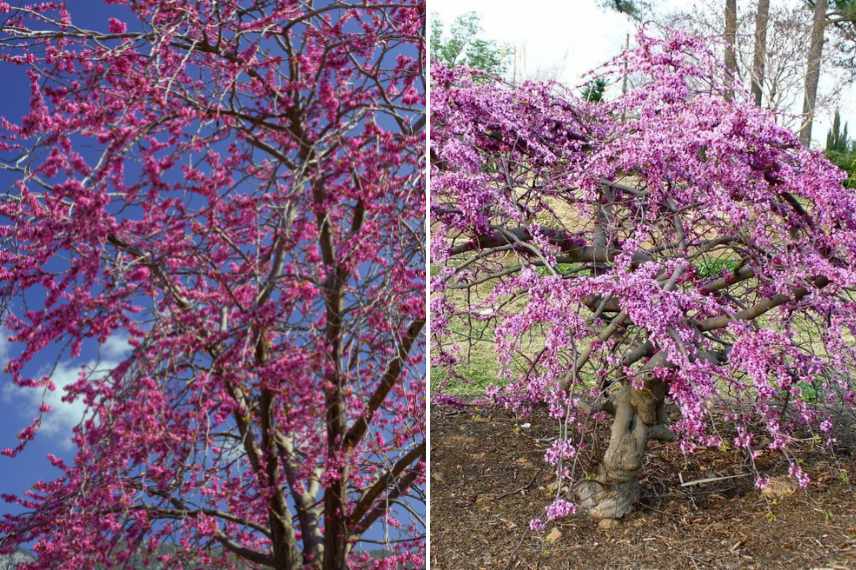
Cercis siliquastrum and Cercis canadensis ‘Traveller’
Choosing the Judas Tree Based on Habit and Use
The Judas Trees differ in their habit. Highly ramified from the base and bushy, they can have a weeping or upright silhouette.
Upright Varieties
They form beautiful rounded bushes, often slightly taller than wide, such as Cercis canadensis ‘Eternal Flame’, Cercis canadensis ‘Forest Pansy’, and Cercis canadensis ‘Heart of Gold’.
Weeping Varieties
The Cercis canadensis ‘Golden Falls’, Cercis canadensis ‘Vanilla Twist’, ‘Ruby Falls’, and ‘The Rising Sun’ owe their originality to their very weeping habit and particularly twisted branches that cascade down to the ground. They are unmatched in adding a unique touch to a small garden or the centre of a large bed. The Cercis canadensis ‘Lavender Twist’ and Cercis canadensis ‘Cascading Hearts’ are among the most astonishing of the genus when they transform in spring into a beautiful pink cascade forming a unique vegetative umbrella.
With age, Cercis often adopt a more twisted silhouette with a sinuous trunk, making them easy to integrate into a small Japanese-style scene, especially if you favour a species like ‘Ruby Falls’.
→ If you want to learn more about the different tree habits, read Trees and shrubs: the different habits.
→ Learn more about umbrella-shaped trees
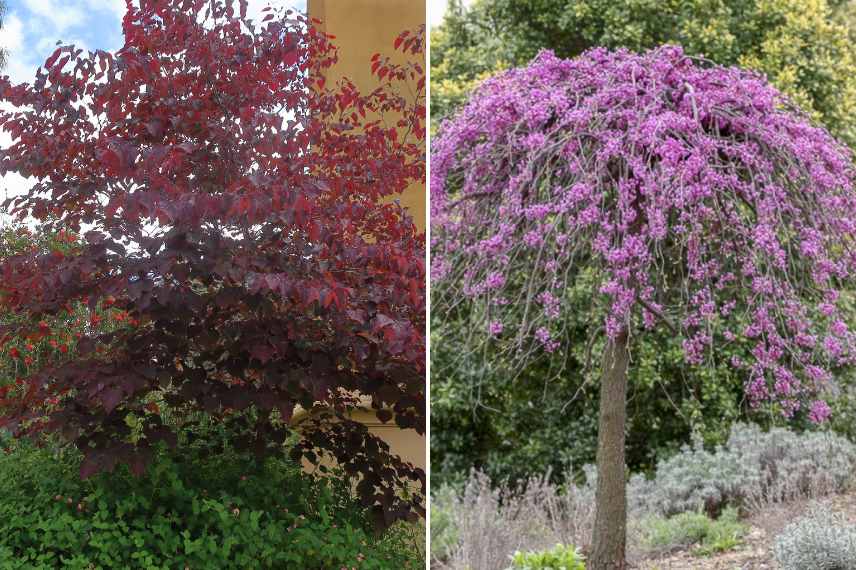
Cercis canadensis ‘Forest Pansy’ (© Cultivar 413) and Cercis canadensis ‘Cascading Heart’
Choosing the Judas Tree Based on Hardiness
Cercis exhibit remarkable hardiness, allowing them to brighten even the most inhospitable gardens. While Cercis siliquastrum may be somewhat tender when young, most Judas trees are hardy down to at least -20 °C. With few exceptions, they can withstand severe frosts down to -28 °C. However, always plant them in a sheltered area away from cold winds, as young shoots can suffer during severe frosts in early spring.
Choosing the Judas Tree Based on Soil and Exposure
In terms of soil nature, the preferences of Judas Trees differ from one species to another. While Cercis canadensis can adapt to various types of soils as long as they are deep, well-drained, and retain some moisture, even tolerating a bit of lime, and prefer sunny situations but cool or partially shaded areas, Cercis siliquastrum prefers dry, stony, or even arid soils and full sun.
- Subscribe!
- Contents
Comments