





























Cold, a natural ally in the garden
Discover how the winter cold purifies, strengthens and prepares your garden for the days ahead
Contents
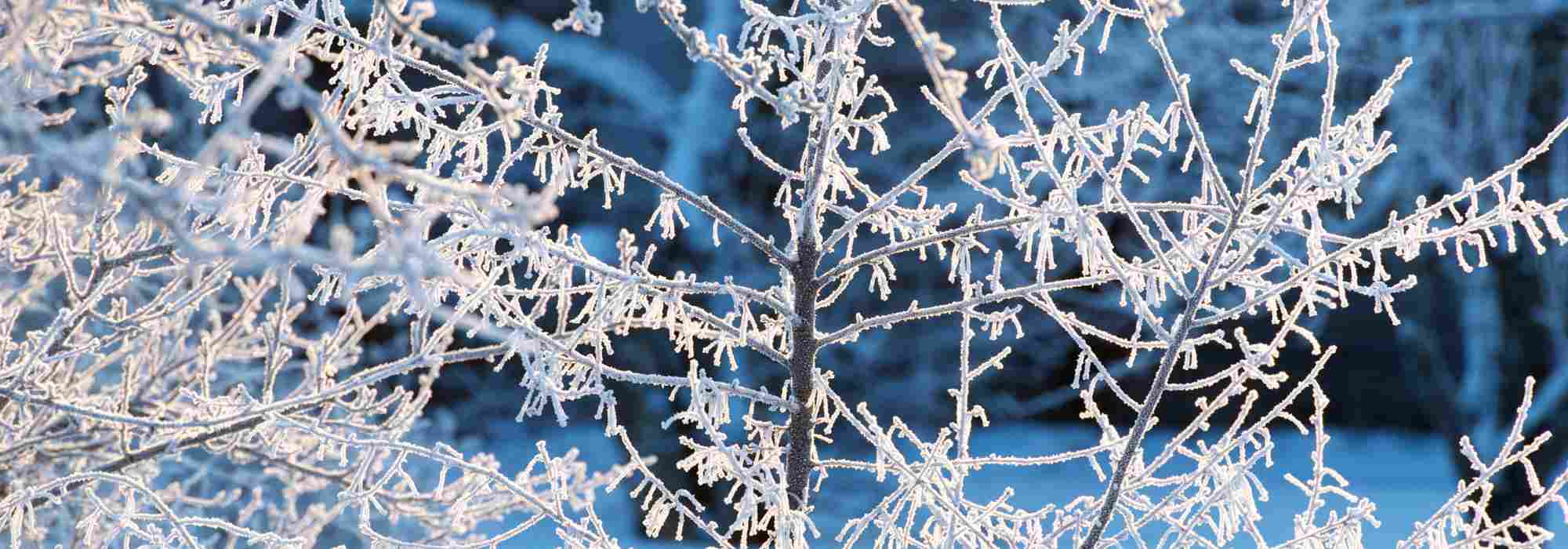
The sleeping garden under its white cloak, the branches of the trees fringed with frost… When winter settles in and the garden becomes coated in frost, many gardeners dread the effects of the cold. However, by adopting a new perspective, we realise that the cold can be a valuable natural ally for the garden.
In reality, winter plays a fundamental role in the balance of ecosystems and the overall health of the garden. From soil to plants, through biodiversity, every element of the garden benefits from the cold in one way or another. And if, instead of fearing winter, we learnt to appreciate it as a precious ally for our garden?

The benefits of cold weather for the garden
Natural purification and cleansing
Cold plays a key role in regulating pests and diseases. In winter, low temperatures contribute to a natural cleansing process that limits the proliferation of parasites, pests and fungal diseases. This is often called a “winter clean-up”.
How does it work?
- Death of larvae and eggs: many insects lay eggs or develop as larvae during winter. However, prolonged frosts can prevent their survival. For example, some caterpillars, aphids or fruit flies cannot withstand sub-zero temperatures for an extended period.
- Reduction of pathogenic fungi: diseases such as powdery mildew, rust or downy mildew are favoured by damp and mild conditions. Frost, by contrast, destroys these surface spores and slows their spread.
- Fewer pests in spring: by naturally reducing the population of parasites and pests, the cold lowers the pressure at the start of the new growing season.
Practical tip: don’t tidy your garden too much in autumn! Leave the dead stems and leaves in place, as they can harbour beneficial insects that will withstand the cold. Moreover, this organic litter layer will protect the roots of perennial plants from frost, while enriching the soil as it decomposes. Additionally, the seed heads can look very pretty under frost, as Pierre explains in his article.
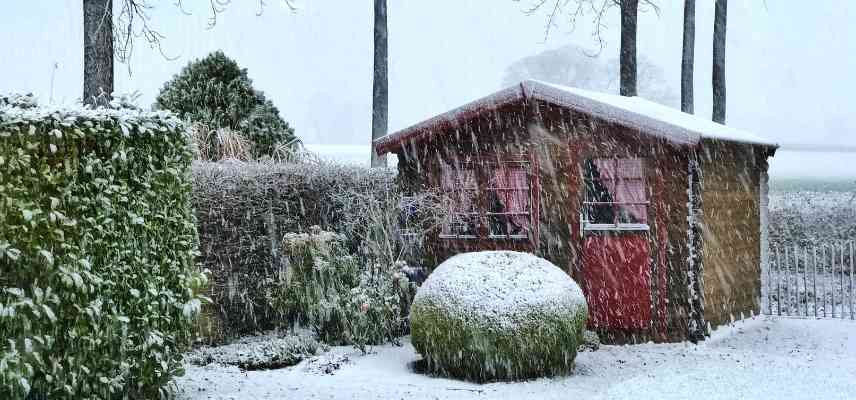
Improvement of soil structure (frost action)
Cold does not only have a surface effect. It also acts in depth, by altering the very structure of the soil through a phenomenon called frost action. This process is essential for clayey or compact soils, often difficult to work.
How does frost action work?
- When water contained in the soil freezes, it expands and creates tiny cracks in the soil.
- As it thaws, these cracks slowly close, naturally fragmenting the soil structure.
- This freeze–thaw cycle aerates the soil, facilitating the penetration of air, water and nutrients essential to the roots.
Why is it beneficial?
- Natural aeration: soils that are too compact become more permeable, facilitating the infiltration of rainwater and reducing runoff.
- Preparation for spring: the soil is looser, reducing the effort required for gardening tasks.
- Improved fertility: beneficial microorganisms proliferate in well-aerated soil, contributing to better breakdown of organic matter.
Tip: it is best not to turn the soil before winter. By letting nature take its course, frost action will aerate the soil gently and effectively. You can then complete this work in spring, refining the soil with a garden fork or cultivator.
Encouraging plant vernalisation
Some plants require cold to develop properly. This phenomenon, called vernalisation, is a biological process during which a plant must undergo a period of low temperatures to induce flowering.
Why is vernalisation necessary?
- Vernalisation prevents some plants from flowering too early (in autumn or winter). This biological mechanism ensures that flowering will occur only upon the return of mild temperatures.
- Without this cold period, some plants may either not flower at all, or produce flowers that are underdeveloped and less abundant.
Examples of plants requiring vernalisation:
- Flowering bulbs: tulips, daffodils, hyacinths.
- Fruit trees: apple trees, pear trees and cherry trees.
- Winter cereals: wheat, rye.
Practical tip: if you want abundant flowering, it is important to plant bulbs and seeds in autumn, so that they over-winter in the soil. The natural cold will stimulate their growth cycle.
Seed stratification stimulation
Stratification is a process similar to vernalisation, but it mainly concerns seeds. Some seeds require a period of cold to break their dormancy and begin germination.
It is a natural protective mechanism. By preventing germination before winter, the young shoot avoids being destroyed by frost. In spring, after having been exposed to cold, it is ready to germinate when conditions become more favourable.
Which seeds need stratification?
- Fruit trees: apple, pear, walnut.
- Wildflowers: lavender, poppies, campanulas.
Tip: some seeds can stratify naturally by sowing them directly outdoors in autumn. Nature will do the stratification work during winter.
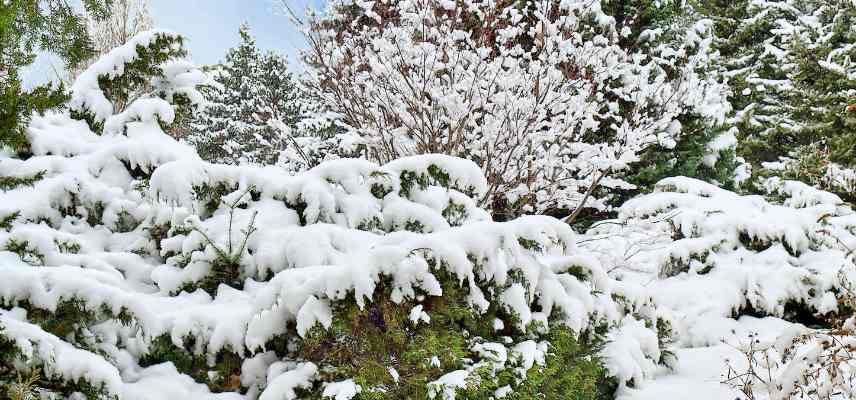
Snow, as well as frost and cold temperatures, is beneficial for a wide range of plants
Read also
10 very hardy, frost-resistant treesThe cold and biodiversity: a necessary rest for plants and animals
Winter dormancy in plants
For many plants, winter is a period of dormancy. This natural phenomenon is comparable to a plant hibernation, during which biological activity slows considerably.
Deciduous trees illustrate this cycle perfectly. In autumn, their leaves fall, reducing evaporation and thus protecting the tree from water loss. This shedding marks the onset of dormancy, a crucial process for their survival. During this period, the tree stops growing and concentrates its energy in its roots and trunk. It thus prepares to withstand the low temperatures without suffering water or thermal stress.
Why is this rest vital?
- Energy conservation: by limiting their activity, plants save their resources to restart in spring.
- Increased resilience: dormant plants are less sensitive to weather variations and to disease attacks.
- Preparation for flowering: some plants require cold to initiate their reproductive cycle, a process called vernalisation.
Even perennials that retain their foliage slow their metabolism. They slow their growth to focus on root development, thereby strengthening their resistance to frosts.
> Gardener’s tip: respect this vegetative rest. Avoid pruning or moving your plants during winter to avoid disturbing their dormancy cycle.
→ To understand what a plant’s hardiness is and to help you choose them better, read Elisabeth’s advice sheet on the subject: Hardy plants and hardiness: definition, tips and practical examples.
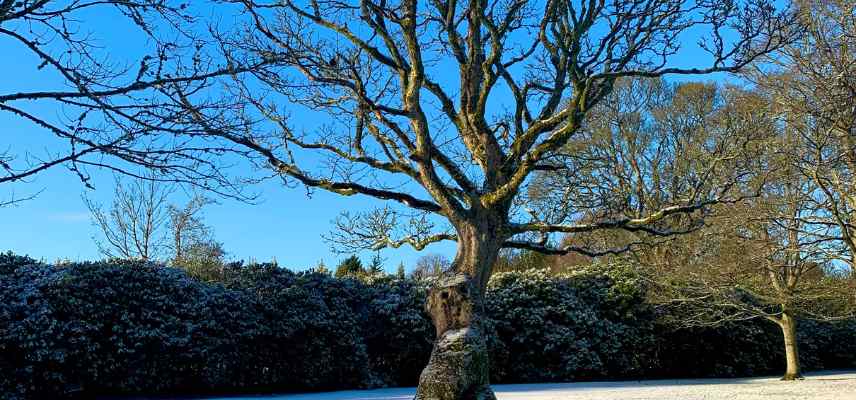
The deciduous habit allows plants to enter dormancy
Garden wildlife: essential hibernation
The garden fauna is not left out. Winter drives many animals to enter hibernation or adopt adaptive behaviours. Hedgehogs, for example, nest under piles of dead leaves or wood to find warmth and safety. Many beneficial insects, such as ladybirds and lacewings, spend winter sheltered under bark or in natural cavities.
These species, often called garden auxiliaries, play a fundamental role in pest regulation and in pollination. Their survival is therefore essential to maintain the ecological balance of the garden as the warmer days return.
Encouraging garden auxiliaries
To encourage the presence of these valuable allies, it is important to create favourable conditions for their hibernation. The key lies in not over-cleaning your garden before winter.
- Leave dead leaves in place: they provide shelter and a food source for many insects.
- Create piles of wood or stones: these structures provide ideal hiding places for hedgehogs, amphibians and reptiles.
- Insect hotels: install or build specific shelters for ladybirds, solitary bees and other insects.
- Keep dry stems: do not prune all your plants in autumn. Hollow stems provide a shelter for insects that lay their eggs there.
? Create a hedgehog refuge:
Arrange piles of leaves or branches in sheltered corners of the garden. These natural shelters will serve as wintering refuges for hedgehogs and small mammals.
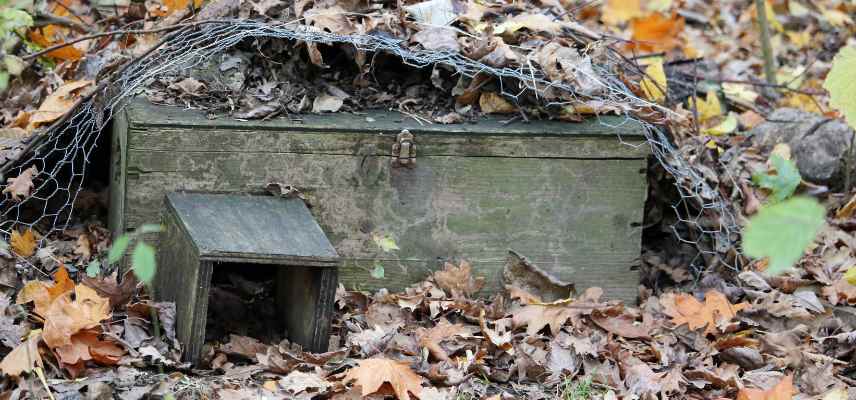
A hedgehog shelter, built to varying degrees, will help them get through the winter
Mistakes to avoid in cold weather
Overprotecting plants
When winter approaches, the gardener’s first instinct is often to protect their plants at all costs. We cover the beds with thick layers of mulch, wrap shrubs in several winter protection veils and install improvised greenhouses everywhere. Yet, excessive overprotection can have the opposite effect to the one intended.
Why is this a problem?
- Moisture buildup: too much mulch or an ill-suited veil traps moisture around the roots and the collar. This damp microclimate becomes a breeding ground for mould, rot and other fungi.
- Lack of ventilation: plants, even in winter, need to breathe. If they are completely covered, air circulation is poor, promoting cryptogamic diseases (fungal diseases).
- Weakening of plants: when a plant is overprotected, it struggles to adapt to the cold. It becomes less hardy and more fragile at the slightest temperature change. Result: when a more severe frost arrives, unhardened plants may suffer more than if they had been gradually exposed to the elements.
Which plants should be protected?
It is unnecessary (and counterproductive) to try to cover everything. Some plants are perfectly able to withstand the cold, while others require precautions.
→ Plants to protect absolutely: frost-sensitive plants (citrus trees, olive trees in pots, some exotic shrubs) and new growth and plantings.
Best practices
- Moderate mulching: apply a thin layer of mulch (5 to 10 cm maximum) around sensitive plants to insulate their roots without suffocating them.
- Light winter protection fleece: if you use veils, opt for a breathable material. Remove them as temperatures become milder to avoid the greenhouse effect.
- Protect only when needed: it’s preferable to not cover plants unless frost is forecast or conditions are particularly extreme.
Tip: for potted plants, group them near a wall or in a wind-sheltered spot and surround them with straw or fallen leaves to give them a little insulation from the cold.
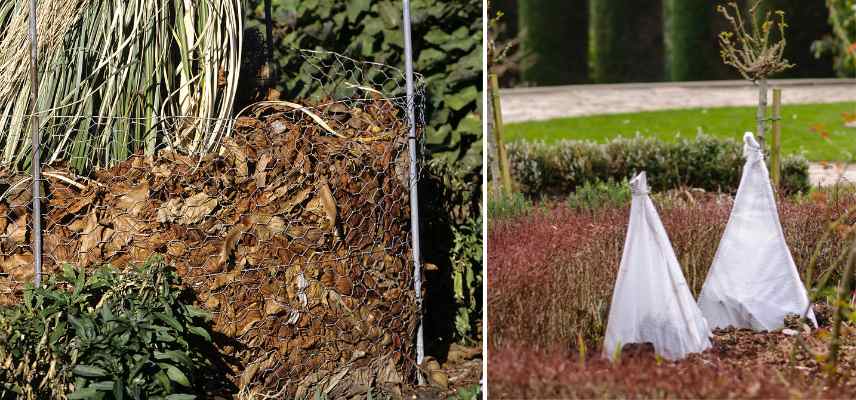
Protect only frost-sensitive or newly planted plants in case of severe frost
Pruning at the wrong time
Pruning is an essential step for the health and shape of shrubs and trees in the garden. However, poorly timed, it can weaken plants and spoil their future growth.
Why avoid pruning too early?
- Stimulation of new growth: pruning in autumn or early winter often encourages the plant to produce new shoots. These young, tender shoots are extremely vulnerable to frosts. As soon as a severe frost sets in, they freeze and die, leaving the plant weakened.
- Injuries poorly healed: in winter, plants slow their activity and heal much more slowly. A cut made in autumn leaves open wounds that are exposed to the cold and diseases. Fungi and bacteria can take hold there more easily.
- Energetic balance: plants enter dormancy as winter approaches, storing their energy in the roots and main branches. Pruning at the wrong time diverts this precious energy towards unnecessary growth which, in the end, will be wasted.
When should you prune, then?
End of winter or early spring: for most shrubs and trees, the best pruning period is at the end of winter, just before new growth begins. This allows plants to heal quickly and focus their energy on vigorous new growth.
The golden rule is to wait until the risk of late hard frosts has passed.
> Tip: if you’re not sure when to prune, observe your plants. Wait for the buds to swell slightly, a sign that the plant is preparing to come out of dormancy.
→ Also read our tips in What not to prune in winter? and What to prune in winter?
- Subscribe!
- Contents

Comments