





























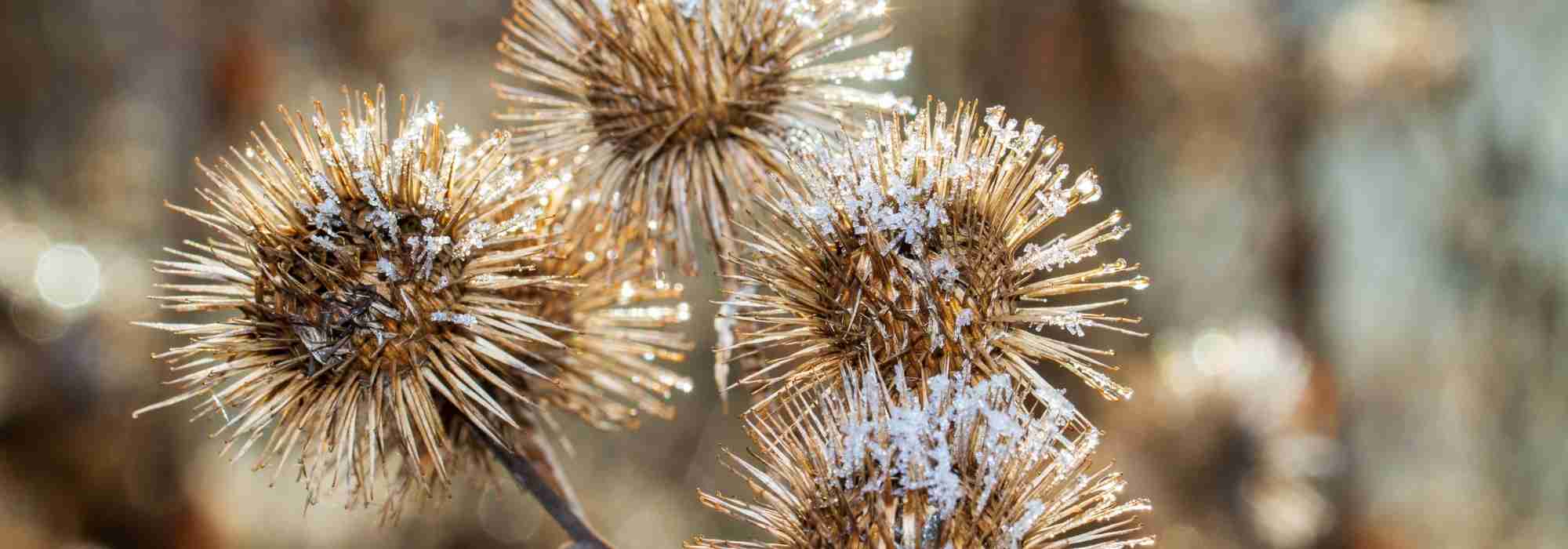
Decorative dried flowers in winter
The dry, graceful, and graphic flowerings of the coldest months
Contents
There are faded flowers that are best left uncut as autumn sets in… They bring an infinite grace to the garden with the first frosts and add further charm in autumn and winter, when the garden begins to freeze under the cold. These flowers are magical in the low light of these months with shorter days. They go through various stages, evolving in their colours, often parchment-like, until they turn brown or black for some. Flowering in spikes, cymes, corymbs, or umbels, and in spikelets for grasses, sometimes even transforming into fruits… they all bring delicacy and a beautiful presence to the garden from October to March. The cup-shaped or cavity-forming inflorescences also provide a soft nest for the small wildlife in the garden during winter.
There are robust flowers that remain beautiful from autumn through the long winter months in the garden, and those that are a bit more fragile, which are interesting to cut for creating wonderful dried bouquets for the home.
Let’s discover the most beautiful among them, graphic and so photogenic!
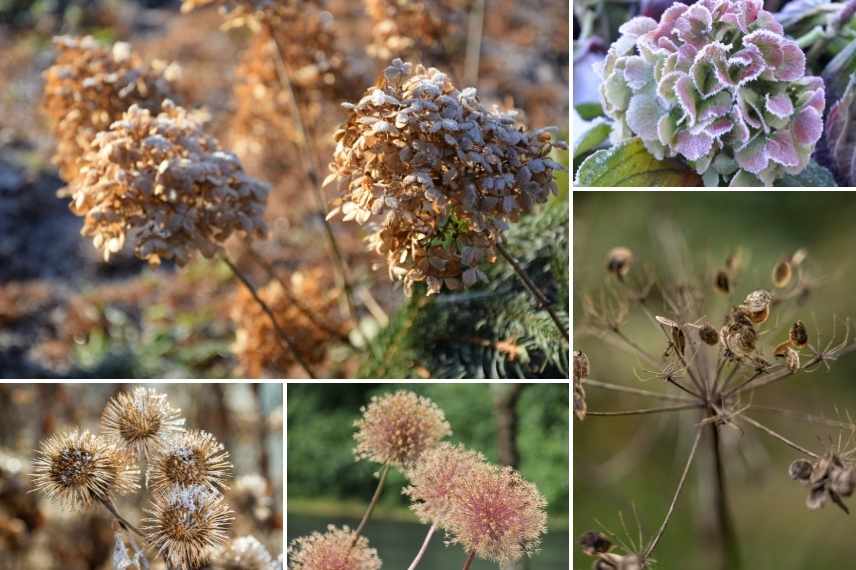
Hydrangeas, burdock, alliums, and wild fennel

Hydrangeas
How beautiful it is to give Hydrangeas a second life in the garden during winter! While some gardeners prefer to prune American Hydrangeas (Hydrangea paniculata and Hydrangea arborescens) back in autumn, it is preferable to leave the beautiful heads, which often turn beige or ochre, in place to enjoy them for many months. They fill spaces beautifully, especially when planted in large groups, and are enhanced by winter sun or frost.
As for the classic hydrangeas with large blooms, the Hydrangea macrophylla, they often take on lovely green to violet hues, which they will retain for a while in autumn. It would also be a shame to deprive the garden of them, even if care is taken to create the most beautiful dried bouquets, adding a charming touch to the home. Not cutting them also effectively protects the spring buds.
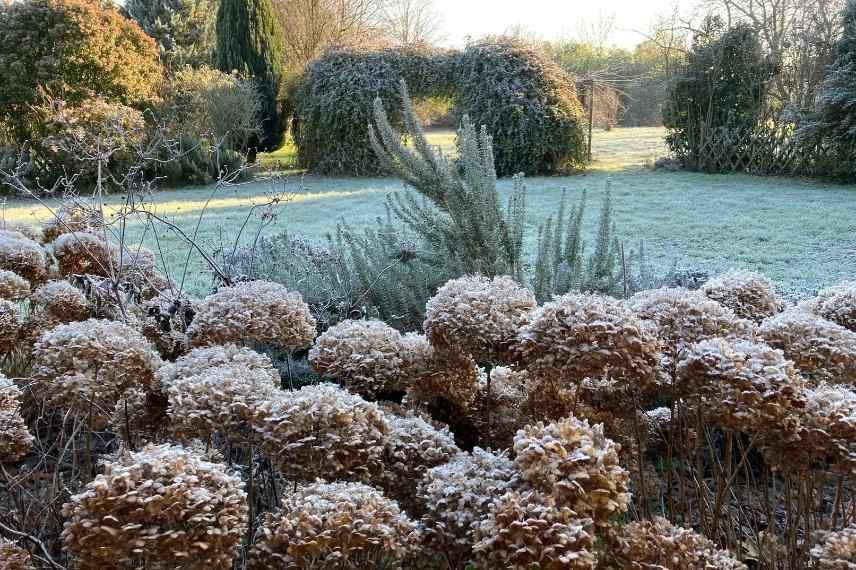
The Hydrangea paniculata ‘Annabelle’ contrasts beautifully against a rosemary (© Gwenaëlle David Authier)
Read also
The Winter gardenGrasses
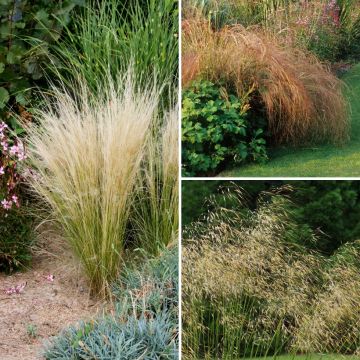
Grasses are one of the major assets of a garden in autumn, at the peak of their beauty, but also in winter! They bring infinite grace through their brilliance and softness, thanks to their diaphanous colours, white or ivory, and their texture, silky spikelets or airy plumes, dancing in the wind or forming decorative spikes. All catch the light like no other in winter and have remarkable longevity. They are the poetic complements of winter gardens or “winter garden”.
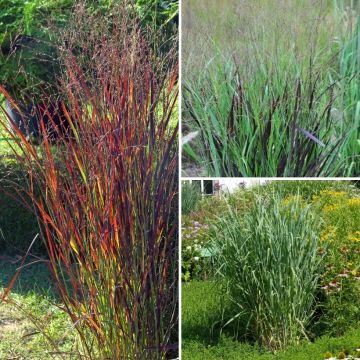
Essential grasses to remember include: Miscanthus sinensis and its numerous cultivars of varying heights, Calamagrostis with its wonderful diamond grass, Andropogon gerardii ‘Prairie Sommer’ with its coppery red…
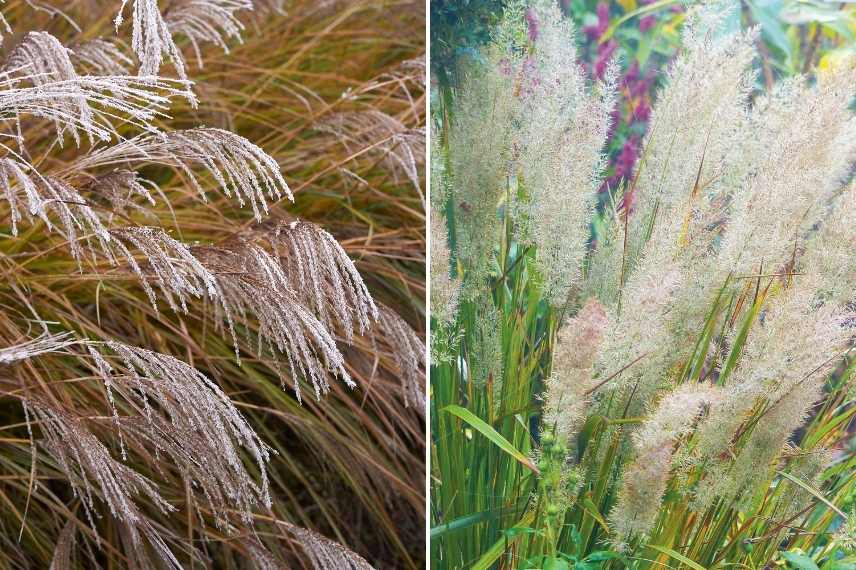
Miscanthus sinensis and Calamagrostis brachytricha
Discover other Late flowering perennials
View all →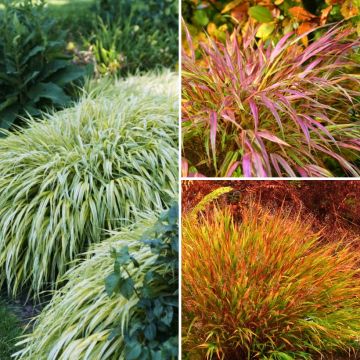
Available in 0 sizes
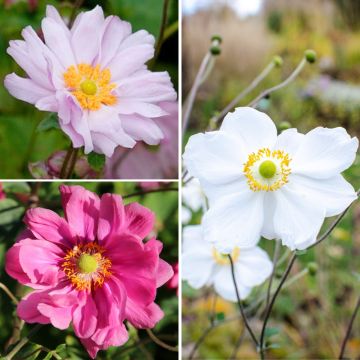
Available in 0 sizes
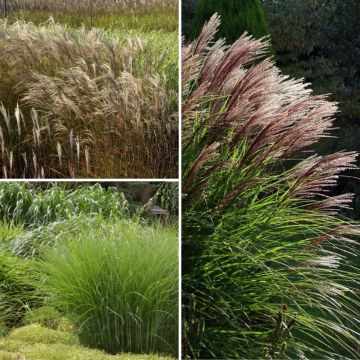
Available in 0 sizes
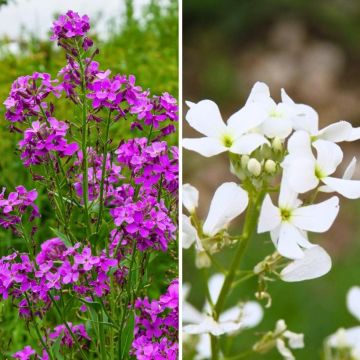
Available in 0 sizes
Available in 0 sizes
Available in 0 sizes
Available in 0 sizes
Available in 2 sizes
Available in 1 sizes
Available in 1 sizes
Sedums or stonecrops
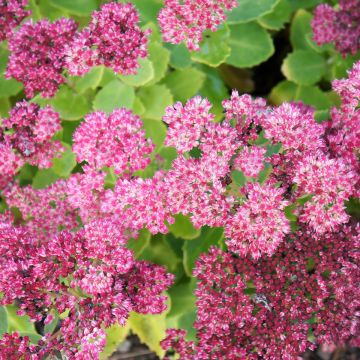
Among the latest late summer flowerings, Sedums or stonecrops are among the most remarkable, for the duration of their flowering, the shape of their corymbs made up of tiny flowers, their soft colours, light pink or darker, and their melliferous character.
Once the beautiful fleshy foliage has disappeared, usually in November or December, the flowers, if left in place, take on a brown, burnt bread hue with the rain and cold. This dark colour does not appeal to all gardeners, yet it provides, like Phlomis, a counterpoint of interest in a border where other perennials have gone into dormancy. The dark sedums are enhanced by a fine layer of frost or snow.
We are referring here to the large Sedums, such as Sedum spectabile like the popular Sedum ‘Matrona’ or ‘Autumn Joy’, all growing in very well-drained soil, in full sun or very light shade.
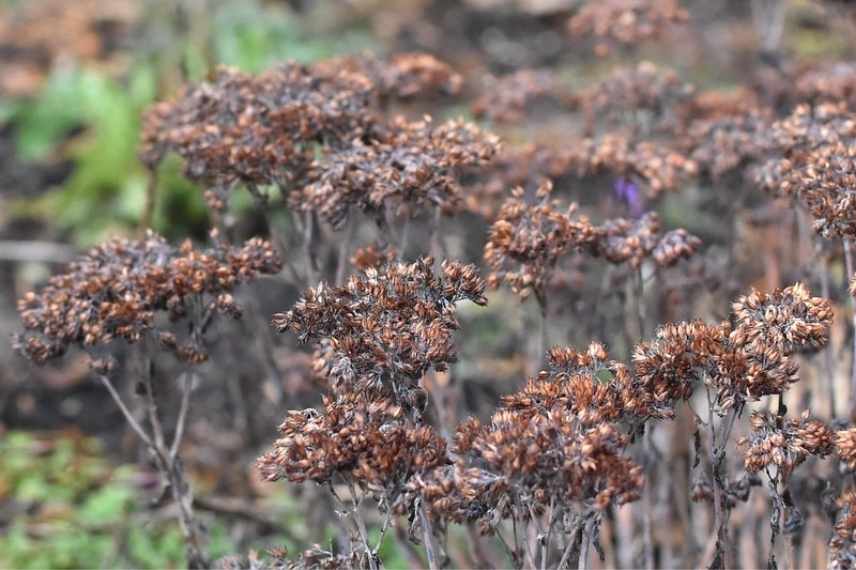
Sedum spectabile ‘Autumn Joy’ (© Rosewoman)
Read also
How to dry chrysanthemum flowers?Daucus carota and Ammi visnaga
Wildflowers from the umbellifer family are a delight in naturalistic gardens. Their flat or rounded umbel flowers, both frothy and airy, lend a very natural style to meadows or country gardens. They are often white or yellow, as seen with wild fennel, for example. Thriving in sunlight, they also adapt well to poor, dry, or even clayey soils.
In addition to their melliferous interest and rustic charm, they look stunning once they have faded, as the flowers then fold in on themselves like a small tapered bag, becoming lignified in the process, while taking on a slightly scorched caramel hue. Among the beautiful flowers to leave undisturbed for winter, the wild carrot or Daucus carota‘Dara’, particularly ornamental with its pink flowers in summer, and Ammi visnaga, tall and stately. These flowers are as beautiful in the garden as they are for adding lightness to fresh or dried country bouquets!
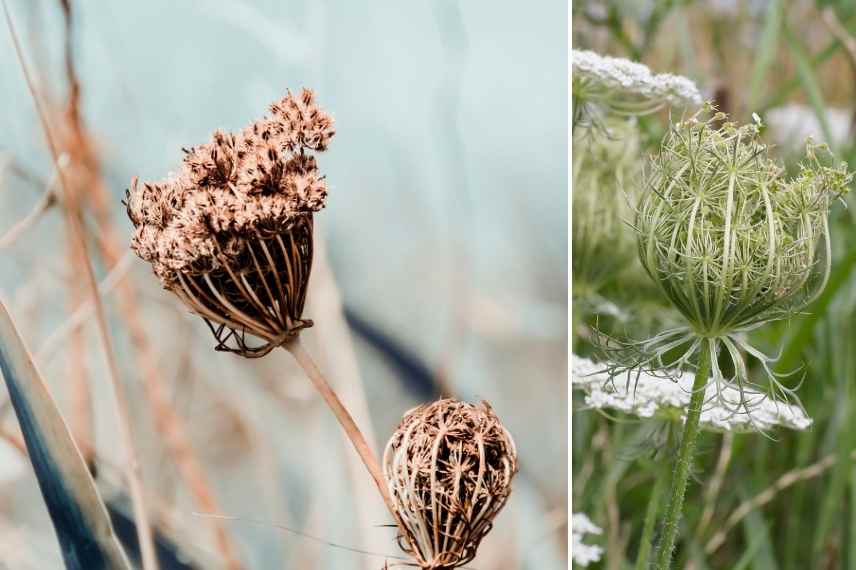
Wild carrot, in winter and to the right in spring, in bud and open, all white
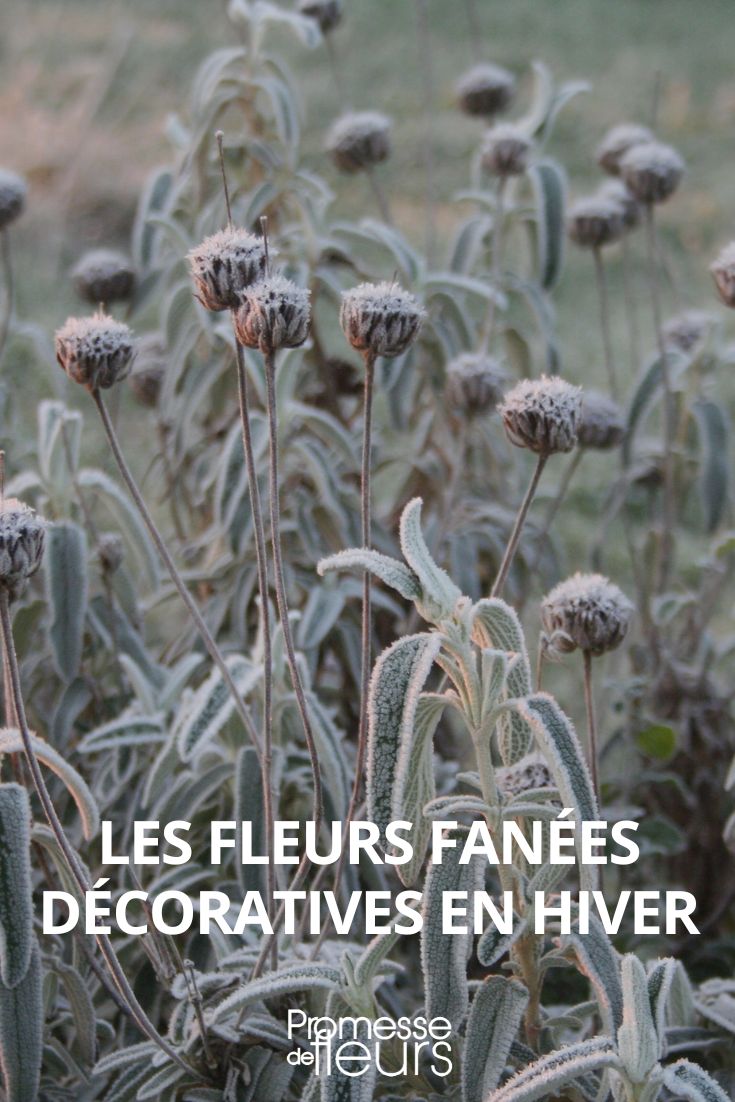
Phlomis
With their yellow pompom flowers arranged in whorls on tall, sturdy stems in late spring, Phlomis undeniably brings a sunny touch and soft green to grey foliage, depending on whether we are referring to Phlomis russeliana or Phlomis fruticosa.
Once autumn is well established, the plant loses its foliage and turns a dark brown colour, resembling small antennas. This is the silhouette of Phlomis and their fruiting (referred to as “seedheads” in English, a term easily understood in relation to Phlomis in particular) regularly spaced along the upright stems that adds to the charm of this perennial in the garden. This dark colour contrasts beautifully with light, airy grasses, as shown in the example below. It is therefore best to tidy up the Phlomis at the end of winter to enjoy its enigmatic beauty in the depths of winter, even more touching when dusted with a fine veil of snow!
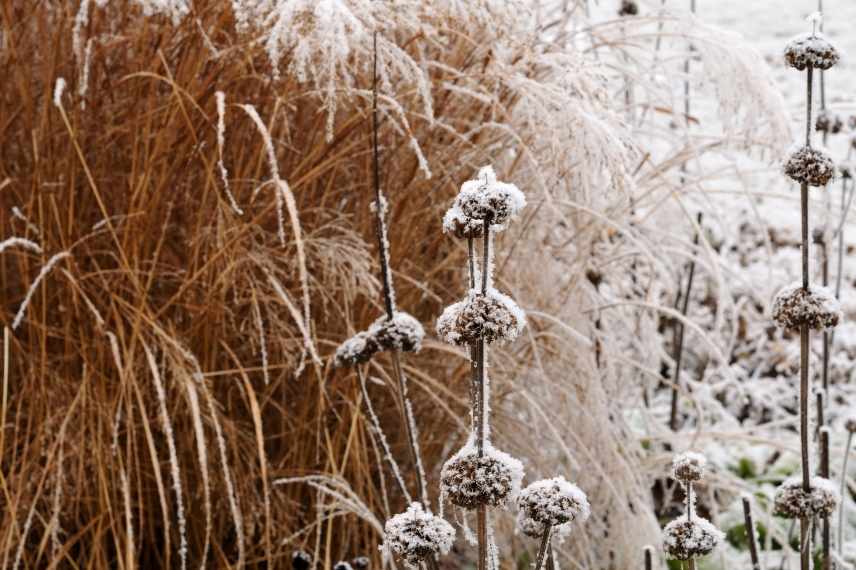
Jerusalem sage
Clematis
Clematis are perhaps the most surprising flowers in this selection: after their magnificent summer flowering, some undergo a final metamorphosis, and not a minor one. The flower transforms into a fluffy pom-pom, as white as snow, soft and silky, as seen in Clematis tangutica, Clematis vitalba, Clematis terniflora, or Clematis koreana.
This is the final stage of flowering, the transformation into fruit, of the achenes, which, once ripe, give way to these strange and very graphic little fluffy balls. Their feather-light texture is enhanced by the rays of light filtering through.
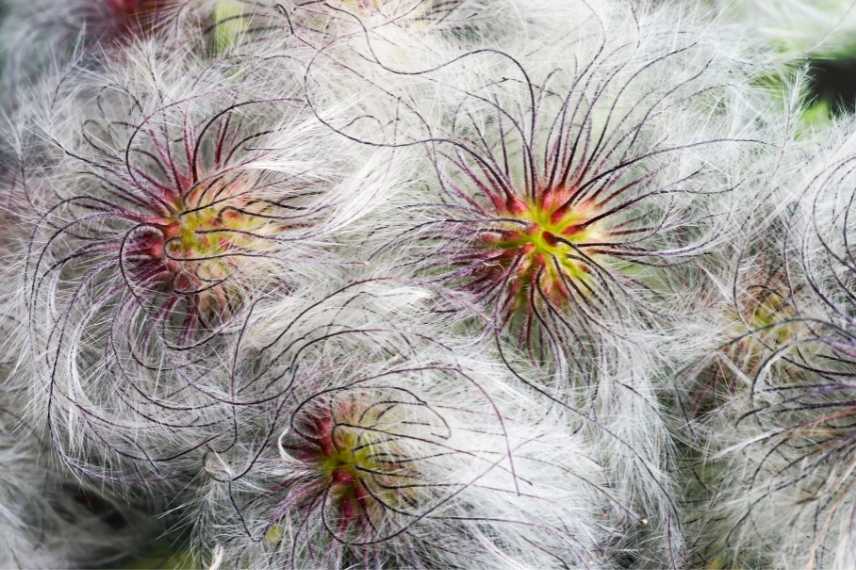 Clematis koreana
Echinaceas
Echinaceas, just like Rudbeckias, delight gardens until early autumn with their warm tones. Once faded, the fallen petals leave behind their head, the heart of the flower, often a large cone that turns completely black. When planted en masse, these flowers create a stunning visual in winter, as all these appendages form a myriad of black pom-poms. They are also enhanced by the winter light and snowy days, topping the cones with pure white balls!
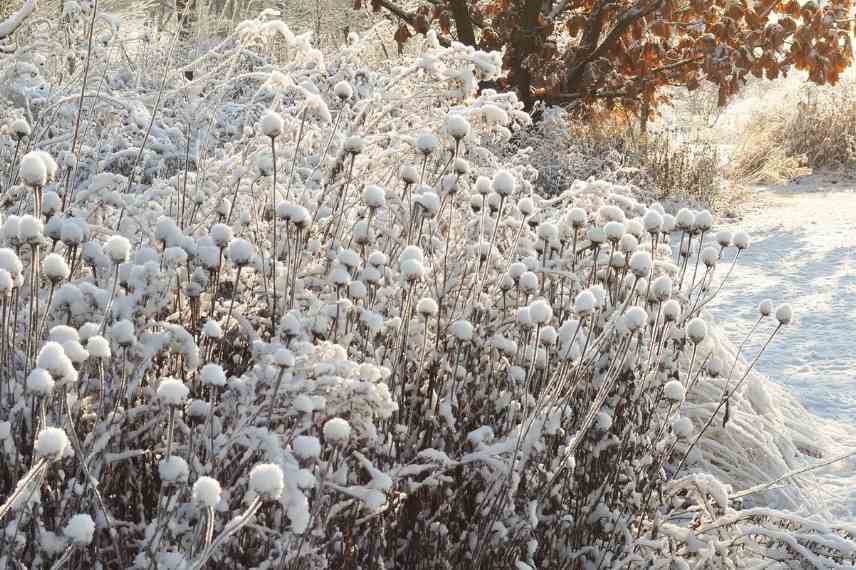 Winter magic on the black cones of Echinacea purpurea
The Physalis or cape gooseberry
Physalis peruviana has two revealing nicknames that highlight its unique beauty: cape gooseberry or Japanese lantern. These refer to the fruiting that begins in late summer from the rather common white flowers. It is therefore the fruits rather than the flowers that interest us here, but we mention it in this selection for its absolutely remarkable coloration, unique in the garden during autumn: this lantern-shaped capsule displays an ornamental reddish-orange hue. However, as the membrane is very thin, it can easily become damaged and wilt if autumn rains are abundant.
Physalis is thus interesting in the garden during autumn, and is best pruned and used in dried bouquets or as a Christmas decoration on the table alongside pine cones for a magical decor.
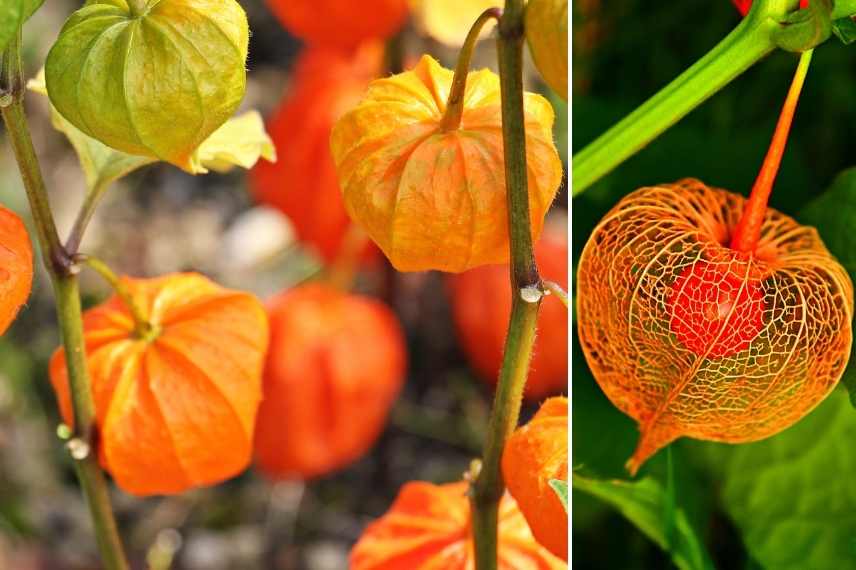
The small lanterns of the Physalis at the height of their beauty
The Honesty or Lunaria annua
Well-known in cottage gardens, the honesty is a biennial plant (Lunaria annua) or perennial (Lunaria rediviva) appreciated for its fruiting in the form of siliquae, unique flat and elongated discs, appearing from early summer, following the spring flowering in white or mauve. They resemble small coins, but are so delicate with their translucent ivory membrane, revealing the seeds inside.
They, too, are very fragile and have been present in the garden for several months. They will look beautiful kept outdoors until autumn in a sunny spot where the sun will play with their pearlescent reflections, well sheltered from winds and rain, or like Physalis, used in stunning dried bouquets for the home.
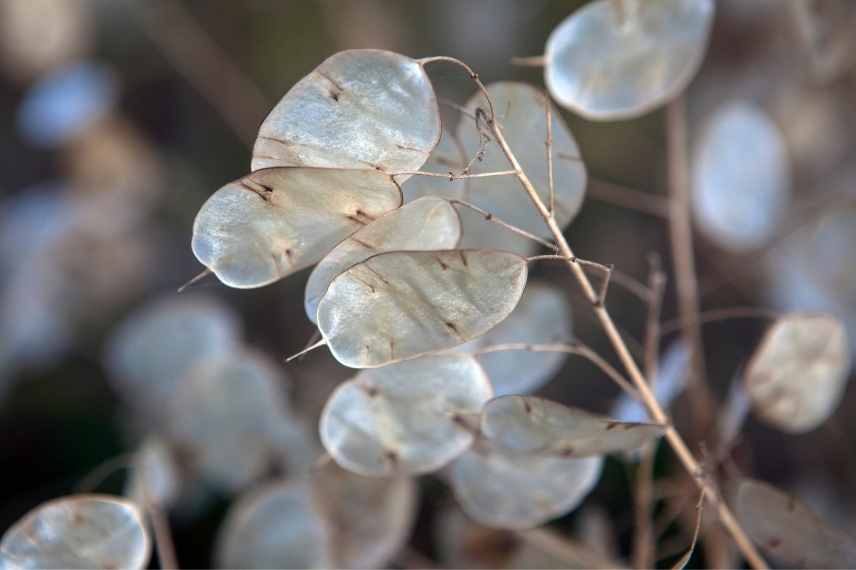
Honesty, beautifully transformed into fruit, but fragile
Poppies and Nigella
True little gems of nature, photogenic to the core… One cannot praise the capsules of the Oriental poppies and nigellas enough, two perennial plants that do not belong to the same botanical family, but which prove to be almost as attractive after their flowering (in July for the former, in September for the latter). Their flowers deserve to be preserved so they can transform into floral artworks on stems! The poppy flowers, stunning, all crumpled, and in pastel or vivid colours, see their capsule change from celadon green to mauve, then to greyish beige and brown. The nigella experiences a spectrum of colours: after the blue or white flowering, the dishevelled capsule turns green, striated with burgundy, until it reaches a café au lait colour once completely dry.
These two remain fragile, despite the sturdy stem of the poppies. Thus, they will stay in the garden until late autumn in less rainy regions, but do remember to use them to create sublime dried bouquets for the home!
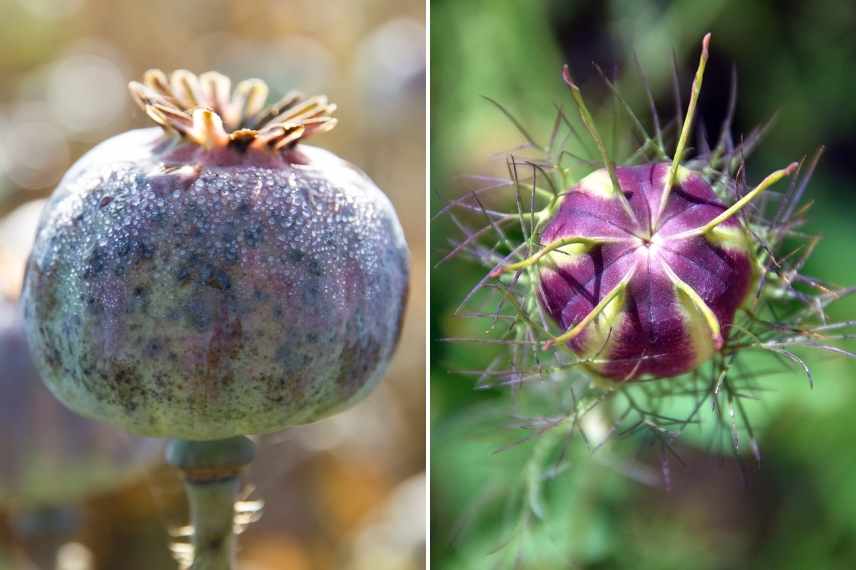
Poppy and nigella capsules
Burdock or Dipsacus and thistles
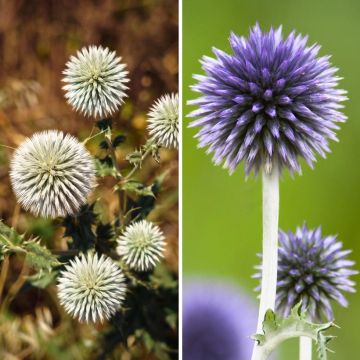
The wild teasel and thistles are already striking in summer with their thorny heads and mauve hues. They thrive in natural and slightly wild gardens. Evolving into a straw colour, the teasel, due to its stature (often reaching 1.5 m), becomes a favourite subject in winter as it stands out elegantly against the landscape. The thistles too – Eryngium and Echinops – are remarkable in the dormant season, especially the larger or more unusual varieties like Eryngium yuccifolium or Eryngium planum. However, be cautious with some Echinops, as their heads can disintegrate too quickly, failing to maintain the desired consistency for the winter garden.
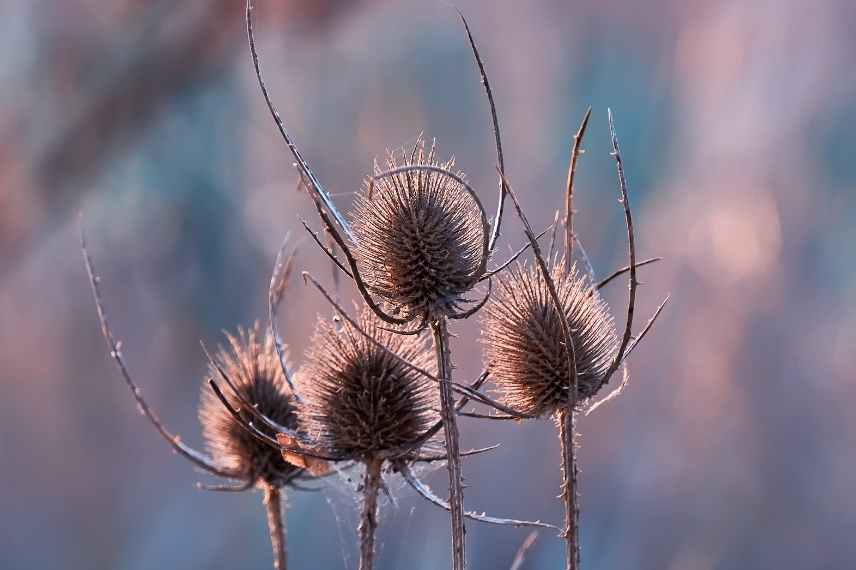
The teasel and its typical silhouette
Alliums, Angelonias, and Agapanthus
The spherical umbel flowerings typical of alliums, angelicas, and agapanthus also create beautiful silhouettes when, once faded, they shine in the sun with their perfect rays.
Agapanthus are more beautiful when they have dropped their seeds, revealing their very fine peduncles. The angelicas (Angelica archangelica) have a charming allure when their brown seeds are still attached, resisting the last frosts. As for the alliums, since many bloom in spring, their lovely heads have had time to endure quite a few mishaps… Opt for the hardiest ones with large flowers, such as Allium christophii or Allium ‘Ambassador’, for example. Also, keep some alliums for dried bouquets…
→ see also 10 plants with umbel flowers: the most beautiful varieties,
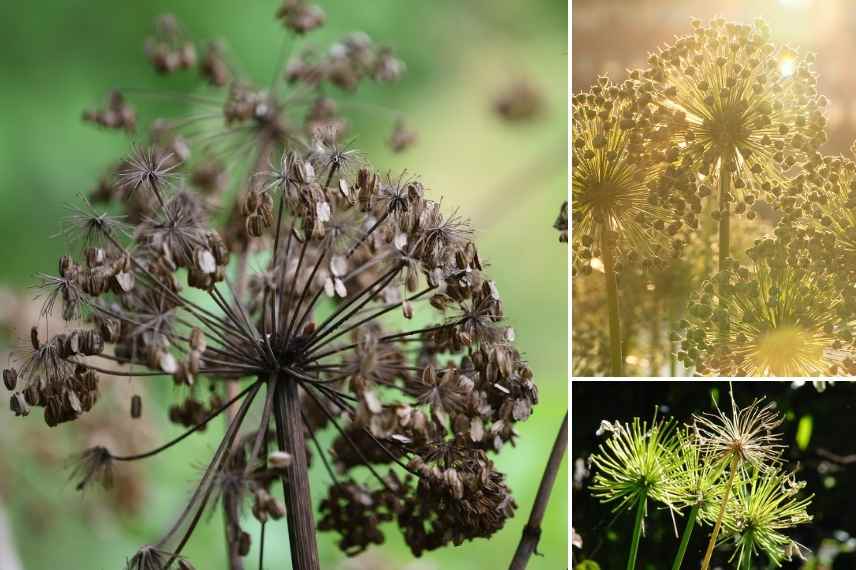
Angelica, Alliums, and faded Agapanthus
... and many more beauties!
On less often think about it, but many other inflorescences transform and provide beautiful visual effects in the garden, especially during frost or snow: Asclepias, Veronicastrum, Geranium, Solidago, Pulsatilles, Farfugium, burdock, statice, silver everlasting, achilleas…
Discover also Pierre’s winter garden, with its poetic seedheads!
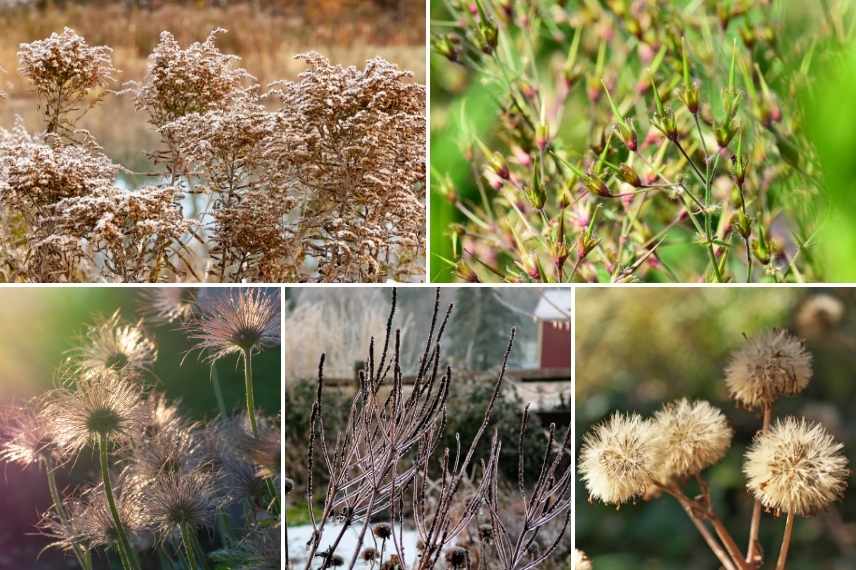
Solidago, Pelargonium, Pulsatille, Veronicastrum virginicum and Farfugium
- Subscribe!
- Contents
Comments