




























Get 10% off your first order with the code: FIRST-10
Desert Rose, Adenium: diseases and pests

Desert Rose, Adenium: diseases and pests

How to prevent them and treat them?

Contents

Modified the 18 February 2026  by Leïla 6 min.

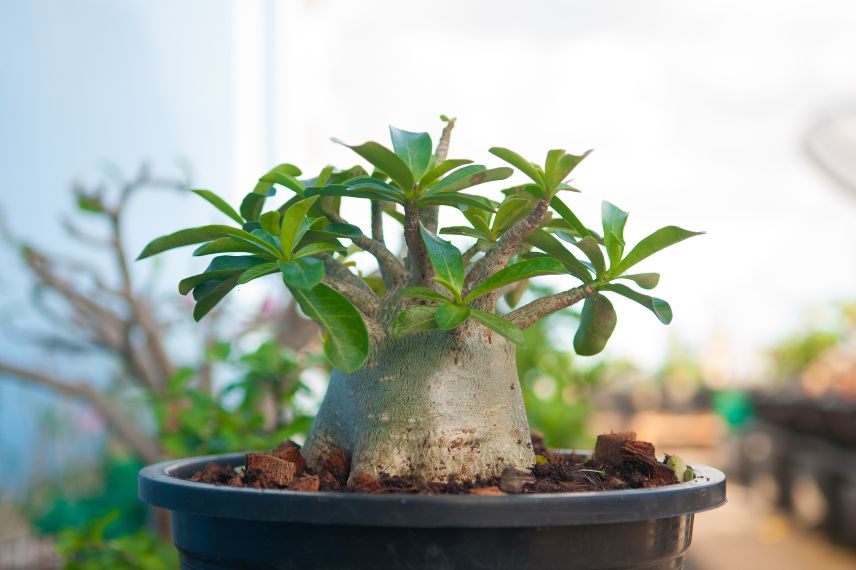
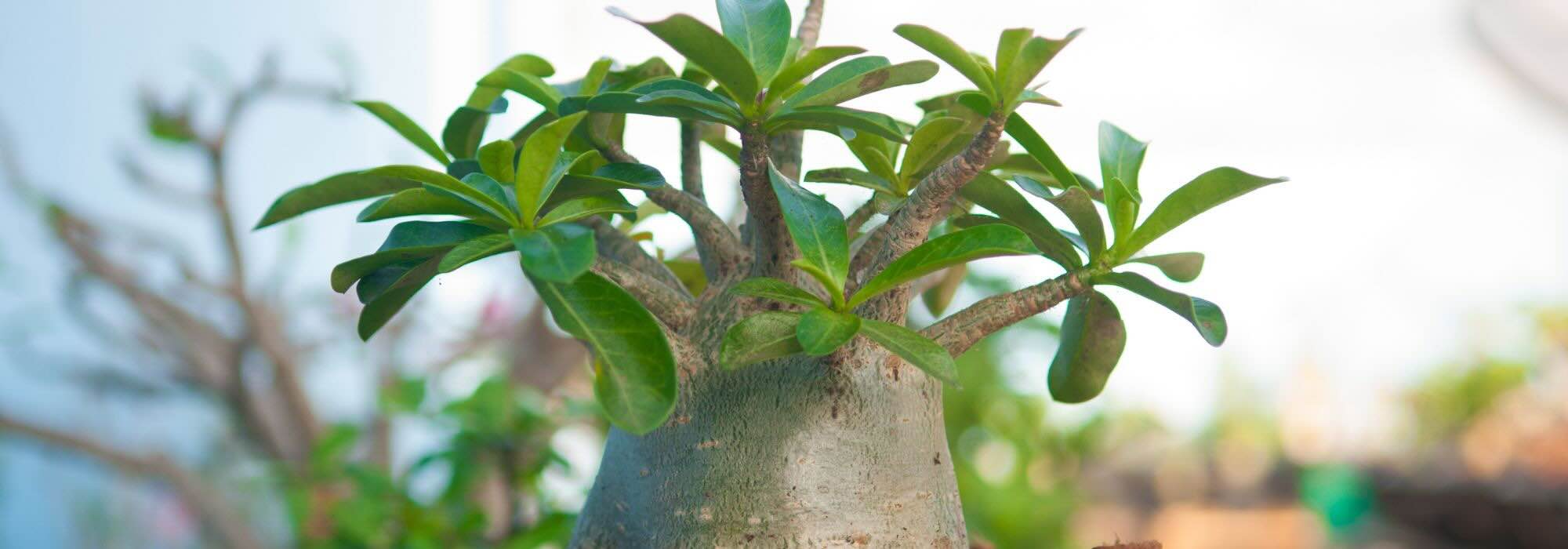
The Adenium is a succulent plant native to the arid regions of Africa and the Middle East. Its unique appearance, characterised by a swollen caudex (stump), allows it to store water and survive periods of extreme drought. Its thick, sculptural trunk gives the Adenium a natural bonsai look, which makes it a highly prized plant for its miniature-tree appearance, adorned in summer with trumpet-shaped flowers on its main species, Adenium obesum, also known as the Desert Rose.

Although hardy, the Adenium can be prone to certain diseases, notably in cases of excess moisture or lack of light when it is grown indoors, which is the case in our regions. It can also be attacked by various pests such as scale insects, aphids or red spider mites, in indoor cultivation. A good understanding of its needs and regular monitoring helps prevent these problems from escalating.

In this article, discover the best natural solutions for diseases or pests and our preventative advice to ensure the health and vitality of the Adenium.

Difficulty

Common diseases of Adenium

Adenium, also known as Desert Rose, is a hardy plant, but it can be affected by certain diseases if its environment is not optimal. Most problems stem from excessive moisture, poor drainage or unsuitable exposure. Early detection helps prevent irreversible damage, particularly to the caudex, the plant’s essential part.

Root and caudex rot

Symptoms:
The base of the Adenium becomes soft, darkens and may sag. The caudex, normally firm, becomes spongy to the touch. Roots blacken and may emit a mouldy odour. In advanced rot, the plant may break at the base.

Causes:
This problem is almost always linked to overwatering. A poorly drained substrate or too frequent watering prevents rapid evaporation of water, favouring the development of bacteria and fungi that attack the roots. Too low a temperature or water stagnation in the saucer can also slow the drying of the substrate and worsen the situation.

Solutions:

  • Immediately stop watering and place the plant in a dry, well-ventilated area.
  • Carefully remove the Adenium from the pot and inspect the roots and caudex.
  • Trim away all soft, black areas with a well-disinfected knife.
  • Dust the cut areas with charcoal powder to prevent infections.
  • Allow the plant to dry in the air for 24 to 48 hours before repotting into a completely dry and well-draining substrate (cactus mix) enriched with perlite.
  • Resume watering gradually after 7 to 10 days, ensuring not to water too frequently.
adenium obesum

The Adenium caudex can be prone to rot as it is sensitive to excess moisture

Yellowing of the leaves

Symptoms:
Adenium leaves begin to yellow, losing their natural sheen. Yellowing may be uniform or appear as scattered patches on the foliage.

Causes:
Overwatering is the main cause of leaf yellowing. When the substrate remains damp for too long, roots can no longer absorb nutrients properly, leading to weakened foliage. A lack of light can also be a factor, if the plant is placed in too shaded a location.

Solutions:

  • Reduce watering frequency and ensure the substrate dries completely between waterings.
  • Move the Adenium to a brighter spot, ideally behind a well-exposed window. The Adenium requires 6 hours of direct sunlight per day.
  • Check the root condition if rot is suspected and adjust watering to the plant’s real needs.

Leaf drop

Symptoms:
Leaves fall suddenly or gradually. In some cases they yellow before dropping, but sometimes leaf loss is abrupt, with no warning signs.

Causes:
Temperature fluctuations are one of the main causes of leaf drop. Regular drafts can cause stress that triggers this response. In winter, Adenium naturally goes into dormancy and loses part of its foliage, which is perfectly normal.

Solutions:

  • Keep the plant in a stable environment, with temperatures ideally between 20 and 30°C.
  • Avoid cold drafts, especially near open windows or air conditioners.
  • In winter, reduce watering and don’t worry if the plant loses a few leaves, as long as the caudex remains firm.

Sunburn and heat stress

Symptoms:
Reddened or brown spots appear on the leaves or the caudex, sometimes accompanied by dry and cracked areas.

Causes:
Sudden exposure of the Adenium to intense sun, particularly around midday, can cause burns.

Solutions:

  • Gradually acclimatise the Adenium to the sun to allow it to adapt to direct rays.
  • Water lightly after intense exposure to help the plant recover without saturating the substrate with moisture.

Fungal infections

Symptoms:
A white powdery deposit appears on the leaves, giving the foliage a powdery appearance. Some leaves may deform or drop prematurely.

Causes:
Powdery mildew is the most common fungal infection in Adenium. It usually appears when ambient humidity is high and ventilation is insufficient. Excess water and poor air circulation around the plant create ideal conditions for the fungus to develop.

Solutions:

  • Improve air circulation around the plant by spacing pots and avoiding a confined environment.
  • Avoid wetting the leaves during watering, as stagnant humidity promotes the spread of the fungus.
  • Move the plant to a drier environment, ideally with ambient humidity of 40–60% maximum.
  • Apply a natural sulfur-based fungicide to treat powdery mildew.

Parasitic pests of Adenium

Like all indoor and outdoor plants, Adenium can be attacked by various pests. These pests often thrive in an imbalanced environment that is too dry or too humid and confined, encouraging proliferation. Regular monitoring allows quick intervention and helps prevent the infestation from worsening.

Mealybugs

Symptoms:
Small white cottony masses appear on the leaves, stems and sometimes even the caudex. The plant’s growth slows and the leaves may yellow or become deformed.

Causes :
Mealybugs thrive primarily in warm, humid conditions and poor ventilation. They suck the sap from the plant, gradually weakening it.

Solutions :

  • Manually remove the mealybugs using a cotton bud moistened with 70% alcohol.
  • Spray a solution of soapy water with black soap, vegetable oil and alcohol to suffocate the parasites.
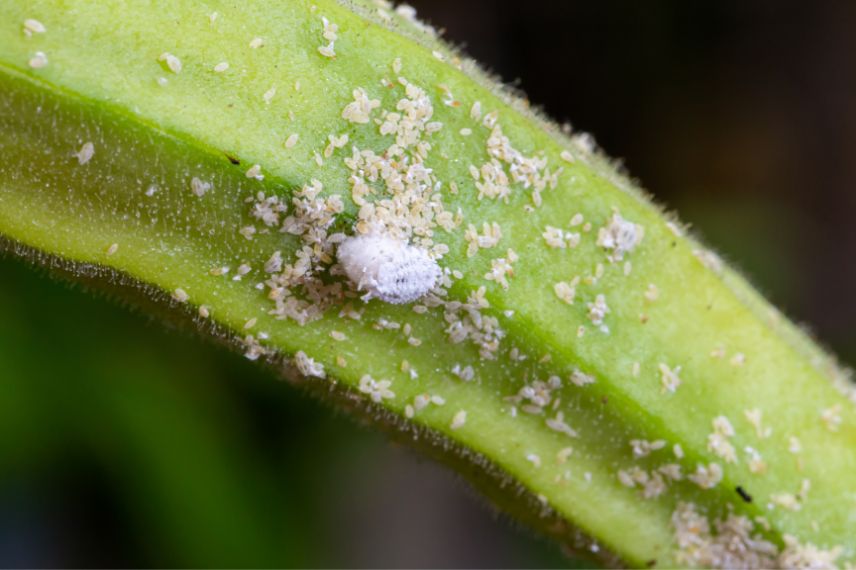
mealybug on stem

Mealybugs form cottony masses

Shield scale insects

Symptoms :
Small hard bumps, brown or black, stuck to stems and leaves, often difficult to remove. Adenium may show slowed growth and leaves that yellow.

Causes :
These pests cling to the plant and suck its sap, causing progressive weakening.

Solutions :

  • Gently brush off the shield scale insects with a damp cloth or a soft brush.
  • Apply an insecticidal soap.
  • Regularly inspect new shoots and the caudex to detect any possible reinfestation.

→ Also read our article: Mealybug: identification and treatment
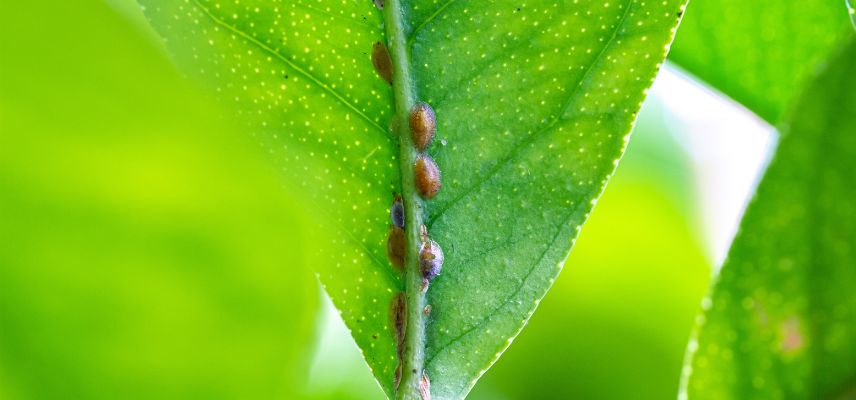
Shield scale insects

Shield scale insects

Aphids

Symptoms :
Small colonies of green, yellow or black insects gather on new shoots and stems. Leaves may be sticky and curl.

Causes :
Aphids typically appear in spring and summer, drawn to the sap of new shoots. They are often introduced by other infested plants or attracted by excess nitrogen in the substrate.

Solutions :

  • Rinse the plant with a gentle spray of water to dislodge the aphids.
  • Spray a mixture of water and black soap to remove them naturally.

→ Also read our article: Aphid: identification and treatment
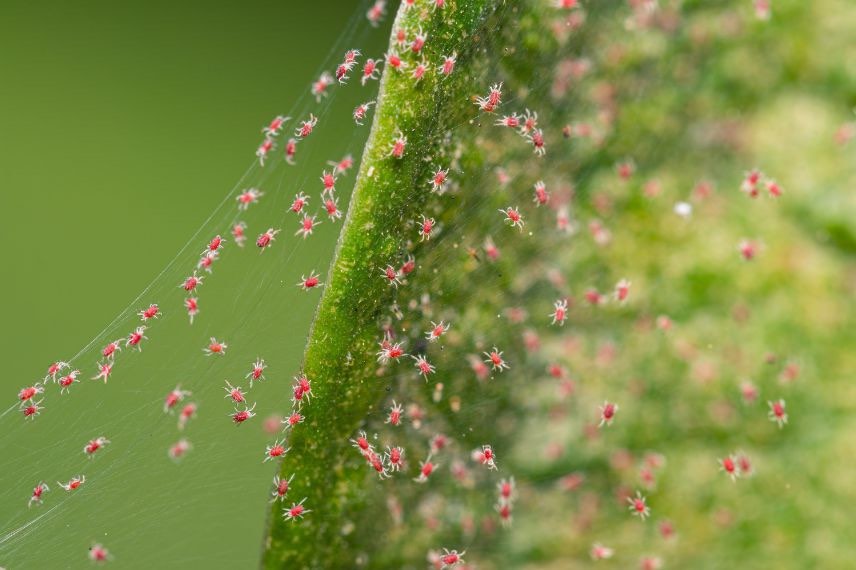
red spider mites

Red spider mites, barely visible to the naked eye, but their webs are visible

Red spider mites

Symptoms :
Leaves yellow and show small pale spots. In advanced infestations, fine webs may be visible under the leaves and along the stems.

Causes :
Red spider mites thrive when the air is very dry and warm. Low ambient humidity combined with a lack of ventilation promotes their rapid proliferation.

Solutions :

  • Spray the foliage with water, as red spider mites dislike humidity.
  • Apply a natural treatment based on black soap and vegetable oil to eliminate them.

→ Read our article on treatments for red spider mites

red spider mites

Red spider mites, barely visible to the naked eye, but their webs are visible

Comments

L'Adenium, également connu sous le nom de "rose du désert", est une plante succulente originaire d'Afrique et d'Arabie. Pour bien prendre soin de votre Adenium, voici quelques conseils :

1. **Lumière** : Placez votre Adenium dans un endroit lumineux, de préférence en plein soleil. Elle a besoin de beaucoup de lumière pour bien se développer.

2. **Arrosage** : Arrosez modérément votre Adenium, en laissant sécher le substrat entre deux arrosages. Évitez l'excès d'eau qui peut entraîner la pourriture des racines.

3. **Substrat** : Utilisez un substrat bien drainant, comme un mélange de terreau spécial cactées et de sable. Cela permettra d'éviter l'accumulation d'eau au niveau des racines.

4. **Température** : L'Adenium apprécie les températures chaudes, entre 20 et 30°C. Évitez les températures inférieures à 10°C.

5. **Taille** : Vous pouvez tailler votre Adenium pour favoriser une croissance compacte et ramifiée. Taillez les branches mortes ou malades pour favoriser la santé de la plante.

6. **Fertilisation** : Fertilisez votre Adenium avec un engrais spécial plantes succulentes, une fois par mois pendant la période de croissance (printemps-été).

En suivant ces conseils, vous pourrez profiter d'un Adenium en pleine santé et profiter de ses magnifiques fleurs tout au long de l'année.