




























FLASH SALES: discover new special offers every week!
Discover 7 unusual little fruits with flavours you've never tasted before

Discover 7 unusual little fruits with flavours you've never tasted before

Our selection of berries with unusual flavours

Contents

Modified the 26 January 2026  by Leïla 6 min.

Small fruits are exciting for their range of flavours and colours, which delight both the eye and the palate. In this article, we invite you to discover seven varieties of small fruits that are sure to pique your curiosity and entice your taste buds. Beyond their aesthetic appeal, they are distinguished by intense flavours and distinctive aromas. Orange-fruited raspberry plant, Kiwaï, green-berried blackcurrant, each variety brings its own surprises and originality. These small fruits with unique characteristics will beautify your garden while offering a range of flavour experiences.

Difficulty

The Cassissima® 'Green Life'® blackcurrant bush.

The Cassissima® ‘Green Life’ blackcurrant bush® is a recent variety of blackcurrant with green fruits, free of anthocyanins, but rich in chlorophyll. Despite their unusual colour, these fruits surprise with their characteristic blackcurrant flavour, sweet, slightly sugary, tangy. Parfaits à consommer frais, ils sont également idéaux pour la préparation de gelées, confitures, pâtisseries ou pour accompagner des plats salés. Riches en vitamine C, antioxydants, minéraux et oligo-éléments, les baies de cassis sont bénéfiques pour la santé.
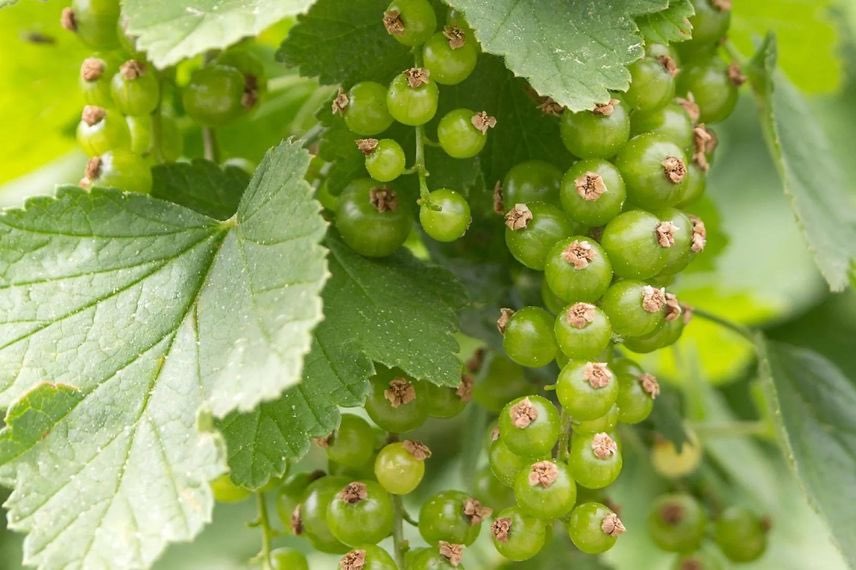
The Green Life® currant bush forms a bushy, non-spiny shrub, reaching 1.50 m in height with a 1.20 m spread. Its deciduous, palmately lobed foliage is aromatic. The flowering in April yields greenish-brown flowers, attracting bees. Fruiting develops mainly on 2- and 3-year-old shoots, producing clusters of 3 to 5 green berries, of medium size.

Self-fertile, the ‘Green Life’ currant bush does not require another plant to bear fruit, but the presence of another variety nearby can increase yield. A currant bush yields roughly 3 to 5 kg of fruit per plant, depending on age and growing conditions.

Hardy, tolerating temperatures down to -25°C, this currant bush prefers a sunny or partial-shade site. It is easy to grow in well-drained, cool soil.

blackcurrant bush

Kiwi 'Pink Jumbo'

The Kiwi ‘Pink Jumbo’, a female variety of Actinidia arguta or kiwifruit, stands out for its beautiful fruit with red skin on the outside and green flesh inside. These fruits, with smooth and thin skin, contain a juicy, sweet and fruity flesh, with an exotic flavour, about the size of a large grape and elongated. With a slight acidity, they can be enjoyed raw, with the skin, like a grape. They measure 2.5 to 4 cm in diameter and 5 to 6 cm long. The flesh is rich in calcium and vitamin C. They keep for one to two weeks after harvest.
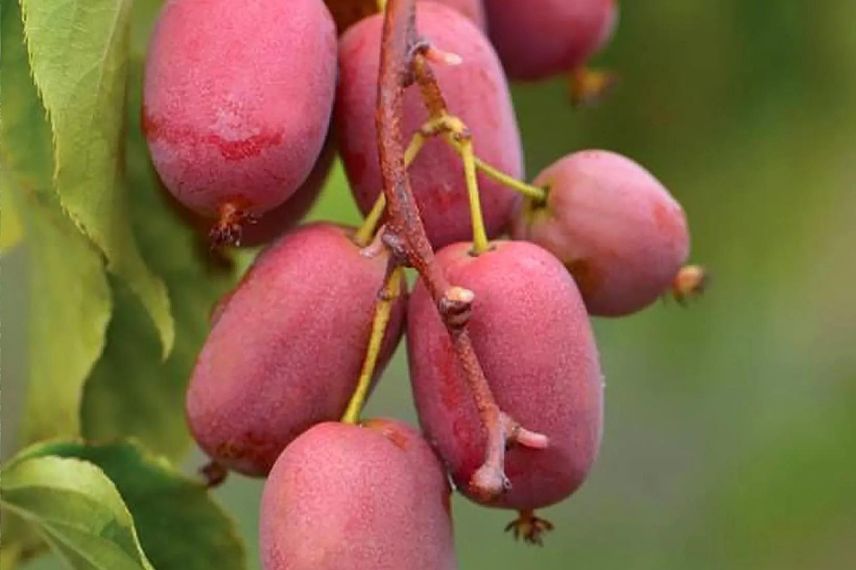
‘Pink Jumbo’ is very productive, ripening from mid-September with harvests through mid-October. A nearby male plant, such as ‘Prince Jumbo’ or the kiwifruit Nostino, is required for pollination. It is hardy down to -20°C and produces long, voluble shoots. Its heart-shaped green leaves bear fragrant and melliferous flowers in June–July. Fruiting begins 2 to 3 years after planting, with a male plant able to fertilise 4 to 5 female plants.

In addition to its fruiting qualities, kiwifruit offers ornamental interest thanks to its lush foliage and fragrant flowering. It requires a sturdy support to be trained, such as taut wires, a trellis, a pergola, an arbour or a fence. Preferring light, cool, non-calcareous soil and a sunny position, it yields up to 40–50 kg of fruit per plant.

kiwifruit

Aronia Lowberry 'Little Helpers'

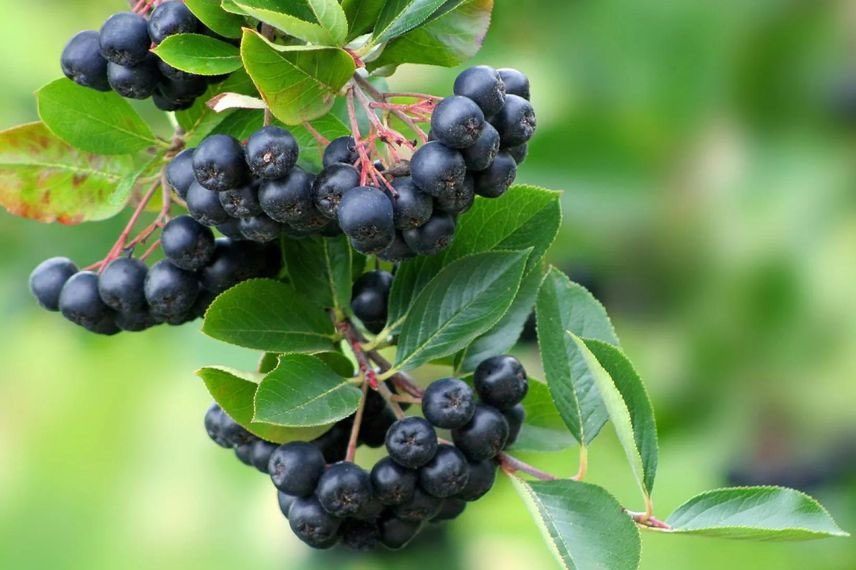
Aronia Lowberry® ‘Little Helpers®’ is a compact-growing chokeberry variety, ideal for small spaces and pot cultivation. It reaches 80 cm in height at maturity and produces deep purplish-black berries, less tart and astringent than other varieties.
‘Little Helpers’ is an upright, sparsely branched shrub, with reddish-brown bark and oval, finely dentate leaves that turn red-orange in autumn. In April–May, it bears white flowers speckled with pale pink, arranged in fragrant and melliferous cymes. The round fruits, greenish-purple at first, turning to deep black-purple at maturity, have a slightly tart and bitter flavour, with enough sugar to balance the bitterness.

This variety is intensively cultivated in Eastern Europe for the Asian market. Aronia berries are eaten fresh, made into jam or juice, often blended with other juices such as cranberry or apple. Renowned for their medicinal properties in Chinese pharmacopoeia, they are rich in polyphenols, notably anthocyanins, vitamins B and C, minerals and fibre. Birds are attracted to these fruits, so it is advisable to protect the bush with a net. Aronia prefers moist, slightly acidic soil and is frost-hardy.
Aronia

Dwarf raspberry Lowberry 'Little Orangelina'

The Dwarf Raspberry Lowberry® Little Orangelina® is an ideal variety for small spaces, producing raspberries in an unusual colour, in orange and apricot hues, from July to the end of September. These fruits, medium to large in size, offer a sweet, yet aromatic flavour, sugary and subtly tart. Its thornless shoots make picking easy and its small size allows pot cultivation on terraces or balconies.
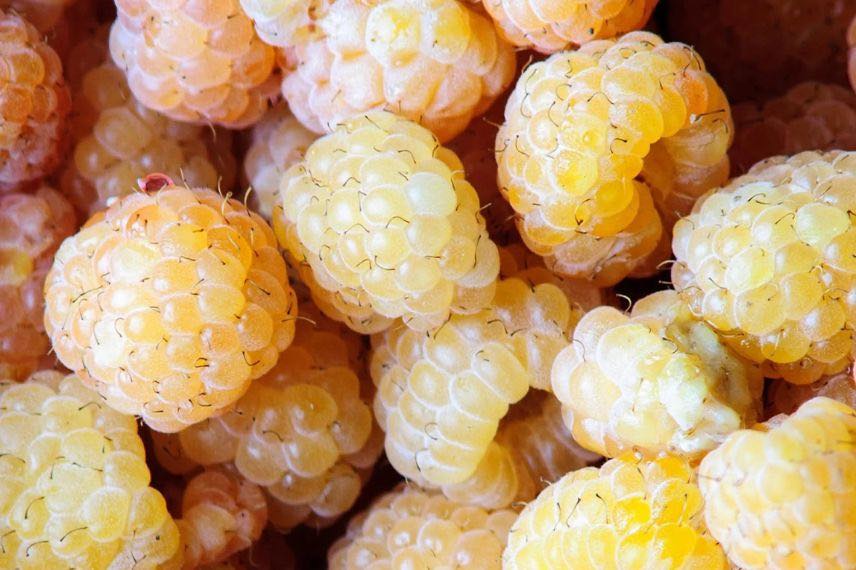
Hardy down to -20°C and disease-resistant, this raspberry plant is easy to grow and requires little maintenance. Self-fertile, it can be grown with other varieties to boost production. It is a recent Swiss selection from the Lowberry® range, chosen for its high yields, its dwarf and compact habit, and its good suitability for pot cultivation. It reaches 1 m in height with a spread of 80 cm.

The Raspberry ‘Little Orangelina’ is suitable for pot culture or in-ground cultivation, in a kitchen garden, an orchard or an ornamental garden. It prefers humus-bearing, rich soil that stays cool, even in summer, not too calcareous. It appreciates partial shade, but bright light. North of the Loire, it handles sun well, whereas in the south it prefers partial shade.

raspberry plant

Gooseberry Crispa 'Solemio'

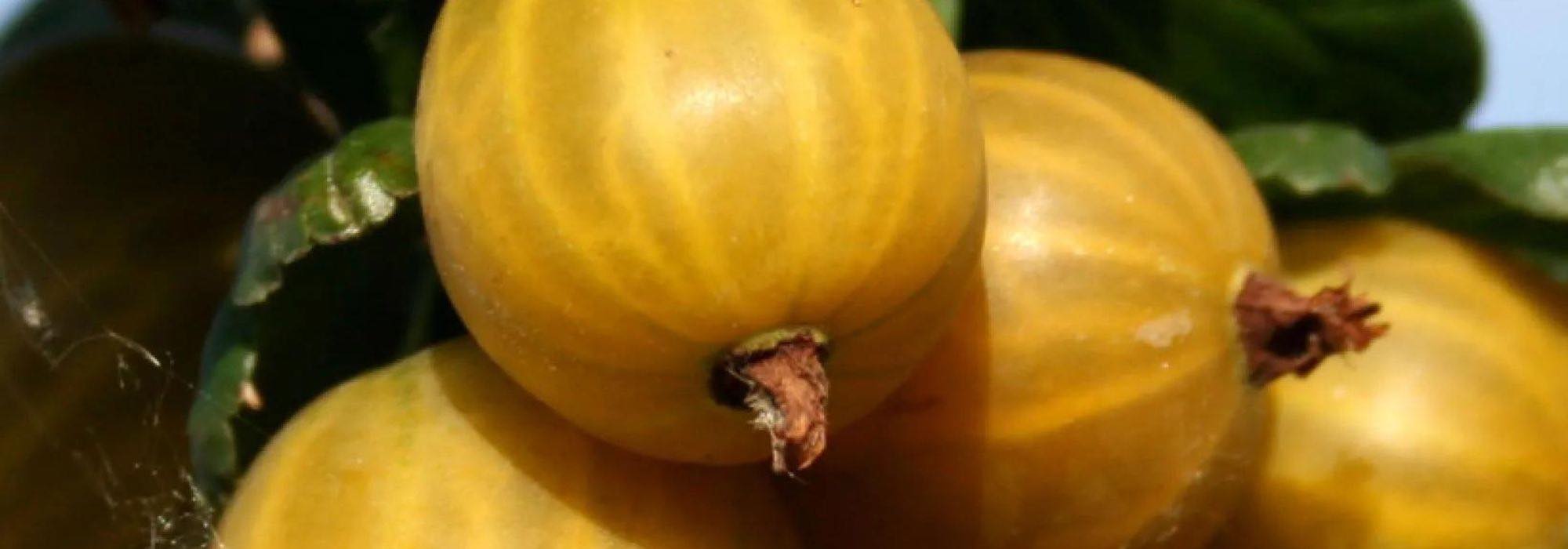
The Crispa ‘Solemio’ gooseberry bush is a recent variety, offering hairless fruits, golden to mustard-yellow, with translucent, juicy, fruity and very sweet flesh, slightly tart. Resistant to powdery mildew and leaf drop disease, even in damp soil, it delivers a high yield. In summer, its fruits are perfect for eating fresh or to brighten salads, savoury dishes and desserts. In April, it bears pale-green flowers, feeding bees and beneficial insects.
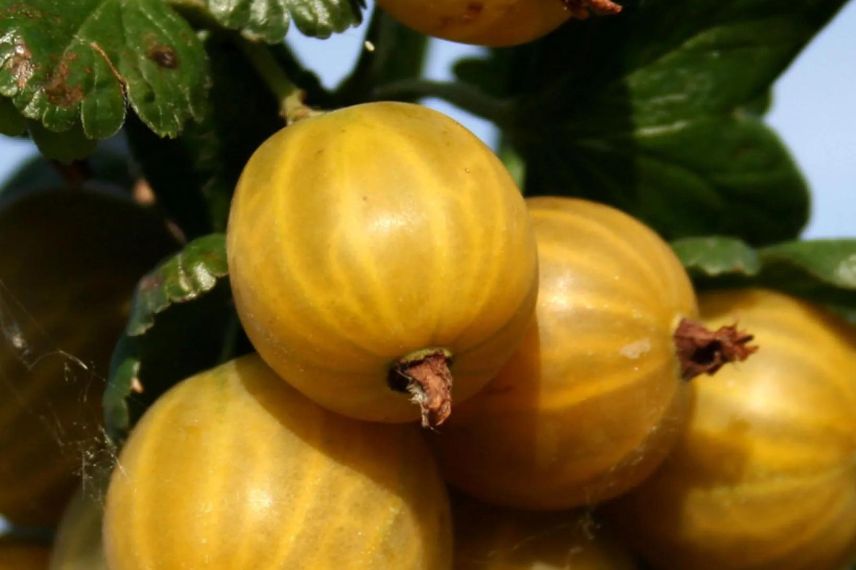
This bushy, thorny bush reaches 1 m in height with a spread of 80 cm. Its deciduous foliage comprises palmately lobed, aromatic leaves. It is distinguished by its large, sweet fruits, solitary along the shoots, unlike gooseberries that bear in clusters. Fruiting mainly occurs on one- and two-year-old shoots.

Self-fertile, Solemio gooseberry does not require another plant to fruit, but a nearby variety can increase production. Harvesting takes place as the fruits ripen, aided by their size. A gooseberry bush yields about 2–4 kg of fruit per plant, depending on age and growing conditions. The fruits, rich in vitamin C, antioxidants, minerals and trace elements, are low in calories and have purifying properties.

In summer, the gooseberry yields fine harvests and tasty fruits, although the thorns require some caution. It tolerates ordinary, even poor soils that are acidic. It prefers well-drained, cool soil, but not permanently damp. It dislikes heat and drought; plant it in full sun in the northern Loire region or in partial shade in the south. Choose a site sheltered from strong winds.

small fruit

Climbing strawberry “Mount Everest”

The climbing strawberry ‘Mount Everest’ is a repeat-flowering variety that is distinguished by its long stems that can be trained on a trellis or allowed to trail in a hanging position. Producing large red fruits with excellent flavour, this distinctive variety is space-saving and makes picking easier.
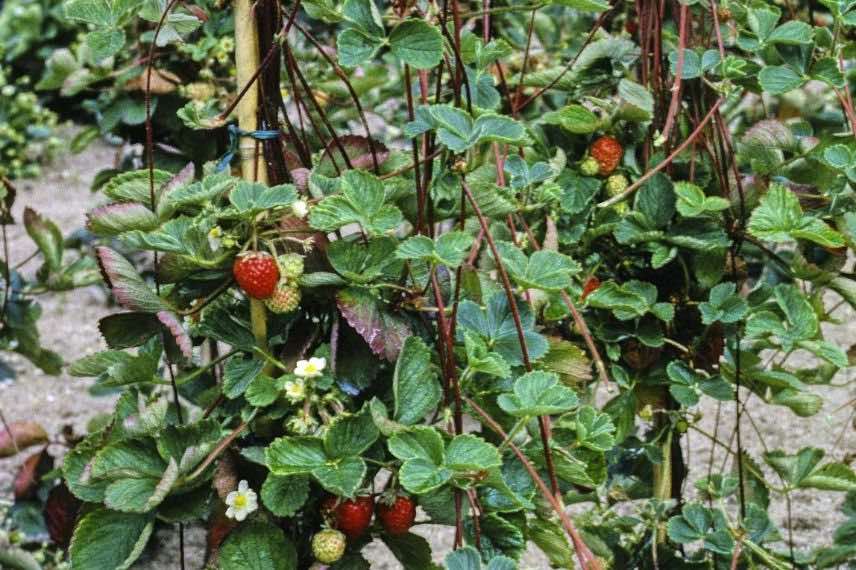
Large-fruited repeat-flowering varieties, such as ‘Mount Everest’, flower twice a year or continuously, and produce large fruits from June to October. It has a climbing habit with evergreen trifoliate, ovate and dentate leaves. Its long stems, reaching 1 to 1.5 metres in height, can be trained on a trellis or left to trail in a hanging position, bearing small white flowers with golden centres that become large red fruits.

strawberry


thornless blackberry 'Dirksen Thornless'

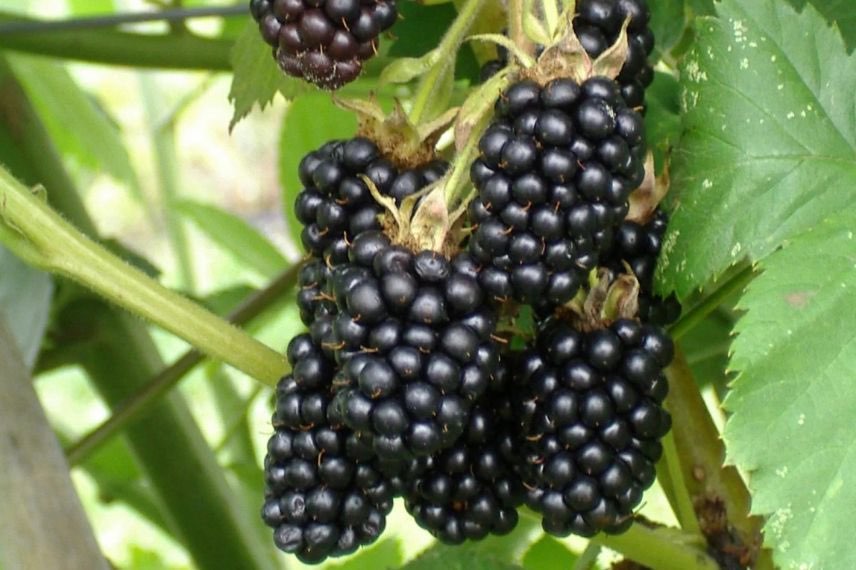
The thornless blackberry ‘Dirksen Thornless’ is a fruiting undershrub, sturdy and hardy, with thornless canes, making picking easy. From August to October, it yields an abundance of juicy, black fruits with an aromatic and sweet flavour, balanced by a slight acidity, very pleasant on the palate. These blackberries are perfect for enriching coulis, jellies, jams, pies and fruit salads.

Rubus fruticosus ‘Dirksen Thornless’ is an American garden blackberry variety, selected for its large fruits, thornless canes and high yield. This climbing perennial with a semi-woody, bushy habit develops semi-rigid stems 2 to 3 m long that can be trellised easily, thus facilitating cultivation. Fruit production takes place on two-year-old canes, requiring annual winter pruning. From May to June, the plant flowers abundantly, producing small white flowers and fruits red then black as they ripen.
Hardy to -20°C, it grows in ordinary, fertile, well-drained and moist soil, in full sun or light shade. Trellising the canes on a support makes harvesting easier. In winter, it is advisable to prune back the fruiting canes to 15 cm above the soil and to mulch.

thornless blackberry

Comments

Pink Jumbo Kiwi