Actinidia arguta Pink Jumbo
Actinidia arguta Pink Jumbo
Actinidia arguta Pink Jumbo®
Hardy kiwi, Kiwi berry, Arctic kiwi, Baby kiwi, Dessert kiwi, Grape kiwi, Northern kiwi
Totally magnificent. It opened its buds gently. Take care: perhaps cover it if light frosts are possible. Tall and very robust. Lovely habit.
Céline, 27/02/2026
Back-to-school special offer!
Get €10 off for every €50 you spend! And get up to €40 off on a single order.
How does it work?
1. Shop your favourites
Add your favourite plants to your basket. For every €50 you spend (excluding delivery charges, store credit and the plastic-free option), you’ll receive a €10 voucher.
€50 spent = €10 voucher
€100 spent = €20 voucher
€150 spent = €30 voucher
€200 spent = €40 voucher
2. Place your order
Once your basket reaches one of the spending thresholds, place your order. You can even choose your delivery date!
3. Receive your voucher
As soon as your order has been shipped, you’ll receive an email containing your personal voucher code and its value.
4. Use it on your next order
Your voucher is valid for 90 days from the date you receive it. It can be used once only, on a new order worth at least the value of the voucher, excluding delivery charges.
Please note: Vouchers can be combined with other offers, but cannot be split or refunded.
Home or relay delivery (depending on size and destination)
Important: You may be charged customs duties by your country’s customs authorities upon delivery.
Schedule delivery date,
and select date in basket
This plant carries a 12 months recovery warranty
More information
We guarantee the quality of our plants for a full growing cycle, and will replace at our expense any plant that fails to recover under normal climatic and planting conditions.

Description
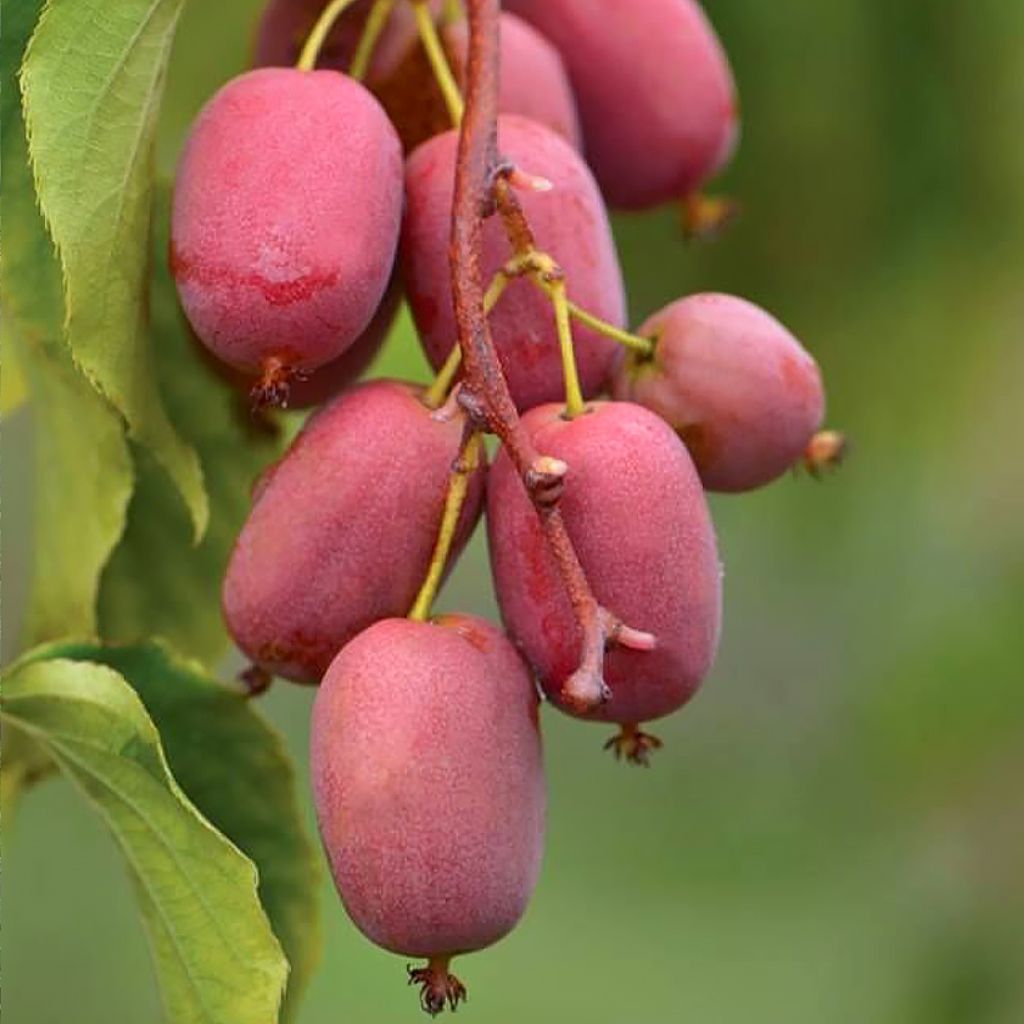
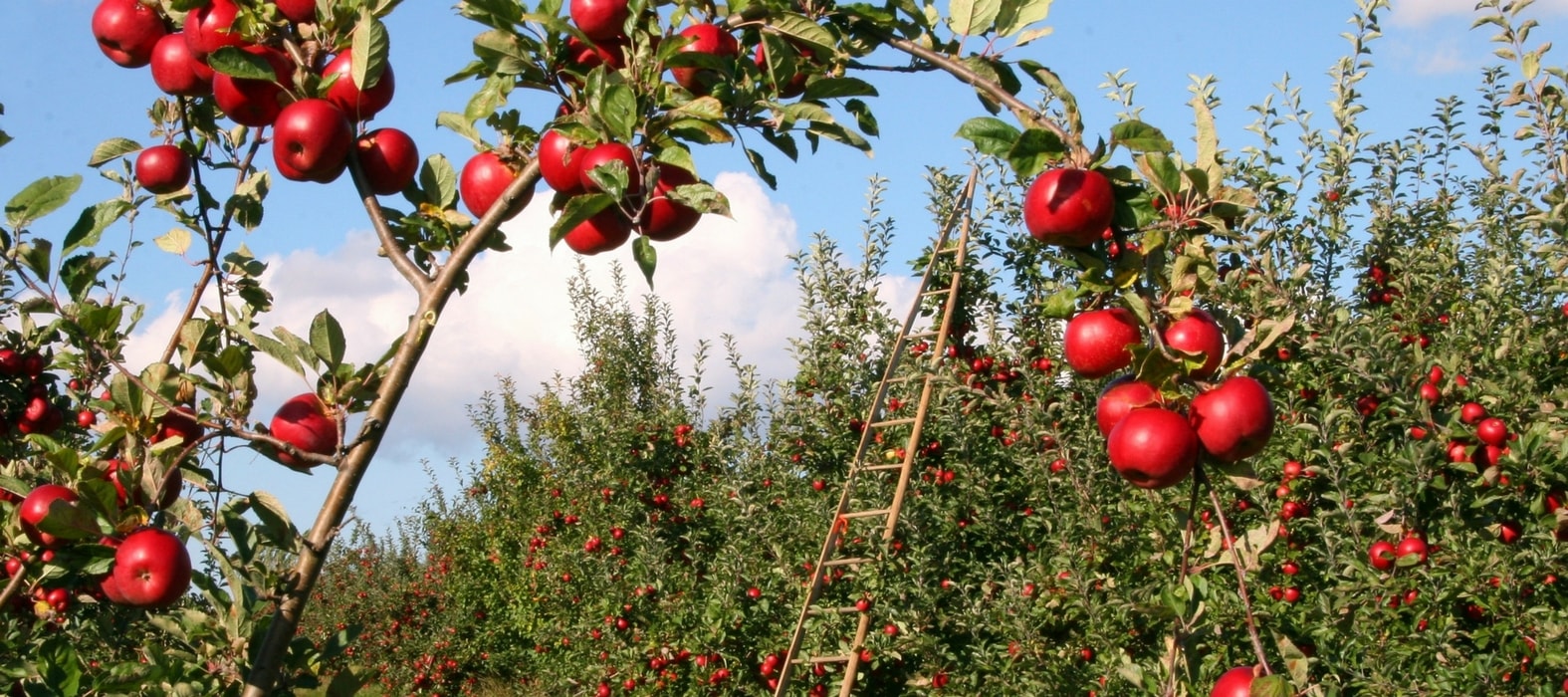
Actinidia arguta 'Pink Jumbo' is a female variety of kiwai or Siberian kiwi 'Pink Jumbo', which is distinguished by its fruits with atypical colours: red on the outside, green on the inside. This pretty colour comes from hybridisation with A. purpurea. The elongated fruits have smooth, thin skin. They boast an exotic flavour, which is pleasantly sweet and fruity with a slight acidity. They can be enjoyed raw, with the skin, like grapes. This energising and refreshing fruit is about the size of a large grape. It is particularly rich in vitamin C. Ideally, plant in autumn. Harvest in September from the 2nd or 3rd year.
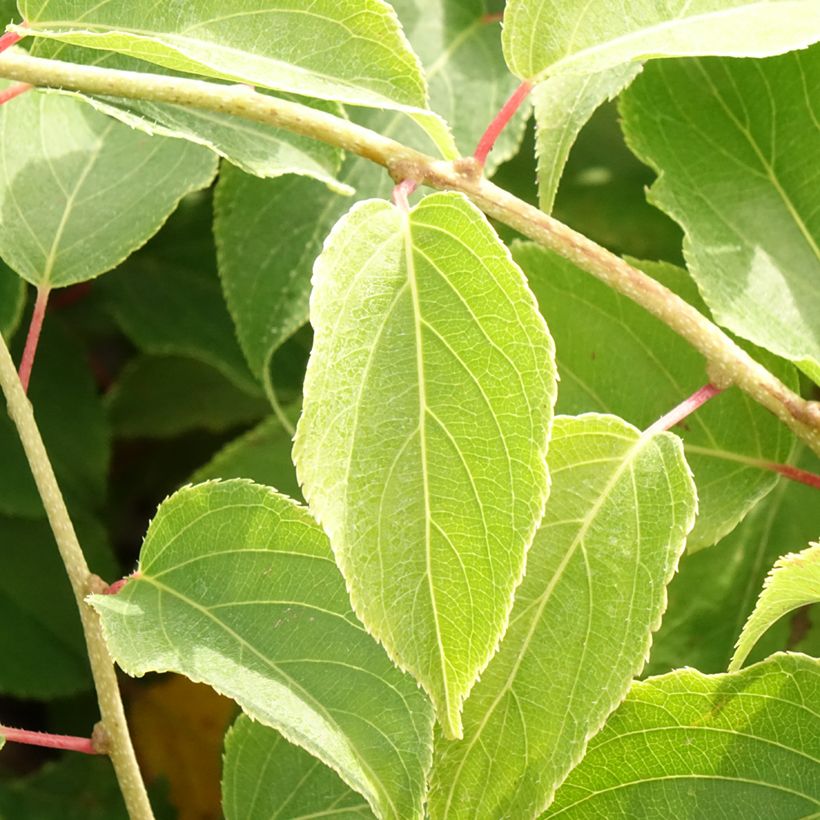
'Pink Jumbo' produces a high yield. It ripens around mid-September and the harvests continue until mid-October. It is a female plant that requires the presence of a male plant nearby, for example the variety ‘Prince Jumbo' or 'Nostino' which will enable pollination. In addition to its fruit qualities, this voluble plant bears beautiful, heart-shaped, shiny green foliage. It can adorn a pergola, trellis, or arbour.
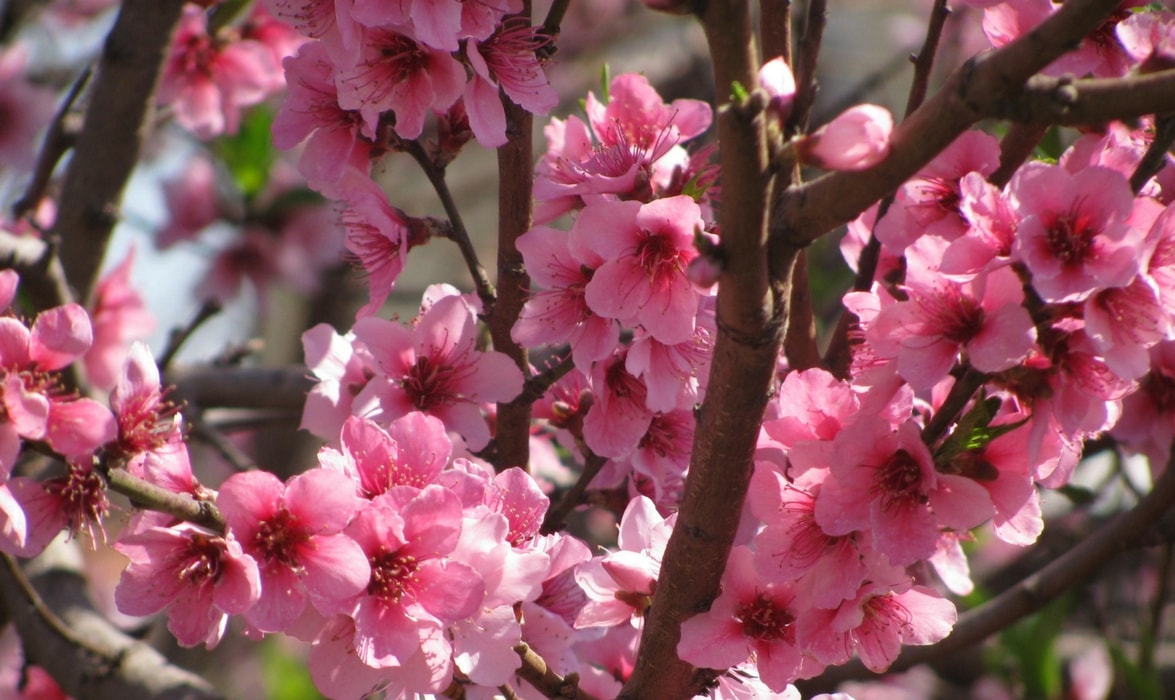
The category of kiwis includes the ornamental kiwi (Actinidia kolomikta), kiwi (A. chinensis or A. deliciosa) with its fuzzy skin, and kiwai (A. arguta) with its smooth skin. Kiwai is also known as Siberian kiwi, mini-kiwi, or summer kiwi. All three belong to the Actinidiaceae family. Kiwai is native to Asia and produces long, voluble branches that can reach 4 to 6m (13 to 20ft) in length. It is hardy down to -20°C (-4°F). The branches bear 8 to 10cm (3 to 4in) long, heart-shaped, green leaves. Its foliage is deciduous. In June-July, fragrant and melliferous flowers appear in the axils of the leaves. They are cream-white with purple anthers, grouped in threes.
The elongated fruits of 'Pink Jumbo' measure 2.5 to 4cm (1 to 2in) in diameter and 5 to 6cm (2in) in length, with smooth and thin skin. They ripen in September-October. Fruiting begins 2 to 3 years after planting. One male plant can fertilise 4 to 5 female plants. Each plant can produce up to 40 to 50kg of fruit in a harvest. The fruits can be eaten fresh, straight off the branch. The green flesh is sweet, fragrant, and slightly acidic. It has an exotic taste and can be eaten whole, with the skin. The fruits are rich in calcium and vitamin C. They can be stored in a refrigerator for one to two weeks after harvest. They can be enjoyed in tarts, fruit salads, dairy desserts, jams, jellies, compotes, fruit juices, and cocktails. As a sweet vegetable, it can accompany white meat dishes (poultry, veal, pork).
Kiwai is excellent for bearing fruit, but its luxuriant foliage, fragrant flowering, and generous branches make it ideal for ornamenting the garden. This plant needs to be trained on a sturdy support such as wires stretched on a frame, trellis, pergola, or fence. It prefers light, moist, non-calcareous soil, and a sunny exposure.
Report an error about the product description
Actinidia arguta Pink Jumbo in pictures
Plant habit
Fruit
Flowering
Foliage
Botanical data
Actinidia
arguta
Pink Jumbo®
Actinidiaceae
Hardy kiwi, Kiwi berry, Arctic kiwi, Baby kiwi, Dessert kiwi, Grape kiwi, Northern kiwi
Cultivar or hybrid
Planting and care
Plant in rich, light, moist but well-drained soil. It dreads stagnant moisture. It cannot tolerate limestone. Place it in a sunny position sheltered from strong winds. Dig a hole 50cm (20in) in all directions. Spread a layer of gravel in the bottom and then a layer of soil mixed with turf. Lay the root ball diagonally and bring the stems vertically along the support. Backfill with the same mixture. Provide support to help its voluble branches climb. Add half a watering can of water. It has running roots, which develop horizontally below the surface of the soil. The soil should remain moist in summer, so it will be useful to mulch the base with a layer of 10 to 15cm (4 to 6in). Mulching also prevents the germination of adventive plants and prevents evaporation of water from the soil surface, allowing for reduced watering in summer.
This kiwai requires little maintenance. It only needs regular watering. During periods of high heat, water it 1 to 2 times per week. Once established and rooted, the plant can fend for itself and becomes less water-hungry. Apply a fertiliser rich in crushed horn at the start of vegetation. An application of special fruit tree fertiliser will also be beneficial during the flowering period.
Not very susceptible to insects and pests, Actinidia arguta can nevertheless be attacked by red spider mites in a hot and dry environment. To eliminate them, lightly mist the foliage and soil.
Planting period
Intended location
Care
Planting & care advice
-
-
-
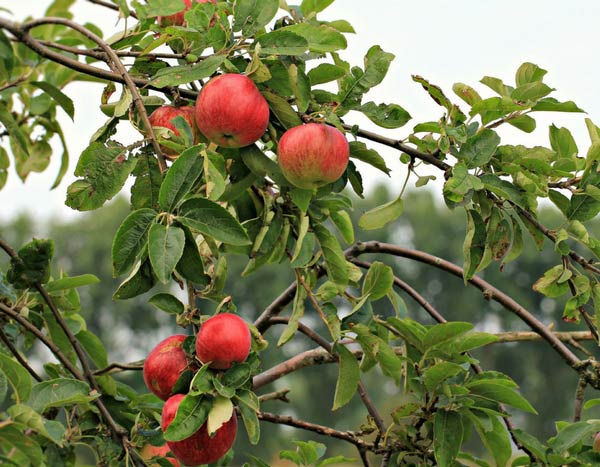
-
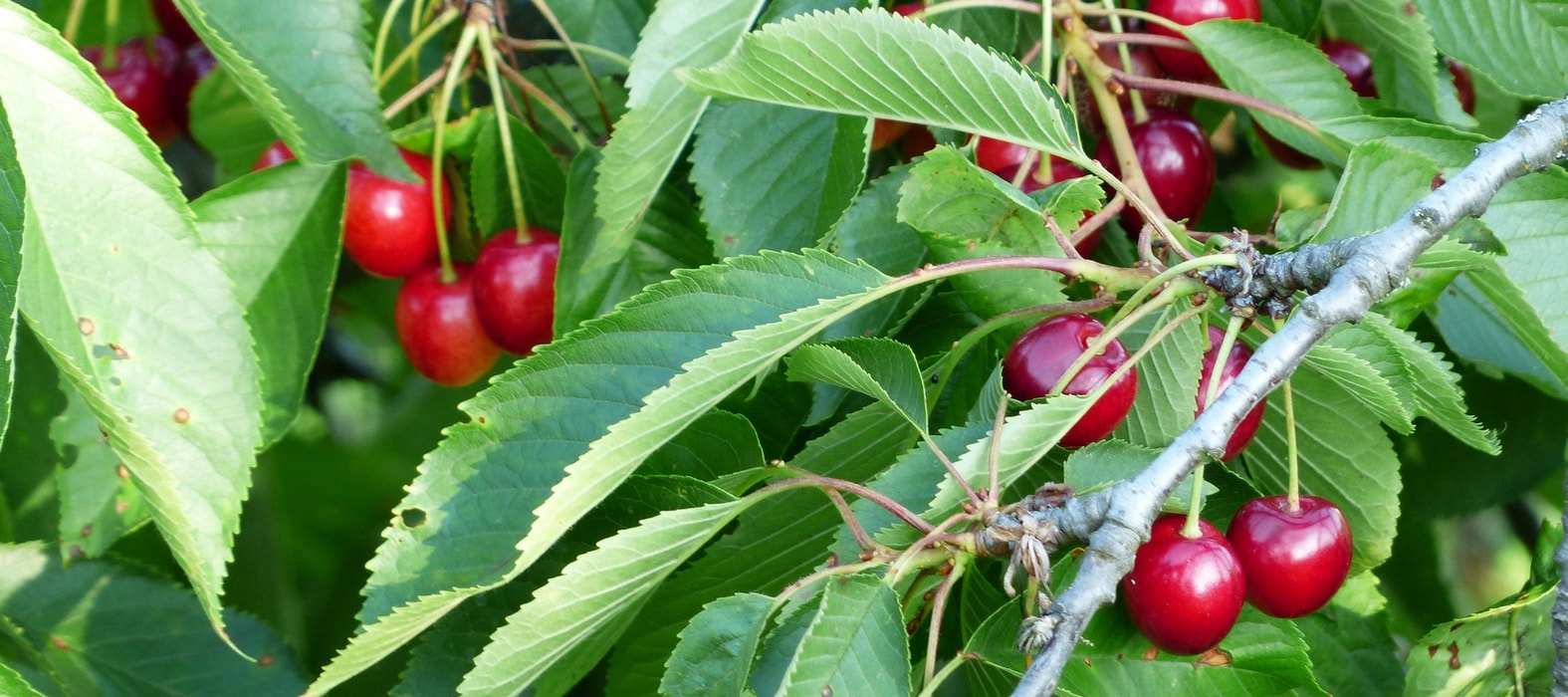
-
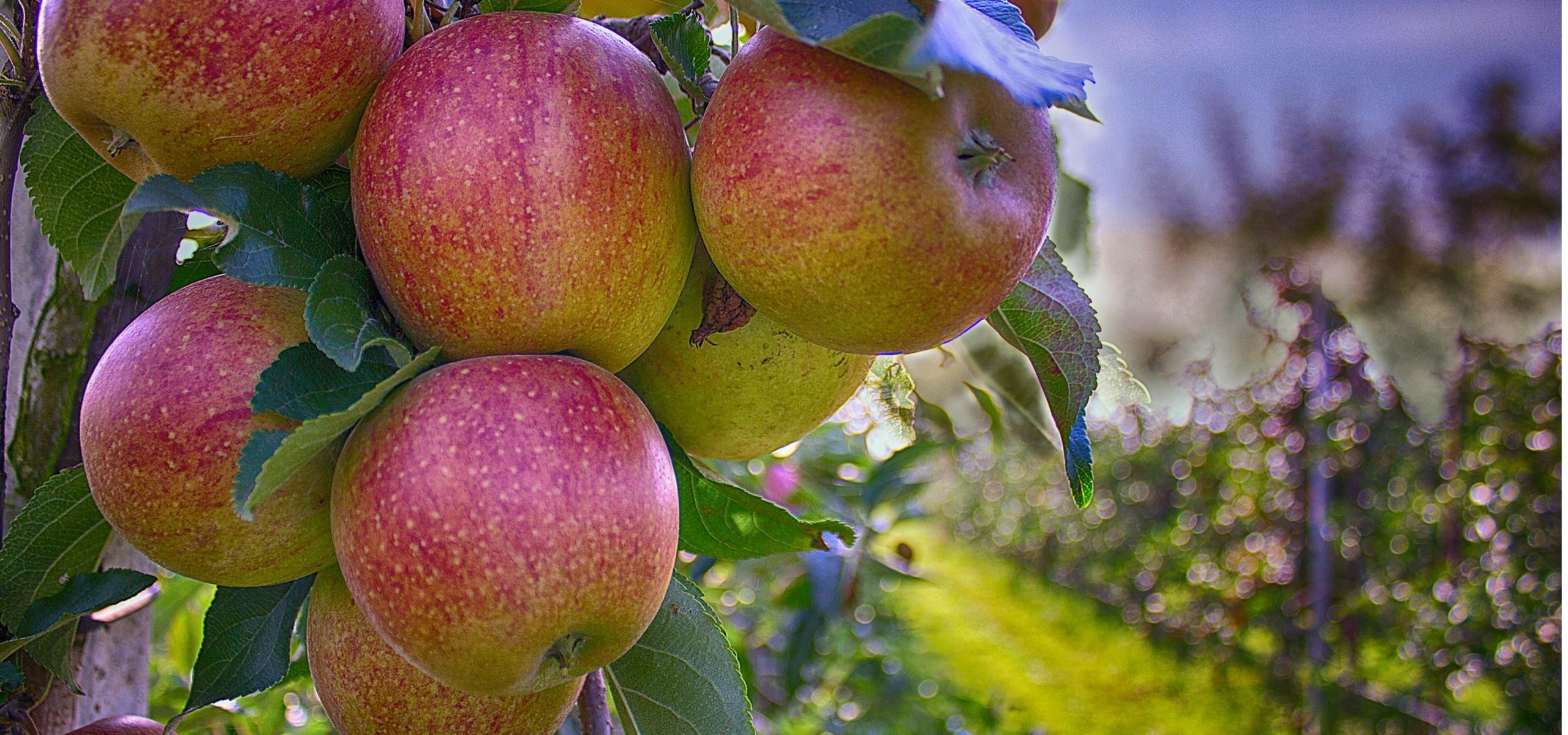
-
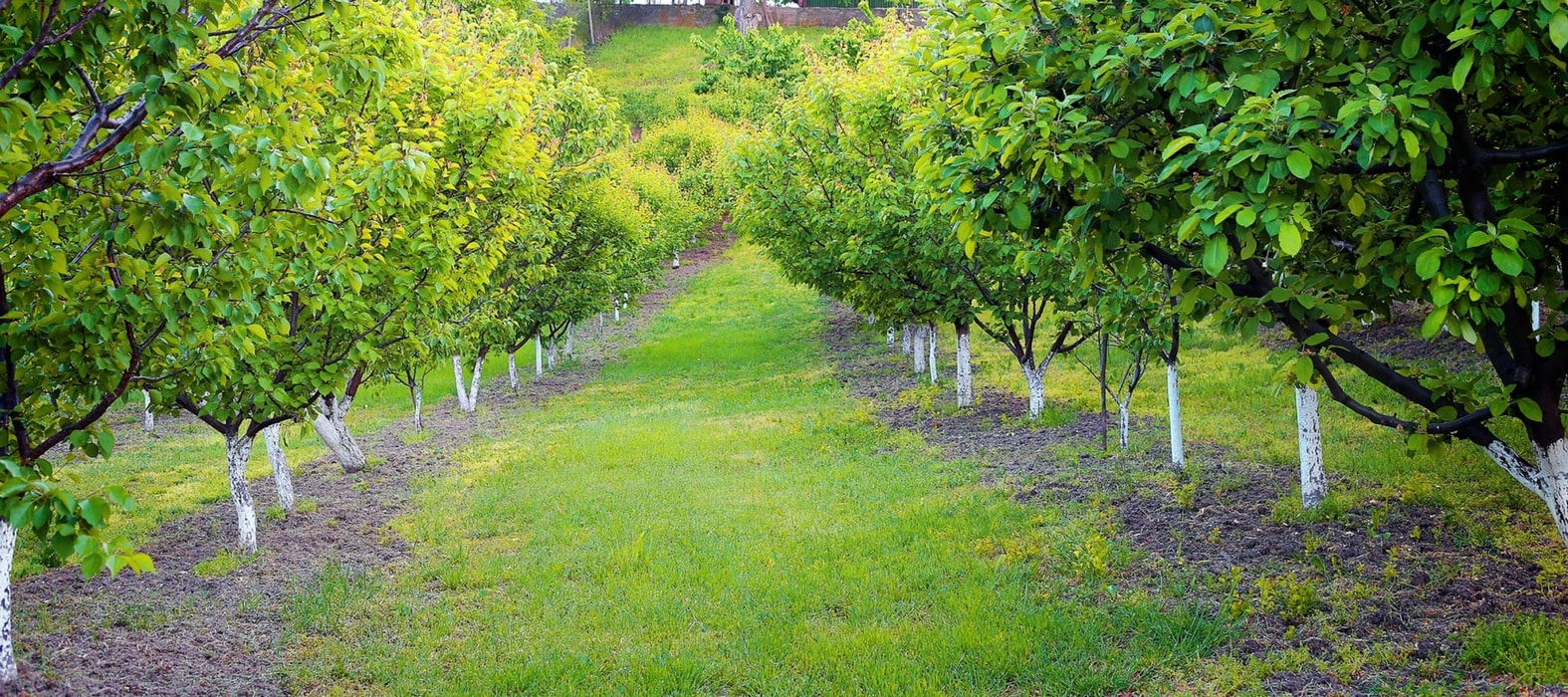
-
-
-
, onOrder confirmed
Reply from on Promesse de fleurs
Recently viewed products
Haven't found what you were looking for?
Hardiness is the lowest winter temperature a plant can endure without suffering serious damage or even dying. However, hardiness is affected by location (a sheltered area, such as a patio), protection (winter cover) and soil type (hardiness is improved by well-drained soil).

The flowering period indicated on our website applies to countries and regions located in USDA zone 8 (France, the United Kingdom, Ireland, the Netherlands, etc.)
It will vary according to where you live:- In zones 9 to 10 (Italy, Spain, Greece, etc.), flowering will occur about 2 to 4 weeks earlier.
- In zones 6 to 7 (Germany, Poland, Slovenia, and lower mountainous regions), flowering will be delayed by 2 to 3 weeks.
- In zone 5 (Central Europe, Scandinavia), blooming will be delayed by 3 to 5 weeks.
In temperate climates, pruning of spring-flowering shrubs (forsythia, spireas, etc.) should be done just after flowering.
Pruning of summer-flowering shrubs (Indian Lilac, Perovskia, etc.) can be done in winter or spring.
In cold regions as well as with frost-sensitive plants, avoid pruning too early when severe frosts may still occur.
The planting period indicated on our website applies to countries and regions located in USDA zone 8 (France, United Kingdom, Ireland, Netherlands).
It will vary according to where you live:
- In Mediterranean zones (Marseille, Madrid, Milan, etc.), autumn and winter are the best planting periods.
- In continental zones (Strasbourg, Munich, Vienna, etc.), delay planting by 2 to 3 weeks in spring and bring it forward by 2 to 4 weeks in autumn.
- In mountainous regions (the Alps, Pyrenees, Carpathians, etc.), it is best to plant in late spring (May-June) or late summer (August-September).
The harvesting period indicated on our website applies to countries and regions in USDA zone 8 (France, England, Ireland, the Netherlands).
In colder areas (Scandinavia, Poland, Austria...) fruit and vegetable harvests are likely to be delayed by 3-4 weeks.
In warmer areas (Italy, Spain, Greece, etc.), harvesting will probably take place earlier, depending on weather conditions.
The sowing periods indicated on our website apply to countries and regions within USDA Zone 8 (France, UK, Ireland, Netherlands).
In colder areas (Scandinavia, Poland, Austria...), delay any outdoor sowing by 3-4 weeks, or sow under glass.
In warmer climes (Italy, Spain, Greece, etc.), bring outdoor sowing forward by a few weeks.
Shipping country and language
Your country of residence may be:
Your country of residence is:
For a better user experience on our website, you can select:
Your shipping country:
-
 Austria
-
 Belgium
-
 Bosnia & Herzegovina
-
 Bulgaria
-
 Croatia
-
 Cyprus
-
 Czechia
-
 Denmark
-
 Estonia
-
 Finland
-
 France
-
 Germany
-
 Greece
-
 Hungary
-
 Iceland
-
 Ireland
-
 Italy
Italy
-
 Latvia
-
 Liechtenstein
-
 Lithuania
-
 Luxembourg
-
 Malta
Malta
-
 Netherlands
-
 Poland
-
 Portugal
-
 Romania
-
 Serbia
-
 Slovakia
-
 Slovenia
-
 Spain
Spain
-
 Sweden
-
 Switzerland
Language:
-
French
-
 English
-
Spanish
-
Italian
-
German
-
Portuguese
-
Dutch
-
Finnish
My Account
Hello
My wish lists
My cart
Log in / Register
Existing customer?
This form is protected by reCAPTCHA - the Google Privacy Policy and Terms of Service apply.
New customer?
Create an account to track your orders, access our customer service and, if you wish, make the most of our upcoming offers.