





























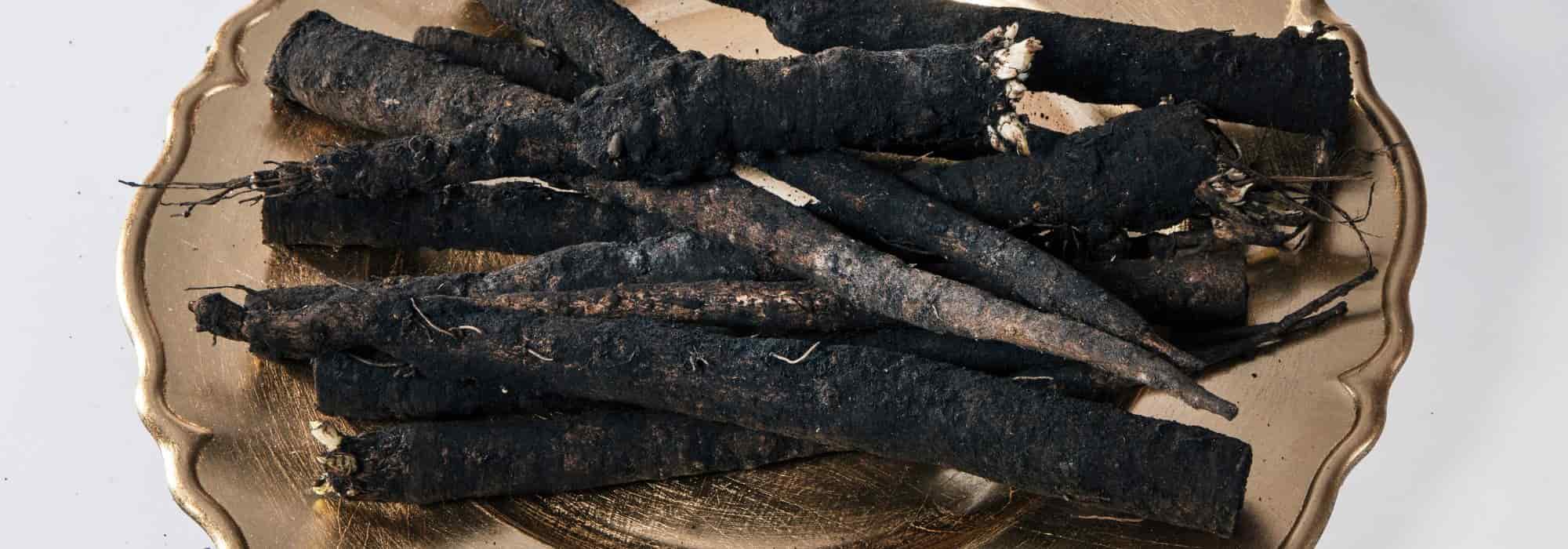
Discover scorzonera, a vegetable to grow in the kitchen garden
Often confused with salsify, black salsify deserves a place in the garden
Contents
Don’t look in the canned goods aisles of supermarkets or at market stalls; you will very rarely find scorzonera. Although… Often, under the name of salsify, it is the famous thick roots of the scorsonère that are eaten. This is simply because the roots of the scorsonère are much easier to grow and process (industrially) than those of salsify (Tragopogon porrifolius). Also known as “black salsify”, scorzonera is often confused with its close cousin, salsify. Both belong to the Asteraceae family and offer long, edible, and very tasty roots. But that’s where the resemblance ends!
The scorzonera (Scorzonera hispanica) is a hardy perennial plant, grown as an annual or biennial. Classified among the old and forgotten vegetables, the scorsonère deserves attention. It is a root vegetable with a rather unappealing appearance. Indeed, its long, tapered roots are covered with a black skin (whereas salsify has a white bark) beneath which lies a white flesh with a fine texture. In terms of flavour, the scorsonère is somewhere between parsnip and artichoke.
If I have piqued your curiosity as a gourmet, why not try your hand at gardening to grow scorzonera? I will explain everything, from sowing to harvest, with a little detour through the kitchen.

What exactly is scorsonera?
Black salsify is a very old vegetable whose roots have a thick, rather rough skin of a beautiful black colour! I admit, the description is not very appealing. However, let’s overlook this first impression and focus on this perennial plant, likely native to southern Europe. Long harvested in the wild as a medicinal plant, black salsify entered gardens in the 17th century.
A member of the large Asteraceae family, black salsify is actually a herbaceous perennial with rosette leaves that are upright, fairly broad, lanceolate, and tapered at the top, borne on glabrous or very slightly cottony stems. Its roots are thick and taprooted, lacking root hairs at the collar, about 4 cm wide and 30 cm long. From May to July, it flowers in terminal heads of yellow, appreciated by pollinating insects for their melliferous properties. (For your information, the flower of salsify is purple).
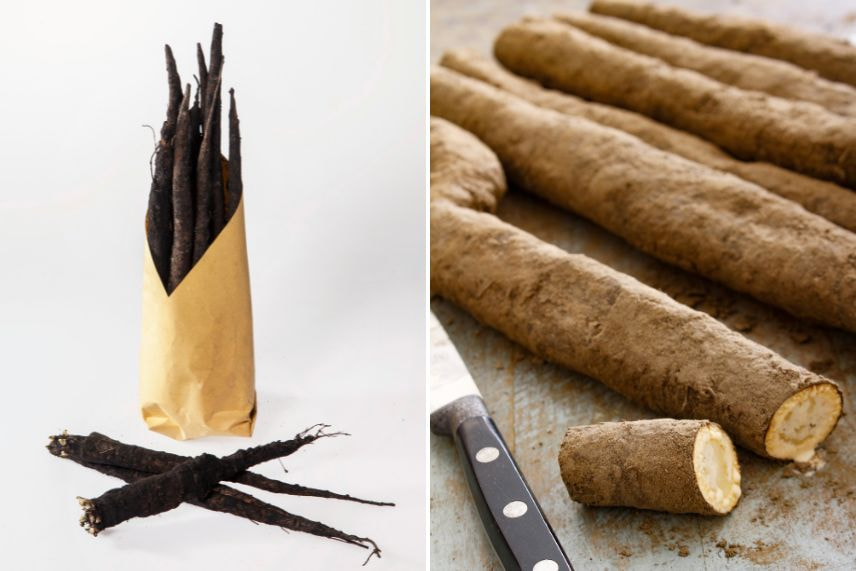
The black salsify on the left, the salsify on the right
Black salsify can also be found under the names of black salsify, Spanish salsify, or even winter asparagus. Indeed, it is a vegetable to be consumed in winter. In fact, black salsify is very hardy, surviving temperatures below -20 °C. In our gardens, it is cultivated as an annual or biennial plant.
To learn more: Black salsify: sowing, care, and harvest.
Where, when, and how to plant black salsify?
Scorzonera is a remarkably robust plant, very hardy and not demanding in terms of soil. However, it is a root vegetable that requires a bit of patience… but isn’t that the essence of gardening?
When to sow scorzonera?
Scorzonera seeds should be sown in spring, ideally between March and April, possibly until May. This way, it can be harvested as early as October (when sown in March), throughout the winter, until March.
For biennial cultivation of scorzonera, sowing can also be done in August for a harvest the following autumn. The roots will then be larger.
Where to sow scorzonera?
Scorzonera enjoys a warm and sunny location. In terms of soil, it is very accommodating. It can indeed accept any soil, but the roots will be significantly tastier in good garden soil, light and loose, preferably sandy, deep, and rich.
Since seed germination can be quite delicate, it is essential that the soil is sufficiently moist. Likewise, it is crucial to work the soil deeply to loosen it. And especially to remove stones so that the roots are not too twisted and difficult to peel.
Note that scorzonera appreciates the company of parsnips and carrots. It is even said to have the power to deter the carrot fly (Chamaepsila rosae).
How to sow scorzonera?
- Prepare the soil, previously enriched with manure or compost in autumn, using a garden fork
- Carefully remove stones and weeds
- Rake the soil to level it and remove any remaining stones and plant debris
- Draw furrows spaced 25 to 30 cm apart
- Sow the scorzonera seeds about 2 cm deep and cover with soil
- Firm the soil with the back of the rake
- Water gently to maintain good soil moisture.
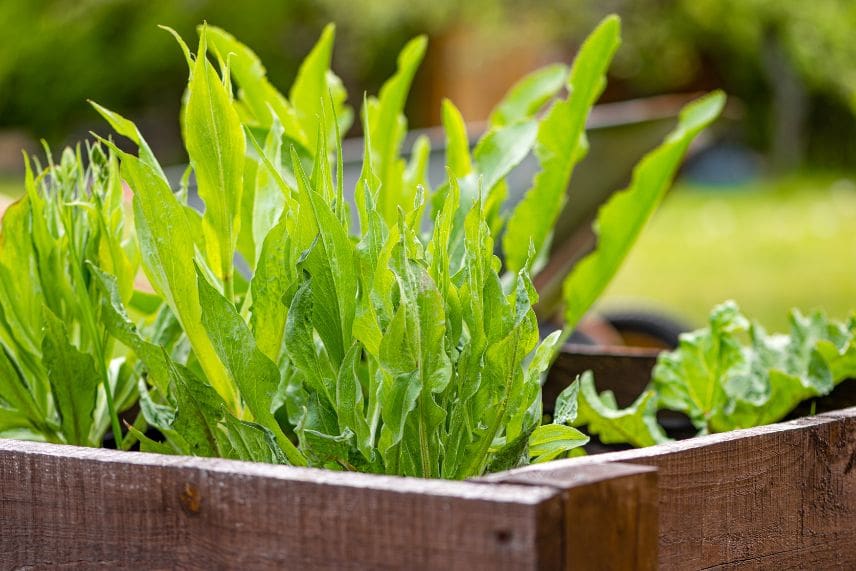
Once the seedlings have developed 3 to 5 leaves, thinning should be done to keep one plant every 10 to 15 cm.
What care does the black salsify require?
Scorzonera requires very little maintenance. However, a few actions are still important for a good harvest:
- Keep the soil moist, especially in summer, by watering regularly while avoiding wetting the foliage
- Weed regularly as scorzonera is sensitive to competition from adventive plants
- Cut the flower stems as soon as they appear
- In regions with harsh winters, it may be beneficial to apply a mulch of dead leaves or straw to facilitate harvesting in winter
- Watch for the possible appearance of rust that can affect the foliage without compromising the harvest. A spray of Bordeaux mixture should resolve the issue
- Also monitor for voles that enjoy nibbling on the roots. I explain how to combat the mole rat or field vole.
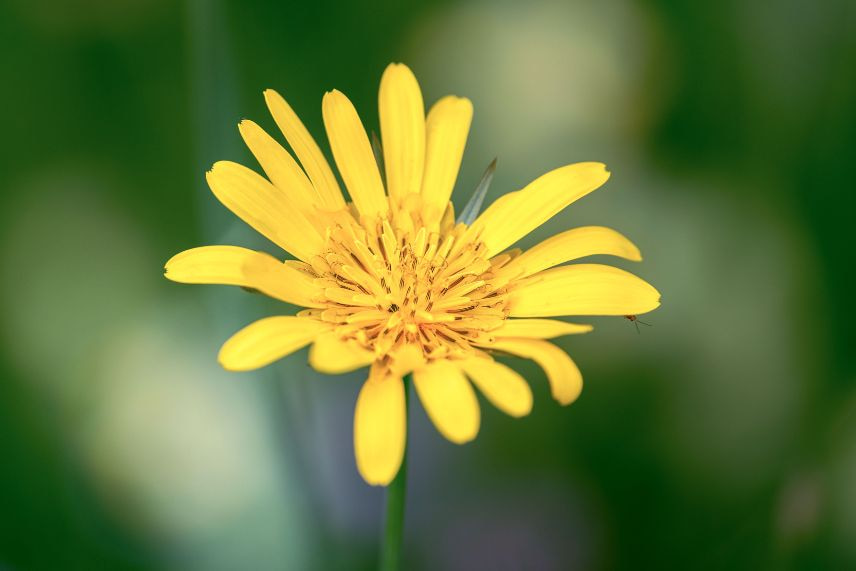
A scorzonera flower
Harvesting and storing black salsify
The harvest of black salsify is done as needed throughout winter, from October to March. For August sowings, you must wait until the autumn of the following year to harvest the roots, which are much larger but not woody (unlike those of common salsify). It is recommended to use a fork-spade to harvest the roots as they can break quite easily.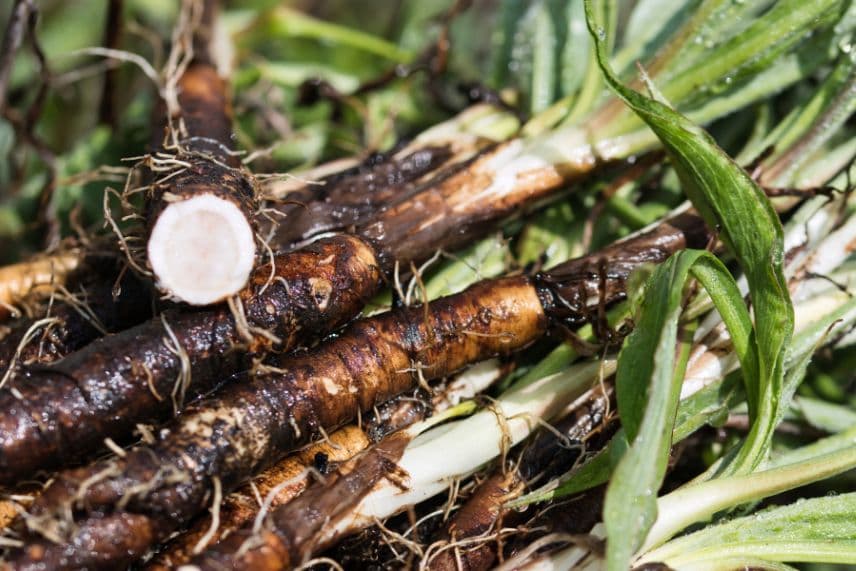
Once harvested, the roots should be consumed very quickly as they wilt rapidly.
Very frost-resistant, black salsify roots can remain in the ground all winter. However, in cases such as attacks by voles, the roots can be harvested all at once. They can then be placed in a box of slightly damp sand, kept outside or in a cellar. If you live in an area with harsh winters that harden the soil, it is also recommended to store the black salsify in a clamp.
Scorsonera, from garden to plate
Scorsonera has a delicate flavour, somewhere between parsnip and artichoke. It can be prepared in various ways: in soup, gratin, sautéed, roasted in the oven, or served cold and grated with a vinaigrette.
To enjoy this incomparable flavour, it must be prepared correctly:
- Peel the scorzonera while wearing gloves, as this vegetable can stain fingers significantly.
- Soak them in lemon water to prevent rapid discolouration and cut them into pieces.
- Steam or boil in salted and lemony water for 15 to 20 minutes until tender without falling apart. Afterwards, the scorzonera can be dressed as you wish.
Beyond their fine flavour, scorsonera is low in calories and rich in minerals and trace elements, particularly potassium. They also contain a high level of inulin, which aids digestion.
Which variety of black salsify to choose?
There are a few varieties of scorzonera available on the market:
- The ‘Giant Black Russian’: it produces regular cylindrical roots that are long and of excellent taste quality. This is the most common variety.
- The ‘Hoffmanns Schwarze’: it offers thick cylindrical roots with firm and tender flesh, covered with a fine black-brown epidermis.
- The ‘Giant Westlandia’: a variety similar to the ‘Giant of Russia’.
- Subscribe!
- Contents
Comments