





























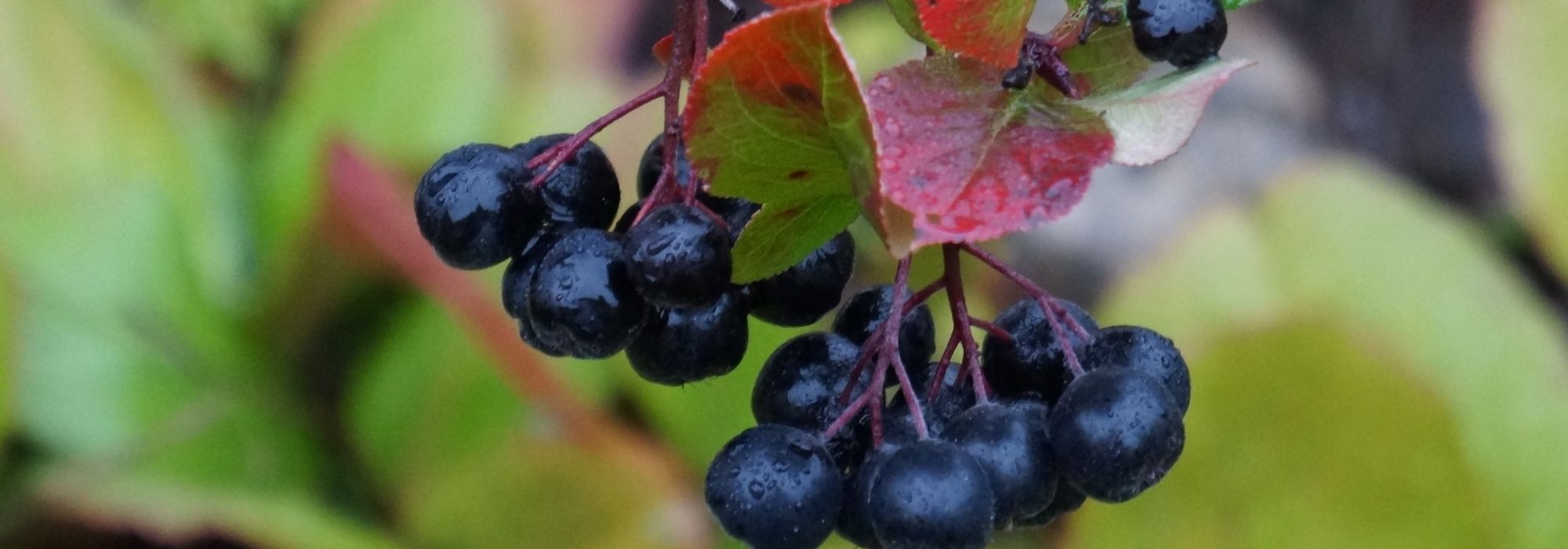
Diseases and parasites of Aronia
Identify, treat and prevent
Contents
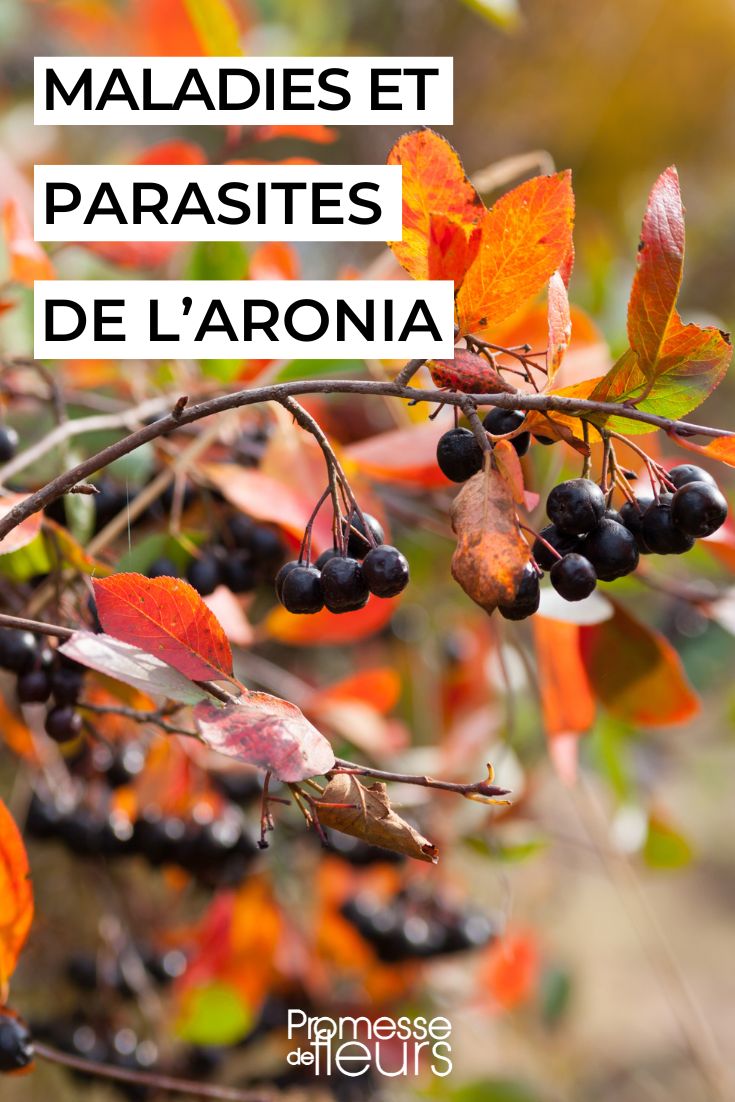
Aronia, and more specifically the Aronia melanocarpa, is a bush prized for its antioxidant-rich fruits. Although hardy, this bush is not entirely immune to diseases and parasitic pests. Rust, scab, aphids, or pear sawfly larvae can affect the health of your young plants and the harvests.
In this article, we review the most common diseases and pests of Aronia and discover preventive and curative strategies to ensure vigorous young plants and healthy fruits.

Fungal diseases
Rust
Rust is the main fungal disease affecting aronia berries. It presents as orange, red, or brownish spots on the leaves. These spots develop into pustules filled with spores, often visible to the touch. As the disease progresses, the leaves may become distorted and drop prematurely, weakening the plant.
This fungus thrives in humid, warm conditions, and its spread is aided by poor air circulation between the plants. The spores are carried by wind or water and survive on plant debris, becoming a source of infection for the following season.
To prevent rust, it is essential to maintain good air circulation around the plants and remove infected leaves as soon as they appear. Watering should be directed at the soil, rather than the foliage, to reduce excessive humidity. In case of infestation, fungicidal treatments, including copper-based products, can be applied to control the disease.
→ Read our article on how to treat rust.
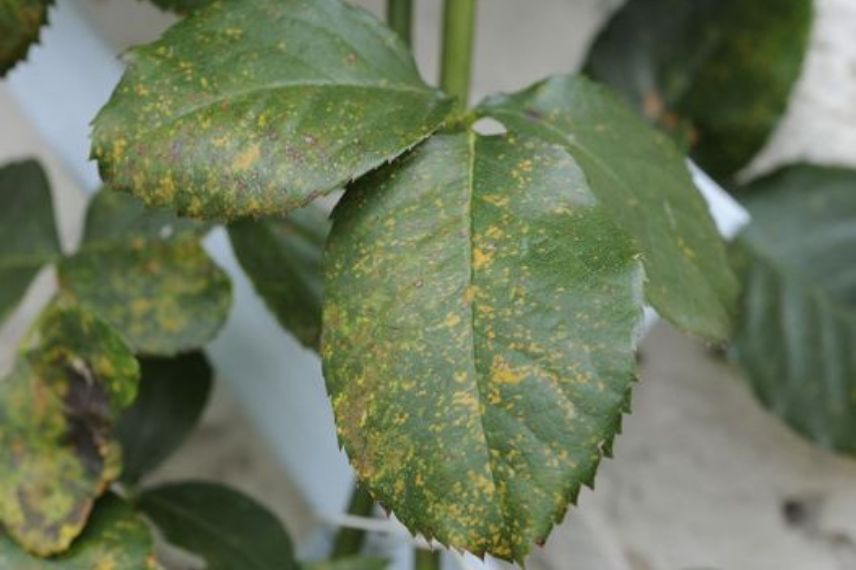
Symptoms of rust on leaf
Scab
Scab is a fungal disease that can affect both the leaves and the aronia fruits. On the leaves, it is characterised by black or brown spots that tend to widen and merge, while on the fruits, it causes corky and dark lesions that degrade their appearance and quality. Heavily affected leaves may drop prematurely, reducing the plant’s vitality.
The disease develops mainly after extended periods of rain, when humidity remains high. The fungus spreads by spores, which overwinter on leaves and fallen fruits, ready to infect the plant the following season.
Good garden hygiene is essential to prevent scab: regularly clean away dead leaves and fallen fruit, especially in autumn. Spacing between the plants is also crucial to improve air circulation. If the disease is detected, copper-based treatments or specific fungicides can be used to limit damage.
→ Read our article on scab.
Monilia rot or fruit rot
Monilia rot is a fungal disease that attacks aronia berries, particularly in warm and humid conditions. Affected fruits become soft, brown, and eventually develop a grey or white mould. If these fruits fall to the ground, they serve as a reservoir for the fungus, increasing the risk of infection for the other still-healthy fruits.
This disease is often the result of late harvest or poor maintenance of the plants. Fruits left on the plant too long are more vulnerable, as are those that suffer damage.
To reduce the risk, it is advisable to harvest the fruits as soon as they are ripe and to remove immediately any that are damaged or infected. Destruction of fallen and infected fruits is also essential to slow the spread of the disease. If necessary, preventive antifungal treatments can be applied at the start of the season, especially when weather conditions favour the disease.
→ Read our article o learn all about monilia rot.
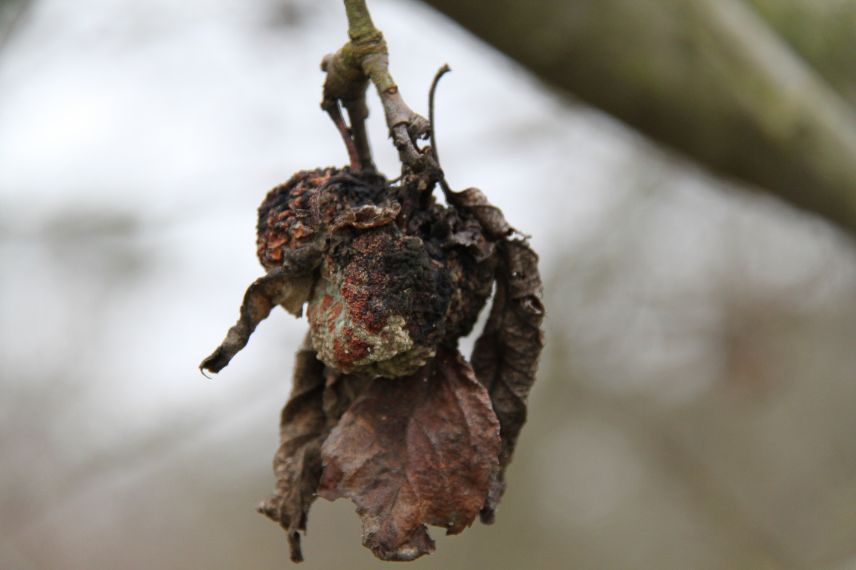
Monilia rot on an apple tree
Read also
Aronia: planting, pruning and careParasitic pests affecting Aronia
Despite its natural resistance, aronia can still fall prey to a few pests, the main one being the pear sawfly larva. These insects, often attracted to its leaves or berries, can cause significant damage if their presence is not detected promptly.
Pear sawfly larvae
Pear sawfly larvae (Caliroa cernais), also called ‘false caterpillars’, can attack aronia by feeding on its leaves. These larvae chew into the leaf surface, leaving the leaves skeletonised, with only the main veins intact. A heavy infestation can reduce the plant’s ability to perform photosynthesis, thereby weakening it in the long term.
This pest is more active in spring and summer. Management of this infestation relies on regular inspection of the leaves to detect the larvae. If present, they can be removed manually or treated with biological insecticides, such as insecticidal soap. Encouraging natural predators, such as birds or ladybirds, is also an effective method for regulating their population.
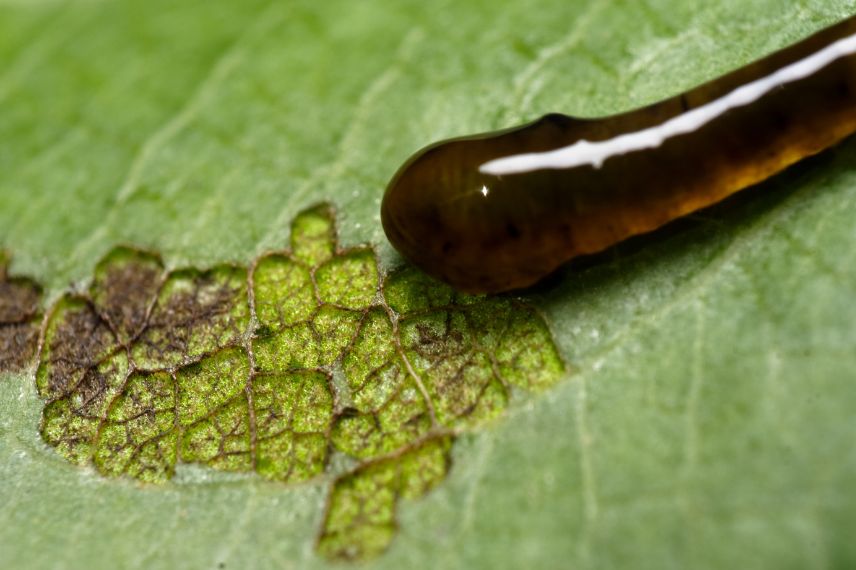
Pear sawfly larva
Aphids and red spider mites
Aronia can also be attacked by more common pests such as aphids and mites.
Aphids, small green, black or brown insects, attack the leaves by sucking their sap. Their presence is manifested by curled leaves, slowed growth, and sometimes a sticky exudate (honeydew) which promotes the development of sooty mould, a black mould. To control them, regular water sprays can be enough to dislodge them. In cases of heavy infestation, solutions based on insecticidal soap or the introduction of ladybirds are very effective.
Red spider mites appear as pale yellow spots or discolourations on the leaves, accompanied by fine, silken webs. These tiny arachnids thrive in hot, dry weather. Increasing humidity around the plant can help limit their presence. In severe cases, horticultural oils or biological acaricides can be used.
In Canada, blueberry maggot larvae
In Canada, the larvae of the blueberry maggot (Rhagoletis mendax) pose a threat to the berries of Aronia melanocarpa. These flies lay their eggs directly into the berries, and the larvae that emerge feed on the pulp inside the fruit, making the berries unusable. Infested fruits become soft and often show signs of internal rot.
To prevent this issue, it is advised to place protective nets around the plants during the egg-laying period, usually in summer. Yellow sticky traps can also be used to monitor and reduce the population of adult flies. Prompt harvesting of ripe berries and removing fallen or damaged berries also helps limit spread.
General strategies for prevention and treatment
Adopting a proactive approach to preventing and treating diseases and pests is essential for keeping young plants healthy.
- Maintaining good air circulation and adequate spacing : one of the key factors in reducing disease risk, particularly fungal diseases, is to promote air circulation between the young plants. Sufficient spacing helps prevent moisture build-up on leaves and fruits, thereby limiting conditions favourable to infections.
- Practising rigorous hygiene : this includes removing dead leaves, fallen or infected fruits, and any other plant debris where fungal spores or insect larvae could survive. In autumn, a thorough cleaning of the area helps limit disease reservoirs for the following season.
- Regularly monitor young plants : regular inspection of leaves, fruits and branches is essential to detect early signs of disease or the presence of pests. Prompt intervention can often contain an infestation before it spreads.
- Harvest ripe fruit promptly : leaving ripe or damaged fruit on the plant or in the soil can attract pests.
- Encouraging biodiversity in the garden : introducing natural allies such as ladybirds, lacewings or birds, can greatly help to combat pests such as aphids and sawfly larvae. Planting flowers that attract these natural predators is an eco-friendly and effective solution.
- Ensure healthy young plants : healthy young plants are better able to resist diseases and pests. This involves watering appropriately, balanced fertilisation to enrich the soil, and regular pruning to remove weak or diseased branches.
- Subscribe!
- Contents
Comments