





























Diseases and parasitic pests of Euryops
Naturally keep Euryops healthy
Contents
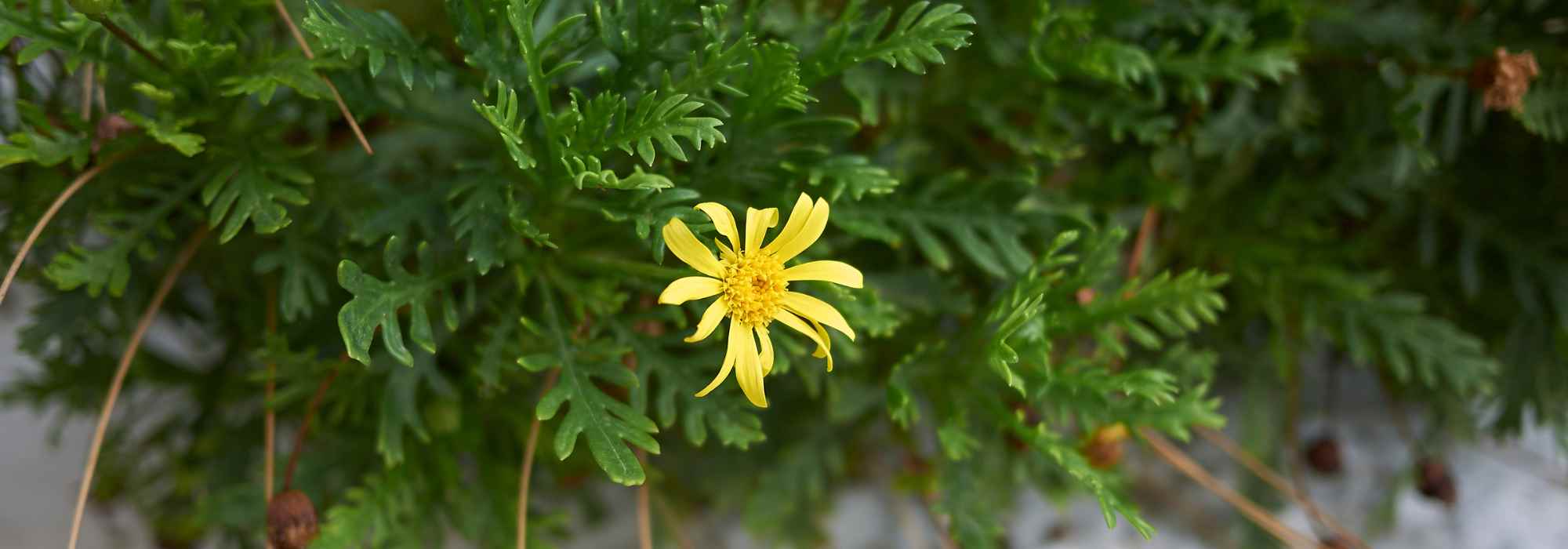
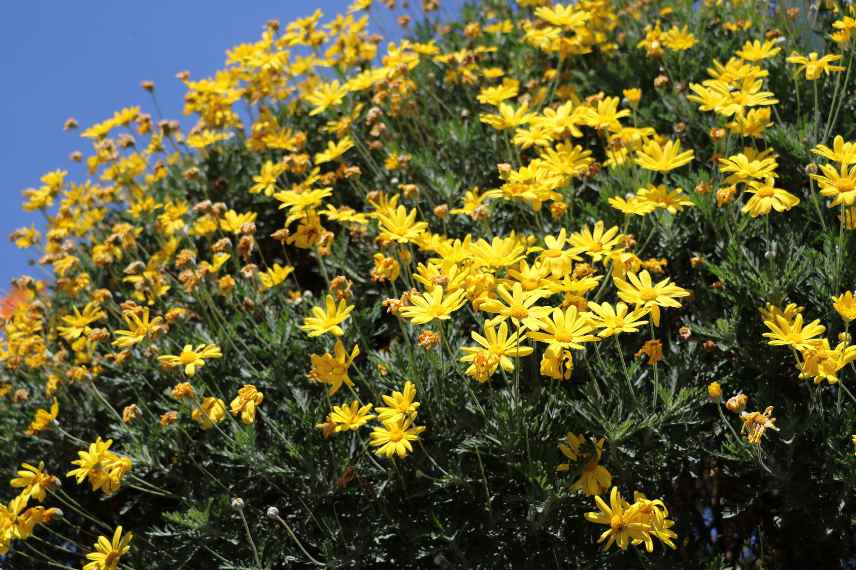
Euryops or African bush daisy (Euryops pectinatus) in Latin) is a robust plant that, in general, is not much affected by diseases and pests. However, the presence of pests such as aphids or scale insects can occur from time to time. Aphids feed on the sap of the plants, weakening Euryops and can transmit viruses potentially dangerous for the plant. On their part, scale insects also cause harm by feeding on the sap they extract with their long mouthparts. Moreover, excess water in the soil can lead to the appearance of fungal diseases such as root rot.
To avoid these problems, it is advisable to regularly monitor our Euryops to quickly detect any anomaly and take appropriate measures to ensure their optimum health.
Euryops pectinatus

Physiological problems (non-parasitic) of Euryops
Even in the absence of diseases or parasites, the Euryops pectinatus can suffer from various physiological disorders related to its environment. Two of the most common are chlorosis (leaf yellowing) and wilting.
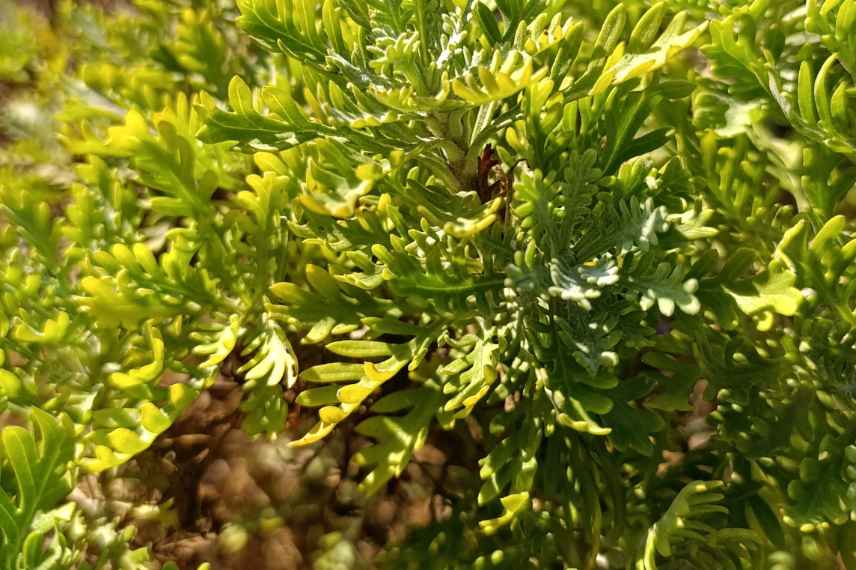
Leaf yellowing (Chlorosis)
Symptoms
- Leaves turning yellow, while the veins sometimes stay green.
- General decline in the plant’s vitality.
- Growth slows and flowering is reduced.
Possible causes
-
Iron deficiency (iron chlorosis)
- Soil that is too calcareous or too compact, preventing iron uptake.
- Excess watering that leaches nutrients from the soil.
- Soil pH too high, blocking iron absorption.
-
Magnesium deficiency (magnesium chlorosis)
- Imbalance between calcium, potassium and magnesium in the soil.
- Lack of organic matter input or exhaustion of the potting mix.
Solutions
- Iron chelate: a soluble product that quickly corrects iron chlorosis. To be diluted in irrigation water and applied at the base of the plant.
- Improved drainage: add compost to lighten overly compact soil.
- Soil pH adjustment: if the soil is too calcareous, add acidic organic matter (leaf mould, pine bark).
- Balanced fertiliser: use a fertiliser containing magnesium (e.g., magnesium sulphate or nettle manure).
Wilting of Euryops
Symptoms
- Leaves and stems become soft, sometimes pendulous.
- Loss of overall vigour, potentially progressing to complete desiccation.
Possible causes
-
Water stress (too much or too little water)
- Water shortage during hot periods, causing wilted and dry leaves.
- Overwatering = root asphyxiation, leading to black or soft roots.
-
Cold snap or frost
- Euryops is sensitive to temperatures near 0°C.
- A sudden cold snap can damage leaf cells, making them soft and drooping.
Solutions
- Appropriate watering :
- Water moderately, allowing the soil to dry slightly between two waterings.
- In pots, ensure drainage is effective (drainage holes and clay balls at the bottom of the pot).
- Winter protection :
- If frost is forecast, protect the Euryops with a fleece or bring it indoors into a greenhouse or conservatory.
- In pots, place the plant away from cold drafts and elevate the container to avoid direct contact with frozen soil.
- Avoid thermal shocks :
- Do not water with water that is too cold in winter.
- Gradually acclimatise the plant if it is moved from indoors to outdoors.
Read also
How to grow Euryops in a pot?Diseases of Euryops
Fungal diseases
Fungal diseases are caused by fungi that thrive in humid and poorly ventilated conditions. They primarily affect the foliage and flowers, compromising the appearance and health of the young plant.
Powdery Mildew (Leaf White)
Symptoms :
- A white powdery deposit appears on the leaves, mainly on the upper surface.
- The leaves may become deformed, yellow and drop prematurely.
- Flowering may be affected if the attack is severe.
- For more information, read Powdery mildew: prevention and treatment
Causes :
- Excess ambient moisture, especially when frequent nocturnal dew occurs.
- Poor air circulation around the plant (too crowded planting, lack of pruning).
- Mild temperatures and alternating humid and dry conditions, favouring the development of the fungus.
Solutions :
- Natural treatments :
- Spraying of horsetail decoction or baking soda (1 teaspoon per litre of water).
- Powdered or spray sulphur, effective against powdery mildew.
- Skimmed milk diluted (10% in water) to strengthen the leaves’ resistance.
Preventive measures :
- Space the plants apart to improve ventilation.
- Avoid watering the foliage, favour watering at the base.
- Prune regularly to remove infected leaves and air the plant.
Botrytis (Grey mould)
Symptoms :
- Brown spots appear on leaves and flowers.
- A greyish down forms on the affected parts.
- Wilting and rapid rotting of flowers and young shoots.
Causes :
- Excess moisture and cultivation conditions that are too humid and confined.
- Decomposing plant debris promoting the spread of the fungus.
- Poor air circulation, especially indoors or in a greenhouse.
Solutions :
Curative treatments :
- Remove and destroy the affected parts immediately (do not compost).
- Apply a biofungicide based on copper or a garlic decoction (effective against fungi).
Preventive measures :
- Do not water excessively, especially in damp periods.
- Ensure good ventilation around the plant.
- Regularly clean fallen leaves to prevent fungal spread.
→ For more, read Botrytis – Grey mould: prevention and treatment.
Rust
Symptoms :
- Orange or brown spots under the leaves.
- Leaves turn yellow and then drop prematurely.
- If the attack is advanced, the plant may weaken.
Causes :
- Overextended moisture on the foliage.
- Too dense planting promoting water stagnation.
- Mild temperatures and high humidity, ideal conditions for the fungus.
Solutions :
Natural treatments :
- Spraying Bordeaux mixture at the first symptoms.
- Use horsetail decoction or nettle manure to strengthen leaf resistance.
Preventive measures :
- Remove diseased leaves to prevent spread.
- Avoid watering the foliage, favour watering at the base.
- Ventilate plantings to prevent a too-humid atmosphere.
→ Read Rust: identification and treatment for more information.
Bacterial diseases
Bacteria can also affect the Euryops, although these diseases are less common than fungal diseases. They are often caused by waterborne contamination or injuries to the plant.
Bacterial Spots
Symptoms :
- Brown or black spots on the leaves, often surrounded by a yellow halo.
- Leaves may necrose and drop in severe attacks.
- Rapid progression in hot, humid conditions.
Causes :
- Overwatering promotes the spread of bacteria in the soil.
- Leaf injuries, facilitating bacterial entry.
- Presence of standing water on the leaves after rain or irrigation.
Solutions :
Curative treatments :
- Remove and burn the affected leaves (do not compost them).
- Apply a copper treatment (Bordeaux mixture or copper sulfate) to limit spread.
Preventive measures :
- Avoid watering the foliage, favour watering at the base.
- Do not handle the plants when they are wet to prevent transmission of bacteria.
- Ensure good crop rotation to prevent soil depletion and accumulation of pathogens.
Parasitic pests of Euryops
Pest Insects
Aphids
Symptoms:
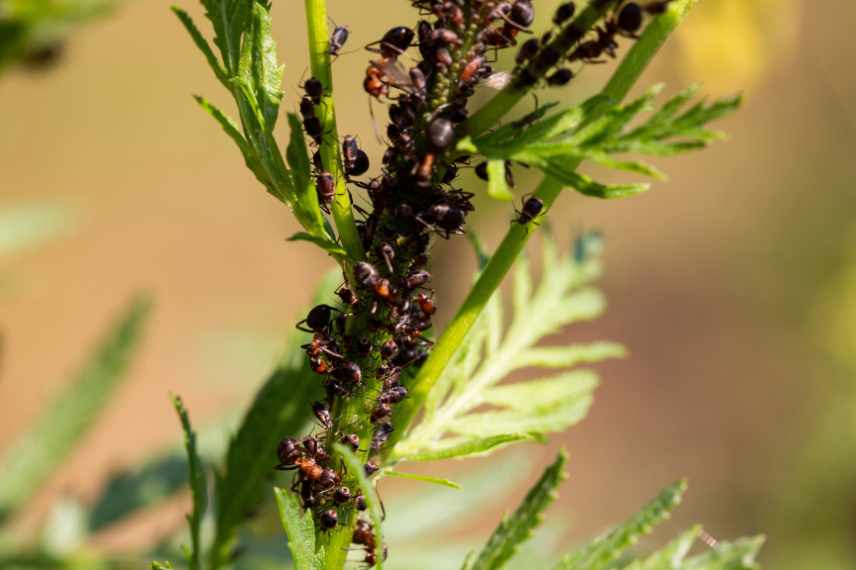
- Presence of small green, black or yellow insects clustered on young shoots and stems.
- Leaves curl, deform and turn yellow.
- Sticky honeydew secretion promoting sooty mould (black mould).
- General weakening of the plant and reduced flowering.
Solutions:
Biological control:
- Introduce natural predators such as ladybirds or the hoverfly larvae, which feed on aphids.
Natural treatments:
- Spraying diluted black soap (1 tablespoon per litre of water) on infested areas.
- Infusion of garlic or of tansy decoction, repellents against aphids.
- Powerful jet of water to dislodge colonies at the onset of infestation.
→ For more information, read Aphids: identification and treatment
Red spider mites
Symptoms:
- Leaves yellow, wither and fall.
- Appearance of fine silky webs under the leaves and between the stems.
- Progressive weakening of the plant in case of heavy infestation.
Solutions:
Natural methods:
- Regular misting of the foliage: red spider mites hate humidity.
- Spraying nettle manure or horsetail decoction, strengthening the plant’s resistance.
- Apply a solution based on black soap to suffocate the mites.
Prevention:
- Maintain good ambient humidity, especially in summer.
→ For more information, read Red spider mite: identification and treatment
Mealybugs
Symptoms:
- Presence of small insects protected by a white, brown or waxy shell, attached to stems and leaves.
- Leaves yellow and wither.
- Sticky honeydew deposits, favouring sooty mould (black mould).
- Growth is slowed.
Solutions:
Natural methods:
- Dab mealybugs with a cotton swab moistened with 70% alcohol to remove them manually.
- Apply white oil (rapeseed oil or paraffin oil), which smothers them.
- Spray a solution based on black soap and alcohol diluted in water.
Prevention:
- Inspect regularly the undersides of leaves and the stems.
- Avoid excess nitrogen fertiliser, which promotes their appearance.
- Isolate new plants before introducing them into the garden or greenhouse.
→ For more information, read Mealybugs: identification and treatment
Nematodes (microscopic worms)
Symptoms:
- General weakening of the plant, despite proper watering and fertilisation.
- Deformed roots, with nodosities or abnormal swellings.
- Growth slowed and flowering reduced.
Solutions:
Control methods:
- Crop rotation: avoid planting Euryops in the same spot for several consecutive years.
- Soil solarisation: cover the soil with clear plastic for several weeks in summer to eliminate nematodes by heat.
- Soil amendment with compost rich in organic matter to promote beneficial microorganisms that limit nematode proliferation.
Read also
How to propagate Euryops?Natural prevention and care for a healthy Euryops.
A first essential rule is to ensure good air circulation. Euryops does not tolerate excess moisture, which promotes fungal diseases and attacks by parasites. To avoid these problems, it is preferable to plant it in well-drained soil and give it enough space for air to circulate freely between the leaves. When grown in a pot, good drainage should be ensured by adding clay balls or gravel to the bottom of the container. Regular pruning of the plant also helps limit the entanglement of branches and promotes air circulation, thus reducing the risk of fungal growth.
Watering also plays a key role in disease prevention. It is recommended to water the Euryops directly at the base, without wetting the foliage, to avoid conditions favourable to fungi such as powdery mildew and rust. Watering should be moderate, as an excess of water can cause root asphyxia and weaken the plant, making it more vulnerable to parasites. In pots, it is important not to allow water to stagnate in the saucer.
Nutrient supply also contributes to strengthening the Euryops’ natural resistance. A balanced organic fertiliser or amendment, rich in potassium and phosphorus (such as bone meal, for example), promotes abundant flowering and vigorous growth. Organic mulch (see: the different organic mulches) based on compost or fallen leaves helps enrich the soil gradually while maintaining moderate moisture.
In addition to good cultural practices, natural preventive treatments can be applied to protect the plant against diseases and pests. The use of plant manures, such as nettle manure, stimulates Euryops’ natural defences and provides essential nutrients. The horsetail decoction, rich in silica, is particularly effective at strengthening leaf structure and preventing fungal attacks (see: how to prepare horsetail decoction?). For insects, a spray of diluted black soap helps deter aphids and scale insects before they establish themselves.
The association of Euryops with certain companion plants can also have a protective effect. The scent of lavender or rosemary naturally repels aphids and some pests, while the calendula attracts beneficial insects such as ladybirds, which help to regulate pest populations. Planting these companion plants nearby helps create a natural balance and reduces the need for treatments.
- Subscribe!
- Contents
Comments