


Diseases and Pests of Cherry Trees
Protect yourself and fight naturally
Contents
The cherry tree is a fruit tree that requires little care and attention. However, it can be endangered by certain diseases, such as grey rot or moniliosis, or attacked by an insect like the cherry fruit fly or the black cherry aphid. What can be done to protect it? How should one react when the problem is already present?
→ To avoid missing out on cherries, let’s review the main diseases and pests affecting the cherry tree.

Cherry tree diseases
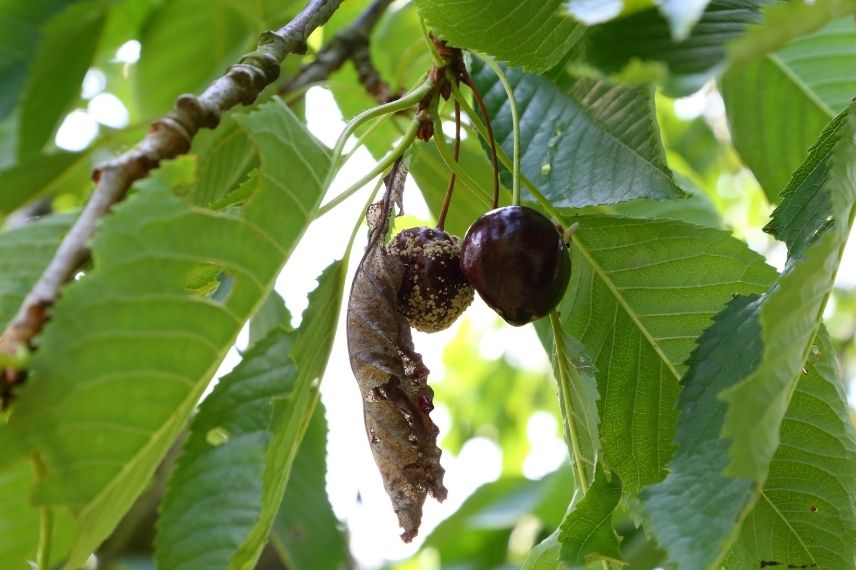
Brown Rot
Symptoms: it is a spring disease caused by a fungus (Monilia fructigena or Monilia laxa). A small brown spot appears on the cherry. The spot develops and eventually covers the entire fruit, which wilts and dries out. Flowers and the tips of the shoots may also dry out. Attacks are particularly frequent when it rains during flowering.
Treatments: as a preventive measure, it is advisable to remove diseased fruits and thin out even healthy fruits to prevent them from being too close together. As a curative measure, a horsetail decoction mixed with a little bicarbonate of soda can be applied in autumn.
→ Eva explains everything in her article on brown rot of fruit trees.
Brown Rot
Botrytis or Grey Mould
Symptoms: it is a cryptogamic disease caused by a fungus called Botrytis cinerea that occurs during humid springs. Flower buds dry out and fall off before fruiting. The fruits, on the other hand, become covered in grey hairs (hence the name “grey mould”) and rot.
Treatments: as a preventive measure, a horsetail decoction can be applied. As a curative measure, botrytis strains tend to become resistant to usual fungicides. Bordeaux mixture is still effective (be careful not to overuse it, as excess copper is harmful to soil life).
→ To learn more about botrytis, read the article Botrytis or Grey Mould: Prevention and Treatment.
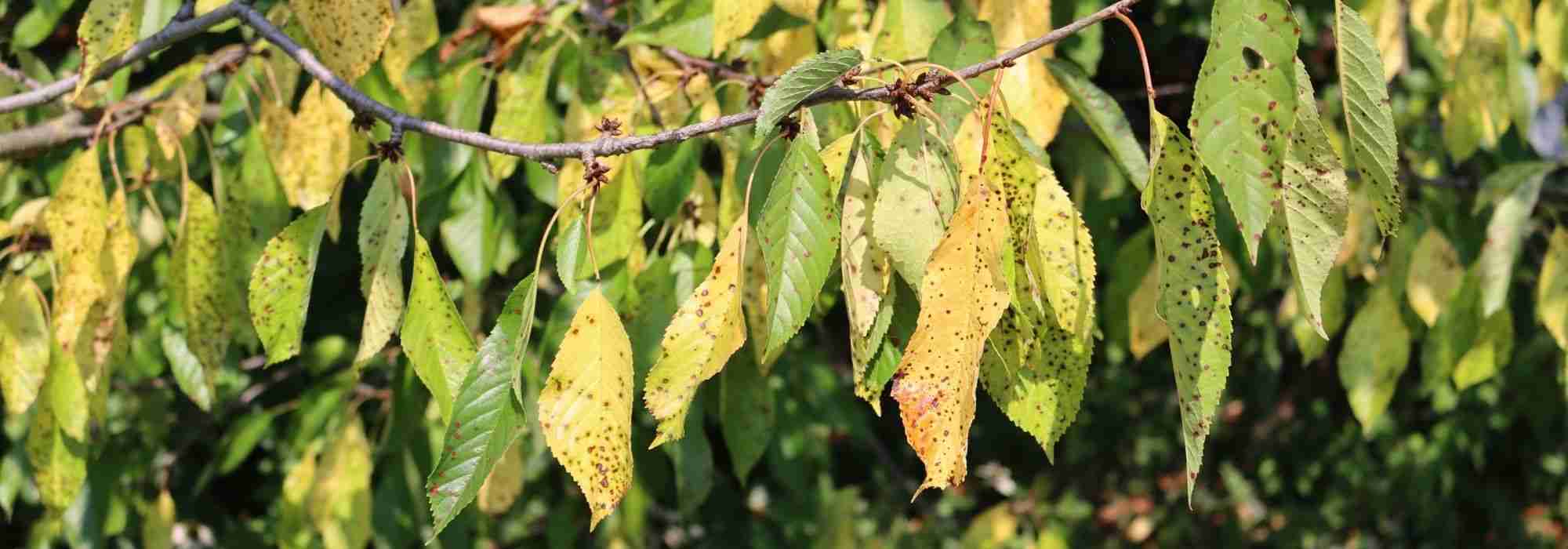
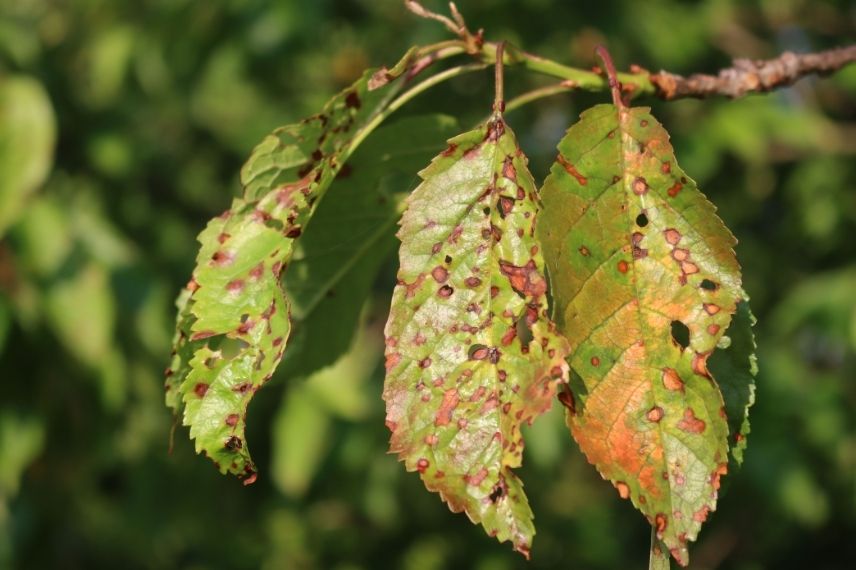
Cherry Anthracnose
Symptoms: anthracnose is caused by a fungus named Blumeriella hiemalis. Reddish-purple spots appear on the upper side of the leaves, which turn yellow and then fall off, weakening the tree.
Treatments: as a preventive measure, a horsetail decoction can be applied. As a curative measure, Bordeaux mixture will provide a solution.
Anthracnose
Cylindrosporiasis
Symptoms: cylindrosporiasis is a cryptogamic disease caused by a fungus of the genus Cylindrosporium. Brown-cream spots appear on the fruits, which eventually dry out. The disease is present on the tree when autumn and spring have been very humid.
Treatments: as a curative measure, a treatment with horsetail manure.
→ How to make horsetail manure yourself?
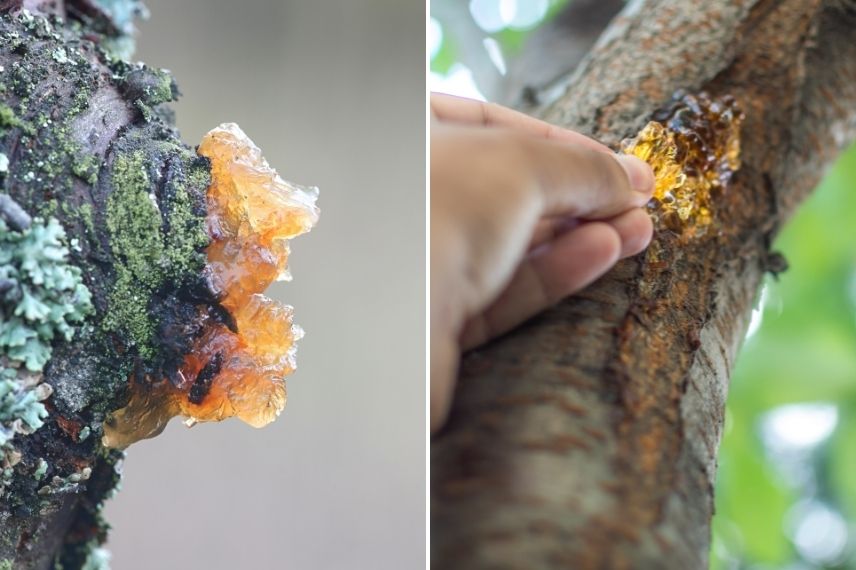
Bacterial Canker or Gummosis
Symptoms: a disease caused by a Pseudomonas sp. (bacterium). The buds remain small and turn black. The leaves crinkle, yellow, and then fall off. Necrosis develops on the shoots and a “gum” oozes out. Affected parts can quickly decline.
Treatments: as a preventive measure, it is essential to respect the cultural needs of cherry trees (see last point) and avoid pruning cherry trees (and other Prunus!) in autumn and when it is humid.
→ Bacterial canker affects many fruit trees. Follow Eva’s advice to avoid this!
Gummosis
The pests and diseases of the cherry tree
Cherry Fly (Rhagoletis cerasi)
Symptoms: these are tiny flies measuring 5 mm in length. Females lay their eggs in still green cherries. The larvae then feed on the fruit, which is lost. The fruit falls from the tree, along with the larvae. They will overwinter underground before emerging in spring.
Treatments: As a preventive measure, you can spray a bit of green clay when the cherries are still small and green. Chromatic traps are also effective: they should be placed after flowering to avoid trapping beneficial insects. Don’t forget to collect the infested fruit before the larvae can overwinter. The new pheromone traps work wonders by trapping the males who can no longer reproduce.
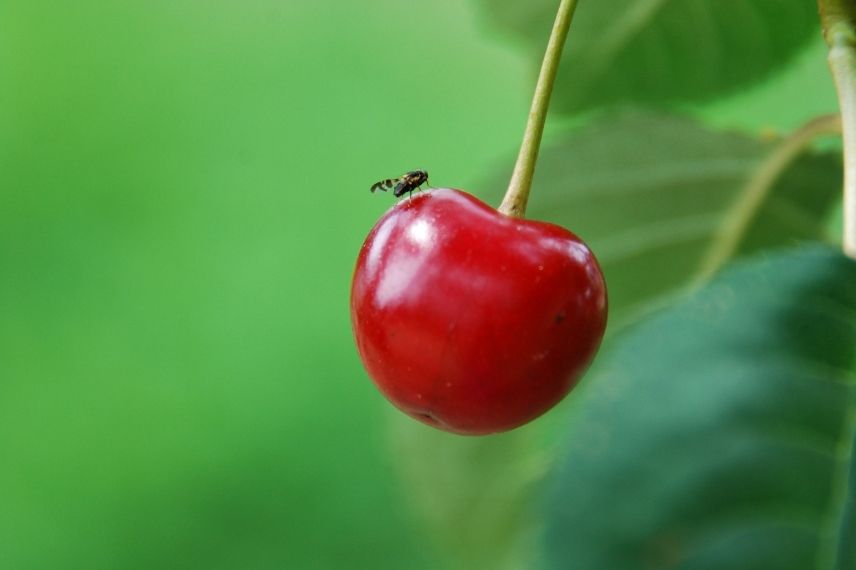
Cherry Fly
For more information: Cherry Fly: Prevention and Treatment
Black Cherry Aphid (Myzus cerasi)
Symptoms: aphids appear in spring, causing leaves to curl and young shoots to deform.
Treatments: as a preventive measure, avoid pruning your cherry tree and limit nitrogen inputs that encourage aphid attacks. As a curative measure, a treatment with black soap will do the trick. Or better yet, ally with beneficial insects like ladybirds. You can now find ladybird larvae or lacewing larvae in stores, which are fond of aphids.
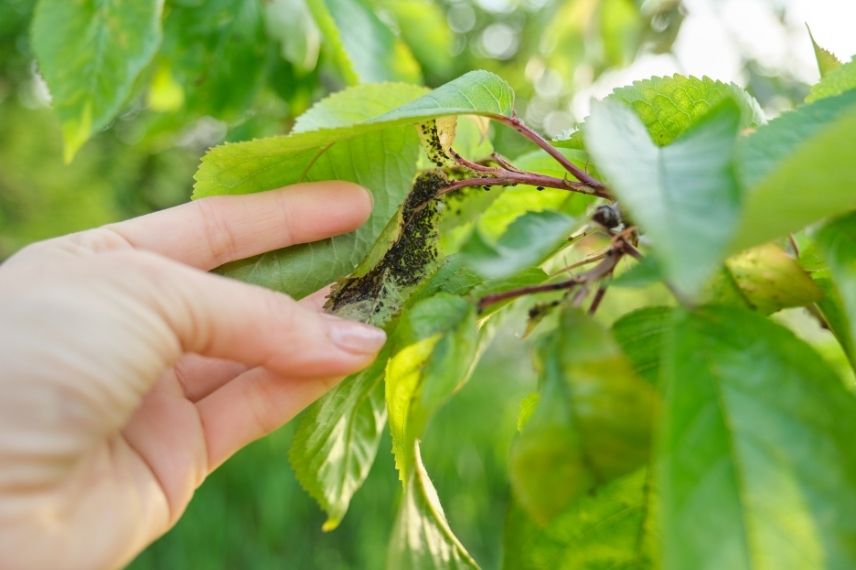 Black Aphids[/caption>
Mealybugs
Symptoms: a white powder develops on the leaves, posing no risk to the tree.
Treatments: a spray of diluted black soap on the foliage will eliminate mealybugs.
Woodworm Moth (Cossus cossus)
Symptoms: this is a wood-eating moth. The caterpillar burrows galleries in the branches and trunk and feeds on wood, which weakens the tree.
Treatments: there is no truly effective curative treatment. It is advisable to encourage its natural predators (notably great tits, which also consume caterpillars) by creating a natural garden that welcomes biodiversity. You can also purchase pheromone traps that will trap the males before reproduction.
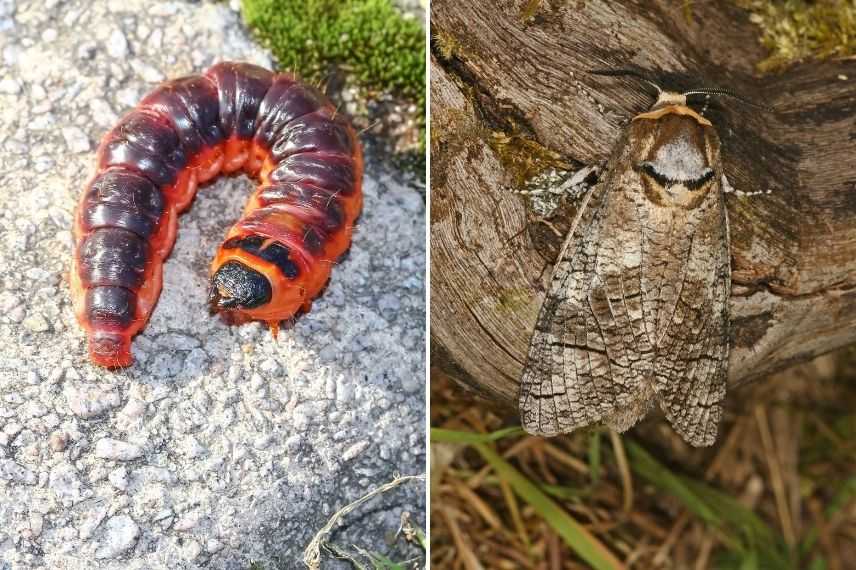 Woodworm Moth (Cossus cossus)
Discover other Cherry trees
View all →
Available in 0 sizes
Available in 0 sizes
Available in 2 sizes
Available in 0 sizes
Available in 0 sizes
Available in 0 sizes
Available in 4 sizes
Available in 0 sizes
Available in 1 sizes
Available in 4 sizes
How to reduce the risk of diseases or pests?
To minimise the occurrence of diseases and even pests, it is essential to provide your cherry tree with the best possible growing conditions.
- A deep, cool, and well-drained soil. The cherry tree dislikes heavy, clayey, and suffocating soils. If it rains a lot in your area, do not hesitate to plant your cherry tree on a mound to allow water to drain away quickly;
- A well-sunny exposure;
- A well-aerated situation and branches: give it space for the tree to flourish. You may also remove a few poorly placed branches or those growing towards the centre of the branches every 3-4 years at the end of summer. Otherwise, avoid pruning as much as possible, as this can create entry points for diseases;
- A sheltered position from the wind to prevent potential breakage and from the cold in areas with harsh winters.
→ Read Cherry Tree: planting, pruning, and maintenance to learn more about cherry trees.
- Subscribe!
- Contents
Comments