





























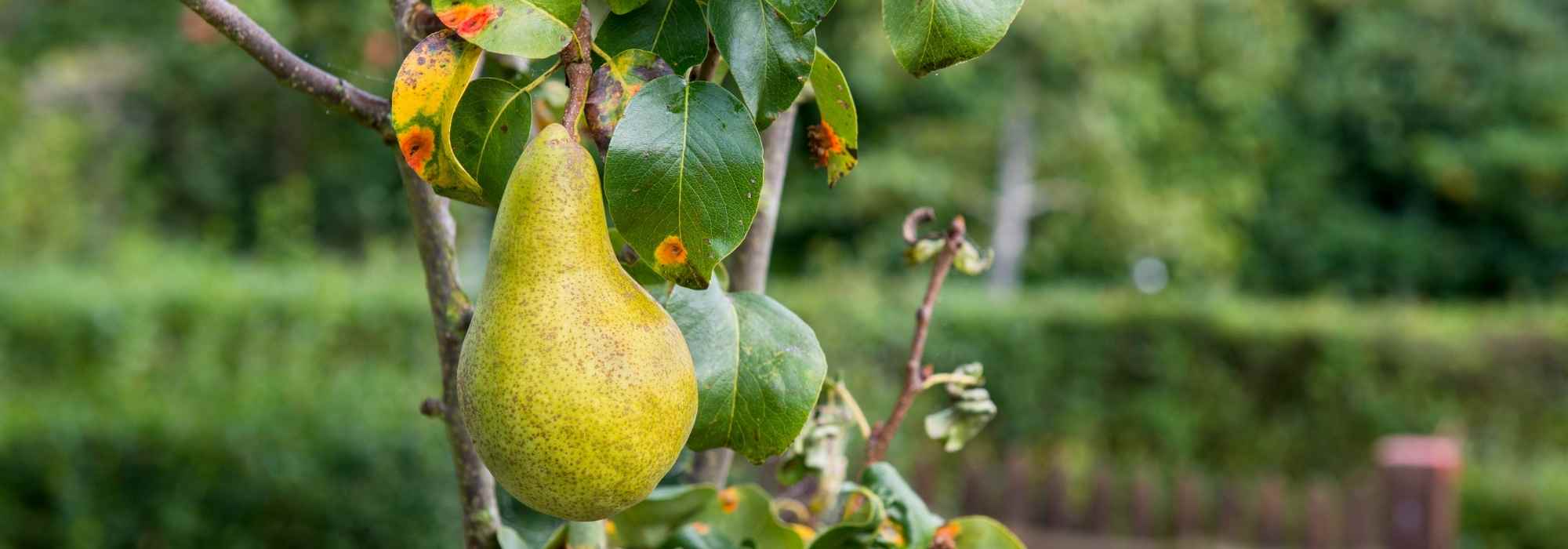
Diseases and Pests of Pear Trees
Prevent and combat
Contents
The pear tree (Pyrus communis) is an essential fruit tree in our orchards. Large and freely shaped, it can reach a height of between 10 and 15 m… or remain much smaller through careful pruning or variety selection. There are hundreds of varieties, including the variety ‘Williams’: very productive, with melting flesh; ‘Conference’: good for storage with firm flesh; and the variety ‘Doyenné du Comice’: an excellent pollinator with sweet and very melting flesh.
However, even though it is very hardy and quite resistant, the pear tree can be susceptible to various diseases and pests. To prevent this, it’s better to be proactive than reactive! It is important to provide everything the pear tree needs to stay healthy: rich, cool soil, sunlight, and space to grow. Pruning is important, but it should be done thoughtfully and with disinfected tools. Additionally, garden wildlife (birds, insects, predators, spiders…) will assist the gardener in combating diseases and pests.
→ If, unfortunately, your pear tree is affected by diseases or attacked by insects, let’s quickly find out what’s going on in our advice sheet.
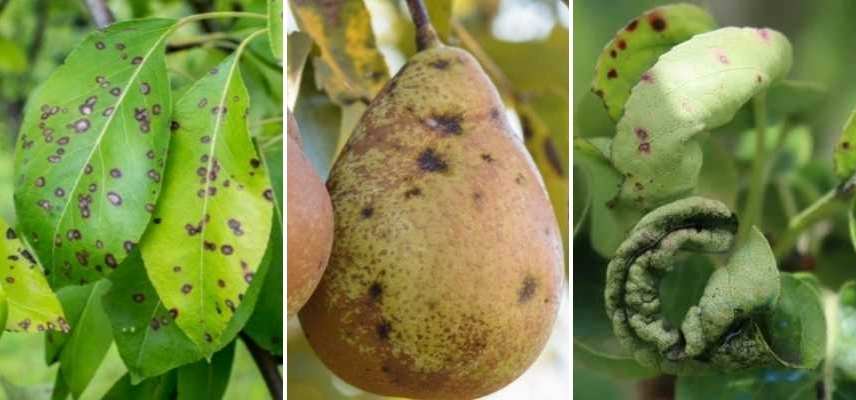
Suspicious spots on leaves, damaged fruits, swollen leaves… all signs that your pear tree is suffering

Pear tree diseases
Scab
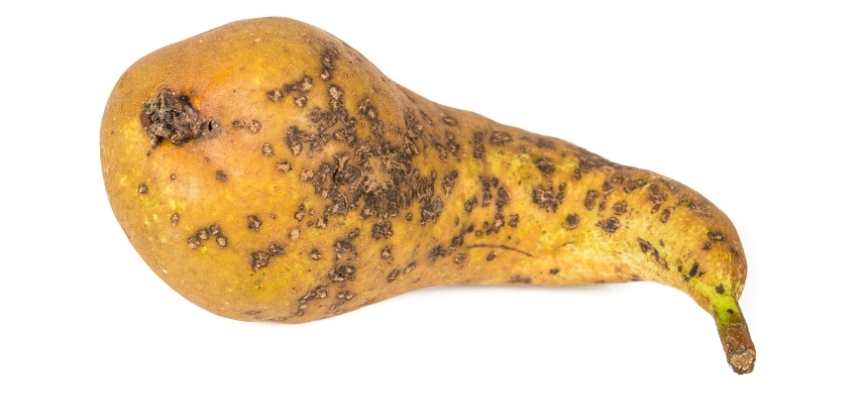
Scab is one of the most common fungal diseases affecting pear and apple trees. It is characterised by brown spots on leaves and fruit. Scab is primarily present in humid weather from May to September.
To prevent scab: ensure good air circulation around your trees (both around them and within the branches), apply compost at the base once a year, and treat with horsetail manure in spring to boost the immune defences of the pear tree, along with nettle manure for additional nitrogen.
Sooty Mold
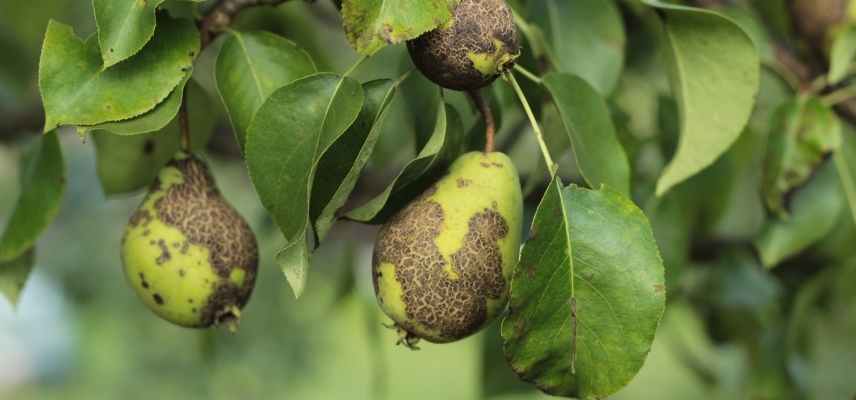
Sooty mold is a disease caused by black moulds that develop due to honeydew secreted by aphids. The disease is characterised by a sort of black soot on the foliage. In rare cases, sooty mold can block part of photosynthesis, thus slowing the plant’s growth.
To limit the spread of sooty mold: keep your trees well-aerated, not too crowded, and thin out the branches. Encourage biodiversity in your orchard. If predators of aphids (ladybird larvae, hoverfly larvae…) are abundant, their damage will be limited.
Brown Rot
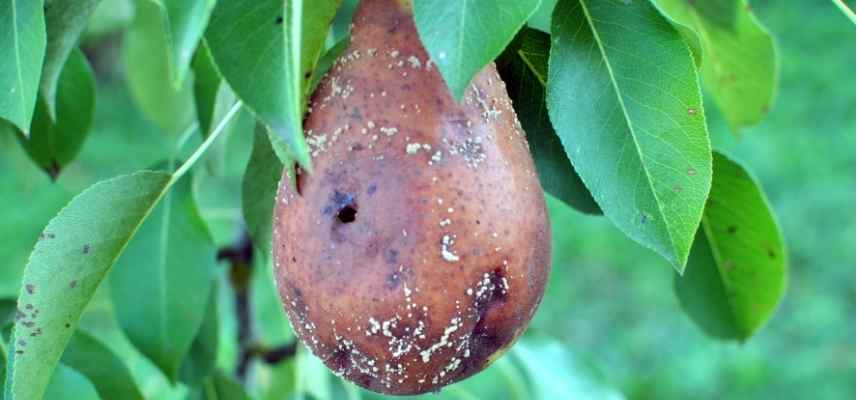
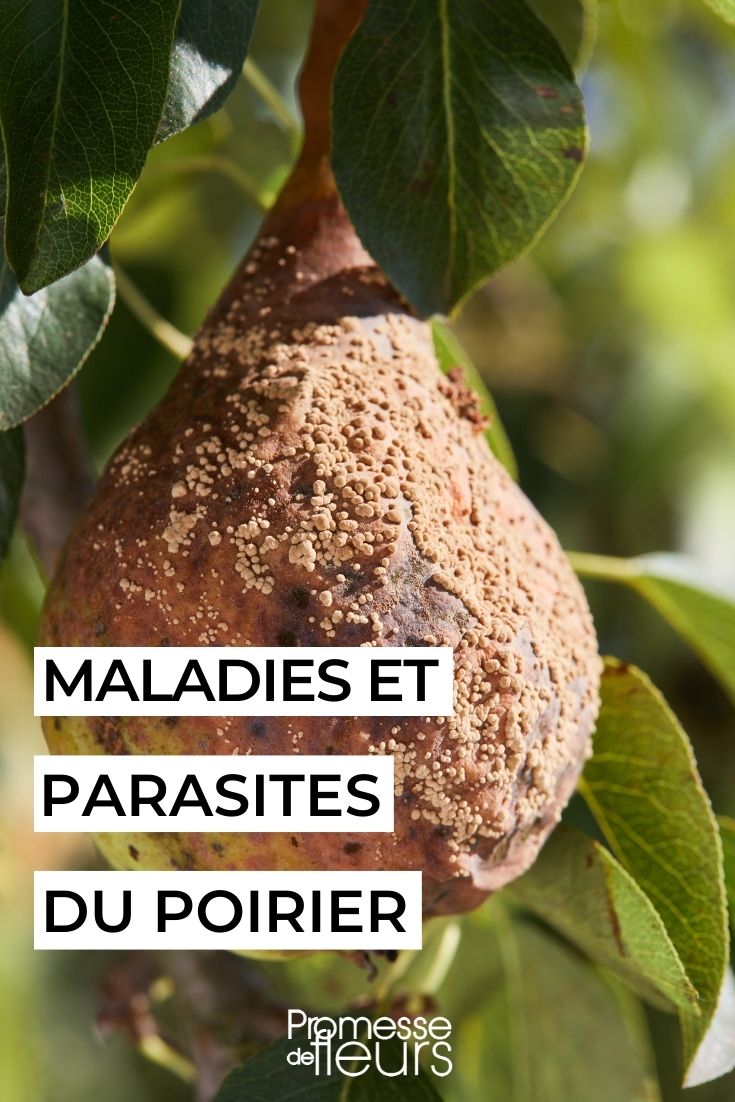
Brown rot is a fungus that develops from damaged areas of the fruit (insect stings or bruises). White pustules in a circular shape develop on the fruit, followed by large brown areas on and inside the fruit. It leads to the wilting of flowers and the rotting of fruit on the tree. The harvest is sometimes reduced to nothing.
To combat brown rot, you must remove and dispose of the affected fruit. A treatment with horsetail manure is often effective.
Powdery Mildew
Powdery mildew is a fungal disease characterised by a white fluff on the leaves. Although striking, powdery mildew is rarely problematic for the pear tree. To prevent this disease or limit its spread: space your plantings to ensure good air circulation, avoid excess nitrogen, and mitigate the effects of summer drought.
Rust
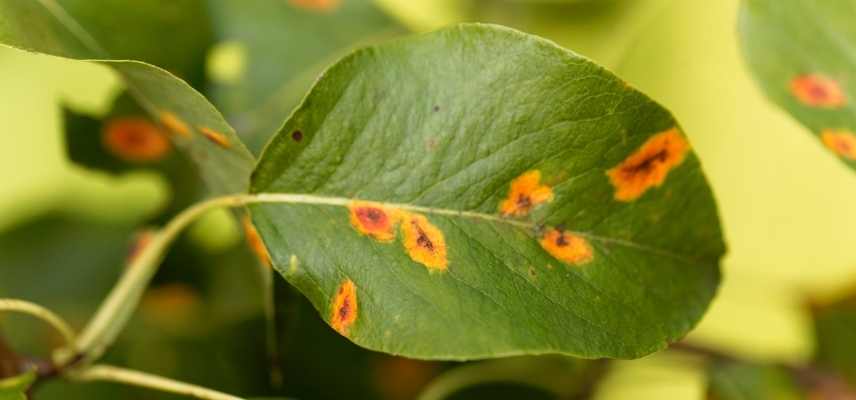
Rust is a fungus that settles on the leaves at the beginning of summer. You will notice orange spots on the leaves and reddish underneath from May to September. The fungus lives on certain junipers, as a host plant: Juniperis sabina and Juniperus oxycedrus. Therefore, avoid planting them near pear trees.
To combat rust: remove the affected branches and leaves in autumn. Apply a horsetail decoction treatment in spring.
Root Rot
Root rot or root decay is a disease caused by a fungus, Armillaria (Armillaria sp.), which attacks the roots of the pear tree, causing gradual decline. The main symptom is the purple colour of the foliage in autumn.
There is no treatment, but Armillaria attacks the weakest trees. This fungus is primarily present in wet and overly nitrogen-rich soils.
European Canker of Pear (caused by a Pseudomonas bacterium)
Canker is a disease caused by a bacterium. This disease is characterised by a brown spot on the bark that spreads rapidly, accompanied by swellings, cracks, and necrosis of the bark. A golden gum flow can also be observed: gummosis. A pear tree affected by canker gradually weakens until death. The pears turn yellow and fall prematurely.
To prevent canker: thoroughly clean your pruning tools before and after pruning. Prune in dry weather. Avoid excess nitrogen.
Coral Disease
Coral disease is a fungal disease caused by a fungus called Nectria cinnabarina. This disease is easy to identify: small coral-coloured pustules will develop on certain branches. These branches will dry out and die.
To prevent this disease: prune with clean tools, correctly and at the right time. Remove dead wood and apply compost every year. Coral develops on weakened trees.
Fire Blight
The fruit is riddled with small black spots and remains small. The bacterium causing this disease (bacteriosis) hibernates in the flower buds. The dry inflorescences turn black, and sometimes the entire branch dries out. The branches appear to have been burned. There is no treatment for this disease for amateur gardeners.
Fire blight has caused serious damage in France in the past. Consequently, the most sensitive varieties are banned from planting, but remain vigilant if you observe sudden wilting of certain branches, especially after flowering.
Nota bene: there is much talk here of horsetail manure and nettle manure, but not of Bordeaux mixture. Bordeaux mixture, although effective as a copper-based fungicide, is toxic to humans, soil fauna, and aquatic life. Especially during repeated treatments that do not respect prescribed doses. In other words, let Bordeaux mixture be for professionals and choose gentler solutions.
Read also
Pyrus: planting, pruning and carePear tree pests
The enumeration of “pests” affecting pear trees may seem alarming, even causing panic among some gardeners. Let’s relax; pests are rarely as problematic in the garden as fruit tree horticulture books would have us believe. Moreover, insects and mites are often regulated by a whole range of natural predators.
Pear Psylla (Cacopsylla pyri)
Psyllids feed on sap and secrete honeydew, which can lead to sooty mould. Psylla larvae, which are very voracious, are tiny and can be brown, green, or yellow. To spot them, look for young shoots on the pear tree that are sticky and deformed. The presence of sooty mould and waxy filaments on the branches are also symptoms. The tree may become weakened and its growth may slow down. To combat psylla, it is advisable to encourage natural predators: lacewings and hoverflies.
Pear Leaf Gall Midges
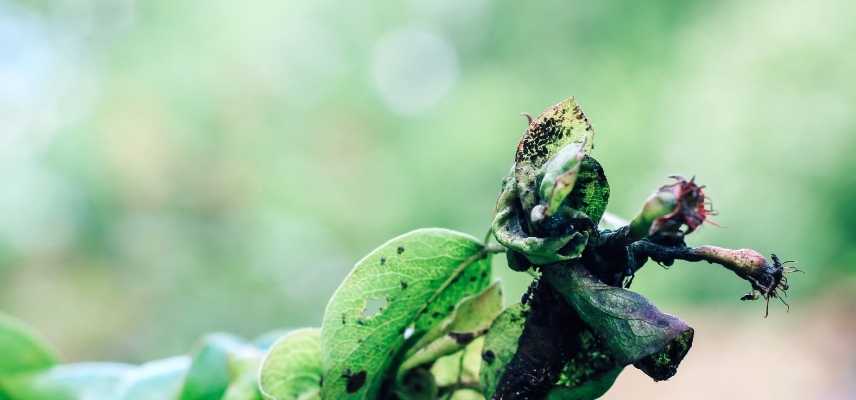
A gall midge is a tiny fly. Its larvae are the main concern for pear trees. They can be found well hidden in rolled leaves, which turn red and then black. Pears may become rounded or misshapen, then blacken and fall.
Pear Weevil (Anthonomus pyri)
This insect, a weevil, develops within the buds on which it feeds. The future harvest is then significantly impacted. Applying lime wash to the trunk yields good results in keeping the insect away from the pear tree.
Codling Moth (Cydia pomonella)
The codling moth larvae burrow into the fruit to feed. You may notice brown spots on pears that fall from the tree before ripening. The codling moth can be countered by installing bird and bat boxes, placing corrugated cardboard bands along the trunk, and bagging the fruit in brown kraft paper.
Aphids
Leaves curl and lose their green colour. Attacks are very localized, and treatment is rarely necessary, especially if your orchard hosts aphid predators: ladybird larvae, hoverfly larvae, etc. In case of a severe aphid infestation, you can spray a mixture of water and black soap.
Frothy Leafhopper (Metcalfa pruinosa)
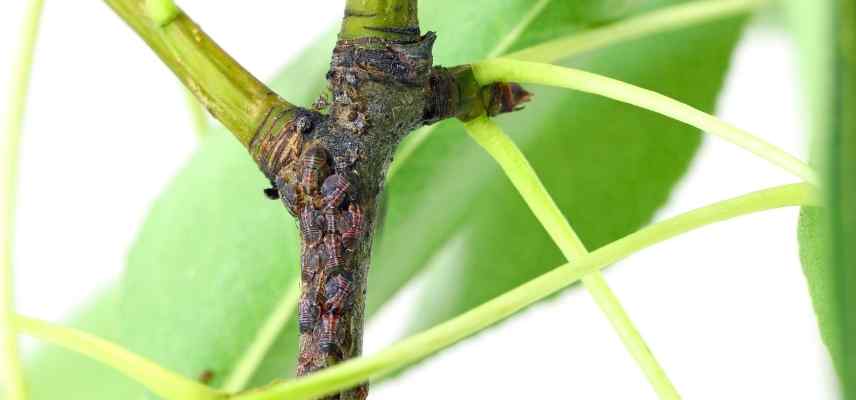
This insect is primarily found in the south of France. It feeds on sap and can sometimes damage the bark of the pear tree. The larvae hide under leaves and on young shoots: they are white and covered with a cottony wax. During severe infestations, the shoots dry out and become brittle. Additionally, the presence of honeydew encourages the appearance of sooty mould.
To combat this “leafhopper” (despite its common name, it is not a true leafhopper), a shower of rainwater can hinder their proliferation on the tree. There is also a parasitoid wasp, Neodrynus typhlocibae, used in biological control, which targets these frothy leafhoppers.
Pear Eriophyte Mite (Eriophyes pyri)
The pear eriophyte mite is a mite that lives under the scales of buds and attacks young leaves even before they develop. The leaves then become blistered and change colour from green to dark brown. It is difficult to combat, but you can remove the affected shoots.
Pear Red Scale (Epidiaspis leperii)
The bite of the pear red scale (both the adult and the larva), which resembles a sort of white and red pill, causes deformities in certain parts of the pear tree and a general delay in growth. If they are numerous, some shoots may dry out or show gummosis. It is advisable to avoid excess nitrogen to prevent a scale infestation. Otherwise, garden predatory insects should significantly reduce the number of scales.
Pear Clearwing Moth (Zeuzera pyrina)
The caterpillar of the clearwing moth, a beautiful butterfly, burrows into the wood, which can create “open doors” for diseases. To reduce clearwing populations, one can let nature take its course (insectivorous birds are fond of caterpillars) or treat with Bacillus thuringiensis (Bacillus thuringiensis) injected directly into the galleries.
Pear Cabbage Moth (Janus compressus)
Cabbage moth attacks can be impressive due to the number of pear shoots whose tips suddenly blacken and curl into a crozier in May-June. The laying of this small wasp has little impact on the tree’s life but alters the harmonious development of new shoots. Cut these shoots 10 cm below the dried part or let starlings and starlings feast on the larvae.
Discover other Pear trees
View all →
Available in 1 sizes
Available in 1 sizes
Available in 1 sizes
Available in 1 sizes
Available in 1 sizes
Available in 0 sizes
Available in 0 sizes
Available in 1 sizes
Available in 0 sizes
Keeping a pear tree healthy: the right actions and good cultural practices
To prevent diseases and limit pest attacks, it is essential to keep pear trees in perfect health. Here’s how to do it:
The Needs of the Pear Tree
Needing warmth, it should be planted sheltered from prevailing winds, especially north of the Loire. The pear tree thrives in cool, rich soils, but does not appreciate overly dry or chalky soils. The pear tree does not like to be crowded, so give it space.
The Care Required
Every year, in autumn, apply well-matured compost to the surface. Then, in winter, add a small handful of wood ash, rich in potash, to improve fruiting. Hoe around the base of the tree if necessary. Water regularly, depending on your climate, during the first two or three years.
Pruning
Tools, always well-sharpened, must be disinfected beforehand.
Pruning the pear tree should be done every 2 to 3 years (except for trained forms, where pruning should be annual and focus on flower buds). It takes place from November to March, outside of frost periods.
To prune the pear tree:
- Remove any suckers growing at the base of the tree and any vigorous shoots developing on the trunk.
- Remove dead or broken branches, as well as those that cross each other.
- Cut back twigs and some interior branches to allow air and light to circulate within the tree.
- Trim the ends of branches above a bud facing outward. Treat pruning wounds with a healing agent like clay.
- Subscribe!
- Contents
Comments