






























Diseases and pests of serviceberry
Identify, prevent, and treat naturally
Contents
Amelanchier is a beautiful ornamental bush, with a delicious fruit production, that we recommend adopting in your garden. The most well-known species are Lamarck’s Amelanchier and Canada Amelanchier or Amelanchier canadensis. Amelanchiers are not very sensitive to insect and parasitic attacks. However, they are susceptible to a few fungal diseases and fire blight, a bacterial disease that severely affects members of the Rosaceae family, including Amelanchier, although it is not the most affected species, and can kill a bush within a few weeks.
Discover the 3 diseases that can affect an Amelanchier and how to identify, treat, and prevent them.

Fire blight
Although Amelanchier is not among the first species affected by fire blight, as a member of the Rosaceae family, it can unfortunately harbour this bacterium. Very serious, it can cause the death of the bush within three months. It is crucial to spot the early signs. The bacterium Erwinia amylovora responsible for this is subject to obligatory control in nurseries, as well as in private gardens. In these, it spreads from ornamental plants such as Cotoneaster, Pyracantha, and Hawthorn, which are the most sensitive species.
Identification
The first symptoms are visible on the flowers in spring: they wilt and dry out. Next, the tips of the shoots begin to bend and dry out as well. Young shoots may suddenly turn reddish or black. A whitish ooze can be observed on the affected parts.
If you observe these types of symptoms, it is essential to investigate without delay. Laboratory analysis can confirm the disease, but before that, by cutting a branch, you can check for other signs. → Read Eva’s article on fire blight to properly identify this disease.
The disease spreads to the shoots, branches, and even the trunk, causing cankers that lead to the sudden death of branches or the entire tree by blocking the sap. They then harbour the disease during winter, which spreads to other plants in the Rosaceae family via the whitish exudates present on the affected parts.
Treatment
The reason this disease is so serious is that there is no effective treatment. It is believed that copper-based treatments can help limit new infections, but they should be used sparingly due to their toxicity to ecosystems.
The crucial point in the fight is early detection.
Prevention and Legislation
It is therefore important to detect the symptoms of fire blight early and to remove the contaminated shoots. Fire blight often appears during warm (between 12 and 24°C) and humid periods. The bacterium enters through natural openings such as the nectaries of flowers or the stomata (pores located beneath the lamina), as well as through injuries caused by hail, wind, or pruning.
It is during flowering and periods of vigorous growth that the plant is most susceptible, but symptoms are generally observed just after flowering, on the young fruits that dry out.
Do not forget good preventive habits such as spraying horsetail decoction, which strengthens the plant and provides general protection.
In the case of confirmed contamination, you must inform your local council or the Regional Plant Protection Service so that they can take the necessary measures to prevent contagion.

Symptoms of Fire Blight
Read also
Amelanchier: planting, pruning, growingEntomosporiosis
Cryptogamic disease typical of plants in the Rosaceae family, Entomosporiosis is caused by the fungus Entomosporium maculatum. It causes only aesthetic damage in ornamental gardens; however, in orchards, the attack can be significant.
Identification
On an amelanchier, small round spots, 1 to 3 mm in size, appear reddish and then covered with characteristic brown crusts. In cases of severe attack, the leaves turn yellow and fall.
On older leaves, the spots darken with a grey central area surrounded by a brown margin. Small black punctuations, the spores, are observed at the centre of the spots. In cool, humid conditions, the disease can spread to the petioles and young shoots, leading to the weakening of the tree in severe cases, where spots are also seen on the fruits, which may even mummify.
Prevention
This fungus primarily develops in humid weather during spring and summer when temperatures are below 20 °C. A dry spell, on the other hand, slows the disease. During winter, the fungus survives on fallen leaves, branches, and the trunks of infected trees. It produces spores in humid conditions, carried by wind and rain, which can contaminate other trees in spring or later, particularly during fruit formation.
For prevention, it is important to avoid overly dense plantings, promote air circulation between plants, and within the crown of the bush by pruning. Also, systematically disinfect your pruning tools with 90% alcohol.
Treatment
Prepare a solution of 20 g of Bordeaux mixture per litre of water as soon as the first symptoms appear and spray:
- In autumn, at leaf fall.
- In early spring: one spray at bud burst and a second one month later.
- In particularly humid springs or as soon as the first symptoms of spots appear, repeat the operation several times until fruit formation.
Collect and burn infested leaves and fallen fruits.
→ For more information, read the article on Entomosporiosis.
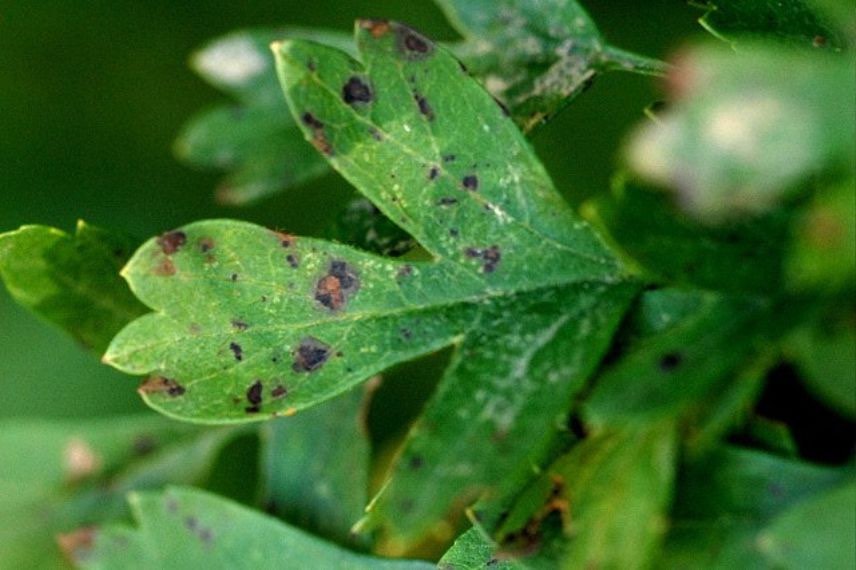
Symptoms of Entomosporiosis
Discover other Saskatoon - Juneberry
View all →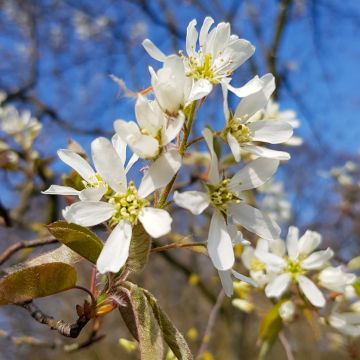
Available in 5 sizes
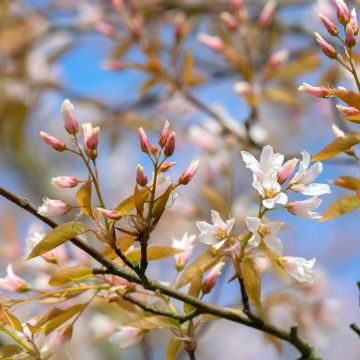
Available in 2 sizes
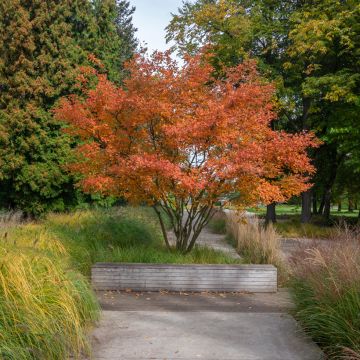
Available in 1 sizes
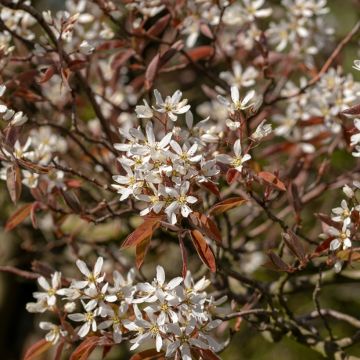
Available in 2 sizes
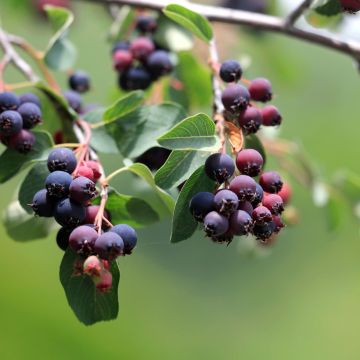
Available in 1 sizes
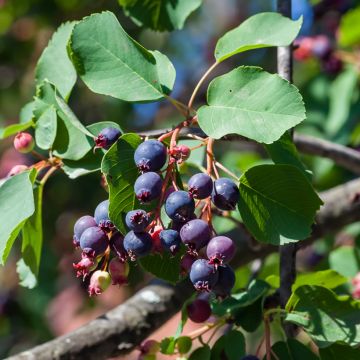
Available in 1 sizes
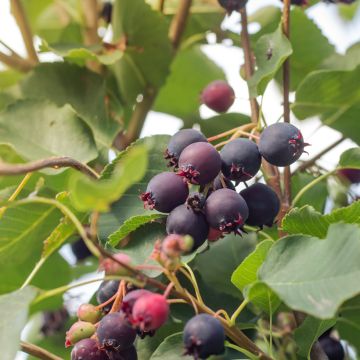
Available in 1 sizes
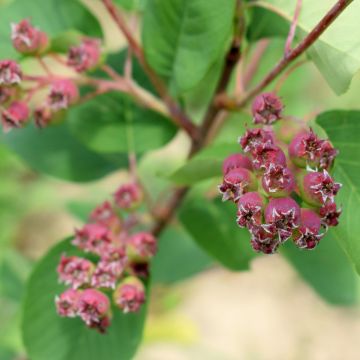
Available in 1 sizes
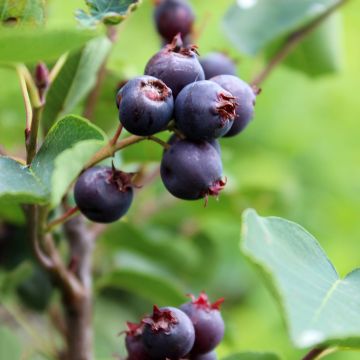
Available in 1 sizes
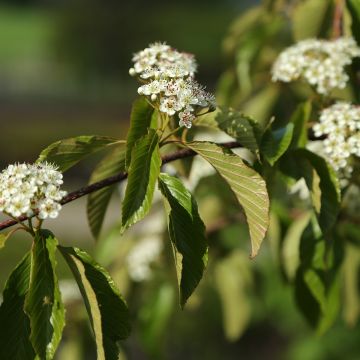
Available in 1 sizes
[powdery mildew]
If you notice a white fluff on your Amelanchier leaves, it is likely a symptom of powdery mildew, common in gardens. It is caused by microscopic fungi and is favoured in confined environments with warm, dry air.
It is characterised by a fluffiness in the form of spots or patches, with a farinose appearance and a greyish-white colour, present on the leaves and flower buds. In cases of severe infestation, these organs may become deformed.
On ornamental plants, the damage is aesthetic, but on fruit-bearing plants, the quality of the fruit can sometimes be affected. Powdery mildew appears in spring or late in the season on fruit crops.
Prevention
Once again, it is important to space your plantings, encourage air circulation, and prune if necessary. The decoction or horsetail manure is recognised as a good preventive measure against powdery mildew. It is also important to mulch to maintain good moisture in the soil. If you notice some damage, it is crucial to cut away the affected parts, collect the dead leaves, and burn them all.
Treatment
Several natural treatments are possible and have shown their effectiveness provided they are applied consistently. Based on baking soda, garlic, or skimmed cow’s milk, they should be sprayed regularly.
→ To discover the natural recipes in detail, read the article on powdery mildew.
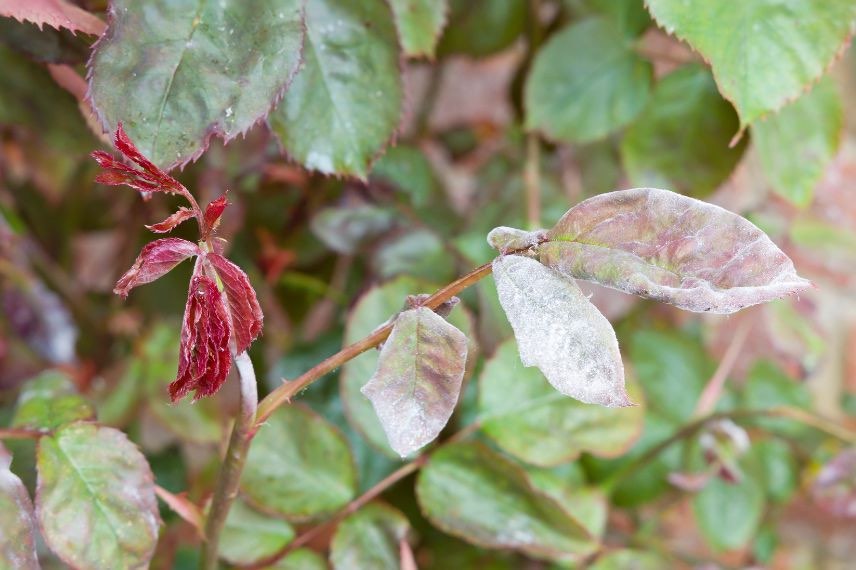
Fluff of powdery mildew on a rose stem
- Subscribe!
- Contents
![[plant_guide title="Soigner l'amélanchier naturellement"]
Pour garder votre {glossary}amélanchier en bonne santé de manière naturelle, voici quelques conseils simples à suivre :
1. Arrosage : Veillez à maintenir le sol humide, surtout pendant les périodes sèches. Évitez les excès d'eau stagnante.
2. Paillage : Appliquez un paillis organique autour de l'amélanchier pour conserver l'humidité du sol et réduire la croissance des mauvaises herbes.
3. Taille : Taillez les branches mortes, malades ou endommagées au printemps. Éliminez également les rejets à la base pour favoriser la croissance des branches principales.
4. Fertilisation : Apportez un engrais équilibré au printemps pour stimuler la croissance et la floraison de l'amélanchier.
5. Protection hivernale : Enveloppez l'amélanchier dans un voile d'hivernage pour le protéger du froid et des vents forts.
En suivant ces conseils simples, vous aiderez votre amélanchier à s'épanouir naturellement dans votre jardin. Profitez de sa belle floraison et de ses délicieux fruits en toute saison ! [/plant_guide]](https://en.promessedefleurs.eu/blogwp/wp-content/uploads/2023/03/Maladies-et-parasites-de-lamelanchier.png "Diseases and Parasites of the Serviceberry")
Comments