





























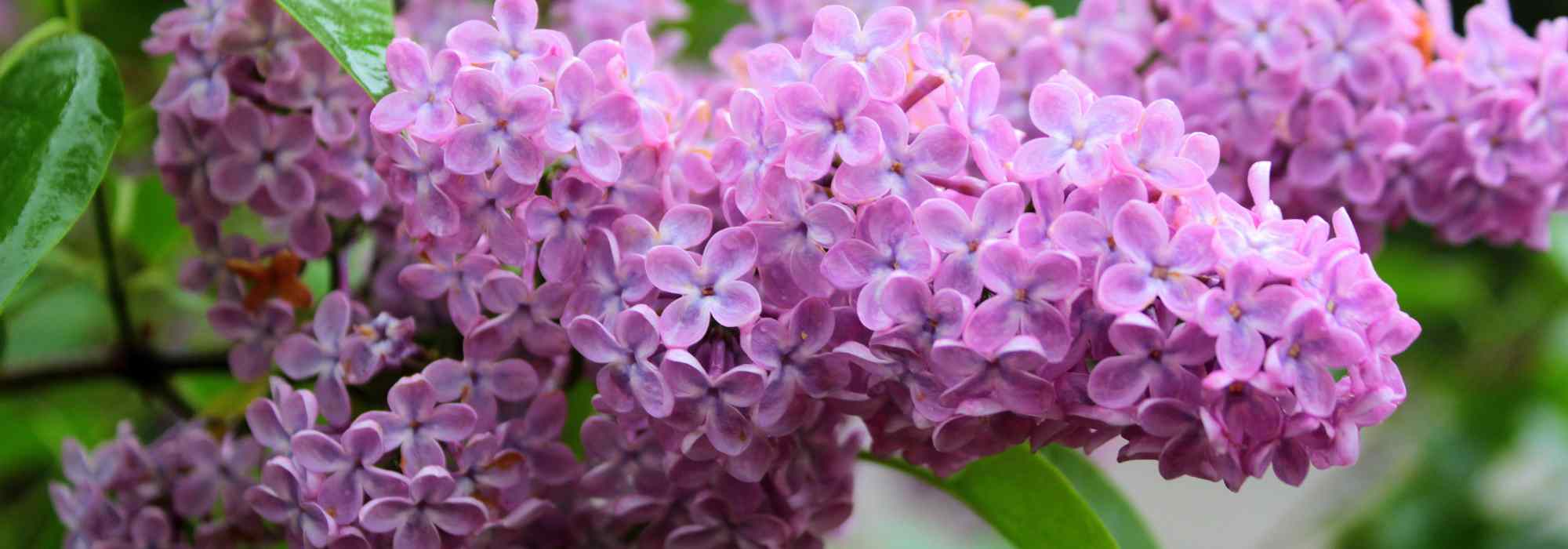
Drought-tolerant lilacs: make the right choice!
Discover our selection of drought-tolerant lilacs for a flowering, low-maintenance garden
Contents
Among the many species and varieties of lilacs, Chinese lilacs, with their hardy varieties and fragrant flowering, make an ideal choice for gardening enthusiasts seeking lasting beauty and drought resilience. Among these botanical treasures, Syringa microphylla stands out for its abundant flowering and adaptability to small spaces and hot climates. The resurgence of European lilacs and their hybrids, such as the majestic ‘Belle de Moscou’, testifies to their ability to transcend trends, offering a palette of colours and scents capable of enchanting every corner of the garden. Their hardiness and their ability to thrive in diverse climatic conditions, including drought resistance once well established, make them exceptional choices for flowering hedges, borders, or simply to adorn a small dedicated space. Discover our selection of Lilacs for dry soil.

Chinese lilacs: Syringa microphylla and Syringa chinensis
Syringa microphylla and Syringa chinensis (and their hybrids) are easy-to-grow bushes and low-maintenance. They are perfect for dry, sunny gardens. With their fragrant and colourful flowers, they will add a touch of beauty to your garden throughout the spring.
Among Chinese lilacs, Syringa microphylla ‘Superba’ is a small-leaved lilac, more floriferous than the wild species. This shrub of modest size (about 1.5 m tall and wide) and low-maintenance flowers abundantly in spring and autumn. Its clusters of dark pink and pale pink flowers are very fragrant and melliferous. The Chinese lilac ‘Superba’ is ideal for small gardens and hot, dry climates. It can be planted as a flowering hedge or in a border with other shrubs that bloom at different times.
Among the other small-leaved lilacs, we can only recommend Syringa microphylla ‘Red Pixie’. It is a small-leaved lilac with a slightly weeping habit, its arching branches lending it a distinctive elegance. It too flowers abundantly in the sun, with beautiful panicles of pearl-pink small flowers that unfold in turn from April to June. Its ruby-red buds add an extra splash of colour. Similar in size to ‘Superba’, it will find a place in all gardens, even the smallest, and can also be grown in a pot on a terrace.
Among Chinese lilacs, one naturally thinks of Syringa chinensis and its hybrids. The lilac ‘Saugeana’ is a Chinese hybrid lilac, also known as Rouen lilac. It is a bushy shrub fairly large (3.5 m tall by 2 m wide), but slow-growing, which offers intense and fragrant pink-violet flowering during the months of May and June. It delights butterflies and other nectar-seeking insects. Easy to grow, frost- and drought-tolerant, it is ideal for informal hedges, borders and terraces.
Not a lot of room to accommodate a Chinese lilac hybrid? Don’t worry — there are more compact varieties. This is the case with the lilac ‘Josée’, which reaches 2 m tall with relatively slow growth. It flowers twice a year, in spring and late summer, with fragrant clusters of vivid lilac pink.
Did you know? The smaller a plant’s leaves, the less water lost to evapotranspiration, and thus the more drought-tolerant the plant will be. In lilacs, you can readily understand that the champions of dry soils are the small-leaved lilacs (Syringa microphylla) and the Korean lilacs (Syringa meyeri).
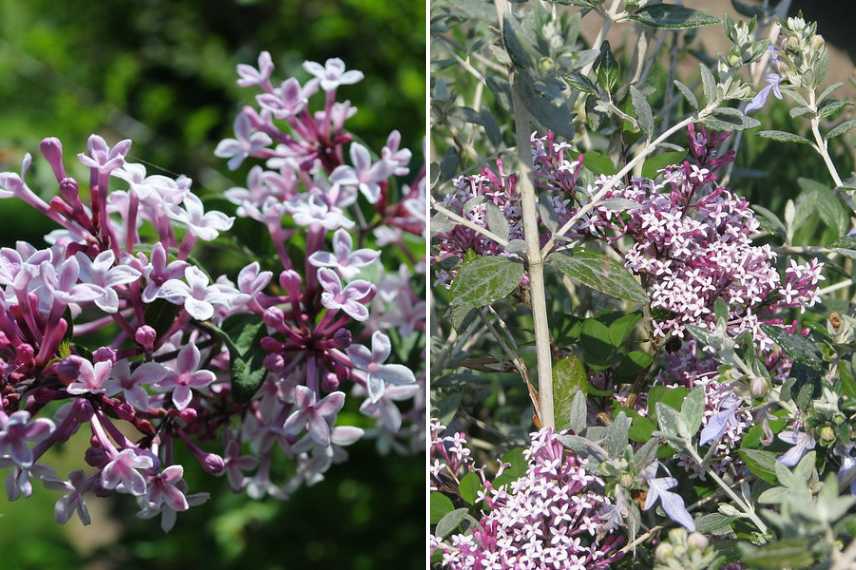
Syringa microphylla ‘Superba’ (© Chiara Coetzee) and Syringa microphylla ‘Red Pixie’ (©Peganum)
Dwarf lilacs: Syringa meyeri
Korean dwarf lilacs, or Meyer’s lilac, aren’t all dwarfs (ah, if only that were true!). For example, the Syringa meyeri ‘Palibin’ is a handsome 2 m by 2 m shrub, but its growth is slow. It is therefore, despite everything, ideal for small gardens or even patios. Its mauve-pale pink flowering is fragrant and abundant, from spring (April–May) to autumn (September–October).
If you’re looking for truly dwarf lilacs, the Flowerfesta series will certainly appeal. The Syringa Flowerfesta® ‘Purple’ is a dwarf lilac, hardy and repeat-flowering, ideal for small gardens and patios. Its purple flowering is fragrant and abundant, from spring (April–May) to autumn (September–October). The flowers of this series are larger than those of other Korean dwarf lilacs. Its growth is slow and it will not exceed 1.25 metres in height or spread. There are other colours: the Syringa Flowerfesta ‘White’ with white flowers or the Syringa Flowerfesta ‘Pink’.
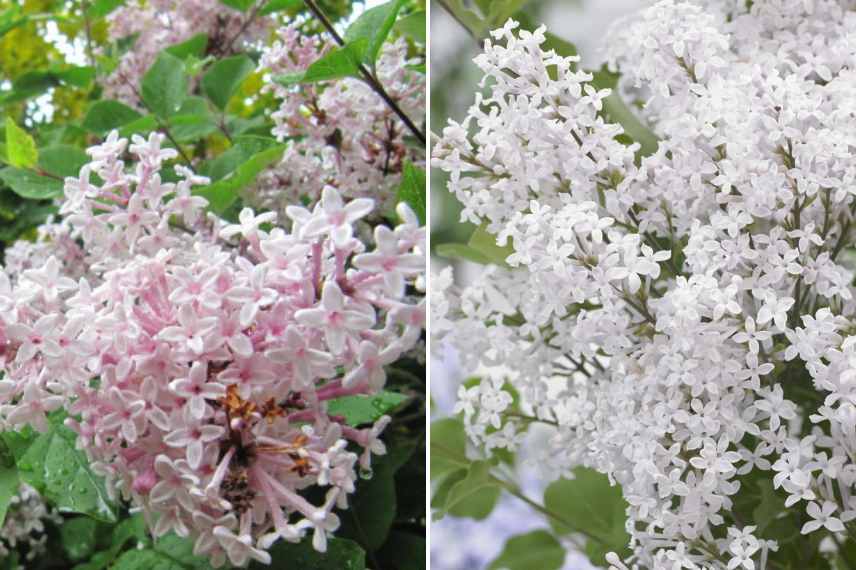
Syringa meyeri ‘Palibin’ (© Leonora Enking) and Syringa Flowerfesta ‘White’
A rare lilac: the Persian lilac or Syringa persica
The Syringa (x) persica ‘Laciniata’, well known (well… this lilac is actually very little known) for its uniquely cut foliage and its spreading, airy habit, offers a touch of grace and originality with its light mauve-blue flowering, early and long-lasting. This lilac, notable for its refined fragrance, is distinguished not only by its aesthetics, but also by its resilience, notably its drought resistance, which makes it an ideal candidate for gardens of all sizes, including in dry regions. Originating from north-west China and Afghanistan, this bushy shrub and slightly suckering reaches a height of 1.5 m with a 2 m spread at maturity, suitable for planting in the ground as well as in a large container on a terrace or balcony. Its hardy nature and adaptability to different climates make it a valuable plant for fragrant gardens, offering a delicate alternative to more common lilac varieties.
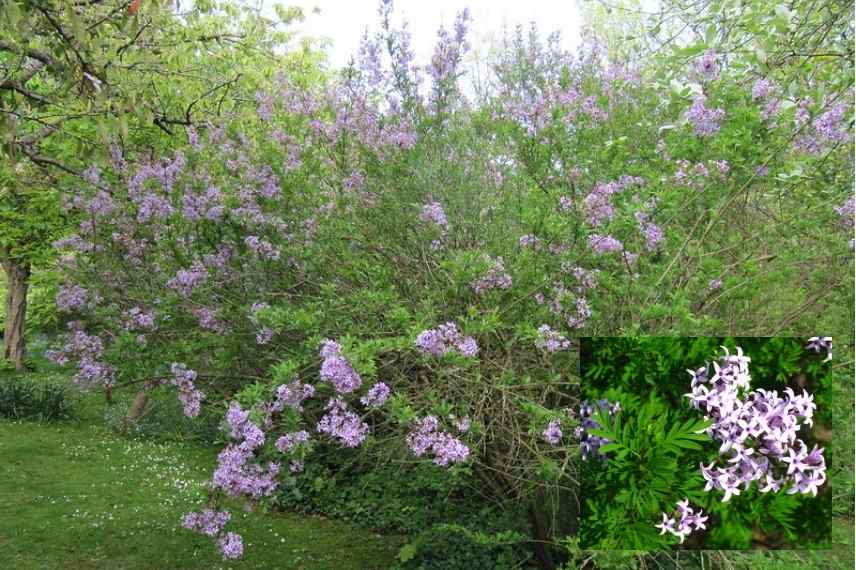
Syringa persica ‘Laciniata’ (© Leonora Enking), and detail of the flowering
Read also
Purple lilac: the best varietiesCommon lilacs: a timeless classic!
Ultimately, European lilacs (Syringa vulgaris) are fairly drought-tolerant once well established. You can therefore choose from the wide range of varieties that exist. However, among them, we recommend the varieties ‘Belle de Moscou’, ‘Charles Joly’ and ‘Primrose’.
The ‘Belle de Moscou’ Lilac, Russian variety derived from Syringa vulgaris, is distinguished by its exceptional May flowering, with clusters of pale pink buds that unfold into almost white double flowers, offering a delicate visual display and a subtle fragrance. This sturdy, slender bush with an erect habit, reaching up to 3.5 m in height, is suited to a wide range of climates, particularly cool and moderately watered, and thrives in ordinary, cool, and well-drained soils. Its ability to produce numerous suckers and its hardiness, inherited from its Balkan and Asian origins where it colonises difficult terrain and withstands cold winters, attest to its resilience and ease of cultivation.
The Syringa vulgaris ‘Charles Joly’, known for its compact clusters of wine-red double flowers and its intense fragrance, is a deciduous bush with a bushy habit and vigorous growth, easy to grow. Created by Victor Lemoine in 1896, this bush reaches 5.5 m in height and a 3.5 m spread, adorned with light green foliage. It flowers abundantly in April–May, attracting butterflies with its flowers exhaling an intense fragrance. ‘Charles Joly’ is not only hardy and long-lived, but also adaptable to different soils and light conditions, from full sun to partial shade, highlighting its ability to thrive even in less-than-ideal conditions, including drought tolerance.
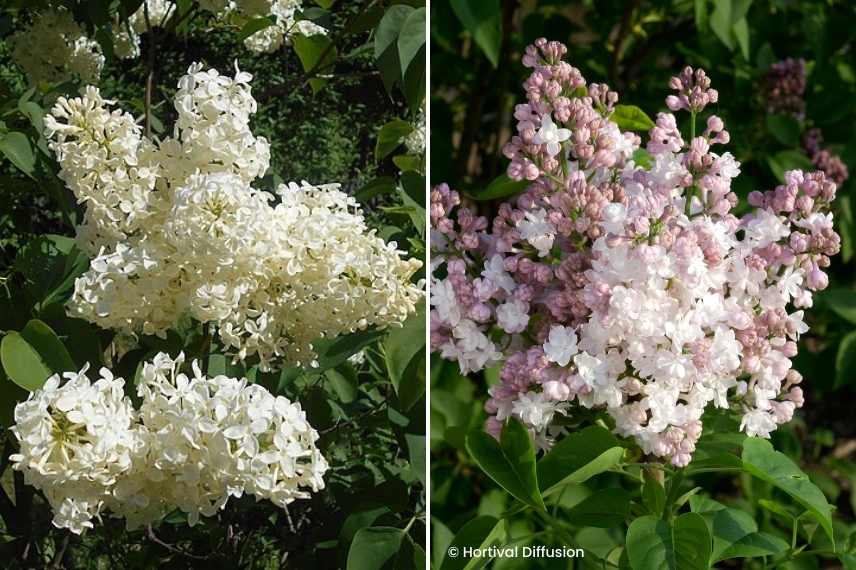
Syringa vulgaris ‘Primrose’ © Salycina-Wikimedia Commons, and Syringa vulgaris ‘Belle de Moscou’
- Subscribe!
- Contents
Comments