





























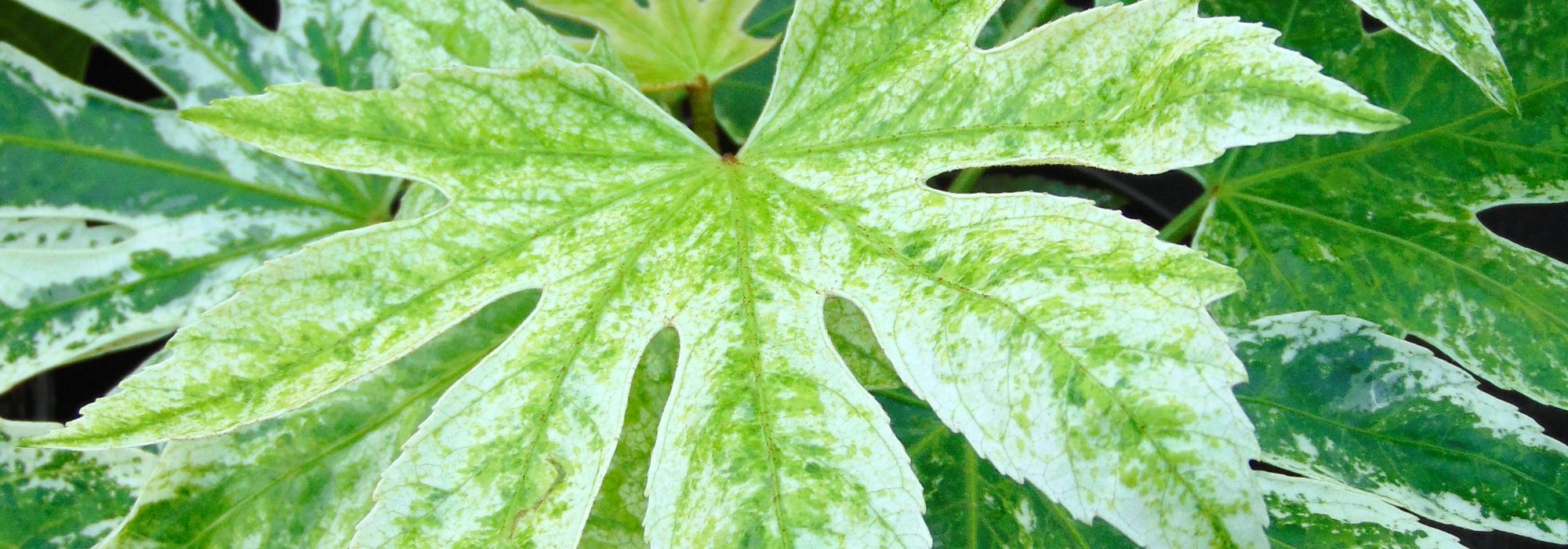
Fatsia japonica: our growing and care tips for indoor
All our tips for successful growth
Contents
Fatsia, also known as Japanese Aralia, is a tropical plant highly regarded for its large glossy leaves and lush appearance. Hardy, it adapts well to life in a pot, provided you follow a few simple rules. In this article, discover everything you need to know to grow a fatsia in a pot indoors: varieties, the type of pot to favour, the suitable substrate, the proper watering and maintenance practices, as well as tips to keep your plant looking vibrant and healthy all year round.

Which Fatsia varieties would be best for growing indoors?
All Fatsias are suitable for indoor growing thanks to their tolerance of moderate light conditions. There are several varieties with different ornamental appeal to guide your choice.
- Fatsia japonica: the type species, the best known and most widely marketed, with deeply lobed leaves, dark glossy green.
- Fatsia japonica ‘Spider’s Web’: more distinctive, this variety is characterised by its foliage broadly splashed with white, very bright.
- Fatsia polycarpa ‘Green Fingers’: this variety, with leaves finer and more deeply cut than the others, offers a modern and lightweight appearance.
- Fatsia japonica ‘Variegata’: a prized variegated variety with white-cream margins.
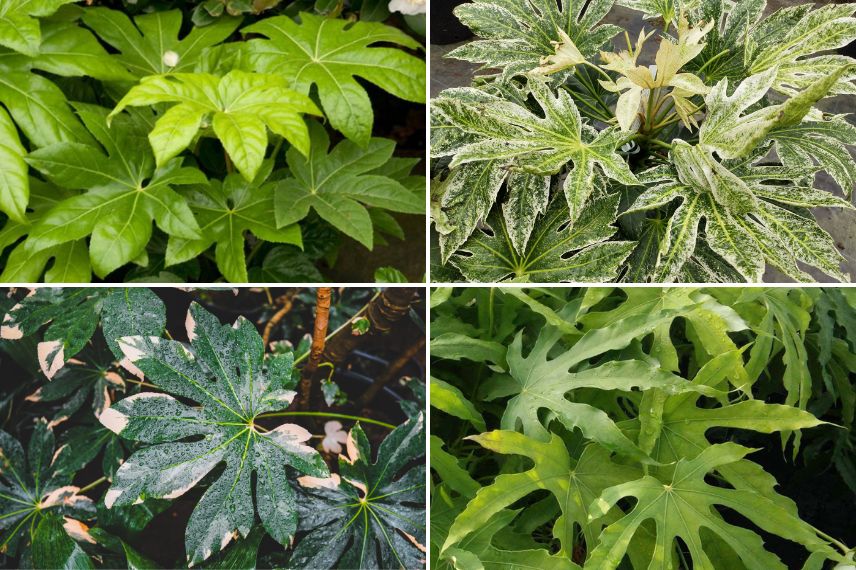
Clockwise from the top left: Fatsia japonica, cultivar ‘Spider’s Web’, Fatsia polycarpa ‘Green Fingers’, Fatsia japonica ‘Variegata’
What type of pot? What size?
Fatsia is a plant that can be grown both outdoors and indoors. It grows more slowly and moderately indoors due to light often being more limited and restricted root space.
On our site, Fatsia plants are sold in several sizes, from an 8/9 cm pot to a 4–5 L pot. Adapt the first pot that houses the plant to the nursery pot, choosing one slightly larger in diameter and depth. For example, for a 9 cm nursery pot, choose a planting pot of up to 15 cm in diameter. A 25–30 cm diameter pot is suitable as a replacement for the largest nursery pots.
Unlike outdoor cultivation, where a large pot promotes vigorous growth, indoors, a pot that is too large can slow the plant or increase the risk of overwatering, since water will take longer to drain in a large substrate.
When the plant reaches mature size, a pot 40–45 cm in diameter is sufficient to keep it stable and with a balanced growth habit. Repot every 2–3 years into a pot slightly larger is ideal, but beware of jumping up a size to prevent the plant from devoting too much energy to root development at the expense of its foliage.
Indoors, the pot also becomes a decorative feature. Choose pots that match your interior style, bearing in mind that the pot material influences moisture management. Terracotta pots dry out moisture more quickly. They are to be preferred in interiors that are damper, less heated or if you tend to water heavily.
Plastic pots are the lightest and can be useful for large, heavy plants, as the substrate retains moisture longer.
If you use a cachepot, monitor the amount of water during watering and regularly empty standing water.
Make sure the pot has drainage holes to prevent water from accumulating at the bottom, a common cause of root rot indoors.
Which substrate?
Indoors, the substrate should strike the perfect balance between water retention and drainage to prevent excess water, which is common in pots kept indoors.
Fatsia prefers a light, airy, and well-drained mix to prevent its roots from suffocating or rotting. It favours a substrate rich, neutral to acidic, staying fresh during the growth period and drier when the plant enters dormancy.
Prepare a mix with a high-quality indoor plant potting compost, with good water retention. Water retention is indicated on the back of potting compost bags or on the technical data sheets if you buy online. Add drainage elements in the form of perlite at 10 to 20% of the mix, depending on whether your indoor environment is drier or wetter and on the pot material. If you have access to well-decomposed compost, use it to enrich the mix with nutrients and lighten it.
In a dry indoor environment and/or a terracotta pot, you can also add sphagnum moss at 15 to 20% to retain moisture longer.
Provide a layer of clay pellets or gravel at the bottom of the pot before filling with substrate. This is especially important in an indoor environment where the air is often less ventilated, which can slow down the soil drying.
When and how to plant?
The best time to plant or repot a Fatsia indoors is in spring, when the plant resumes growth. This period is ideal, as natural light begins to increase, stimulating root development and foliage.
However, indoors you can repot almost all year round, just avoid winter, when the plant’s establishment will be slower.
How to proceed:
- Add a few centimetres of clay pebbles to the bottom of the pot.
- If you are using sphagnum moss, before incorporating it into the mix, soak it for 30 minutes in water, then wring it out.
- Fill the pot to one third to one half with the prepared mix.
- Place your plant.
- Pour in the remaining substrate and gently firm it around the plant.
- Leave a 2 cm gap to the rim.
- Water thoroughly the first time, over a sink.
- Repeat the operation to moisten the substrate well.
- Place a saucer under the pot or set it in a cache-pot and find a spot that showcases your plant.
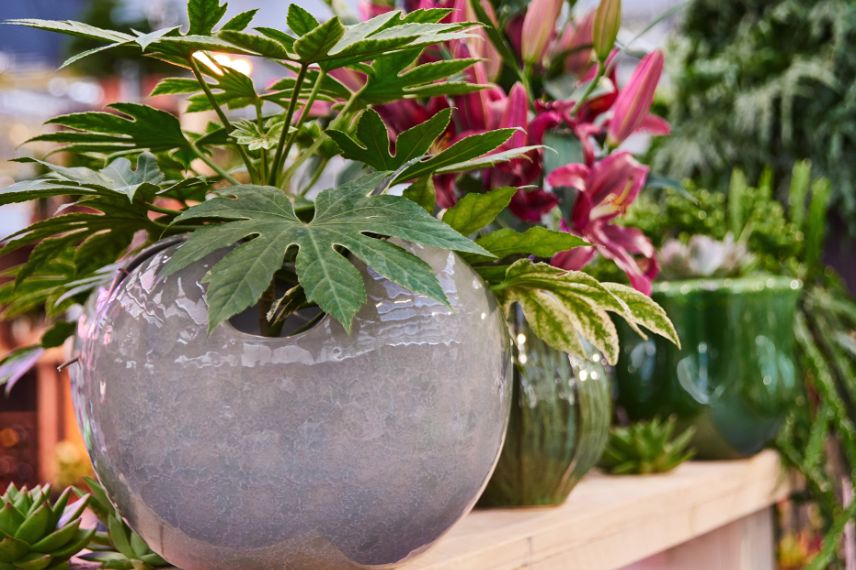
Where should you plant your Fatsia?
Even though Fatsia is a partial-shade plant outdoors, the indoor light is much dimmer. So place your plant fairly close to a window so that it receives as much light as possible, but not direct sun. A well-lit north-facing exposure is suitable for most indoor plants.
For a south or south-west exposure, filter the rays with a sheer curtain or blind.
You can move the plant outdoors in the warmer months, provided it is placed in partial shade. Bring it back indoors at the end of summer. Avoid cold snaps!
Watering and Fertilising
Watering
Fatsia appreciates a moderately moist substrate, but dislikes excess water, which can quickly lead to root rot.
Water when the first 2 to 3 centimetres of the substrate surface are dry to the touch. This may vary with the season: in summer, you will need to water more often, around once a week or more during hot periods, while in winter once every two weeks is usually sufficient, unless indoors is very warm.
Water thoroughly until water runs out of the drainage hole, then allow the excess water to drain away completely before placing the pot back into its cache-pot.
If possible, use room-temperature water that is not calcareous (rainwater or filtered water).
Humidity
Indoor air is often drier, especially in winter when heating is on. Fatsia may suffer if the ambience is too hot and too dry. To prevent its leaves from drying out, you can:
- Lightly mist its leaves once or twice a week.
- Use a room humidifier near the plant if the ambient air is particularly dry.
You can also place Fatsia in the more humid rooms of the house, such as the kitchen or bathroom.
Fertilising
To maintain healthy growth, Fatsia requires a regular supply of nutrients during its active growth period (from March to September).
Use a liquid fertiliser for green houseplants, rich in nitrogen, which promotes leaf growth. Add fertiliser every four to six weeks, diluted to half the recommended dose to avoid overloading the substrate with mineral salts.
Suspend fertiliser during the vegetative rest period, as the plant uses fewer nutrients.
An excess of fertiliser can cause leaf yellowing or a substrate that is too saline, while a lack can slow growth and pale the foliage. Adjust applications according to observed needs.
Care
The fatsia’s large leaves tend to accumulate dust, especially indoors. This buildup can reduce their ability to capture light and detract from their appearance. Wipe the leaves once a month with a soft, damp cloth to remove the dust. Rinsing under a warm shower is also effective, but be sure to drain the excess water from the pot after this operation.
Pruning is rarely necessary for an indoor fatsia, but it can be helpful to remove yellowing or damaged leaves to maintain the plant’s appearance. You can also remove overly long or unbalanced stems to maintain a harmonious shape. Always prune just above a node or a leaf to encourage good regrowth.
To keep your fatsia vigorous for many years, consider renewing part of the growing medium each spring and repotting every two to three years. A well-cared-for indoor plant can reach an impressive size, with dense foliage that will give your space a lush atmosphere.
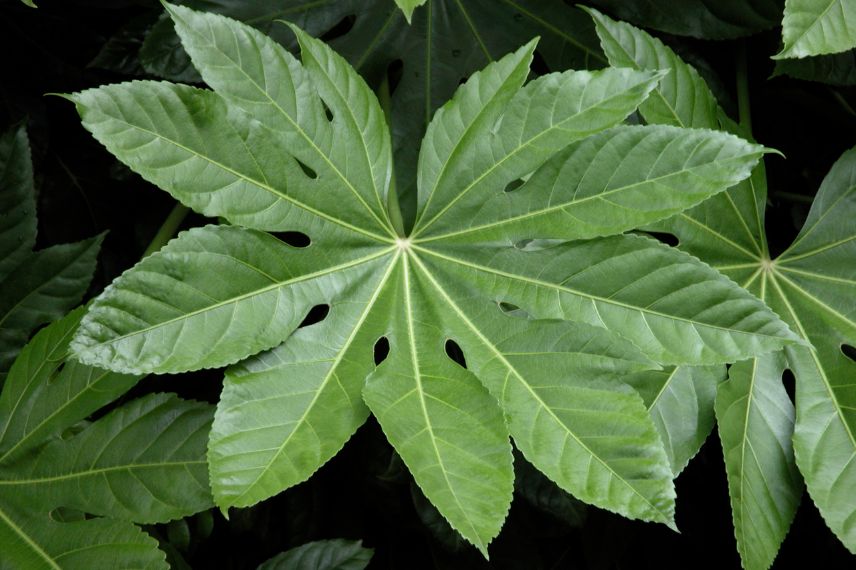
Fatsia’s stunning large leaves appreciate a good dusting indoors
- Subscribe!
- Contents
Comments