


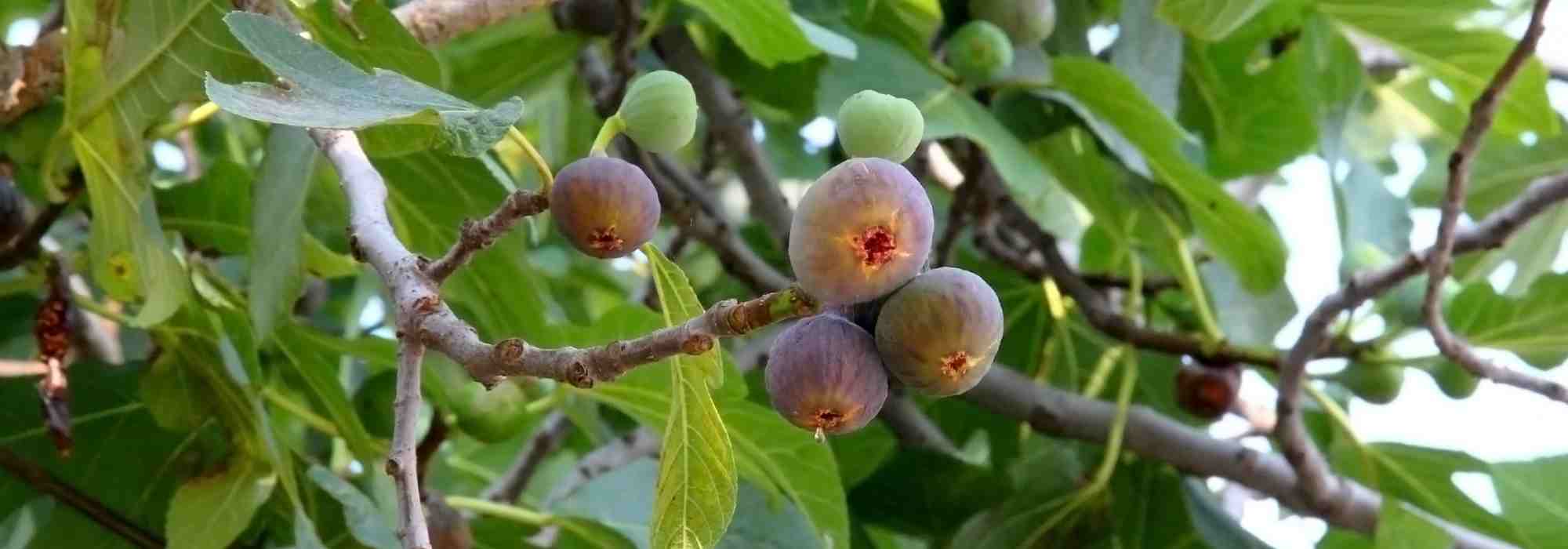
Fig tree: must-have varieties for the garden
Selection of the tastiest and most productive fig varieties
Contents
Iconic fruit tree of the Mediterranean region, the fig tree (Ficus carica) is grown throughout France. Provided you choose the right variety. And the choice is not always easy among the 250 varieties most commonly found on the French market. A selection made all the more difficult by the diversity of fig trees. They are first distinguished by the colour of their fruits, which can be white or green, black or red, deep purple or grey. Alongside these colour differences lies another feature: fig trees can be uniferous, meaning they yield only a single harvest, generally in autumn from August, while biferous varieties produce two harvests per year, in June–July and then in autumn, albeit to a lesser extent.
Once this initial selection is made, attention should be paid to the cold hardiness of fig trees, as the climate in your region is a determining factor. Some varieties are specific to the south of the country, while others are better suited to the northern half. Finally, one can also consider the flavour of the fruits, with flesh that is tender, sweet and fruity, juicy.
Among the diverse fig tree varieties, here is a selection of the 7 best to suit every need.
Further reading: Fig tree: planting, pruning and care.

Marseillaise fig tree for the south of France
The Marseillaise fig tree variety, sometimes called ‘Blanche Marseillaise’, ‘Blanquette’, ‘Couille du Pape’, ‘Athènes’ or ‘Petite Grise’, is a self-fertile and highly productive variety. Very late to fruiting, this variety bears fruit from mid-September to mid-October, which is why it should be reserved for planting in the south of France. Figs are known for their small size, even very small, but for their exceptional flavour, sweet and very sugary. In colour from yellow-green to yellow, the figs of the Marseillaise variety, with a thick peduncle, offer flesh that is pink to red, at once firm and melting, very fragrant. These figs are also perfect for drying. It is indeed often the variety chosen for dried figs that belong to the 13 Christmas desserts in the Provençal tradition. These figs, weighing about 30 to 40 g, are also ideal for making jams.
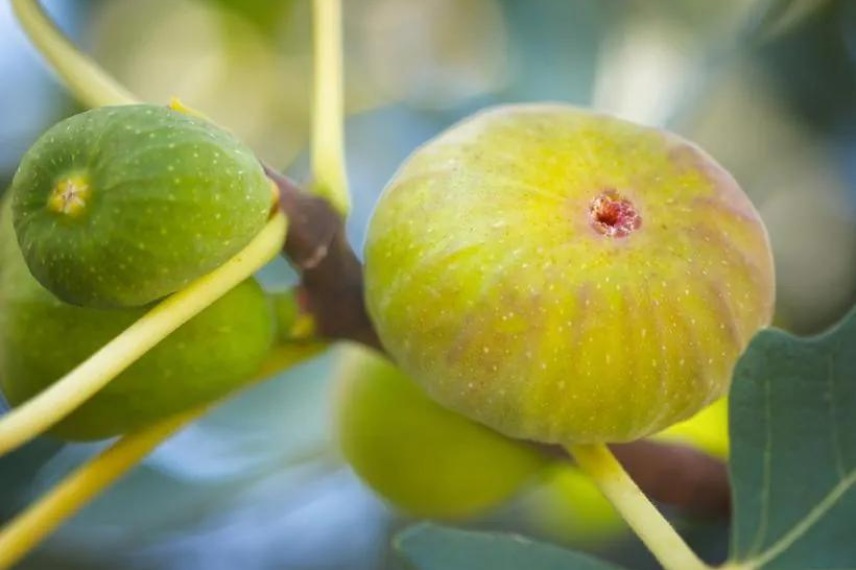 The Marseillaise fig tree has a compact growth habit</caption]
Known since the early 17th century, this fig tree variety is characterised by its compact growth and upright habit in its youth. Over time, the branching tends to spread. This fig tree hardly exceeds 4 m in all directions. Requiring warmth, this fig tree prefers dry soils and slopes. Too damp soil will affect the quality of fruiting: the fruits crack open. Another feature helps readily recognise this variety: on the branches of older trees, the internodes form swellings.
With a hardiness of around -12 °C and late fruit ripening, this fig tree is cultivated mainly in the Mediterranean region or along the Atlantic coast.
Fig tree 'Ronde de Bordeaux', a very hardy variety
The ‘Ronde de Bordeaux’ fig tree variety is a self-fertile variety, particularly early, as its autumn figs reach ripeness by late July to early August, sometimes a little later in less sunny regions such as Brittany. This is, indeed, the feature that earns it its second name, ‘Early Barcelona’. The fig tree is also very productive. Although they are rather small-fruited, these figs are highly versatile. They can be enjoyed in many forms, fresh or dried, or even as jams. These fruits also hold up well to cooking in savoury dishes. The rounded, plump-looking figs of this variety are characterised by their skin dark purple, punctate with bluish reflections, almost black when ripe, their flesh a fairly bright red, at once sweet and juicy, with very good flavour.
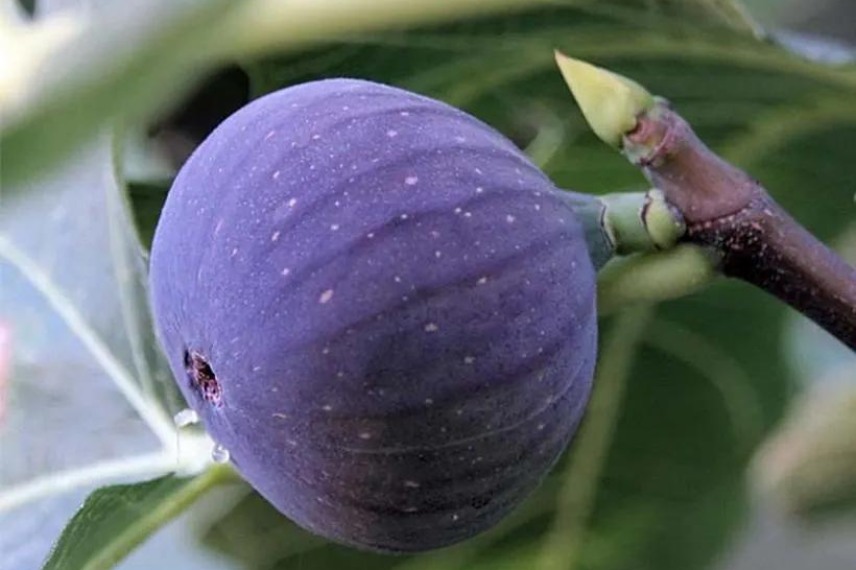
The ‘Ronde de Bordeaux’ variety is very early
In the garden or in the orchard, this fig variety forms a tree with a substantial growth habit, very vigorous. It shows excellent disease resistance. As it is self-fertile and parthenocarpic, it bears fruit everywhere, regardless of the presence of the blastophaga, the fig-pollinating wasp. It is therefore a fig tree that will thrive and fruit in any location, from the warmest regions to the least temperate ones. Fruit set occurs even on the youngest plants.
Figality variety, a highly productive dwarf fig tree
The dwarf variety ‘Figality’ is a fig tree from the Fruitality® range, selected by Verdia, the plant breeder, and introduced in autumn 2019. It is, moreover, the only dwarf fruit tree with a compact, shrubby habit. Thus it is possible to grow your fig tree on a balcony or terrace in the city and harvest your own figs with ease there. Indeed, despite its compact size (about 1.5 m tall with a 1 m spread), this fig tree has all the hallmarks of a full-sized tree. It bears figs in profusion, medium-sized with skin a deep purple, almost black, and red flesh. With a sweet, fruity flavour and fairly juicy, these figs can be eaten fresh or cooked into jam, jelly, juice, syrup, ice cream or pastries… They also freeze very well.
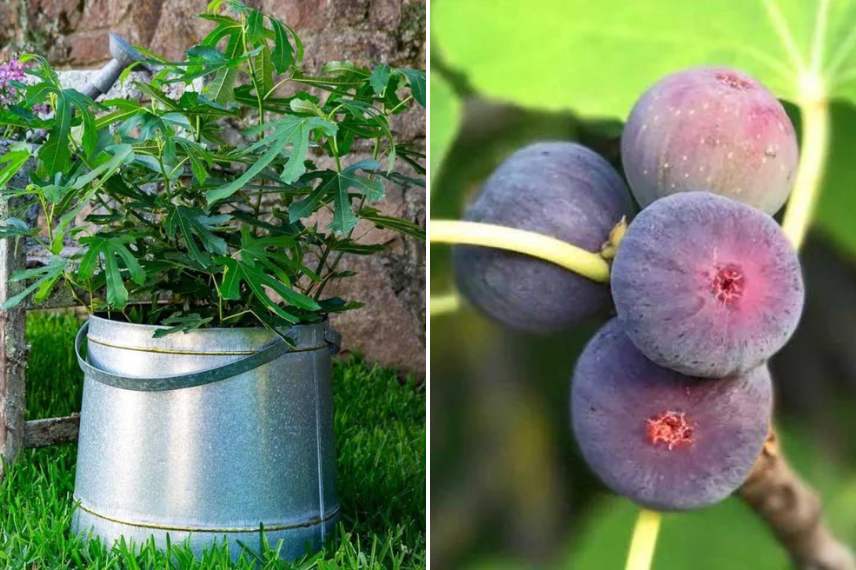 The dwarf variety ‘Figality’ is ideal for small spaces</caption]
Mutation of a biferous variety, the fig tree ‘Figality’ is uniferous and bears its figs only once a year, from July to October depending on the region. It is also self-fertile, very drought-tolerant and hardy down to -15°C. Perfectly suited to small spaces due to its modest dimensions, this fig tree is also very easy to maintain. Resistant to pests and common fig diseases, this fig tree also offers foliage that is very decorative and distinctly original on a balcony or terrace. And when the first figs reach maturity, this small fruit tree should make quite an impression.
Very well suited to container planting, this fig tree will adapt to the space available to it. And in the first season after planting, the first figs will appear.
Read also
Ficus: planting, pruning and maintenanceThe variety 'Brown Turkey', a biferous fig tree with great hardiness
The fig tree variety ‘Brown Turkey’, already cited in English literature in 1857, is an old variety, sometimes called ‘Brown Naples’. It is a self-fertile and biferous variety that will reward you with medium-sized figs in summer, in July, and in autumn, from September to October. The first harvest figs will be larger than those of the second harvest. The first weigh between 40 and 50 g, the second around 30 g. They are fruits of a colour ranging from brown to caramel brown, slightly reddish, with pink to red flesh, tasty and can be enjoyed fresh, made into jam or cooked. It has a light strawberry flavour. Autumn harvest figs can be dried. In some regions, it fruits only once.
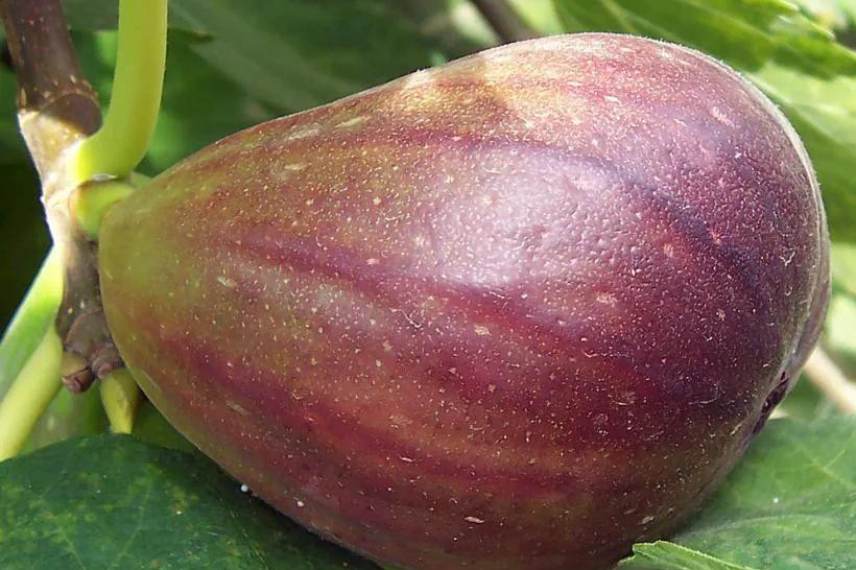
The Brown Turkey variety is recognised for its great hardiness
On the orchard or in the garden, this fig tree is principally recognised for its extreme hardiness. It can indeed withstand temperatures down to -20 °C. It is certainly one of the hardiest varieties, well suited to planting in north-eastern France where it is widely grown. Medium-sized, it displays a bushy, compact habit, making it easy to grow in a pot. Ideal for small spaces, this fig tree has handsome, large foliage, very ornamental.
The variety 'Goutte d'Or', a biferous fig tree bearing very large figs
The fig tree ‘Goutte d’or’, also known as ‘Dorée’, ‘Goutte d’or de Carpentras’ or ‘Figue d’or’, is an old French-origin variety. Biferous, this variety therefore offers two harvests: the first occurs in early July, the second towards mid-August. The second harvest is often larger than the first in terms of quantity. To harvest the fruit at the right ripeness, simply observe them closely. A drop of juice appears at the eye of the fig. The figs of this variety have a fairly thin skin that cracks quite easily. They are very large in size, rather elongated in shape, with skin golden-yellow to purplish. The golden-pink flesh is juicy, fragrant, and very sweet. These figs are usually eaten fresh, or, if anything, made into jams.
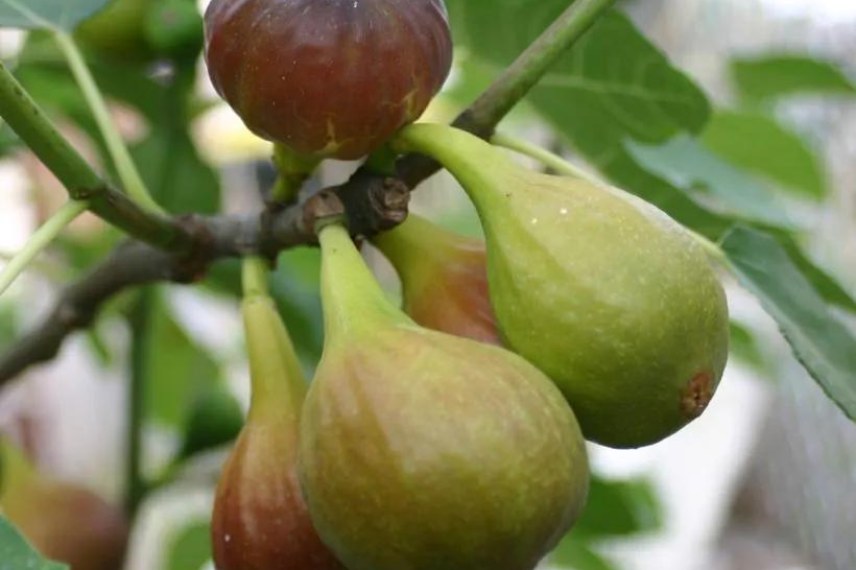
The ‘Goutte d’or’ variety yields very large figs
In the garden, this fig tree has a spreading habit that allows pot culture on a balcony or terrace, or in a small space. Pot culture is recommended in the colder regions. It has a spreading habit.
Fig tree 'Icecrystal' with very decorative foliage
The Ice Crystal fig tree variety is one of those low-growing fig trees that tolerate pot culture very well, on a balcony or terrace, in a courtyard or patio. Moreover, it features foliage cut in a very distinctive way, which gives it an invaluable aesthetic value. It is precisely this unusual foliage that earns it its name, as the leaves evoke ice crystals. Its compact form and shrubby habit enhance its appeal for container culture. At ripeness, it hardly exceeds 2 m in height and spread.
Nevertheless, it also produces figs, rather small, with dark burgundy-red skin and slightly tangy flesh. As it is a biferous variety, the harvest takes place in two stages: first in July, then in late August. The figs of this variety are recognisable above all by their long peduncle and their shiny skin.
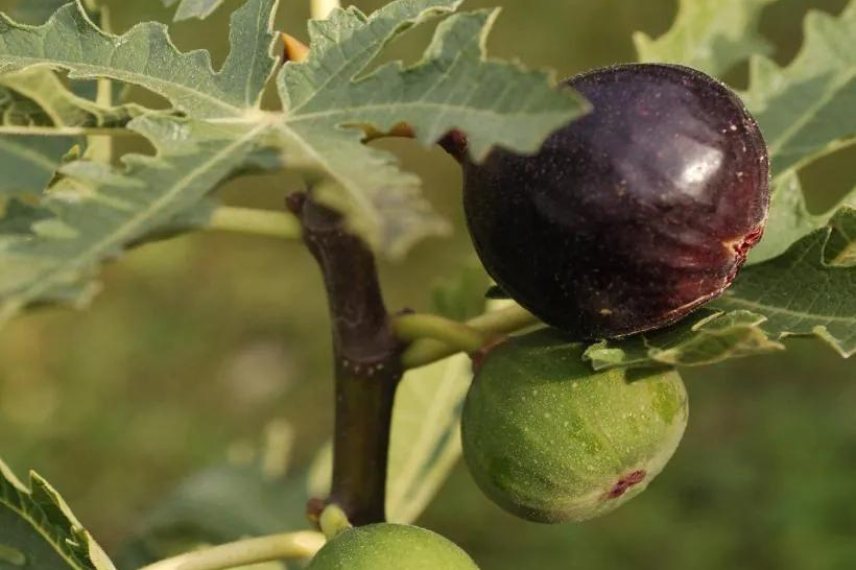
The Ice Crystal fig tree adapts well to pot culture
This fig variety with unusual foliage is frost-hardy, making it suitable for regions north of the Loire.
Fig tree 'Rouge de Bordeaux' or 'Pastilière', an early variety
The variety ‘Rouge de Bordeaux’, often referred to as ‘Pastilière’, is a self-fertile, one-crop-per-year fig tree, known for its precocity. Its figs indeed reach maturity in early August, roughly between the two harvests of biferal varieties. These summer figs, small to medium-sized, with velvety skin, purple-tinged toward black, have pink to red flesh, very fine, with few seeds. Although they are not very sweet, these figs still offer good flavour and a very pleasant sweetness on the palate. However, they do not keep very well due to their tendency to crack easily.
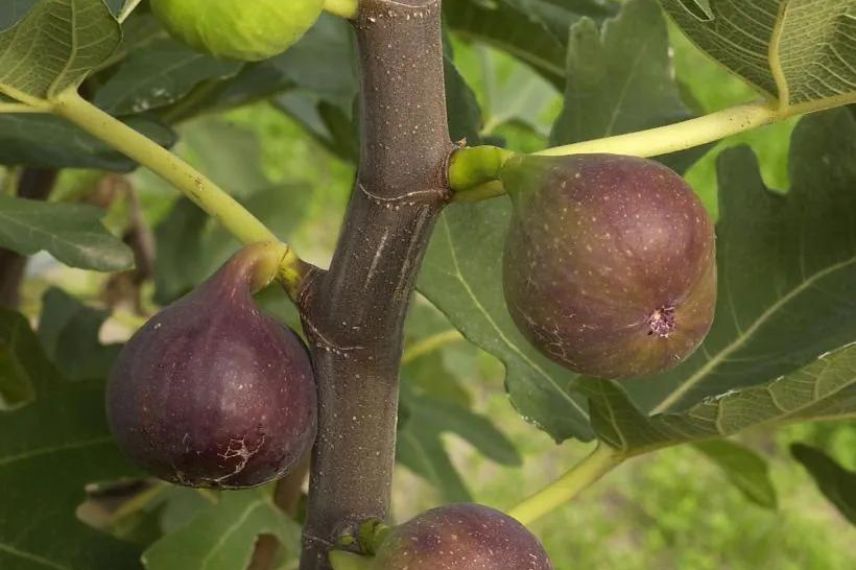
The Rouge de Bordeaux fig tree is a very early variety
This variety forms a compact, low-growing tree, making cultivation in pots possible. In height, it hardly exceeds 2.50 m with a width of 3.50 m. Its foliage is very thick and dense. The absence of flowering figs in this self-bearing variety allows it to be grown in the coldest regions, as it is less susceptible to late frosts. Its final drawback lies in a slight susceptibility to diseases.
- Subscribe!
- Contents

Comments