


Five climbing plants with stunning foliage
Selection of climbing plants with unusual foliage
Contents
Very decorative, the climbing plants cling to walls, to trellises and pergolas to rise towards the sky and green vertical surfaces. Some stand out for their exceptional foliage, bringing a touch of beauty and extra originality to your garden. Whether you’re looking for leaves in unusual colours, shimmering or variegated, or with unique shapes, there are a multitude of varieties to suit your preferences. Discover a selection of climbing plants with striking foliage that will enhance your facades, arches and outdoor trellises. Let us guide you to find the ideal climbing plant for your garden!

Trachelospermum jasminoides 'Winter Ruby' - Star Jasmine
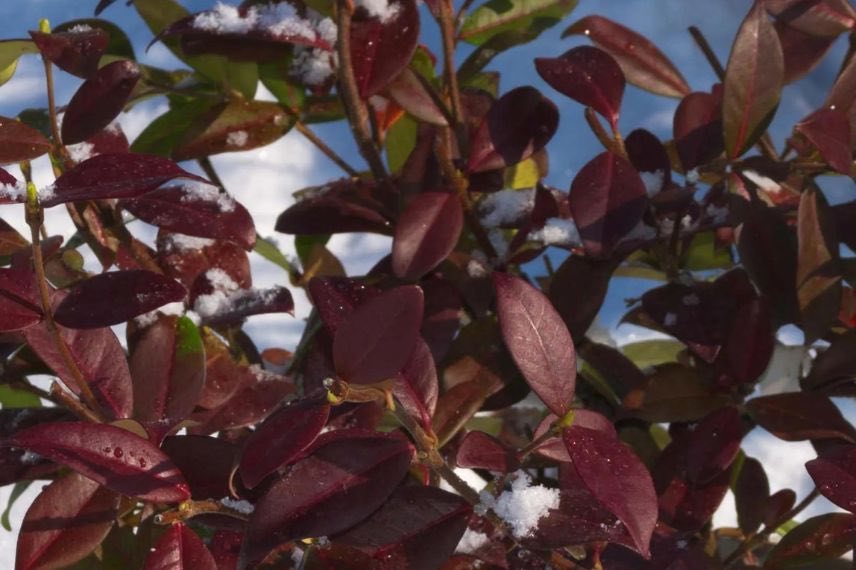
The Trachelospermum jasminoides Winter Ruby® ‘Trared’, or star jasmine, is a new variety of star jasmine that stands out for its foliage reddening in response to cold. In winter, its leaves take on a bright red colour, while at the start of summer, they revert to green and glossy. Originating in Asia, this climbing plant has evergreen foliage and develops long, twining shoots that can reach up to eight metres. The thick, oval, leathery leaves are glossy. This jasmine is also prized for its small white, fragrant and spicy flowers that perfume the garden. Flowering is abundant from May to July and emits a delicious fragrance. The flowers, grouped in clusters, have a spiral corolla and reach a diameter of 2 to 3 cm when they bloom.
This jasmine tolerates temperatures down to -12°C in a well-exposed position and in well-drained soil. In northern France, it can be grown in a pot on a terrace or balcony, and in the warmer southern regions, it can be planted in the ground. It is planted in full sun or in partial shade in well-drained soil. Used for climbing on walls or dressing a pergola, it pairs well with clematis, honeysuckles and other climbing plants.
For more information on jasmine cultivation, see our guide to jasmine planting and care.
Hedera algeriensis 'Gloire de Marengo' – Canary Island ivy
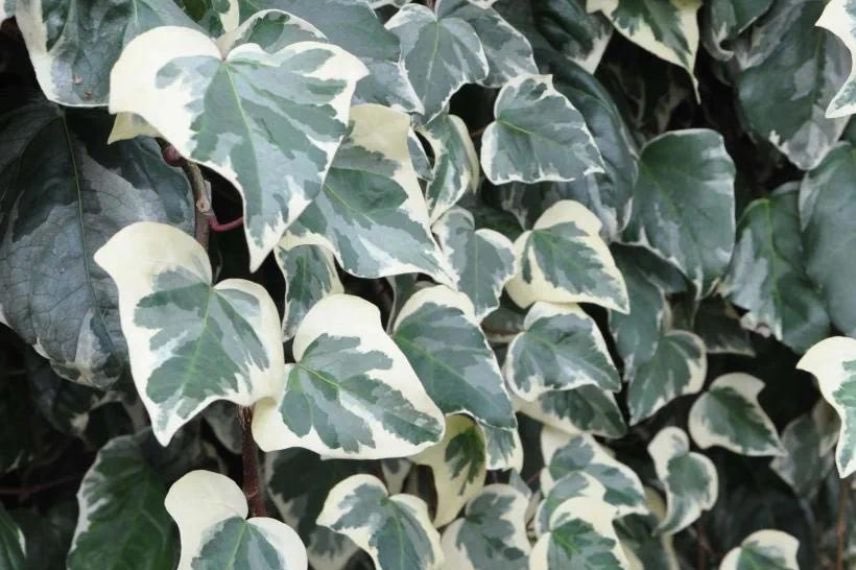
The Hedera algeriensis ‘Gloire de Marengo’ is a superb variety of Canary Island ivy with variegated foliage in green, grey-green, silver and cream and white. Its large leaves, borne on red petioles, can take pink tinges in cold weather. Evergreen and bright, it is ideal for lighting areas in shade or partial shade. Native to the coasts of Tunisia and Algeria, this botanical species also grows in mountain ranges. This hybrid is distinguished by its coloured foliage and moderate growth. Climbing or creeping, it can reach 5 to 7 metres in length. Its broad triangular leaves, slightly puckered, are variegated with emerald green, grey-green, silver and cream. The young leaves are white. Flowering takes place in September–October, producing discreet cream to yellow-green flowers in umbels. They are followed by blue-black berries. They are toxic to humans and mammals, and provide food for some birds.
This variegated ivy elegantly dresses walls, fences, banks and hedges, adapting to drought and poor soils. It withstands temperatures down to -12°C. Adaptable, this ivy enhances difficult areas of the garden and provides lush vegetation, masking fences and adding romance to old stone walls. It pairs well with spring bulbs such as narcissi or muscari. It also pairs well with periwinkles. In addition to its aesthetic qualities, ivy cleans the air by absorbing pollutants such as benzene found in car exhaust fumes.
For more on ivy cultivation, see our guide to planting and maintaining ivy.
Parthenocissus tricuspidata 'Veitchii' - Virginia creeper
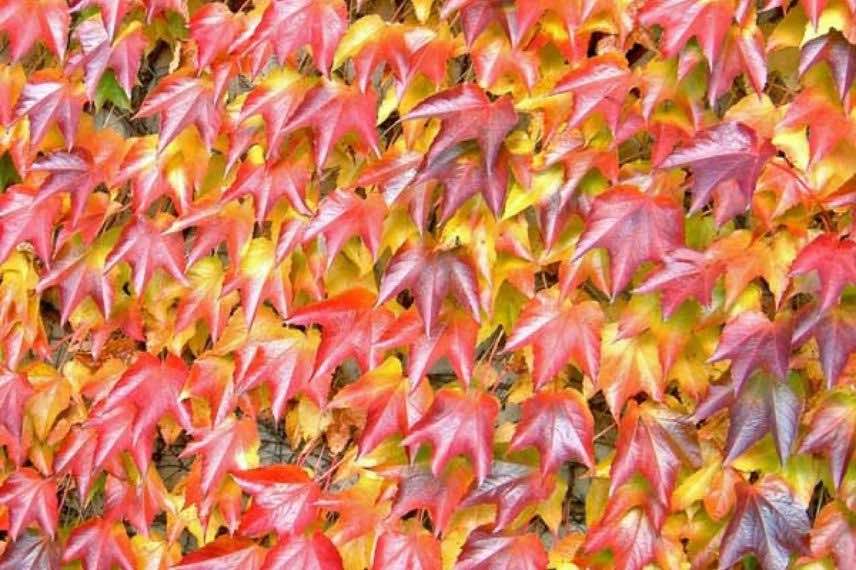
The Parthenocissus tricuspidata ‘Veitchii’, also known as Veitch’s Virginia creeper, is a climbing plant prized for its covering foliage and sumptuous autumn colours. It is distinguished by its large leaves, often three-lobed and dentate, purple at bud burst, becoming dark green in summer. In autumn, the foliage colours in shades of yellow, orange and scarlet red before dropping. In July and August, greenish, discreet inflorescences produce blue-black berries enjoyed by birds. With suction cups, this Virginia creeper clings to any support without damaging it. It can grow to 10 to 15 metres.
Hardy to -20°C and water-efficient, this Virginia creeper tolerates pollution, sea spray, sun and shade, offering beautiful cascades of foliage and colour on walls and fences. Vigorous and easy to grow in any soil, it can be planted in sun or shade, but a sunny exposure produces foliage with brighter colours. Pruning keeps it within its space. Planted at the foot of a wall, a façade or a slope, it can be paired with blue-flowering Clematis with late blooms, providing a striking display in autumn. In addition to its aesthetic value, it helps protect habitats from heat waves and severe cold.
For more information on Virginia creeper cultivation, see our page dedicated to planting and care of Virginia creeper.
Read also
10 climbing plants ideal for fencesActinidia kolomikta - Ornamental Kiwi
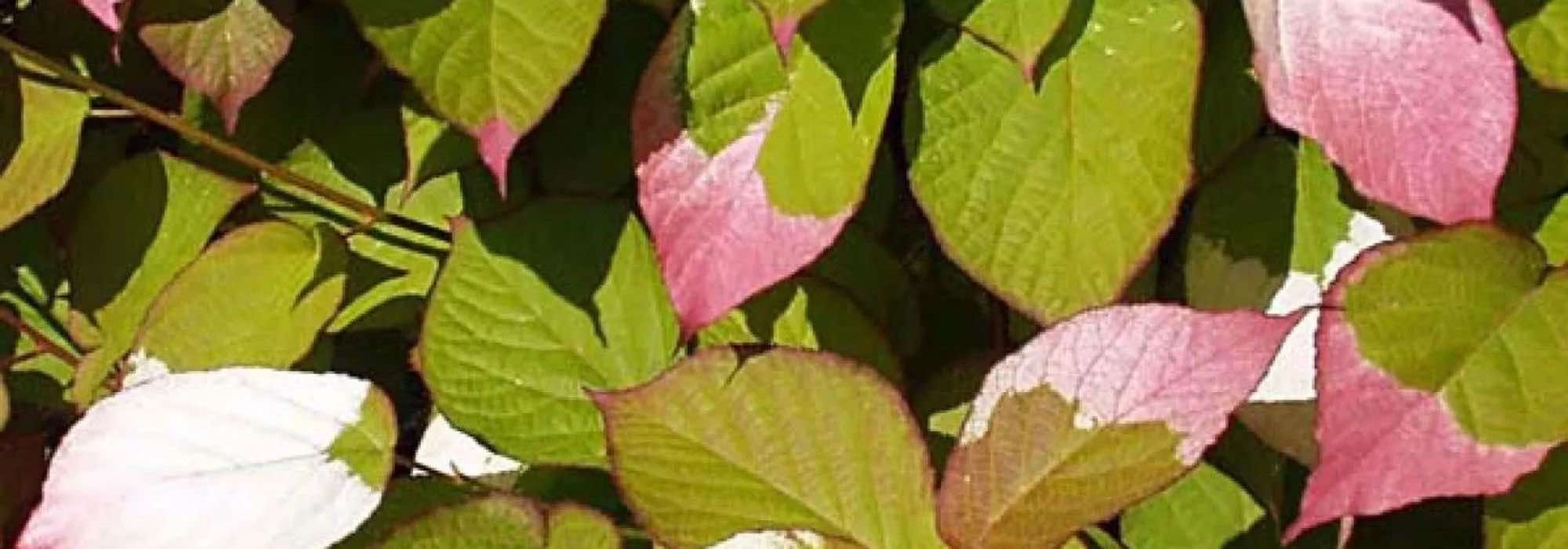
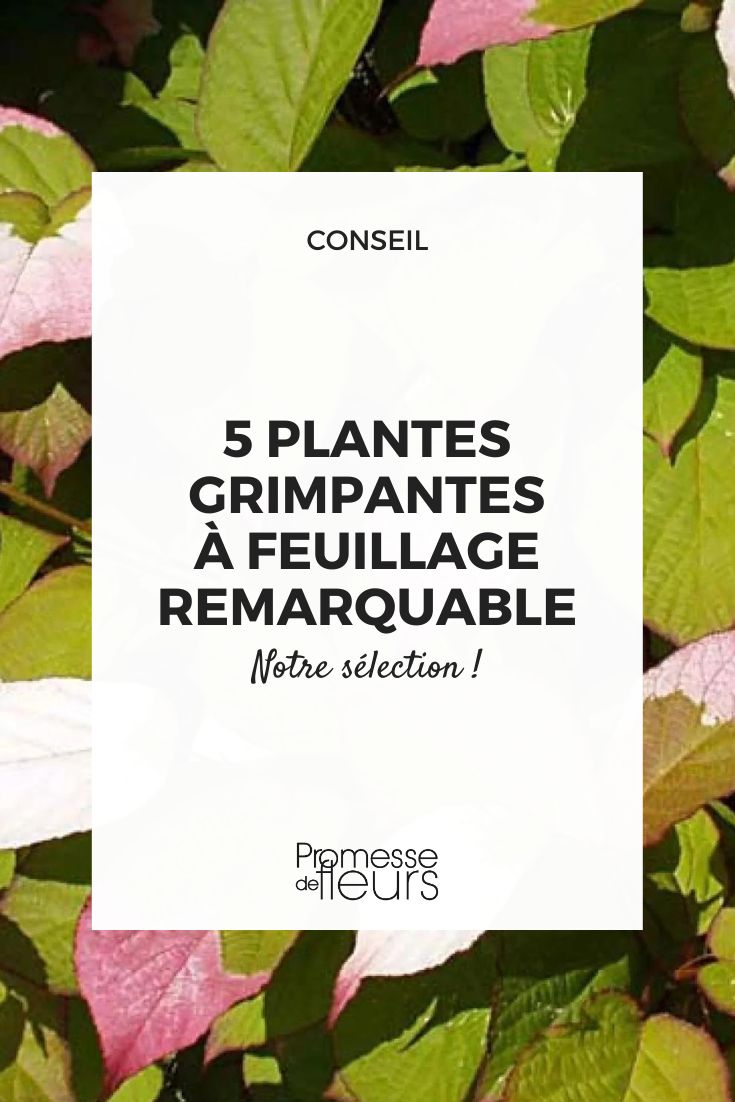
L’Actinidia kolomikta, or ornamental kiw i, is an ornamental plant prized for its spectacular foliage, changing colour with the seasons. In spring, the leaves emerge bronze, turn green, then become variegated in May with a bright white. After flowering, in June and July, they take on pink hues and then crimson red. In autumn, they colour to yellow, pink or purplish-violet before dropping. This deciduous bush, with voluble stems, reaches 5 to 6 metres and is well suited to small gardens. Its small white, scented flowers appear in June, followed by edible kiwifruits, but not very fragrant, ripe by mid-September. Actinidia kolomikta is dioecious, requiring the pairing of male and female plants for fruiting.
Hardy to -13°C, this kiw i should be planted in a sheltered position in cool, rich, well-drained soil, ideally not calcareous. Plant it in a sunny position, but not scorching. Ideal for dressing a wall, a garden shed or a fence, this climber can also be grown in a container. It pairs well with summer clematis such as Clematis ‘Little Mermaid’ or with bush hydrangeas in partial shade.
For more on kiwifruit cultivation, see our guide to kiwifruit planting and care.

Humulus lupulus 'Aureus' - Golden Hop
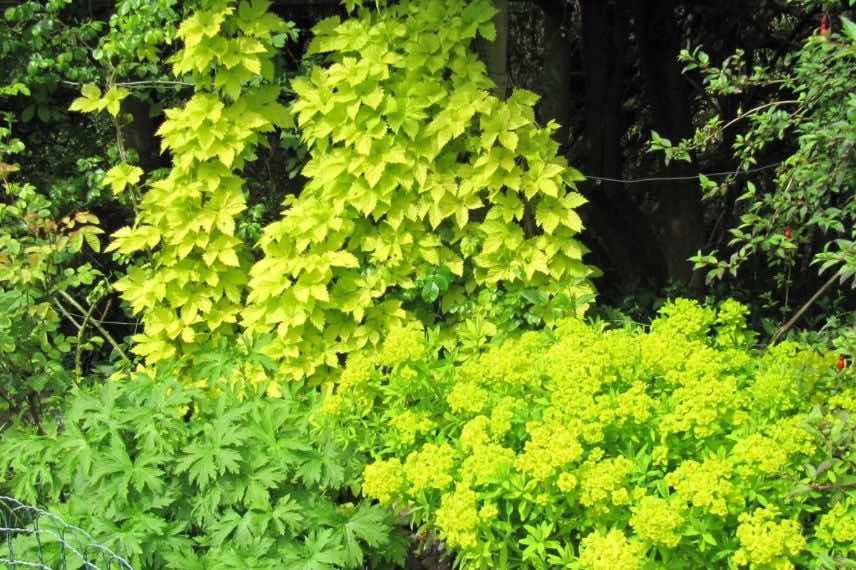
L’Humulus lupulus ‘Aureus’, or golden hops, is a decorative climbing plant, which offers bright yellow foliage in spring, turning chartreuse green and then light green in summer. Its herbaceous and twining stems, emerging in spring, quickly cling to supports and can reach more than 6 metres. The leaves, measuring up to 15 cm in diameter, are divided into 3 to 5 lobes. The inflorescences, appearing from June to August, are aments which, after pollination, become golden, resinous, ovoid cones on the female plants. The fruits are harvested in September. It is a dioecious plant that produces fruit in the presence of a male and a female plant. This herbaceous climbing perennial grows from large fleshy roots and regenerates each year.
Fast-growing and vigorous, this golden hops plant can be planted in full sun or in partial shade, but prefers shaded locations. Hardy down to -29°C; plant it in deep, cool soil. In the garden, golden hops pair well with yellow or white climbing roses. It can cover old trees, a garden shed or a trellis, brightening partly shaded areas. Planted at the back of a border or in an informal hedge, it provides a welcome touch of light. Its cones, used since the 8th century to flavour beer, give a mild bitterness and a distinctive flavour.
For more on hop cultivation, see our page dedicated to the planting and care of hops.
- Subscribe!
- Contents
Comments