


Forest therapy: reconnecting with trees to breathe more easily, think more clearly and feel calmer.
Discover the benefits of the forest.
Contents
Sometimes just a few steps beneath a wooded canopy are enough to let our shoulders relax, our breathing lengthen and our thoughts slow. And if the single act of walking amongst the trees was enough to regain clarity, energy and calm? Silvotherapy, or tree therapy, is attracting more and more gardeners, weary city-dwellers and lovers of the great outdoors. But behind tree-hugging and bucolic strolls, what does science actually say? Follow us on the forest trails of silvotherapy and let yourself be surprised by its benefits…

What is forest therapy?
Forest bathing designates a well-being practice based on contact with trees in the forest, which stimulates the five senses to foster a sense of calm and presence in nature.
A forest immersion with Japanese roots
It was in Japan, in 1982, that this phenomenon was recognised and named for the first time, under the term Shinrin‑yoku, literally ‘forest bathing’. The Shinrin‑yoku is then recommended to help maintain a good lifestyle, by engaging the five senses: sight, smell, touch, taste and hearing. This return to essentials, often accompanied by a guide, is now practised in groups or solo, in woods, in parks or even at the heart of tree-filled gardens.
Benefits known since the Middle Ages
Nevertheless, the idea that the forest and trees bring well-being was not born with contemporary Japan. In the Middle Ages and in many countries, some compounds present in the forest medium were already used — notably terpenes emitted by conifers — in preparations to relieve certain ailments.
In the 19th and 20th centuries, forest walks were among the prescriptions for convalescents, particularly for those who had contracted tuberculosis. Some physicians of the era had already noted health improvements among these patients and those in healthcare establishments in forest or wooded parks.
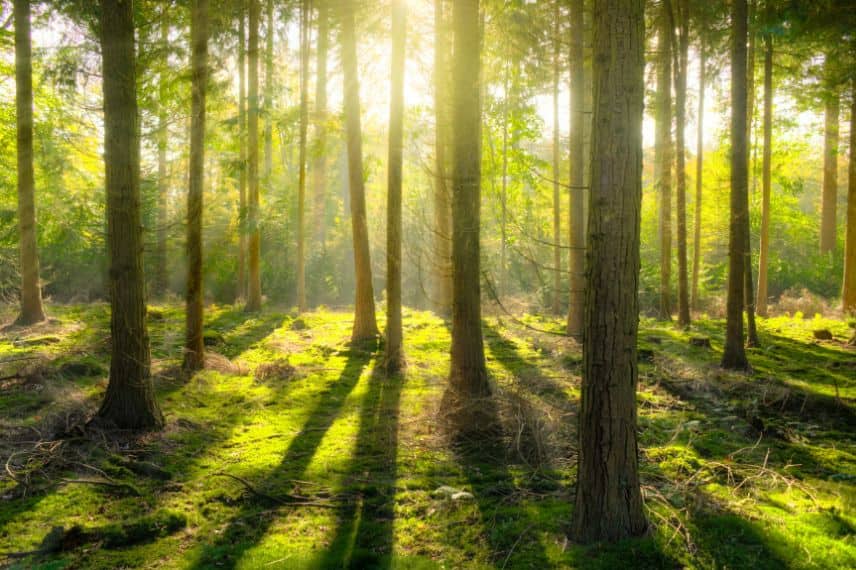
Trees that are good for you: what science says
If the Japanese paved the way, researchers worldwide have looked into the effects of prolonged contact with forest environments. Stress reduction and lower blood pressure, or, further, fostering a state of calm and concentration: several studies suggest that regular exposure to a forest environment leads to measurable physiological responses.
Neurobiology studies have also observed that the brain responds differently in a natural environment: areas associated with anxiety and mental rumination are less active in people walking in forests than in those moving through urban environments. Forest therapy would support overall well-being, notably through the reduction in cortisol (plant hormone) and a gentle stimulation of the immune system.
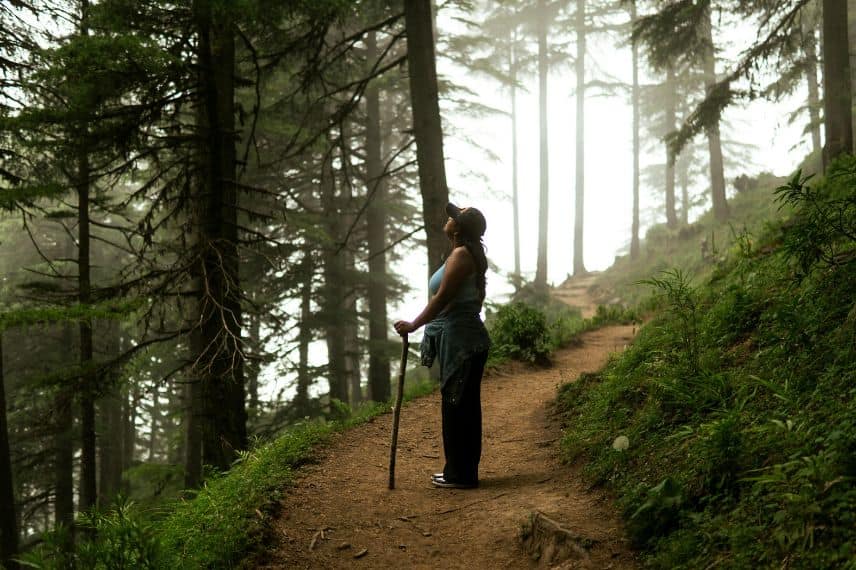
Why do trees calm us down? An alchemy of molecules and landscape
Breathing beneath trees isn’t just a breath of fresh air. The forest releases into the air natural substances such as phytoncides and terpenes, found in foliage, bark or resins. Inhaling them, our bodies could reap positive effects on stress, immunity and mental well-being, according to several scientific hypotheses. These compounds are all the more effective when they act in sym symbiosis with another essential ingredient: the beauty of the place.
Because the forest is also a living, immersive landscape that stimulates the five senses: the rustle of leaves, the scent of damp earth, the play of shadow and light. This sensory richness anchors us in the present moment and reduces the activity of brain regions associated with anxiety, rumination and negative thoughts, as neuroscientists have shown, notably at the Max Planck Institute. Moreover, some specialists refer to our archaic memory, that of a time when trees were synonymous with security, though difficult to prove.
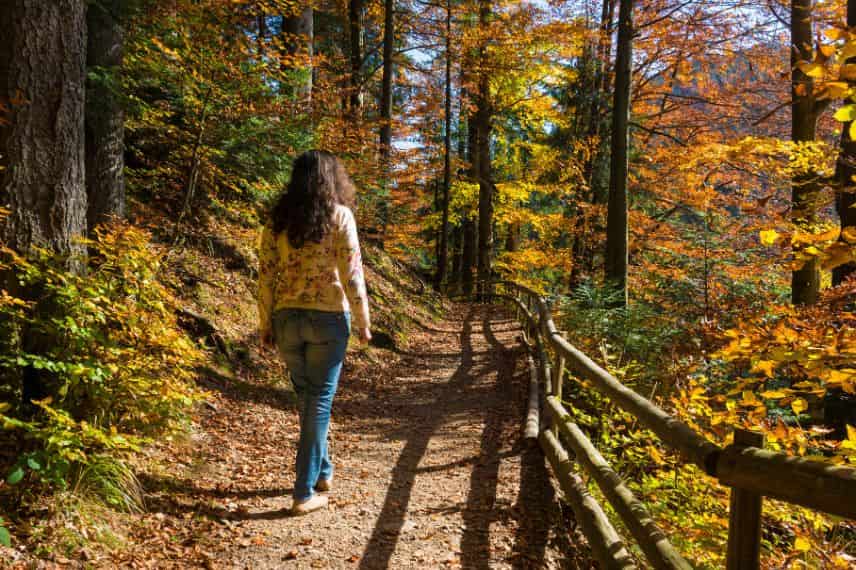
Read also
How to heal with trees?How to practise forest therapy?
No compass or walking stick is needed to start forest bathing. It’s neither a hike nor a green jog: simply a slow, attentive stroll through the forest environment. The idea is to distance yourself from the noise, to cut digital distractions, and let the senses take over. We begin by walking calmly, in silence, then stop to listen, look, and breathe. The important thing is to slow down.
Some people choose to sit against a trunk, rest their hand on the bark, or simply watch the movement of the leaves. There’s nothing to achieve, just be there, curious. You can also stroll alone, in pairs, or with family, in a nearby wood or even in a leafy garden: the effect may already be noticeable. And for those who want to go further, forest-therapy guides offer guided sessions, blending mindful walking, breathing and sensory exercises.
Since 2021, Hostens Forest, in Gironde, has even been recognised as a site suitable for the practice of Shinrin-yoku. Its pine-lined avenues, peaceful lakes and expansive protected spaces make it a prime site for a deep, accessible immersion in the plant world. A true forest bath, certified, just a short distance from Bordeaux.
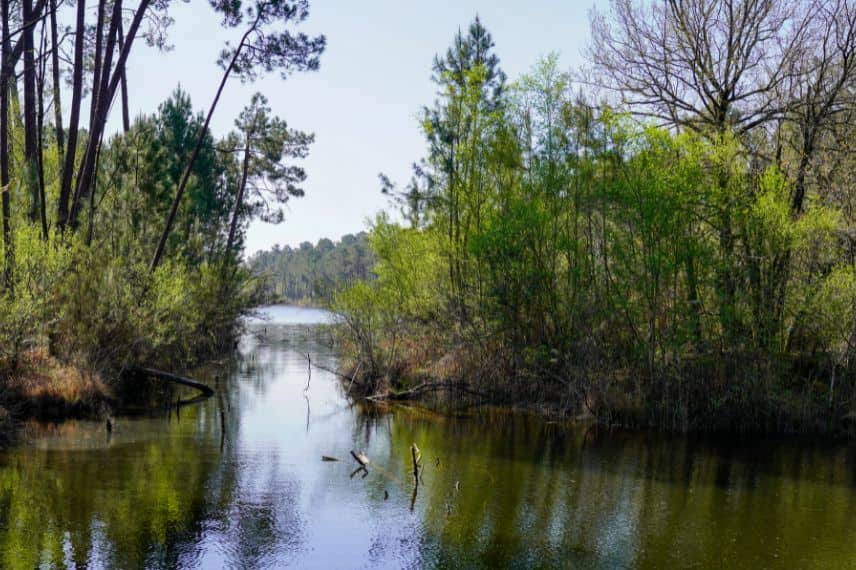
View of the Hostens Forest lake
If you’ve seen on social media the cult video by Josiane Pichet, that enthusiastic teacher who claimed to practise forest dancing, rest assured: forest therapy won’t drive you crazy. It was a deliberately staged humorous video, but it had the merit of making people smile… and reminding, with a touch of gentle whimsy, just how much trees can touch something within us.
Forest therapy and gardening: growing a forest corner at home
Forest therapy isn’t reserved for vast swathes of woodland: it can be invited into a garden, by integrating a few local tree species, bushes with moving foliage, ferns or shade-loving plants. In this way you can gradually create a green sanctuary conducive to rest, contemplation, reconnection or meditation, according to your taste.
An Japanese maple (even in a pot in a courtyard), a weeping birch, a dogwood with coloured wood or even a simple hazel can be enough to evoke the quiet of a woodland understory. The key is to vary textures, shapes and scents, favouring dappled shade and allowing space for spontaneity. A few barefoot steps on the fresh grass, a bench beside a trunk, a moment to listen to the birds: the forest, sometimes, begins at the far end of the garden.
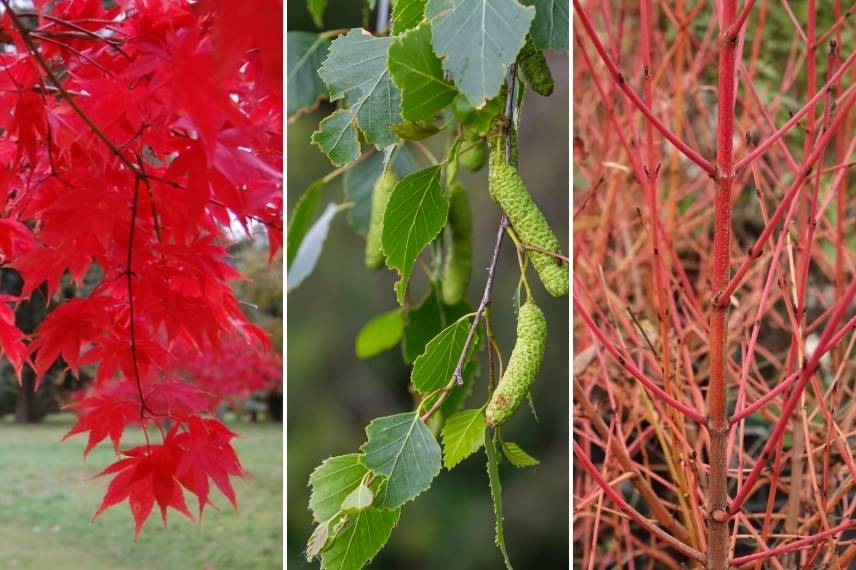
Foliage of a Japanese maple, a weeping birch and a red-twig dogwood
- Subscribe!
- Contents
Comments