





























Free perennials: boost your garden without spending a penny
Enjoy a lush garden without breaking the bank!
Contents
Propagation of perennial plants offers a wonderful opportunity to enrich and diversify your garden at no extra cost. Among the most effective and rewarding methods are division and propagation by cuttings, vegetative propagation techniques that not only generate new shoots, but also contribute to the health and vigour of the mother plant. Whether it involves separating dense clumps, dividing rootstocks, or performing propagation by cuttings of stems and roots, each method offers a specific approach tailored to the different species in your garden. By following the practical advice and tips provided in this guide, you will be able to faithfully reproduce the characteristics of your favourite plants, while ensuring their optimal growth and enhancing the beauty of your garden.

Division: start with a mother plant and divide it!
Division is a method of vegetative propagation that enables you to propagate many perennial plants for free. This technique does more than provide new plants for your garden; it also contributes to the health and vigour of the parent plants by reducing competition for resources.
Clump division
Clump division is ideal for perennial plants that form dense clumps or borders. In early spring or in autumn, choose a healthy and vigorous plant. Carefully dig it up, taking care to preserve as much of the root system as possible. Use a spade or a knife that is well sharpened to divide the clump into several sections, each containing at least one growth bud and a portion of root. Replant the sections immediately in the chosen location, while respecting the plant’s specific needs for spacing, depth, and exposure.
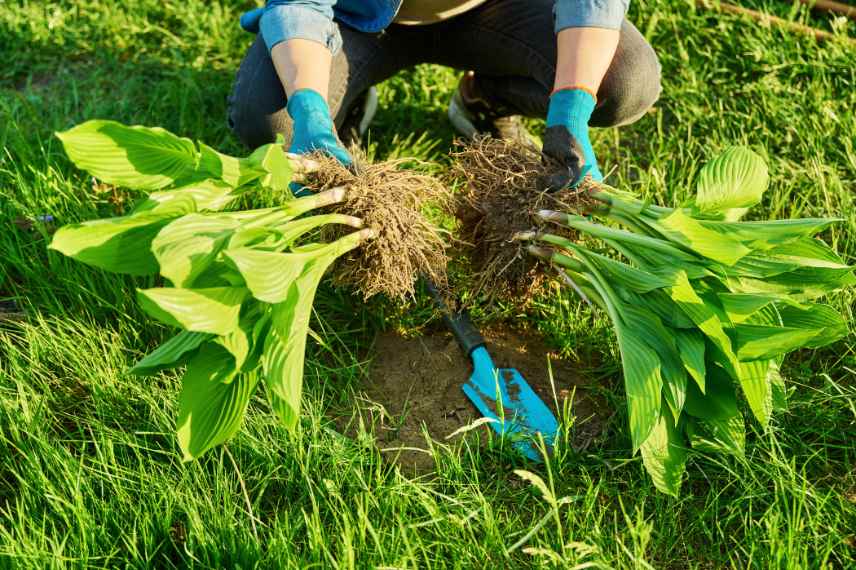
Hosta division
Rhizome division
Rhizomatous plants, such as garden irises for example, lend themselves well to division. Wait until flowering is finished, loosen the rhizome from the soil, then clean it to see its structure clearly. Identify the growth points or buds (often called “eyes”) and divide the rhizome into sections, ensuring each section has at least one growth point. Cut away any damaged or rotten parts. Plant the divisions according to the plant’s specific requirements for depth and orientation.
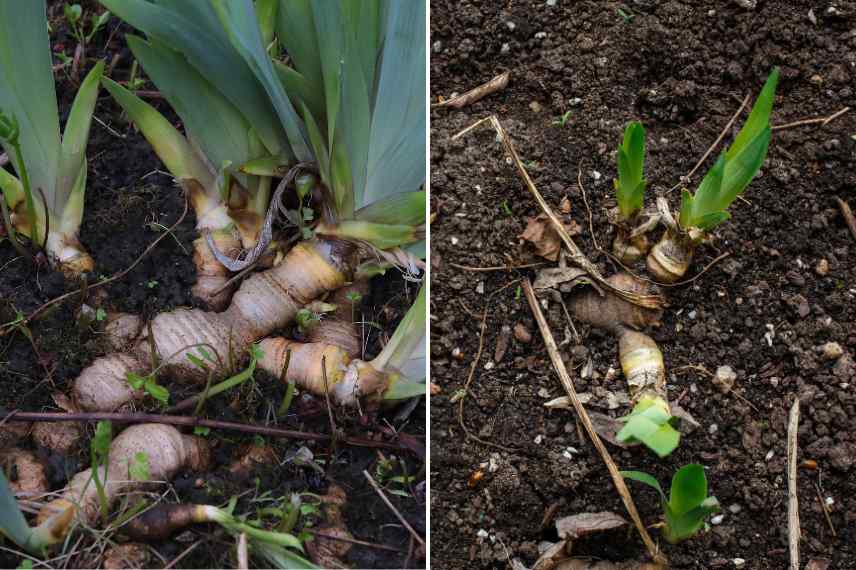
Iris division
Bulbous plants
Bulbous plants division concerns plants that form bulbs, corms or tubers, such as tulips, crocuses or dahlias. After flowering and once the foliage has yellowed and dried, carefully dig up the bulbs. Separate the “daughter” bulbs that have formed around the mother bulb. Ensure that each new bulb has a portion of a root system and is healthy. Plant them immediately in the appropriate spot or store them in a cool, dry place until autumn planting.
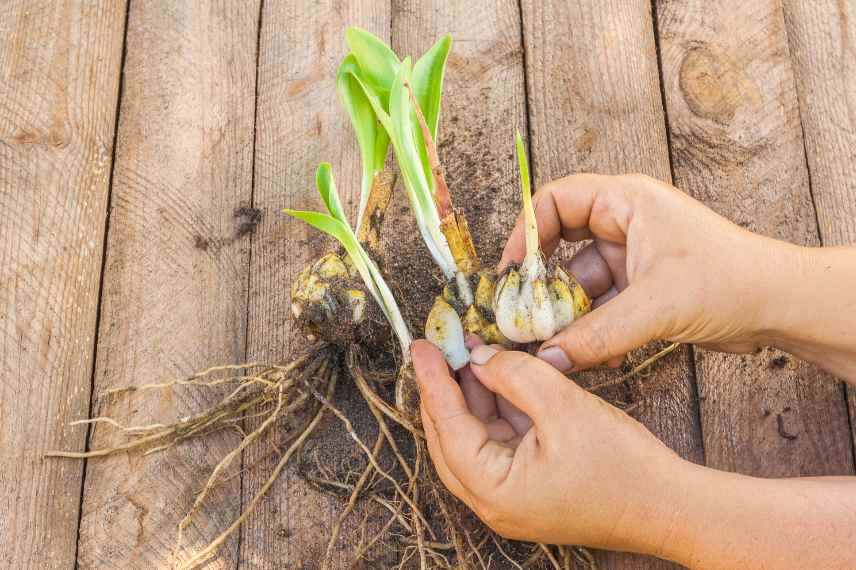
Division of bulblets on a lily
Read also
10 tips for gardening on a budgetPropagation by cuttings: small cuttings will grow into plants
Propagation by cuttings is a form of asexual reproduction that faithfully reproduces the characteristics of the parent plant. This technique is particularly useful for propagating species that do not readily reproduce by seeds, or for quickly obtaining mature plants.
Stem cuttings or simple cuttings
Stem cuttings are ideal for many perennial plants. Choose a healthy, sturdy stem, preferably current-year growth, and cut a 10–15 cm segment. Ensure the cut is clean and just below a node, as growth hormones that promote rooting are located there. Remove the lower leaves to prevent them from rotting in soil or water. Plant the base of the stem in a light potting mix. Keep the substrate moist, but not waterlogged, and place the cutting in a warm place with indirect light.
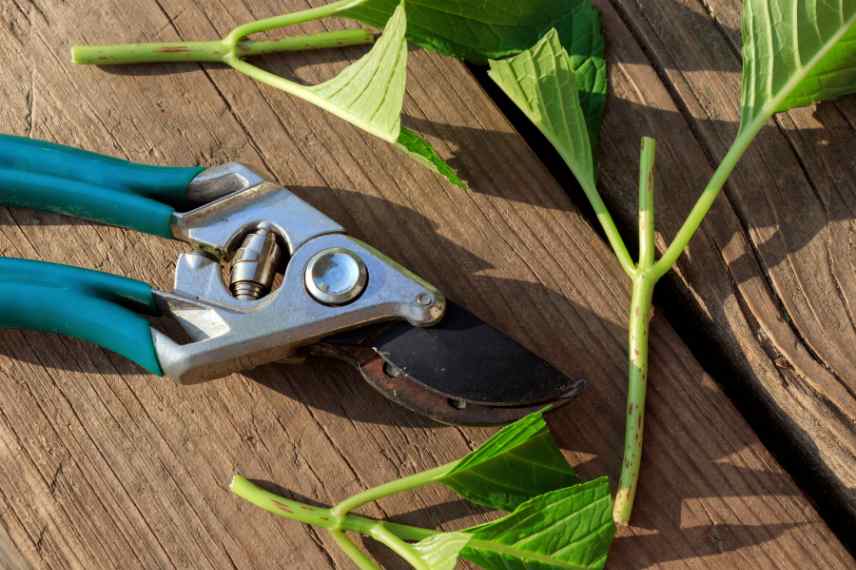
Stem cuttings
Root cuttings
Root cuttings are effective for plants whose roots are fleshy and vigorous, such as phlox, acanthuses, Japanese anemones or Echinaceas. At the end of winter or early spring, before growth resumes, carefully dig up a portion of root. Cut segments 5–10 cm long, be sure to identify the top and bottom of each segment. Plant the segments horizontally or vertically in a potting mix, ensuring the top is at soil level. Keep the substrate moist in a warm place until new shoots appear.
→ Read “What is a root cutting?” to learn more about the subject.
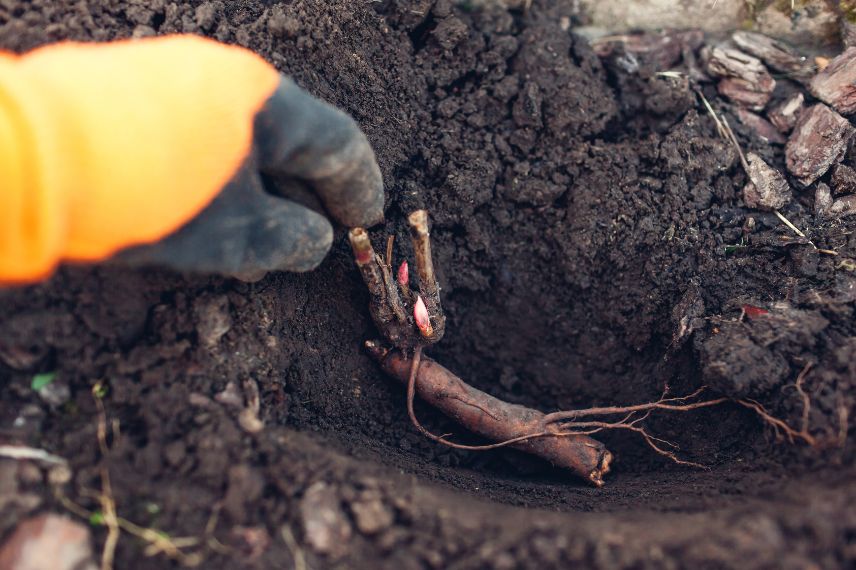
Peony root cuttings
Leaf cuttings
Some perennials, such as sedums and Hylotelephiums, can be propagated by leaf cuttings. Select a healthy leaf and cut it with a small portion of stem if possible. Let the leaf dry for a few days to form a callus, which reduces the risk of rot. Plant the base of the leaf or the stem in a special cutting potting mix or a blend of perlite and peat. Keep the soil slightly moist and place the cutting in a bright location with no direct sun.
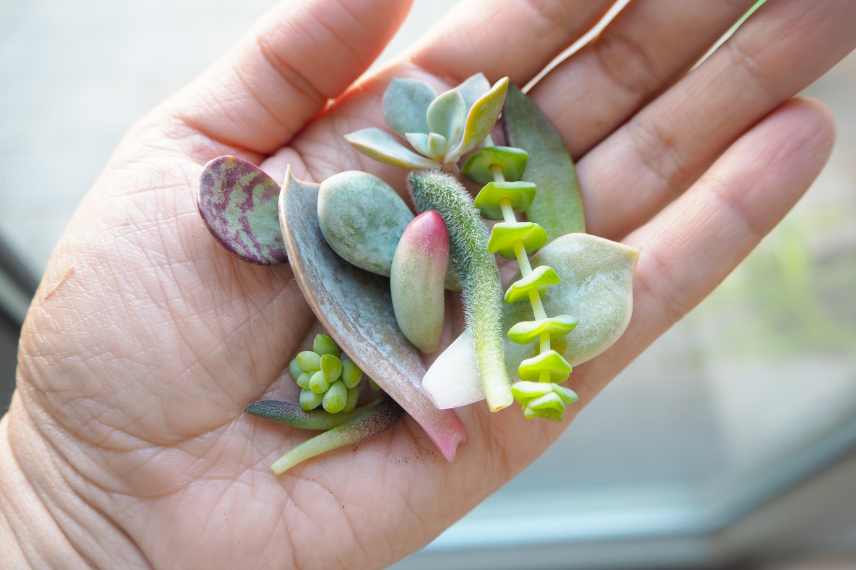
Succulent plants propagate well from leaf cuttings
Layering: another method of asexual reproduction
More anecdotal in the case of perennials, layering is a vegetative propagation technique that stimulates the formation of roots on a part of the plant that remains attached to the mother plant. This method is often used for plants that are difficult to propagate by cuttings or for which one wishes to speed up the rooting process.
Simple layering is particularly suited to plants with flexible stems that can be easily bent to the ground, such as strawberries (thanks to their stolons) or ivy, for example. Bury a portion of the stem in the soil, keeping the incision point just below the surface, while leaving the end of the stem exposed to the air. It may be useful to use a metal U-shaped stake or another device to hold the stem in place. Keep the area moist until roots develop, which can take several months. Once the roots are well established, the new plant can be separated from the mother plant and transplanted.
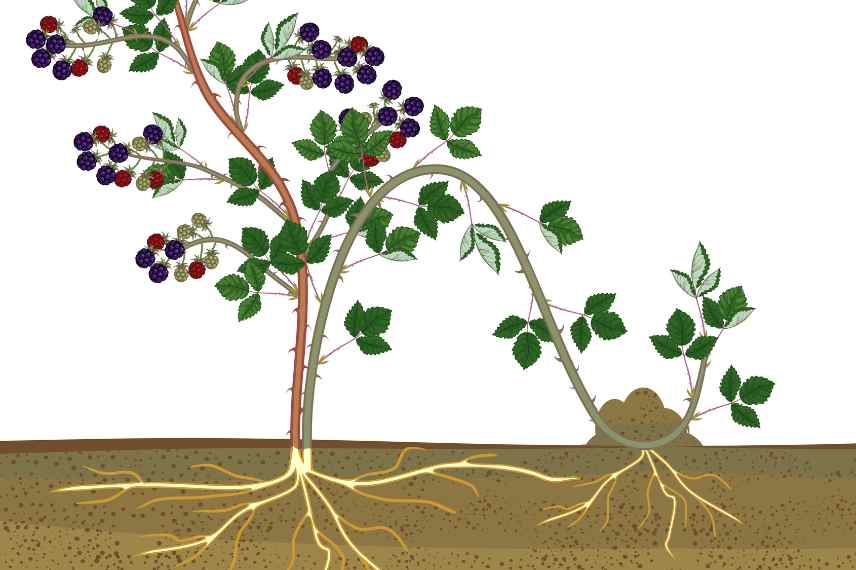
Propagation (here on a raspberry plant), but the principle is the same for perennials and shrubs
Read also
What is a root cutting?Sowing: from seed to young plant
Multiplying perennial plants by sowing is a rewarding method that not only allows you to produce a large number of plants at a reduced cost, but also to experience the joy of watching life germinate from a tiny seed.
Direct sowing in the garden
Direct sowing in the garden involves sowing the seeds directly in their final location in the garden. This method is particularly suited to plants that dislike transplanting or whose roots are too fragile to tolerate disturbance, such as hellebores. To succeed with direct sowing, choose the right moment, usually in spring after the last frosts for hardy perennials, or in autumn for plants that require cold stratification. Prepare the soil carefully by making it fine and ensuring good drainage. Sow the seeds at the depth recommended on the packet (if buying commercially), spacing them sufficiently to allow for optimal development. After sowing, water gently to avoid washing the seeds away. Maintaining constant moisture is crucial until germination. Mulching can help conserve moisture and reduce weeds.
Oliver’s little note : another sowing option could be to imitate nature as closely as possible, or even to let it do its own thing.
When the seeds are ripe on the mother plant, you can let the seeds fall to its base or cut the flowering stem and shake it over the final location.
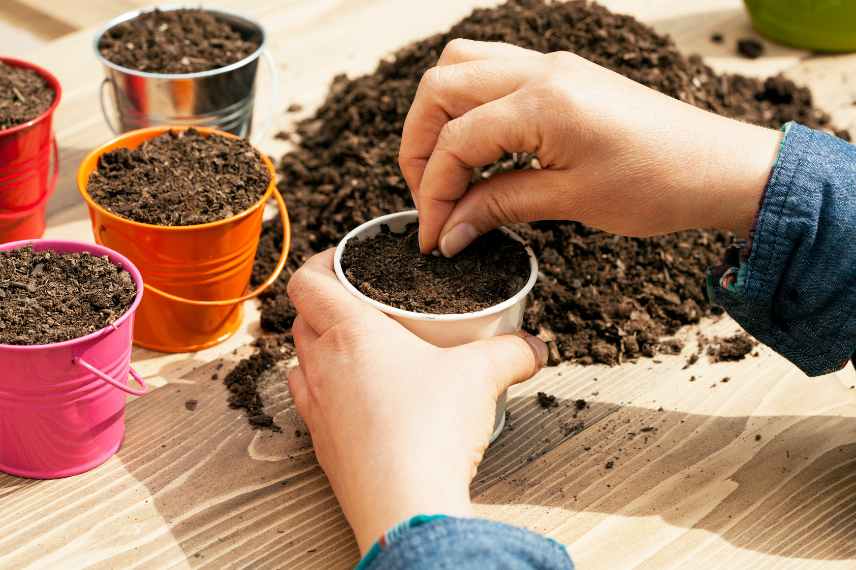
Seed tray sowing
Seed tray sowing allows for more precise control of growing conditions and is ideal for delicate plants or those that require a long period of growth before transplanting. Use seed trays or trays filled with a light, well-drained substrate, specially formulated for sowing. Sow the seeds on the surface of the substrate, covering lightly with a thin layer of seed compost if necessary. A light mist of water helps to moisten the substrate without disturbing the seeds. Cover the seed trays or trays with glass or clear plastic to maintain high humidity and a steady temperature, placing them in a bright spot but out of direct sun. Once the seeds have germinated and the seedlings are strong enough, they can be pricked out into individual pots before being acclimatised to the outdoors and finally transplanted to the garden.
→ Here are all our tips for how to sow in a seed tray.
Exchanges and donations among gardeners
The exchange and sharing of perennials is a rewarding, community-minded way to diversify your garden at no extra cost. This approach not only increases plant diversity but also strengthens the bonds between gardeners who share the same passions.
Encouraging exchanges between gardeners
The exchange of perennials allows gardeners to share their surplus plants, cuttings, seeds, or divided plants with others, while enriching their own collection. This is an excellent way to propagate rare species, old varieties, or simply share gardening tips and experiences. To facilitate these exchanges, you can organise gatherings among gardening friends, participate in gardening workshops or set up an exchange system within your community.
Online communities and local gardening clubs
Online communities are valuable resources for finding people interested in plant exchanges. Specialist forums, Facebook groups dedicated to gardening, and platforms like Reddit offer spaces where gardeners can post listings, share tips and organise exchanges. Local gardening clubs and horticultural societies often organise meetings and plant exchange events, which can be an excellent opportunity to meet other gardening enthusiasts and broaden your network.
Plant exchange events
Plant exchange events are wonderful opportunities to obtain new perennials and share those you have in abundance. These events can take many forms, ranging from plant fairs organised by municipalities or associations to plant-exchange days in community gardens. They offer not only the chance to obtain new plants free of charge, but also to receive advice from experienced gardeners.
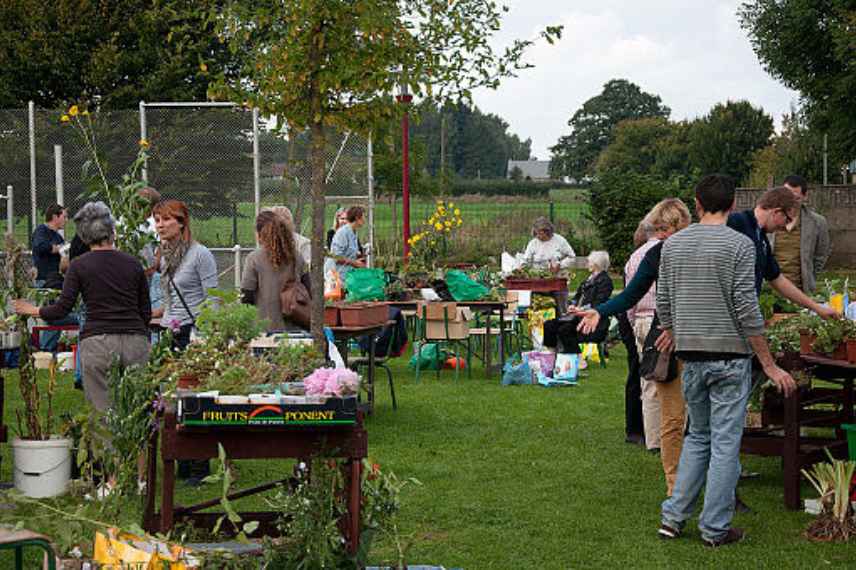
Plant swap (© Wikimedia Commons)
A few tips for propagating your perennials
To successfully propagate perennials, a few key steps must be scrupulously followed.
First, the choice of the right moment is crucial: division and propagation by cuttings are ideally carried out in spring or autumn, periods when plants are in dormancy or start their growth cycle, thereby favouring rooting and establishment.
The preparation of the plants also plays an essential role; ensure that tools are clean to prevent the spread of diseases and that each division or cutting has a healthy root system or nodes capable of developing new roots.
The choice of substrate is equally important: opt for a light, well-draining mix that retains moisture without being waterlogged, ideal conditions to stimulate root growth. Watering should be regular, but moderate to keep the substrate moist without saturating the young roots. Finally, close monitoring of the plants will allow early detection of any signs of stress or disease, and repotting into fresh and nutritious substrate will encourage development and flowering of the perennials.
Oli’s little note: there’s nothing that looks more like a little seedling than another little seedling, often not of the same variety or, at times, not even of the same species. So, remember to label your pots of cuttings and repotted seedlings!
- Subscribe!
- Contents
Comments