





























Garden pond: which aquatic plants to choose for partial shade?
Plants for the shaded areas around your ponds
Contents
Light plays a crucial role in the growth and flowering of aquatic plants and most require sunny exposure. However, some areas of our ponds benefit from less direct sunlight, requiring shade-tolerant species. Fortunately, there are those that thrive in these conditions, offering lush vegetation and spectacular flowering even without the full and direct sun often required.
This article explores a range of aquatic plants, from the hardy Nuphar lutea, known for its resilience and yellow flowers, to the elegant Aponogeton distachyos with its fragrant flowers and floating leaves. These plants do not merely survive in low-light conditions; they thrive there. Whether for a small shaded pond or a large expanse of water, these species are essential for creating a balanced and visually appealing aquatic ecosystem.

Thelypteris palustris - Marsh fern
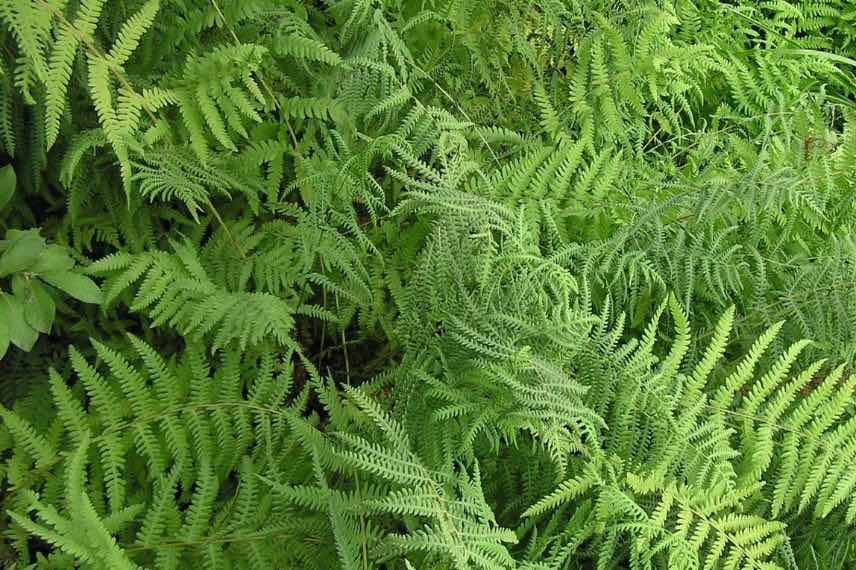
Thelypteris palustris, commonly called Marsh Fern, thrives in damp environments, marshy or waterlogged soils up to 10 cm deep. This deciduous fern brightens partial shade with finely divided fronds in a vibrant green. Although it spreads via a running rhizome, it never becomes invasive, making it an ideal choice for mass plantings near water features, in partial shade or even in full sun.
Native to the temperate Northern Hemisphere, the Marsh Fern extends its stolons over a notable length, promoting lateral growth of new fronds that emerge individually rather than in a crown, a distinctive trait among ferns. From April, new croziers rise from the soil, unfolding into large sterile fronds that can reach up to 80 cm in length. Later in the season, narrower fertile fronds appear, bearing brown sori beneath their pinnae, releasing spores when mature.
This species is easy to cultivate as long as the soil remains consistently moist. It thrives even in heavy clay soils, and tolerates some alkalinity. The Thelypteris palustris does wonderfully at the edge of streams or with light immersion in water, surrounded by plants such as Saururus cernuus and Typha laxmanii. The Japanese primrose which self-seeds among its rhizomes adds diversity and colour to aquatic or damp landscapes.
Read also
5 aquatic plants for a mild climateSaururus cernuus - Lizard's tail
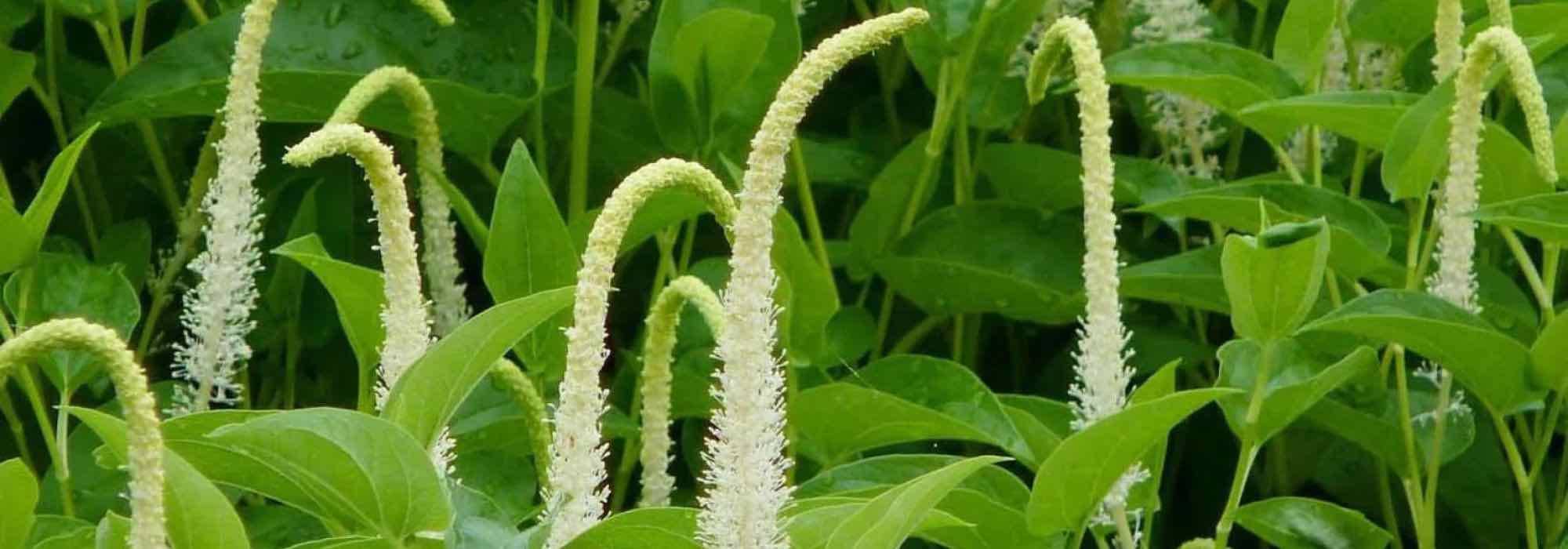
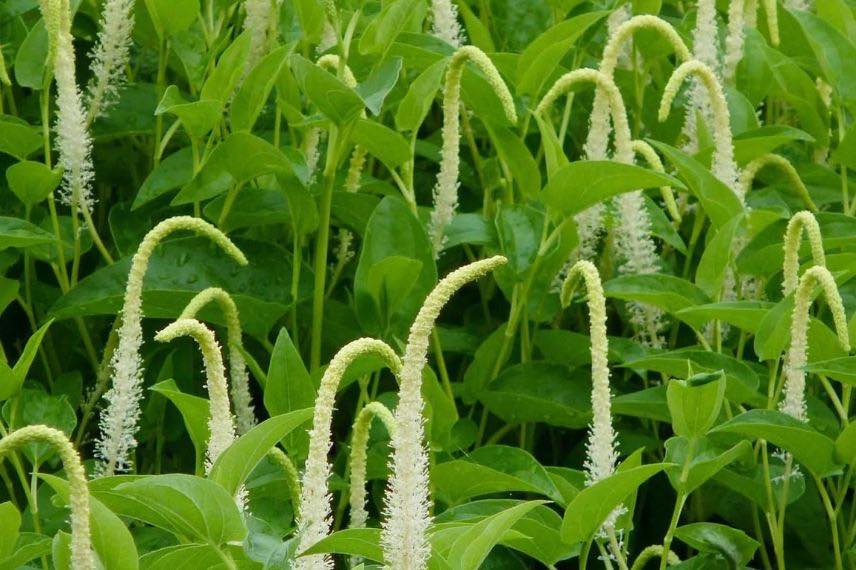
The Saururus cernuus, commonly called lizard’s-tail, is a rhizomatous perennial that thrives in aquatic habitats and on shaded banks. This plant native to the northeastern United States and Canada is distinguished by its arching flower spikes that earn it its evocative nickname. In bloom throughout the summer, it bears creamy-white, long, fluffy inflorescences, highly valued by bees for their fragrant nectar.
Forming a compact, spreading clump, Saururus cernuus features heart-shaped leaves of a deep green, with a paler underside. Its vigorous and hardy nature makes it an excellent choice for garden ponds, not only for its ornamental appeal but also for its purifying properties.
This plant spreads effectively thanks to its robust underground rhizomes, enabling it to form large colonies. Its flowering lasts from July to September, with inflorescences that incline toward the ground. Following flowering, it produces small berries each containing a seed, adding visual interest at the end of the season.
In spring, the young shoots emerge from the soil, forming patterns that resemble lizard tails, a sight particularly intriguing for observers. The pinkish stems gradually straighten and unfold lanceolate, cordate leaves, exuding a slightly tangy fragrance.
Ideal for waterlogged marshy zones in cool climates, Saururus cernuus can be planted with up to 30 cm of water over the roots. It is important to note that its powerful roots can damage pond liners, so careful planning is necessary when installing it. With its rapid growth and strong ground-covering potential, this perennial is perfect as a ground cover in large spaces, paired with plants such as Nuphar lutea, and it thrives in rich, heavy soils, preferring bright, dappled shade.
Acorus gramineus 'Variegata' - variegated Japanese sweet flag
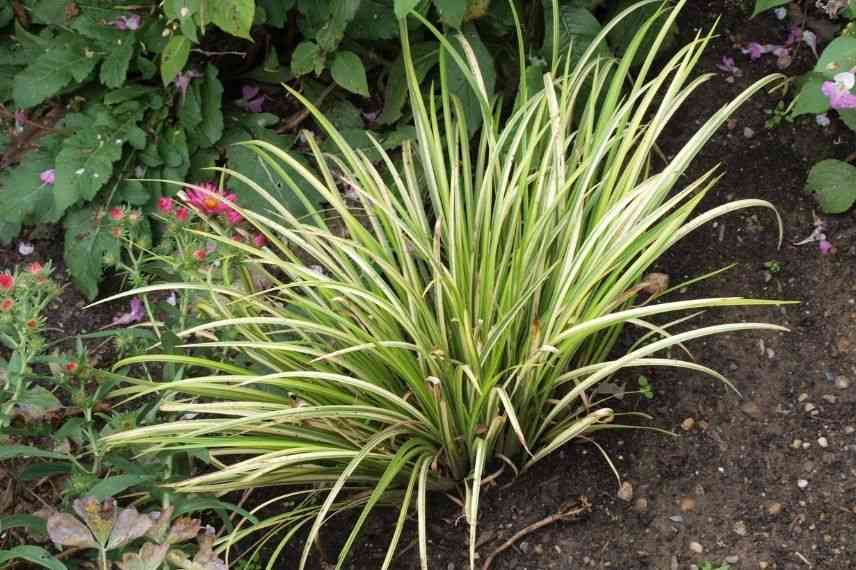
Acorus gramineus ‘Variegata’ is a particularly ornamental perennial that finds a place in aquatic gardens, stream banks or small ponds. This plant is distinguished by its light-green leaves with cream striations, providing a striking visual contrast, especially in partially shaded areas where it is best grown to protect its delicate foliage.
Aponogeton distachyos - Aponogeton fragrant
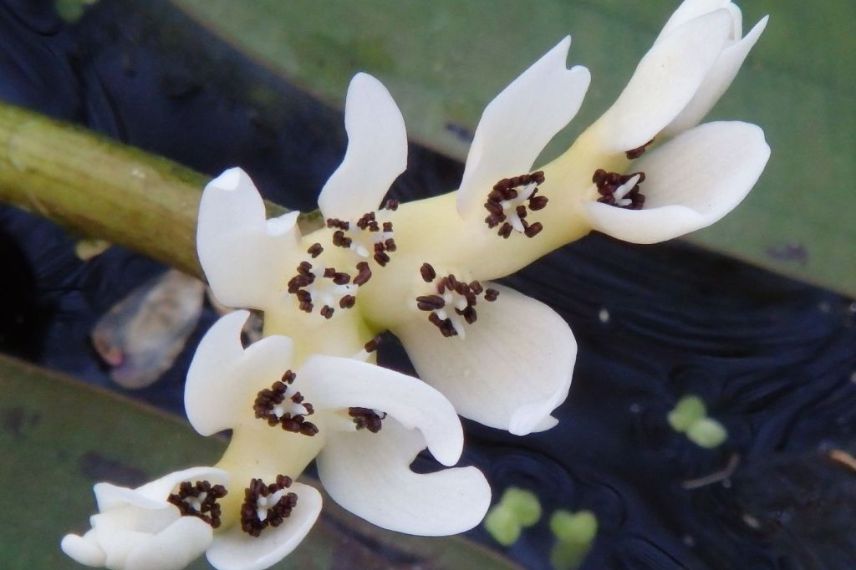
The Aponogeton distachyos, also known as water vanilla, is a fascinating aquatic plant that stands out for its floating leaves and exotic orchid-like flowering. This species is particularly suitable for both small and large ponds, providing an ideal alternative in shady areas where water lilies do not thrive.
Nuphar lutea – yellow water-lily
Nuphar lutea, known as yellow water-lily, is a remarkable botanical species that populates lakes, ponds, pools and tranquil rivers across France. Its broad heart-shaped floating or emergent leaves offer a striking visual display in waters not heavily polluted where it thrives. Less common in aquatic gardens than water lilies, the Nuphar lutea is appreciated for its ability to thrive in semi-shaded areas and for its resistance to carp, often troublesome for other aquatic plants.
Nuphar lutea is an essential component of aquatic ecosystems thanks to its robustness and ability to grow in calm, deep waters. The plant develops from a tuberous rhizome, forming clumps that can reach up to 2 metres in diameter. Its flowering occurs mainly in July and August, bearing small yellow flowers held a few centimetres above the water, giving off a faint apple fragrance that attracts a multitude of pollinating insects.
The life cycle of Nuphar lutea is fascinating, with three types of leaves adapted to its ecological needs: thin submerged leaves, robust large floating leaves, and emergent leaves that help the plant occupy vertical space above the water. These different leaf forms provide shelter for aquatic wildlife and contribute to water purification.
Nevertheless, despite its vigor, Nuphar lutea remains sensitive to pollution, which makes it an indicator of water quality in its natural environment. Its presence often indicates good water quality. In winter, the plant retreats into its tuberous rhizome to survive the cold conditions. 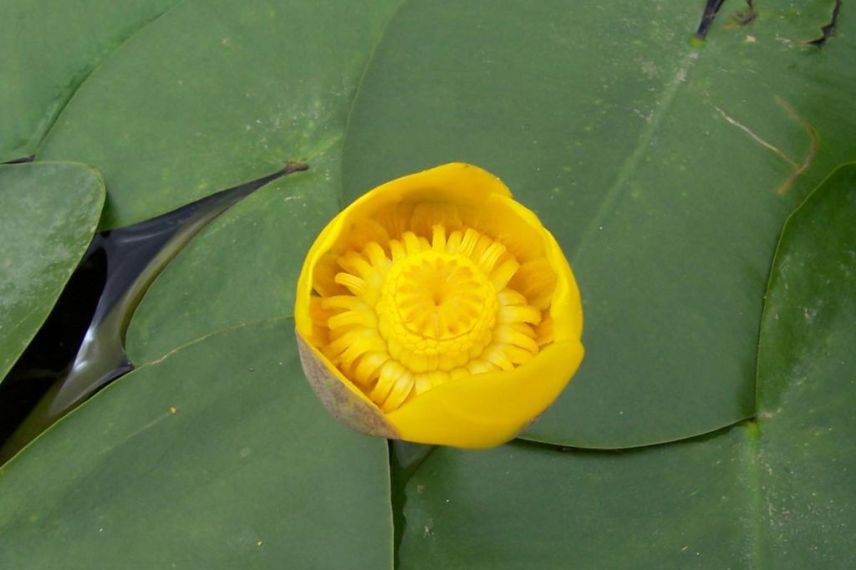
- Subscribe!
- Contents
Comments