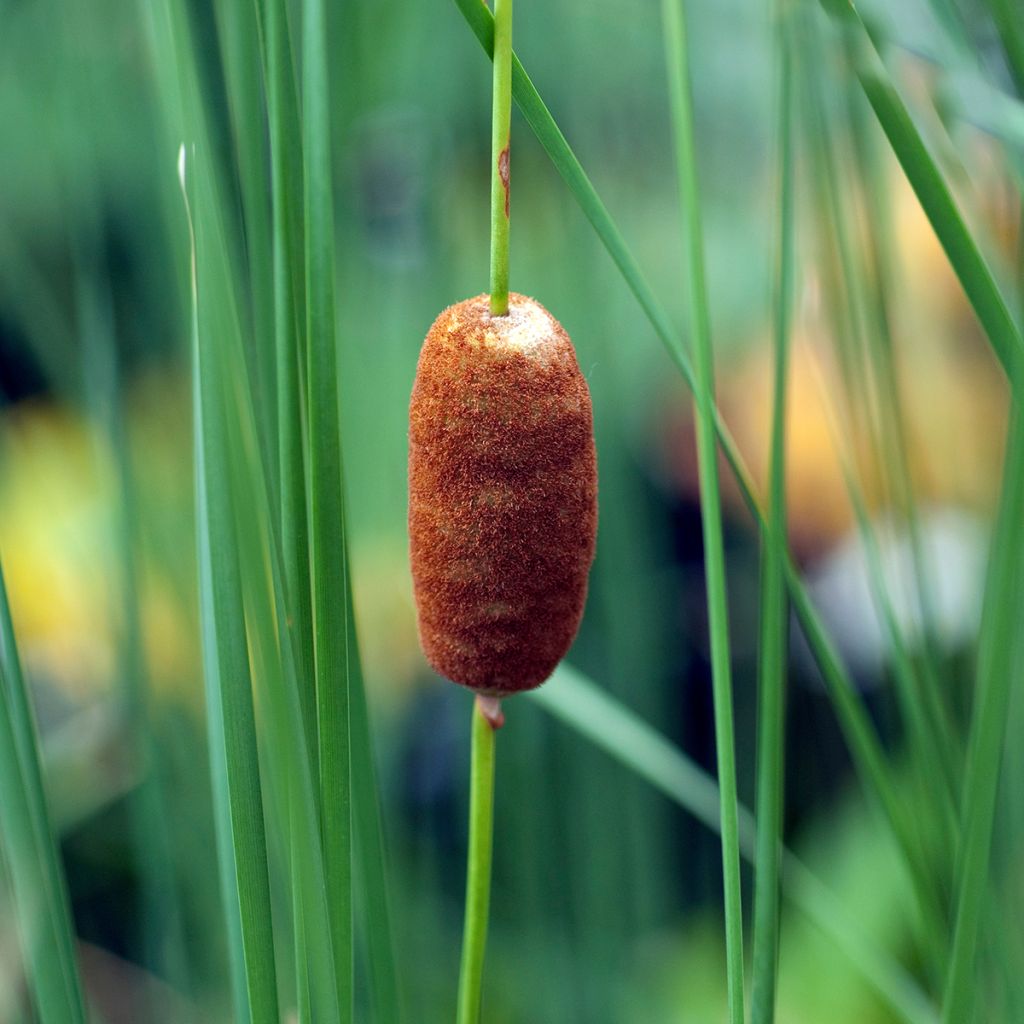
Typha laxmannii - Cattail
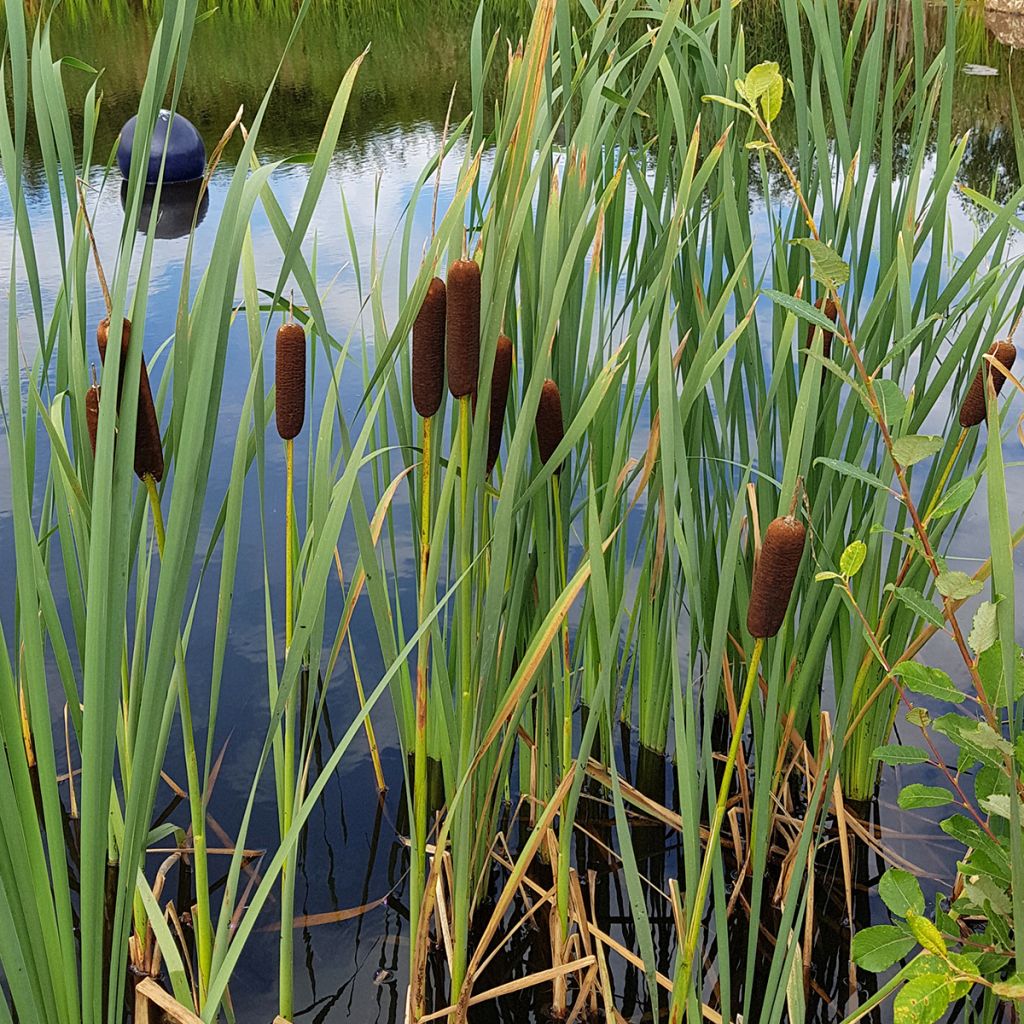
Typha laxmannii - Cattail
Typha laxmannii - Cattail
Typha laxmannii
Cattail, Bullrush
Back-to-school special offer!
Get €10 off for every €50 you spend! And get up to €40 off on a single order.
How does it work?
1. Shop your favourites
Add your favourite plants to your basket. For every €50 you spend (excluding delivery charges, store credit and the plastic-free option), you’ll receive a €10 voucher.
€50 spent = €10 voucher
€100 spent = €20 voucher
€150 spent = €30 voucher
€200 spent = €40 voucher
2. Place your order
Once your basket reaches one of the spending thresholds, place your order. You can even choose your delivery date!
3. Receive your voucher
As soon as your order has been shipped, you’ll receive an email containing your personal voucher code and its value.
4. Use it on your next order
Your voucher is valid for 90 days from the date you receive it. It can be used once only, on a new order worth at least the value of the voucher, excluding delivery charges.
Please note: Vouchers can be combined with other offers, but cannot be split or refunded.
Home or relay delivery (depending on size and destination)
Important: You may be charged customs duties by your country’s customs authorities upon delivery.
Schedule delivery date,
and select date in basket
This plant carries a 6 months recovery warranty
More information
We guarantee the quality of our plants for a full growing cycle, and will replace at our expense any plant that fails to recover under normal climatic and planting conditions.
Description
Typha laxmannii, also known as Laxmann's Bulrush, is a perennial herbaceous plant perfectly suited to aquatic environments, capable of submerging to a depth of 20 cm. Graceful and architectural, it stands out with its superb narrow linear, bright green leaves, adding a distinctive touch of elegance to aquatic scenes.
With moderate growth and low invasiveness, it uses its woody aquatic rhizomes to establish a strong base, perfect for stabilising banks or shores, even in small aquatic settings. Its purifying properties play a crucial role in improving water quality in ponds, basins, or marshy areas. Its unique inflorescences, resembling velvety cylindrical bulrushes, appear in summer and remain on the plant until late autumn. These spikes, remarkable in their natural habitat, retain all their appeal as dried flowers. Simply cut the still green stems and dry them upside down, in the dark, to create magnificent compositions. Well-suited to marshy soils, this bulrush thrives equally well in full sun or light shade, in dense fertile soil, thus constituting an essential element of submerged banks. In a pond, to control its root development, it is recommended to grow it in a container.
Typha laxmannii, more commonly known as Laxmann's Bulrush, in tribute to Erich Laxmann, a Swedish pastor and naturalist born in 1737. Belonging to the Typhaceae family, this hardy perennial herbaceous plant, hardy down to -16°C, thrives along rivers, in marshes, and lakes in temperate climate regions in Europe and Asia. It is common in Russia, particularly south of the Ural Mountains, in Siberia, and in the southwest of European Russia. The name Typha originates from Greek, where "tiphos" means marsh.
It takes the form of an upright tuft measuring between 0.80 and 1.20 m in height, composed of multiple narrow, green, linear, 2 to 7 mm wide leaves, tapering to a point, sheathing from the base. The vegetation is deciduous, emerging from the ground in spring. Much less invasive than the species, its root system consists of running rhizomes that spread without a theoretical limit. The flowering period extends from June to September. As bisexual flowering of cylindrical, brownish, stout and swollen spikes appear at the top of the stems, reaching 2.5 cm in diameter and 3 to 9 cm in length, topped by much more discreet male spikes. Known as bulrushes or cat-tails, these female spikes persist throughout autumn, then split open to release a silky whitish material.
Laxmann's Bulrush thrives in aquatic environments such as pond and river edges with low flow, marshes, and very wet meadows. In a garden, it can be planted along a pond's edge, while in the wild, it harmoniously adapts to pond edges, among rocks or stones, in a few centimetres of stagnant water. Generally, its growth is limited to a water depth of less than 20 cm. This robust plant is also an ideal choice for strengthening the banks of aquatic areas. Due to its non-invasive nature and moderate growth, this variety of bulrush is particularly suitable for urban gardens, small ponds, and limited water features.
Typha laxmannii pairs well with other submerged aquatic plants such as Acorus calamus, Iris pseudacorus, Glyceria maxima Variegata (Variegated Reed Sweet-grass), Juncus inflexus (Hard Rush), Sparganium erectum (Branched Bur-reed), Carex acutiformis (Lesser Pond-sedge), or Lythrum salicaria (Purple Loosestrife). For a diverse colour palette, combine it with plants suitable for banks and marshy areas, such as Pontederia cordata, Myosotis scorpioides (Water Forget-me-not), Stachys palustris, Caltha palustris Polypetala (Giant Marsh Marigold), Iris versicolor Kermesina, Schizostylis coccinea Major (Kaffir Lily), or Colocasia esculenta Mojito.
Report an error about the product description
Typha laxmannii - Cattail in pictures

Flowering
Foliage
Plant habit
Botanical data
Typha
laxmannii
Typhaceae
Cattail, Bullrush
Southern Europe
Planting and care
Plant Typha laxmannii in any wet, rich, clayey soil, it tolerates very well being submerged up to 20 cm in water. It is a species of marshy habitats and wetlands, tolerating a relatively wide range of conditions depending on the season. Place it in a sunny or slightly shaded location. It is a plant of marshy areas that requires constant moisture at the roots, ensuring not to exceed a permanent immersion of more than 20 cm of water. In nature, it is usually found on the banks of marshes, ponds, and slow-flowing rivers. Mostly in natural stagnant waters, shallow to moderately deep.
In a pond, a basin, or on the shores of a large body of water, dig a planting hole in the mud and plant your Laxmann's Bulrush, ensuring that the top of the root ball is at ground level. The average planting distance between plants is about 30 to 50 centimetres, in groups of 5 to 7 specimens for a better effect.
In a more confined space, to control its fairly vigorous growth, it is recommended to plant Laxmann's Bulrush in a planting basket or an area separated from the rest of the pond.
Planting period
Intended location
Care
Planting & care advice
-
-
-
-

-

-

-
-
This item has not been reviewed yet - be the first to leave a review about it.
Recently viewed products
Haven't found what you were looking for?
Hardiness is the lowest winter temperature a plant can endure without suffering serious damage or even dying. However, hardiness is affected by location (a sheltered area, such as a patio), protection (winter cover) and soil type (hardiness is improved by well-drained soil).

The flowering period indicated on our website applies to countries and regions located in USDA zone 8 (France, the United Kingdom, Ireland, the Netherlands, etc.)
It will vary according to where you live:- In zones 9 to 10 (Italy, Spain, Greece, etc.), flowering will occur about 2 to 4 weeks earlier.
- In zones 6 to 7 (Germany, Poland, Slovenia, and lower mountainous regions), flowering will be delayed by 2 to 3 weeks.
- In zone 5 (Central Europe, Scandinavia), blooming will be delayed by 3 to 5 weeks.
In temperate climates, pruning of spring-flowering shrubs (forsythia, spireas, etc.) should be done just after flowering.
Pruning of summer-flowering shrubs (Indian Lilac, Perovskia, etc.) can be done in winter or spring.
In cold regions as well as with frost-sensitive plants, avoid pruning too early when severe frosts may still occur.
The planting period indicated on our website applies to countries and regions located in USDA zone 8 (France, United Kingdom, Ireland, Netherlands).
It will vary according to where you live:
- In Mediterranean zones (Marseille, Madrid, Milan, etc.), autumn and winter are the best planting periods.
- In continental zones (Strasbourg, Munich, Vienna, etc.), delay planting by 2 to 3 weeks in spring and bring it forward by 2 to 4 weeks in autumn.
- In mountainous regions (the Alps, Pyrenees, Carpathians, etc.), it is best to plant in late spring (May-June) or late summer (August-September).
The harvesting period indicated on our website applies to countries and regions in USDA zone 8 (France, England, Ireland, the Netherlands).
In colder areas (Scandinavia, Poland, Austria...) fruit and vegetable harvests are likely to be delayed by 3-4 weeks.
In warmer areas (Italy, Spain, Greece, etc.), harvesting will probably take place earlier, depending on weather conditions.
The sowing periods indicated on our website apply to countries and regions within USDA Zone 8 (France, UK, Ireland, Netherlands).
In colder areas (Scandinavia, Poland, Austria...), delay any outdoor sowing by 3-4 weeks, or sow under glass.
In warmer climes (Italy, Spain, Greece, etc.), bring outdoor sowing forward by a few weeks.
Shipping country and language
Your country of residence may be:
Your country of residence is:
For a better user experience on our website, you can select:
Your shipping country:
-
 Austria
-
 Belgium
-
 Bosnia & Herzegovina
-
 Bulgaria
-
 Croatia
-
 Cyprus
-
 Czechia
-
 Denmark
-
 Estonia
-
 Finland
-
 France
-
 Germany
-
 Greece
-
 Hungary
-
 Iceland
-
 Ireland
-
 Italy
Italy
-
 Latvia
-
 Liechtenstein
-
 Lithuania
-
 Luxembourg
-
 Malta
Malta
-
 Netherlands
-
 Poland
-
 Portugal
-
 Romania
-
 Serbia
-
 Slovakia
-
 Slovenia
-
 Spain
Spain
-
 Sweden
-
 Switzerland
Language:
-
French
-
 English
-
Spanish
-
Italian
-
German
-
Portuguese
-
Dutch
-
Finnish
My Account
Hello
My wish lists
My cart
Log in / Register
Existing customer?
This form is protected by reCAPTCHA - the Google Privacy Policy and Terms of Service apply.
New customer?
Create an account to track your orders, access our customer service and, if you wish, make the most of our upcoming offers.