





























Grasses inflorescence: discover how beautiful they are
From spike to panicle, a journey through forms and colours
Contents
Ornamental grasses are garden jewels, adding volume, lightness and structure, whether in a contemporary border or a cottage-style border. Depending on the variety, they offer a wide range of inflorescences, from elegant spikes to airy panicles, including delicate spikelets. Each type of inflorescence adds a unique texture and movement to the garden, especially during autumn and winter. In this article, we explore the different forms of inflorescences in ornamental grasses to help you choose your favourite variety.

Spikes: vertical elegance
Spikes are characterised by a stem bearing spikelets (small flowers), directly attached to the main axis of the inflorescence, without a peduncle, in the manner of wheat spikes. Flowering begins at the base of the stem and progresses upward. This linear and pared-down structure lends spike-form grasses an elongated appearance, sometimes dense, and a natural elegance. This form is found mainly in the Calamagrostis and the Stipas.
Among our favorite varieties:
- Calamagrostis ‘Karl Foerster’ : With its upright, narrow spikes, this grass offers a distinctly vertical habit. Its brown-gold inflorescences in summer then become a beautiful beige in autumn and winter, adding interest all year round.
- Stipa tenuifolia : Also known as Angels’ Hair, it features slender, undulating spikes, creating a sense of lightness and movement.
- Hordeum jubatum : Foxtail barley, with its long feathery spikes, adds a soft texture and a wild look. Initially pink-tinged with green, the spikes then turn beige.
- Elymus magellanicus : Magellan bluegrass stands out for its bluish spikelets, contrasting beautifully with its silvery foliage.
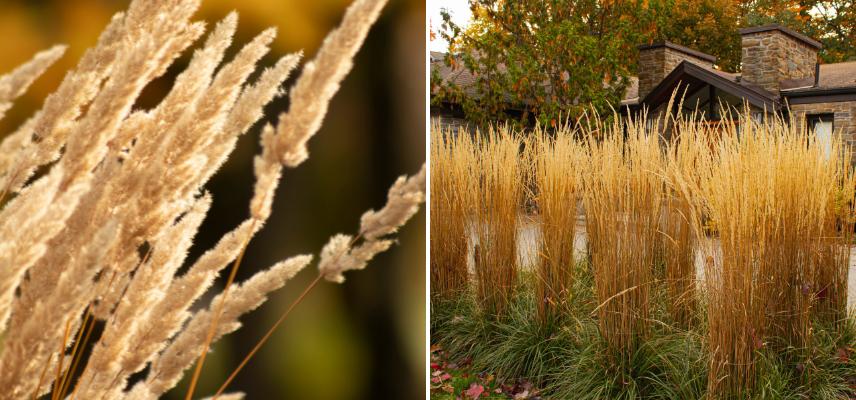
Inflorescences and mass planting of Calamagrostis ‘Karl Foerster’
Read also
Pairing CalamagrostisPanicles: Diversity and movement
The panicle is a more complex inflorescence, composed of many ramifications (the pedicels) on which the flowers develop. This structure offers a more airy and dynamic appearance. Panicles can vary considerably in size and shape, ranging from loose panicles, such as those of Miscanthus and the Panicums, elegant and open, to more compact and tight forms as with Pennisetum. There too, the flowers bloom from the bottom up.
Within this category, there are superb varieties, for example:
- Panicum virgatum ‘Northwind’: This variety is distinguished by its light, airy panicles rising above handsome blue-green foliage. In autumn, the panicles take on a rosy tint and the grass becomes straw-coloured, adding colour and charm to the garden.
- Miscanthus sinensis ‘Gracillimus’ : With its fine silvery panicles that emerge in late summer, this grass brings a touch of softness and movement. Its long, narrow leaves form an elegant, dense clump.
- Molinia caerulea ‘Edith Dudszus’: In autumn, this upright Molinia takes on yellow hues, topped with bun-shaped spikelets borne on long black stems. It adds a lot of charm to windy gardens.
- Sorghastrum nutans ‘Sioux Blue’ : This false sorghum features bright golden panicles, turning golden-brown in autumn, contrasting with its blue-green foliage in summer, which also turns yellow-orange.
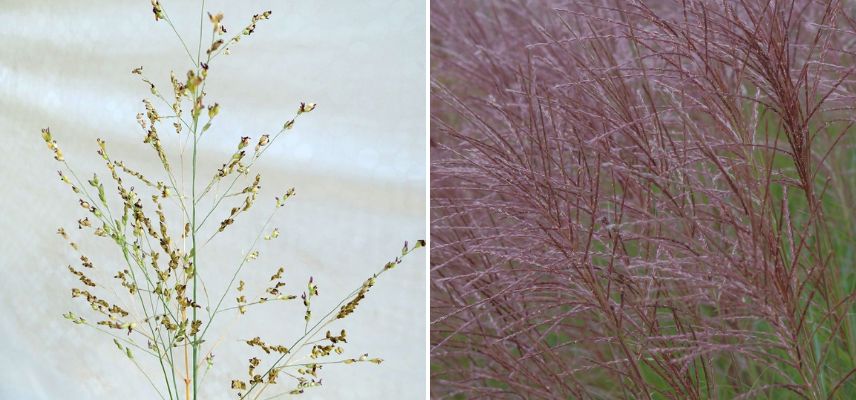
Panicle inflorescences of Panicum virgatum ‘Northwind’ and Miscanthus sinensis ‘Gracillimus’
Spicules: delicacy
A spicate inflorescence is a compact structure composed of small groups of flowers called spikelets, tightly arranged along a central axis. Each spikelet contains several flowers (florets) protected by bracts. Spikelets are characteristic of certain grasses and vary in shape and size depending on the species, primarily among the Fescues and Deschampsias. This form is often delicate and fine, adding a unique texture to the garden.
Here are some examples of notable cultivars in this category:
- Festuca glauca ‘Elijah Blue’: This blue fescue is characterised by its discreet spikelets that rise above a blue-grey foliage. It is perfect for adding texture and colour in borders or rockeries.
- Deschampsia cespitosa ‘Goldtau’: This tufted Deschampsia features airy, luminous spikelets, forming a golden cloud above the green foliage. It is ideal for creating light, airy effects in the borders.
- Poa labillardierei: This grass, also known as meadow-grass, offers slender inflorescences tinged with purple and delicately silvered, adding a subtle touch of colour.
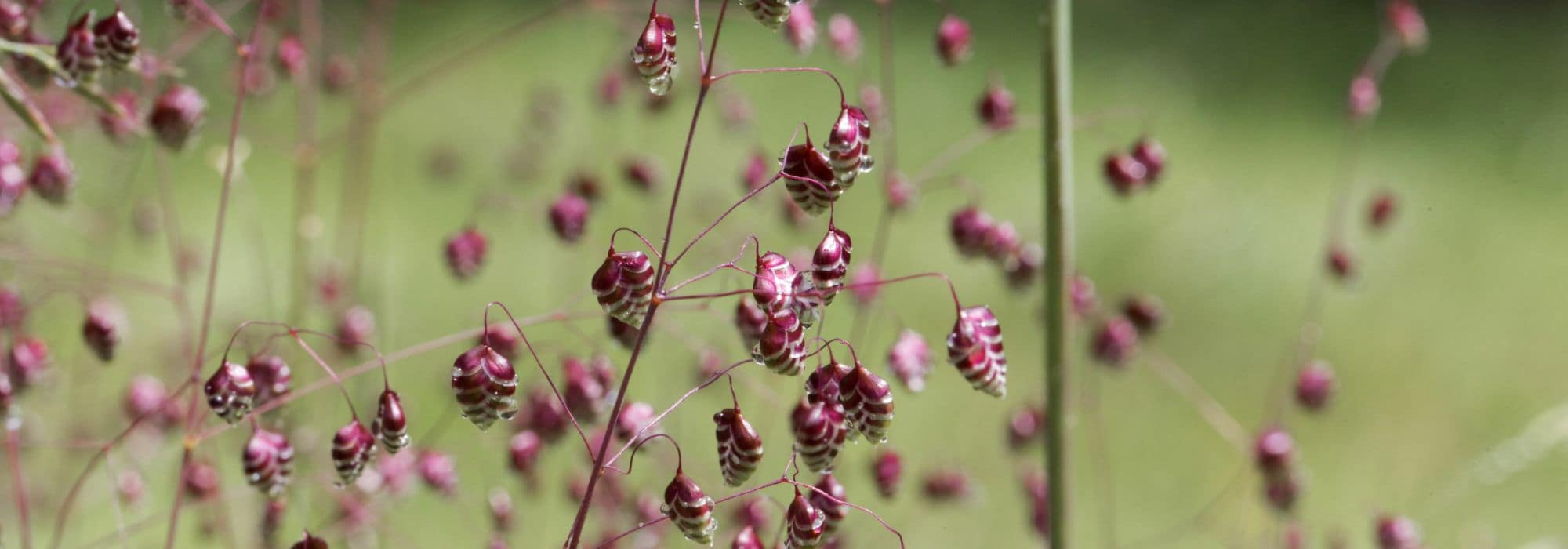
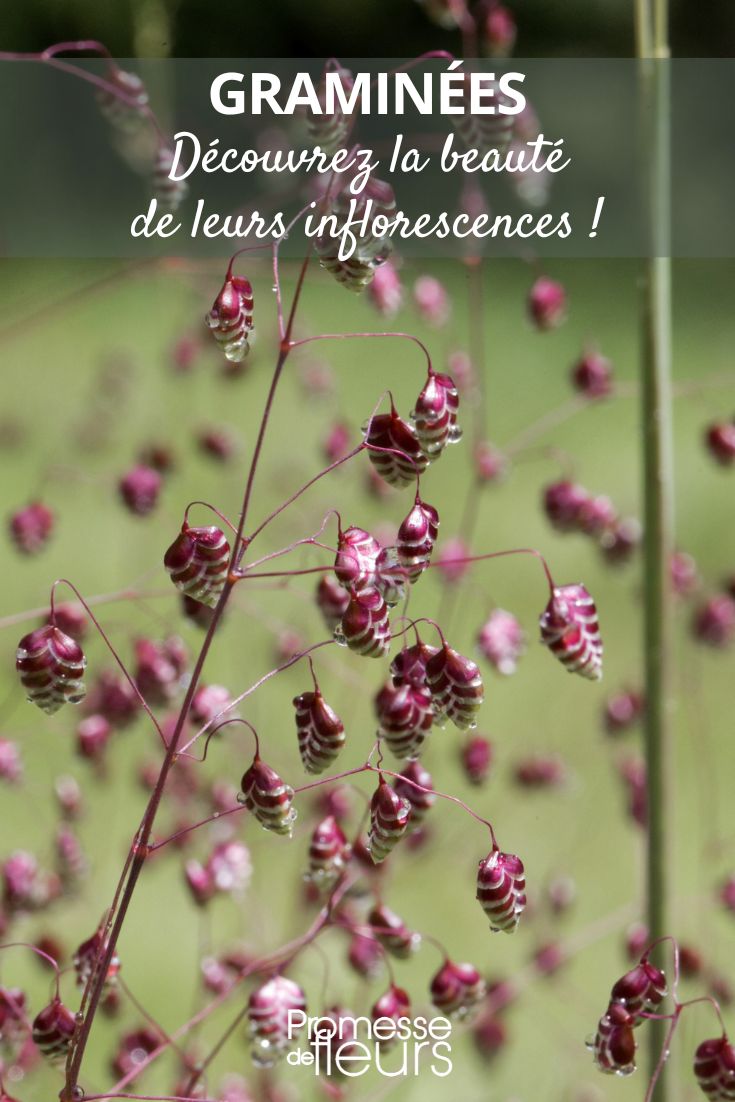
- Briza media: Also known as “common love-grass”, it is a light grass with heart-shaped spikelets dancing in the slightest breeze, creating a delicate effect throughout the seasons.
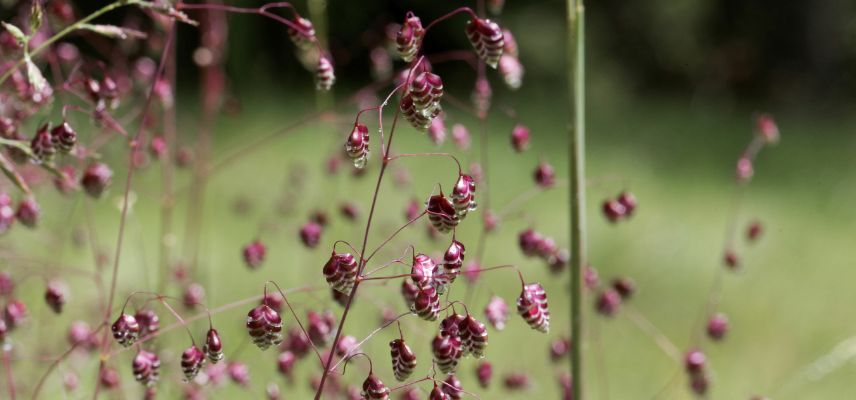
Inflorescences of Briza media
Read also
Grasses: which variety to choose?Showcasing the garden
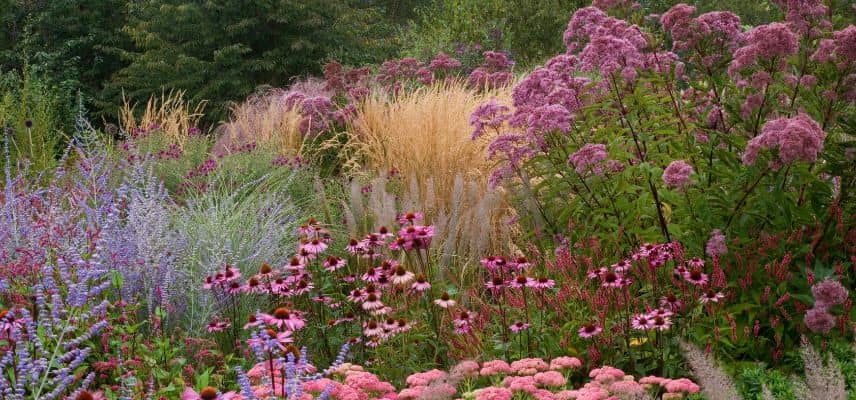
Ornamental grasses, with their varied inflorescences, are perfect for structuring the garden, particularly in autumn and winter. Their flowering, foliage and their colour generally persist during these seasons, taking on golden hues, providing a stunning visual display even in dormancy. To showcase them, pair them with plants with rounded shapes or with colourful flowers to create an interesting visual contrast, such as an Autumn Aster, a Perennial Chrysanthemum, an Echinacea or even large autumn daisies.
Play with height, by planting different varieties of grasses or perennials to create rhythm and depth in your displays. And why not a Perovskia atriplicifolia ‘Blue Spire’ or a Gaura lindheimeri to bring even more lightness with their graceful flowering.
Place ornamental grasses where they can catch the light, especially in the late afternoon, for a luminous and spectacular effect in winter.
→ For more information, read our article: How to create a grass garden?
- Subscribe!
- Contents
Comments