





























Growing begonias in pots for spectacular flowering
Our tips
Contents
Planting a begonia in a pot is a wise choice to bring colour and elegance to your outdoor spaces for many months. A wide range of colours, shapes and sizes, begonias offer abundant flowering that can last from spring to autumn. Easy to grow and low-maintenance, this plant is ideal for beginners as well as for experienced gardeners. In this article, we guide you through essential steps to successfully grow begonias in pots, from choosing the right specimen to the care they require.

What types of begonia?
Begonias come in a very wide range of cultivars, derived from different species, each adapted to specific conditions and offering unique characteristics in terms of colour, flower shape and leaf type. Here’s how to select the begonia that will best suit your outdoor space.
Tuberous begonias
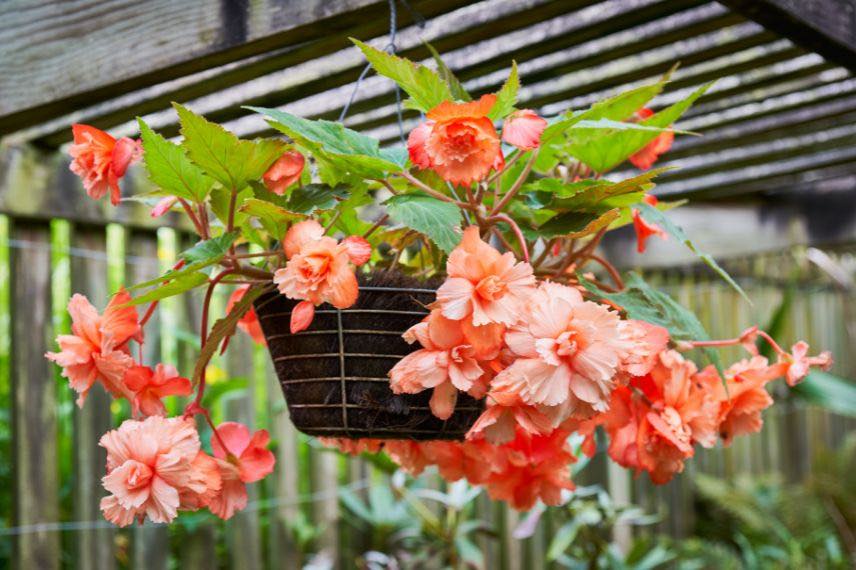
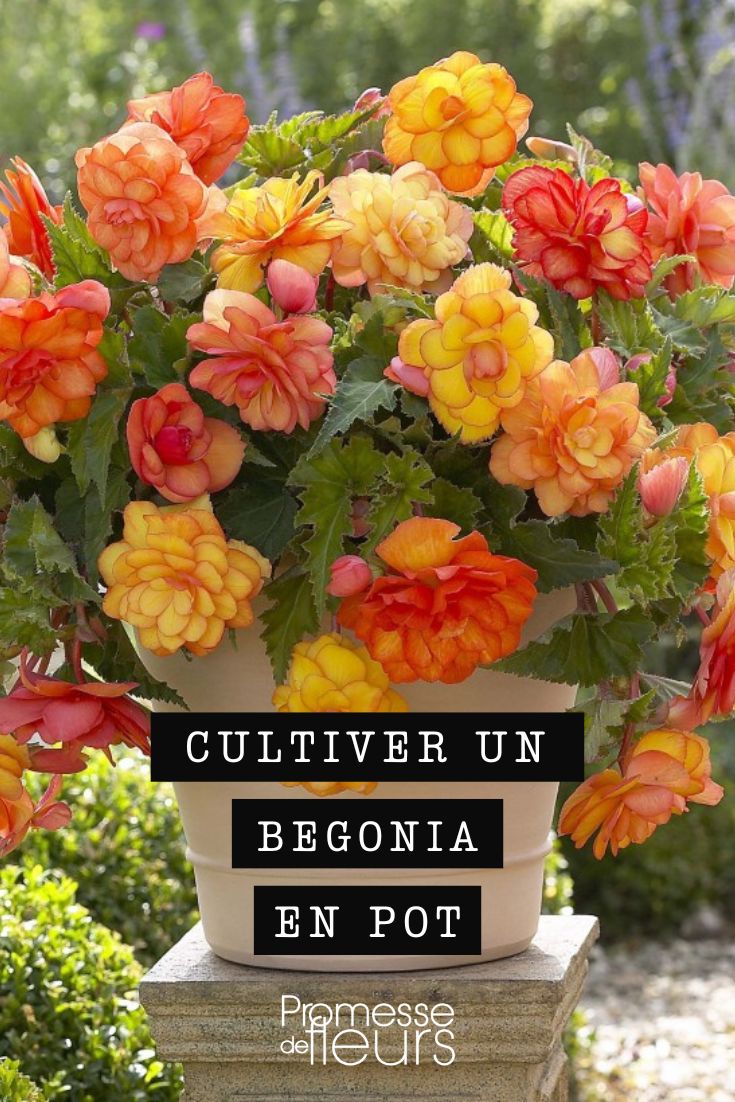
Tuberous begonias, or Begonia tuberhybrida, such as those in the Belleconia series, are renowned for their sumptuous and large flowers. Available in a wide range of vibrant colours, including red, pink, orange and white, these begonias are perfect for creating focal points in your garden or on your balcony. They generally prefer spots with partial shade or shade, avoiding direct sunlight that can scorch their delicate petals. These trailing varieties are ideal for pots, hanging baskets and window boxes, where their flowers can be admired up close.
Begonia semperflorens
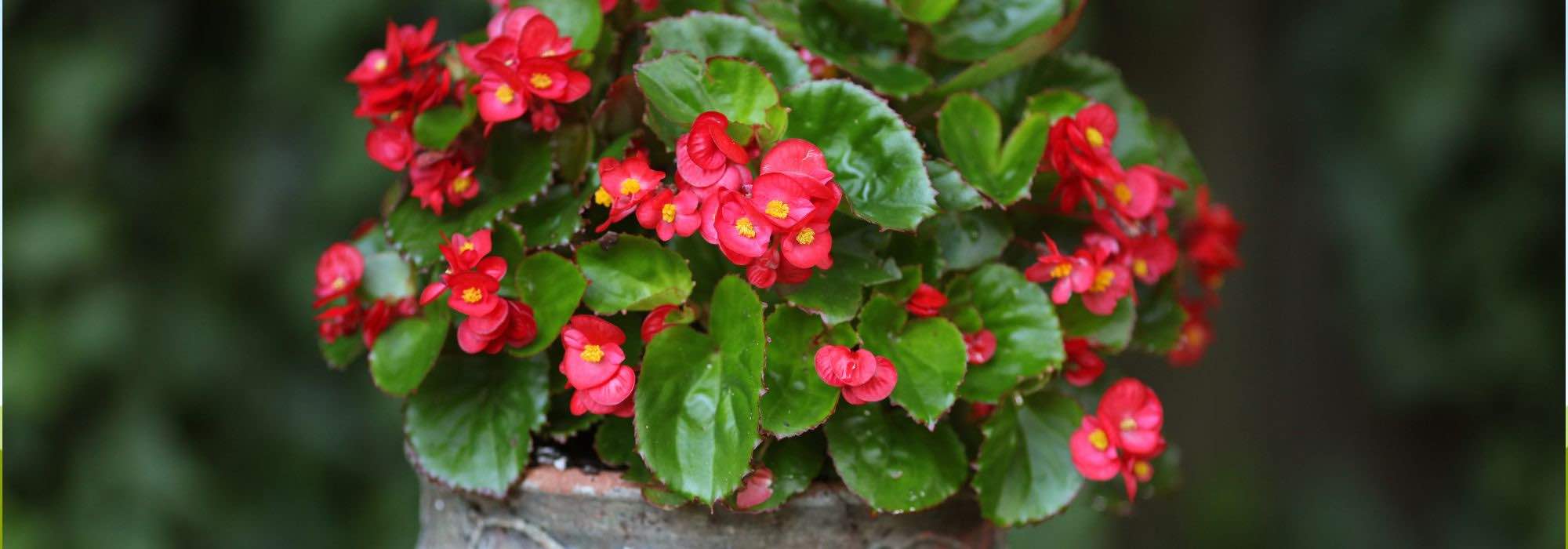
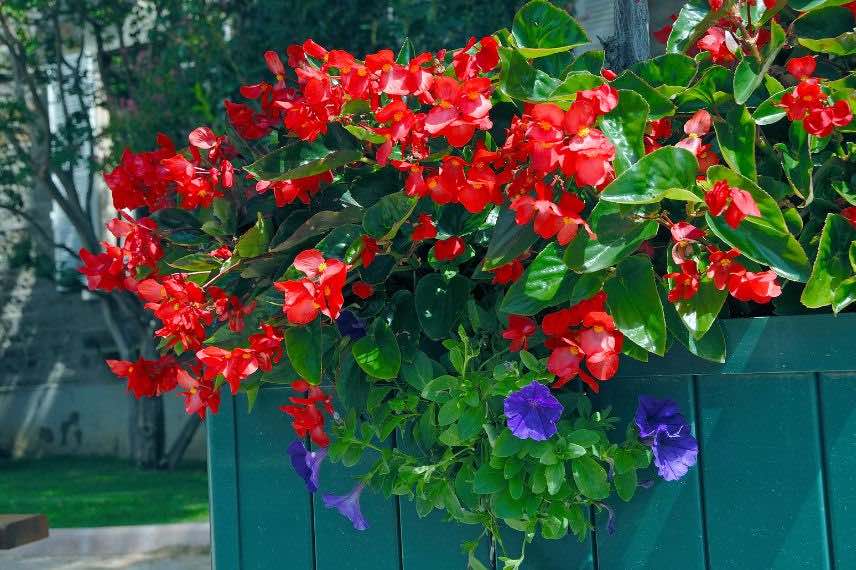
Also known as bedding begonias, Begonia semperflorens offer continuous, abundant flowering for several months. Their compact size, bushy habit and resilience make them an excellent choice for pots and containers, where they provide long-lasting colour. Their green foliage, or sometimes purplish, adds an interesting contrast with white, pink or red flowers. These begonias adapt well to partial shade or sunny spots, provided that the heat isn’t too intense.
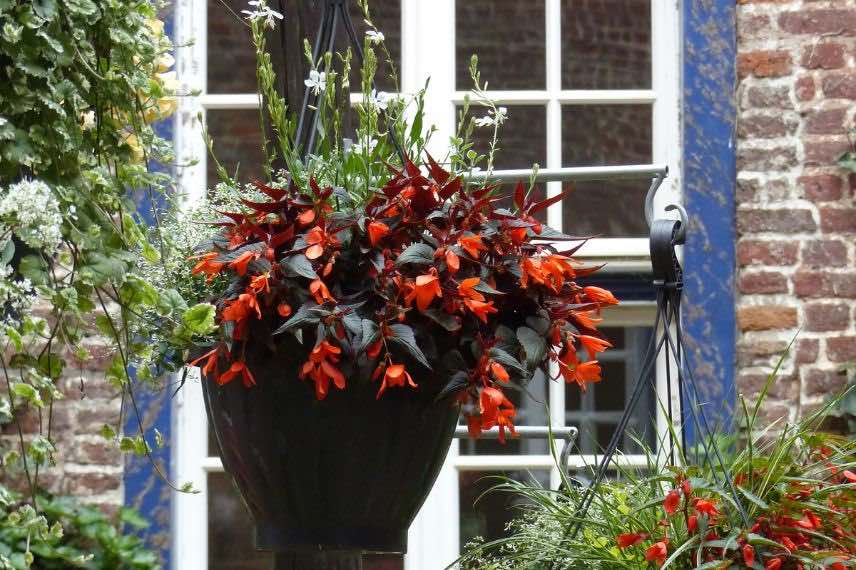
Summerwings trailing begonias, such as ‘White Elegance’ are hybrids of Begonia boliviensis which form a true cascade of single flowers and tolerate full sun.
Tips for selecting
When choosing a begonia for your pot, consider the location where it will be placed. Assess the amount of direct sunlight and opt for a variety that will thrive in these conditions. Also consider the plant’s mature size to select a pot with dimensions appropriate to accommodate its growth.
What type of pot? What size?
The ideal pot for a begonia should have drainage holes to prevent water buildup and reduce the risk of root rot. The pot size will depend on the begonia variety chosen: a pot 20–25 cm in diameter is generally suitable for most begonias. For larger varieties or tuberous begonias, opt for a pot slightly larger to accommodate the growth of tubers or roots.
Materials such as terracotta or plastic are both suitable, but bear in mind that terracotta provides better aeration of the growing medium and faster evaporation of water.
What substrate?
Begonias prefer a light, organic-rich growing medium that drains well. A mix of potting compost for containers or for geraniums and flowering plants with an addition of perlite or of vermiculite will improve drainage while retaining the moisture required for the plant’s growth. For tuberous begonias, adding a little sand can also improve drainage, thus avoiding excess moisture around the tubers.
Also provide some clay pebbles or gravel for drainage at the bottom of the pot.
Read also
Aphid: identification and treatmentWhen and how to plant begonias in pots?
It is advisable to plant begonias in May, after the last risk of frost in spring. For regions with a mild climate, planting can take place earlier.
Planting
- Begin by filling the pot with drainage material to a depth of a few centimetres
- Then pour in some of the prepared substrate.
- Carefully remove the plant from its original container, taking care not to damage the roots.
- Place it in the pot, ensuring the top of the root ball is 2 to 3 centimetres below the rim of the pot.
- Backfill around the plant with additional substrate and gently firm it.
- Water your begonia moderately to moisten the substrate and establish good contact between the roots and their new environment. Avoid wetting the foliage to reduce the risk of diseases.
- If necessary, fill any air gaps with additional substrate.
- Water again.
Exposure
Most begonias prefer bright light, but protected from direct sun, especially during the hottest part of the day. Too intense light can scorch the leaves and flowers, while a lack of light can limit flowering. Find a location that offers filtered light or partial shade, ideal for encouraging vigorous growth and vibrant flowering.
You can place tuberous begonias in shadier spots. The Summerwings series begonias tolerate full sun.
Watering and fertilising your begonia
Watering
Begonias require regular watering to keep the potting mix evenly moist, but not waterlogged. Let the surface of the potting mix dry slightly to a depth of a few centimetres between waterings to avoid excess moisture, which can lead to root rot.
During hot months, monitor the moisture of the potting mix closely, as potting mix can dry out quickly. Avoid watering the foliage directly to reduce the risk of fungal diseases.
Fertilisation
Fertilise your begonias in pots with a balanced fertiliser, suitable for flowering plants, once a month during the growing season. Choose a fertiliser containing a balanced ratio of nutrients, and follow the instructions on the packaging to avoid over-fertilisation, which can damage the plant. You can also opt for a slow-release fertiliser, such as the Osmocote Exact 6-month capsules. Apply a fertiliser low in nitrogen but rich in phosphorus and potassium. This will stimulate the development of flower buds without encouraging excessive leafy growth.
Care
Pruning and care of begonias
Pinch back the tips of the stems to encourage bushier growth, and regularly remove faded flowers to stimulate the production of new flowers. If you notice yellowing or damaged leaves, remove them to keep the plant healthy and improve its appearance.
During periods of high heat or heavy rain, protect your begonias by placing them under an awning or bringing them indoors. This can help prolong flowering by avoiding stress from unfavourable weather conditions.
Over-wintering
Begonias are very sensitive to cold and frost. Plan to over-winter them as soon as temperatures drop noticeably or frosts are forecast. You can place your hanging basket indoors in a greenhouse, a conservatory, or even in the house. The room should be bright and airy. During this period, limit watering.
Repotting
Potted begonias may require annual repotting to provide sufficient space for root growth and refresh the substrate. Choose a pot slightly larger than the previous one and use a well-draining substrate. Repotting is also the occasion to inspect the roots for potential health issues.
Diseases and parasites
Begonias can be affected by several pests and diseases, including:
- Aphids: These small insects can attack stems and leaves, sucking sap and weakening the plant.
- Whiteflies: These pests also feed on plant sap and can cause leaf yellowing.
- Root rot: Caused by overwatering or poor drainage, it can be fatal for begonias.
- Botrytis (grey mould): This fungus develops on damaged or dead parts of the plant, especially in damp conditions. It causes the plant tissues to rot, necrose, wilt, and bear a kind of grey dust.
- Powdery mildew: It is characterised by the presence of a white, powdery felt on the leaves.
Preventive measures
Preventive measures to protect your begonias from diseases and pests:
- Ensure good drainage: Use a well-draining substrate and pots with drainage holes to prevent excess moisture.
- Water correctly: Water begonias at soil level to avoid wetting the foliage, and allow the substrate to dry slightly between waterings.
- Maintain good air circulation: Space the pots far enough apart to allow adequate air circulation around the plants.
- Inspect your plants: Early detection of signs of pests or diseases allows for rapid intervention before the problem worsens.
Natural treatments
- For aphids and whiteflies: A jet of water can be sufficient to remove these pests. You can also use diluted black soap sprays at 15 to 30 g per litre of water. For whiteflies, add a few drops of vegetable oil.
- For fungal diseases: It is often necessary to remove the affected parts of the plant and improve growing conditions (reduce watering, improve drainage). You can treat powdery mildew by spraying sulphur or a horsetail decoction against botrytis.
- Subscribe!
- Contents
Comments