





























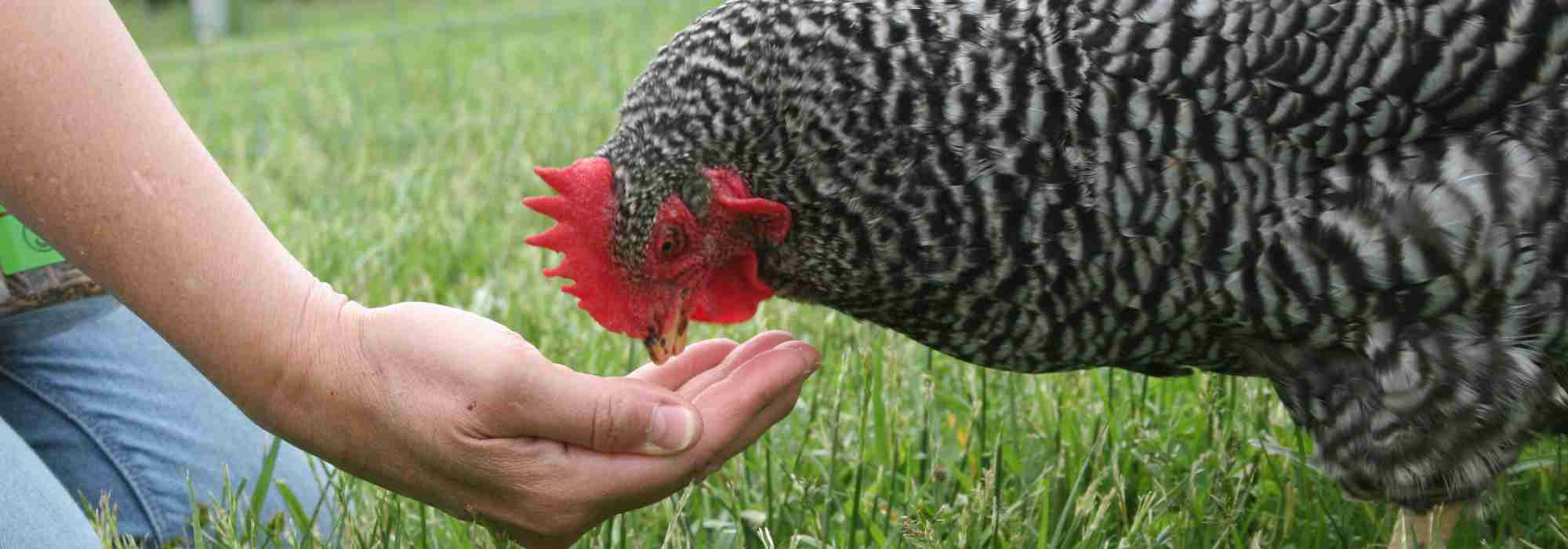
Growing your own chicken feeds: which plants and cereals
Growing your chickens' feed in the garden is possible, but it's also healthy, economical and sustainable
Contents
If you keep a few laying hens, you have the chance to enjoy fresh, healthy eggs with exceptional flavour. Provided you feed them well with a varied and balanced diet, and above all tailored to their needs. Chickens’ feed must, in fact, be rich in animal and plant proteins, fats and carbohydrates, vitamins, minerals and trace elements. Indeed, the hens spend a lot of energy to lay an egg for you most days. Their diet also helps them cope with the cold and various diseases to which they may be susceptible.
Thus, the hens’ diet should be composed of 70 per cent mixed cereals (wheat, maize, barley, oats, rye…) and 30 per cent animal proteins (earthworms and other insects they peck at in the soil) or plant-based proteins (linseed, soya, peas…). To this base are added, of course, a few indulgent extras such as table scraps, fruit and vegetable peelings, dried mealworms, and especially the greens they glean in their run.
This feeding can weigh heavily on a family budget. That’s why it may be worthwhile to grow the food you give to your hens. Our tips and suggestions for varying the menu for your beloved hens.

Golden rules for selecting species to grow
Obviously, it’s out of the question to devote your entire vegetable garden to feeding your hens. The main thing, however, is to feed your family. But A small plot can be enough to sow or plant a few vegetables specifically for your hens. If you have a bit more space, sowing cereals or green manures can be considered. As long as you have a little time to harvest them, obviously without a combine harvester!
If you’ve had your hens for some time now, you should be aware of their tastes and habits. Hens have their preferences when it comes to feeding! When you give them fruit and vegetable peels, you may have noticed that they discard some of them. So there’s no point in growing what they don’t care for.
In addition, you should always ensure they receive very balanced rations, made up of 70% cereals and 30% protein, from animal or plant sources. If your hens have access to a large green space, they will already find a small part of their protein intake there, thanks to earthworms, larvae, gastropods and other insects they manage to root out. Nevertheless, cereal blends are essential to support their laying and keep them healthy. What you grow for them in the garden will be enriching little extras for their well-being. But you should not base their daily feed solely on these contributions.
Read also
Forbidden foods for chickensVegetable and forage plants to grow for your hens
When it comes to vegetable and forage plants, you have plenty of choice to please your hens! But focus mainly on plants that grow quickly, require little maintenance and little water, and above all do not take up too much space. Finally, ensure a year-round supply of plants, especially in winter, the period when hens need a nutrient-rich diet to help them cope with the cold.
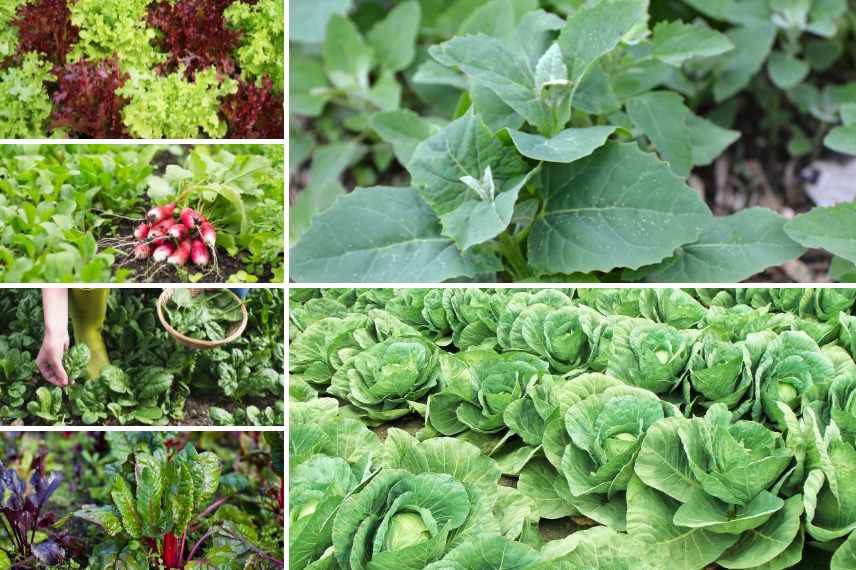
Green fodder for the hens!
Some examples of vegetable plants:
- The salad leaves : hens love salad, but to have a plentiful supply over a long period, favour the cut-and-come-again oak leaf lettuce which grows quickly and regrows. And even when it bolts, the hens never turn their noses up at eating it. It can be sown from March to August.
- The radishes : hens literally love radish greens, which usually go to compost (unless you try making a radish leaf pesto). Some hens even enjoy the roots.
- The spinach : again, spinach leaves delight the hens with their tenderness. You can even grow varieties such as the “Winter Giant” to have them throughout the cold season.
- The chard : with Swiss chard, it’s a case of sharing — you eat the stalks, your hens take care of the leaves.
- The cabbages and, in particular, forage brassicas: the white cabbages, the curly kale, the Chinese cabbages and the kale are perfect for hens, as they consist of plenty of greenery. Even better, forage cabbages: they are very productive, hardy. Since they grow on tall stems, you can sow underneath. They are especially rich forage plants in nitrogen, calcium and magnesium.
- The squashes : fresh squash seeds are treats for the hens. As for the flesh, it can be cooked quickly and form the base for soups and pâtés in winter.
- The melon, the watermelon and the cucumber : if you live in a region with mild summers, don’t hesitate to sow these fruit vegetables which provide hydration for the hens in hot weather or heatwaves.
- The beetroot : hens relish beet leaves which would otherwise be wasted and end up in the compost.
- The ‘orache : this herbaceous plant, closely related to spinach, can also please the hens. Not least because it is easy to grow and grows tall.
For a little more detail : Forage plant: 5 vegetables for animals
Small fruits too, they’re crazy about them!
Chickens are also fond of sugar! Therefore, small fruits can also enter their menu. It is even possible to plant directly in their run small fruit trees that will serve a twofold purpose: they will provide shade during the hottest hours of summer and will supply the fruit for a feast.
Do not hesitate to plant raspberries, blackberry bushes, redcurrant bushes, a black elder (Sambucus nigra)… which grow relatively quickly to satisfy the hens’ appetites.
The rowan (Sorbus aucuparia), the mulberry (Morus), the medlar (Mespilus germanica), the fig tree… can also be planted in a chicken run, but they require a little patience before bearing fruit and providing their shade.
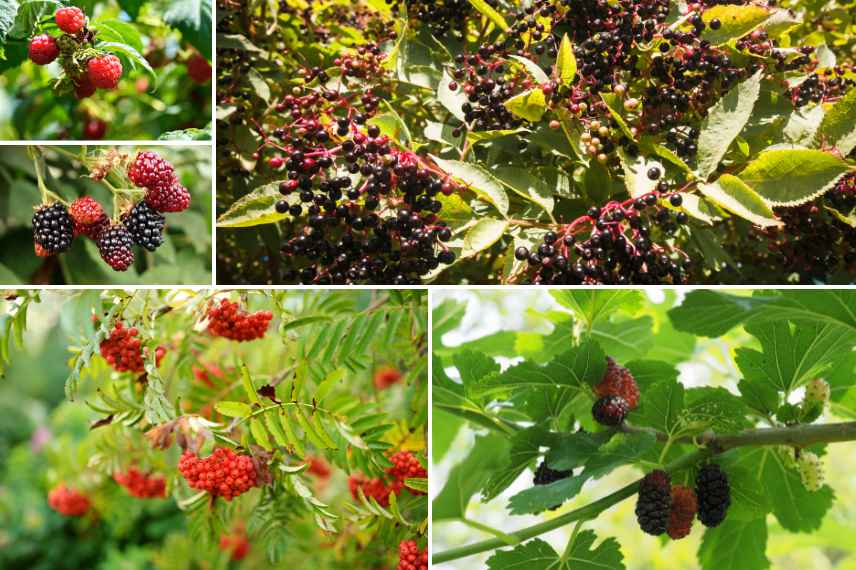
Raspberries, blackberry bushes, rowan, black elder and mulberry can be planted for chickens
In any case, if you plant a tree or shrub in your chickens’ run, make sure to surround it with fencing to protect it from their beaks.
For more information: Chickens in the garden, what to plant in the run?
Read also
What diet for laying hens?The essential cereals and seeds to grow
Cereals form the basis of your chickens’ diet. While it’s easy to buy them in a mixed bag from your neighbour’s farm, at a garden centre or from a specialist shop, you can also sow these cereals. However, you’ll need to devote a little time to cutting them with a scythe, drying them and threshing.
The main cereals, including wheat, barley, rye, bread wheat, oats, millet or sorghum, spelt, buckwheat… can be grown. Some of these cereals, such as millet, are very decorative and can be incorporated into borders. Others, such as rye or buckwheat, are considered green manures. All of these seeds can be fed sprouted to chickens to boost their nutritional value.
You could also grow for your chickens the amaranth, or maize, the grains of which will need to be crushed. Not to mention the sunflower, which seeds are rich in protein.
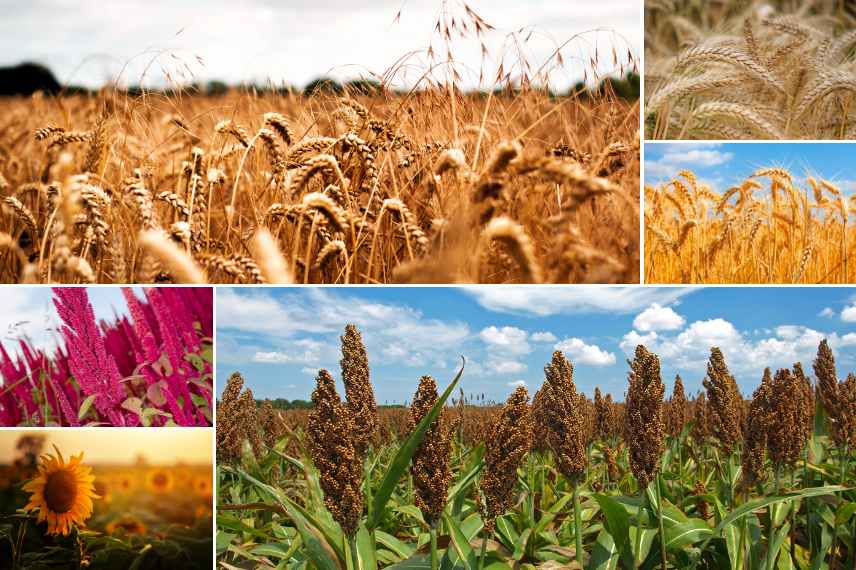
Chickens enjoy seeds and cereals
A small space for wild herbs
When free-range chickens have access to a large area, they will peck at every blade of grass. And among these herbaceous plants, some have their favourites. Starting with the dandelions. Of course, you can always go and harvest them in the wild, but if you have little time to devote to foraging, opt for planting them in a large tub to prevent their spread. You can also sow nettles, which are a source of many benefits for chickens: it’s an excellent dietary supplement to promote laying, while being antibacterial and antiparasitic. However, nettles should be crushed and, if necessary, cooked.
Chickens also enjoy the plantain, ryegrass, and the greater stitchwort…
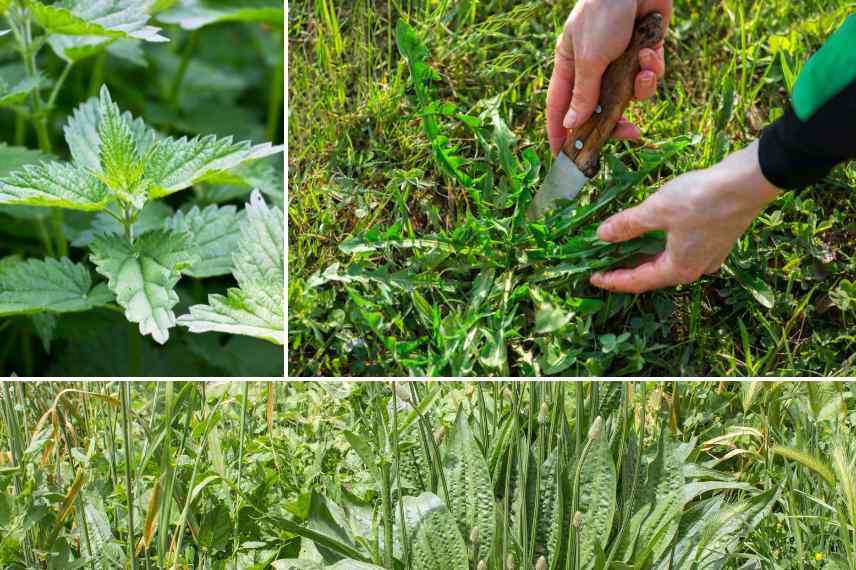
Chickens love dandelion leaves, nettle leaves and plantain leaves
Green manures and legumes, good for your chickens and your vegetable garden
Green manures, grown as a cover crop, help feed, purify, aerate and enrich garden soil. As for Fabaceae (formerly Leguminosae), they enrich the soil with nitrogen, their root system having the ability to capture atmospheric nitrogen and return it to the soil. Green manures such as white clover, vetch, alfalfa, mustard and phacelia… can be sown in a corner of your vegetable garden. You can mow off a portion to offer to your hens. Or simply release your hens into your vegetable garden in winter.
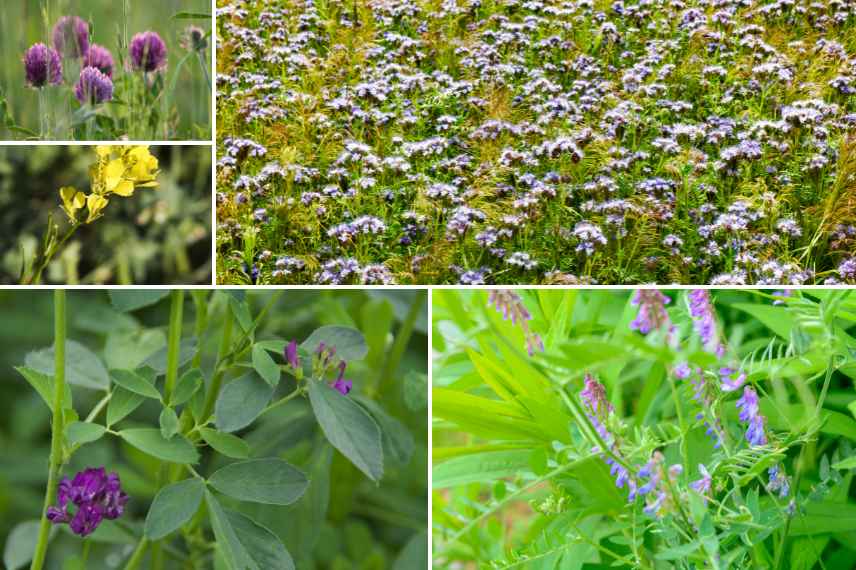 Hens love green manures
Legumes are also a good dietary supplement for hens, as they are rich in plant-based proteins. You can therefore sow peas, peas, soybeans, broad beans, lentils, chickpeas… But it is preferable to sprout them or cook them before feeding them to the hens.
- Subscribe!
- Contents
Comments