





























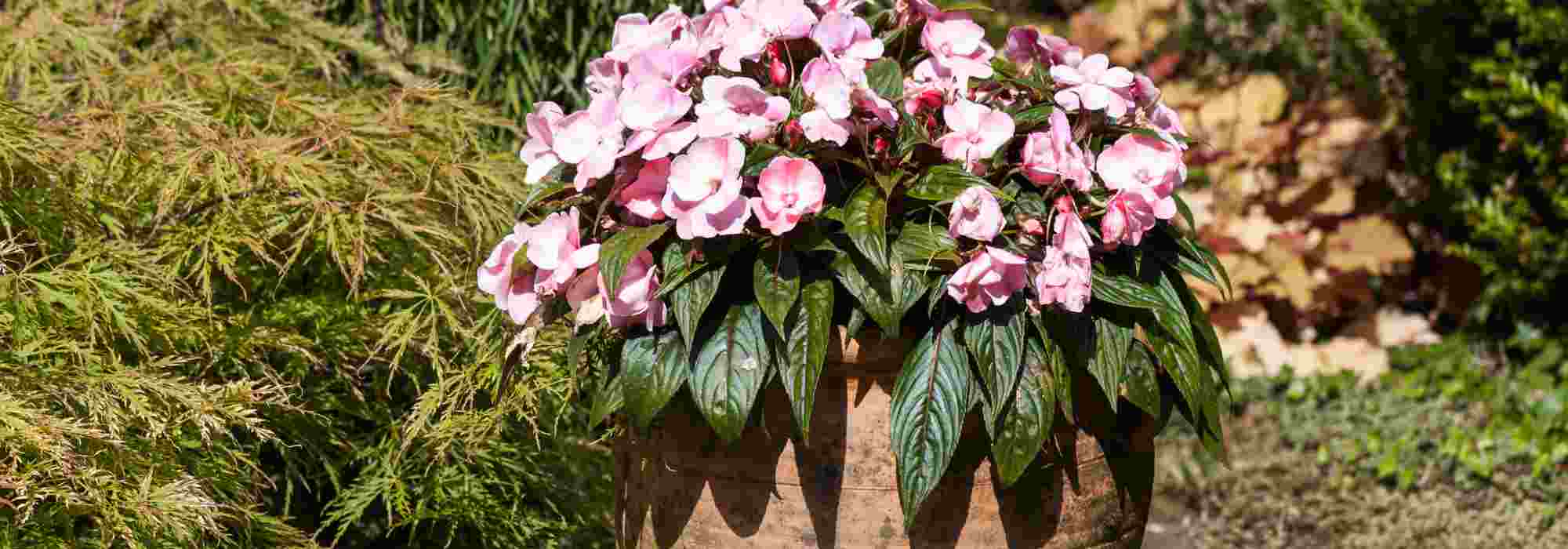
Growing Impatiens in pots
A long-lasting summer flowering for your shade-loving container plants
Contents
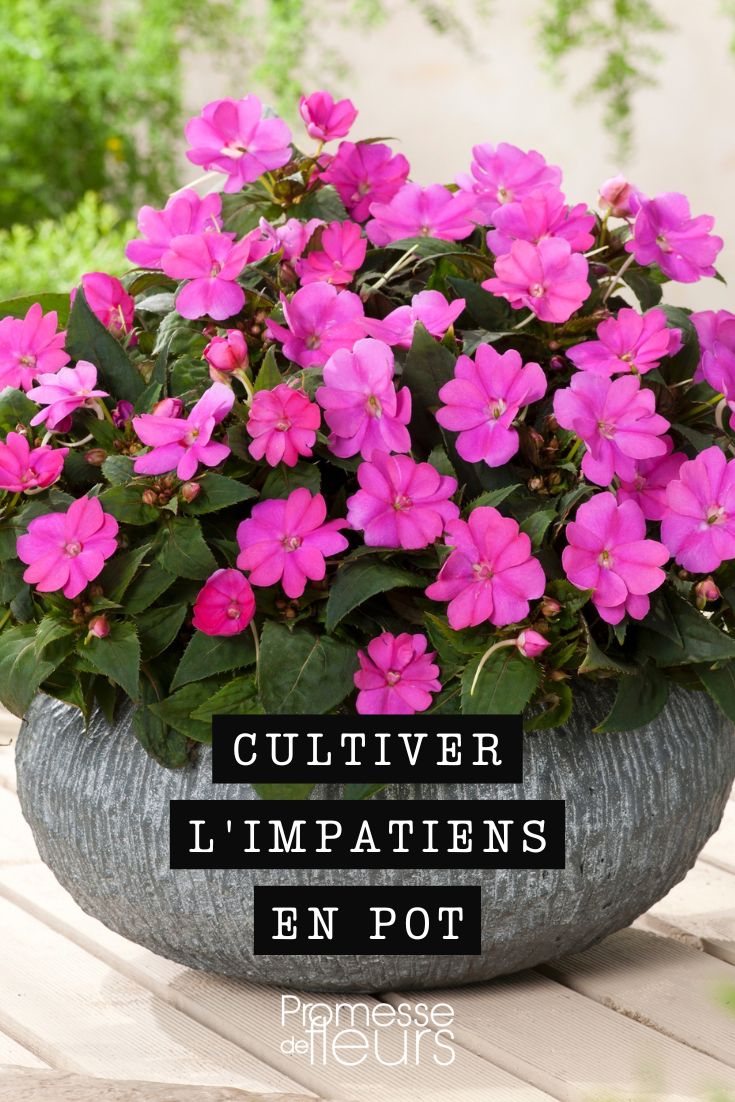
When you want to add a touch of colour to a summer-shaded area of the garden, on a north-facing terrace or balcony, Impatiens quickly proves to be the ideal seasonal plant : this flower in pink, magenta or white tones with handsome foliage is perfectly suited to the least sunny spaces. Impatiens also charms with its very long flowering period, beginning in April–May and lasting until October! Growing in a pot can bring an exotic touch to our outdoor spaces, with the incredible profusion of flowers throughout the summer season, and beyond.
We’ve got all the tips for growing Impatiens in pots!
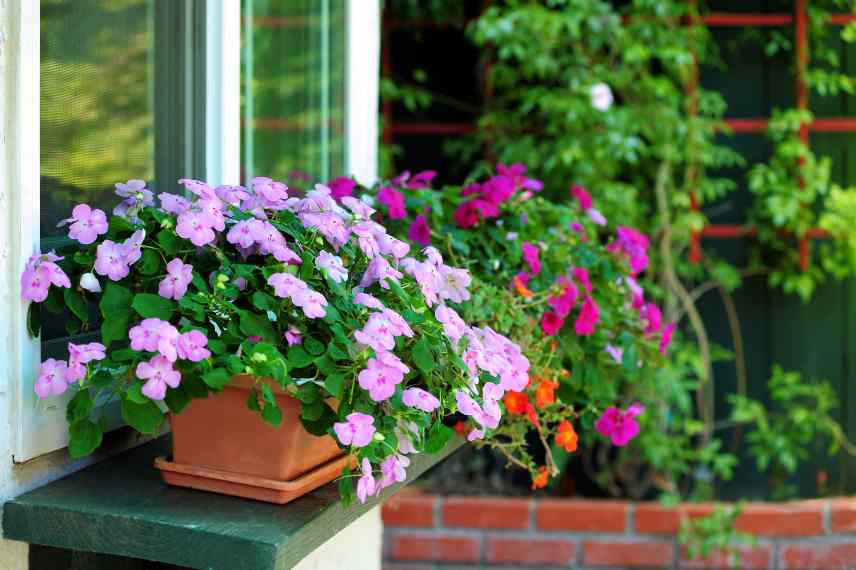

Which Impatiens should I choose for my container or planter?
Originating from Africa or tropical Asia, Impatiens, or balsam, is the seasonal companion ideal for exotic-style gardens, but it actually has a place almost anywhere, once you know how to choose it well and pair it.
You’ll mainly find the Impatiens walleriana in garden centres, but also New Guinea Impatiens (Impatiens hawkeri), with larger flowers and bronze-tinted foliage. All are compact enough to brighten a wide range of containers placed on the ground or on windowsills.
In dense shade
Impatiens with variegated foliage are particularly bright in dense shade, such as Impatiens SunPatiens ‘Vigorous White Variagated’ with yellow-edged leaves. For colours, also favour white-flowered Impatiens in dense shade, which instantly brighten the area. Note that single-flowered Impatiens flower much better in exposures that receive no sun, i.e., north-facing.
In partial shade, you can be tempted by double-flowered Impatiens which will have a subtle effect (they are disappointing in dense shade), and New Guinea Impatiens which tolerate a little more sun (but never at the strongest part of the day).
Even in sun! The SunPatiens are, for their part, annuals of horticultural origin that tolerate all exposures, including sun.
When and where to plant them?
Impatiens, like all annuals, are available in mid- or late-spring, in plug plants or in 10-pot trays, or even in larger pots or ready-to-use planters. You should plant them, as far as possible after the first frosts, around mid-May, once cold spells are no longer to be feared.
Shade-loving, Impatiens bloom best when they have constant moisture at their base. Dense shade doesn’t scare them, which is one of their great strengths. When grown in pots, they are usually placed in north or north-east facing, to brighten a courtyard, a pot garden on a shaded city patio, or the entrance to a house.
Companion planting, pot-grown Impatiens easily join other exotic-looking plants with handsome foliage and good pot tolerance, such as hostas and fatsias, but also fuchsias and tuberous begonias or compact hydrangeas planted in a large pot.
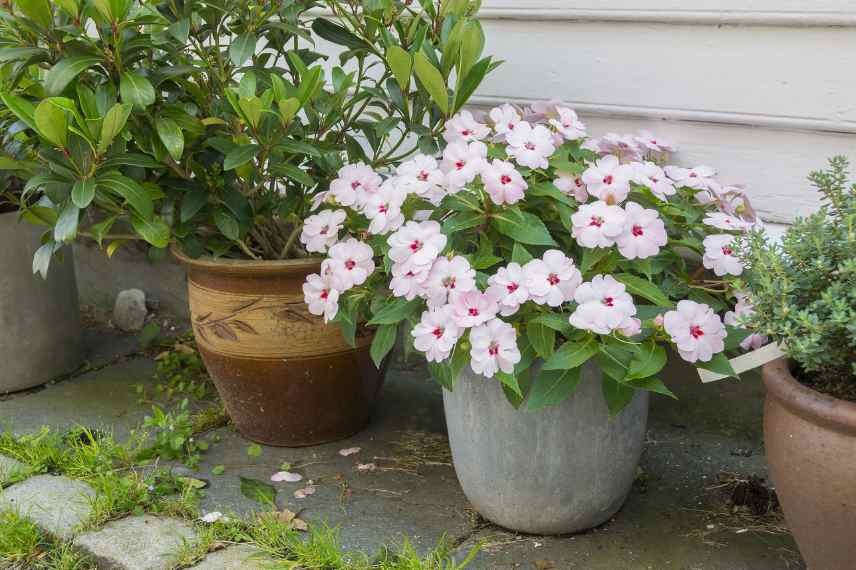
What type and pruning of pot?
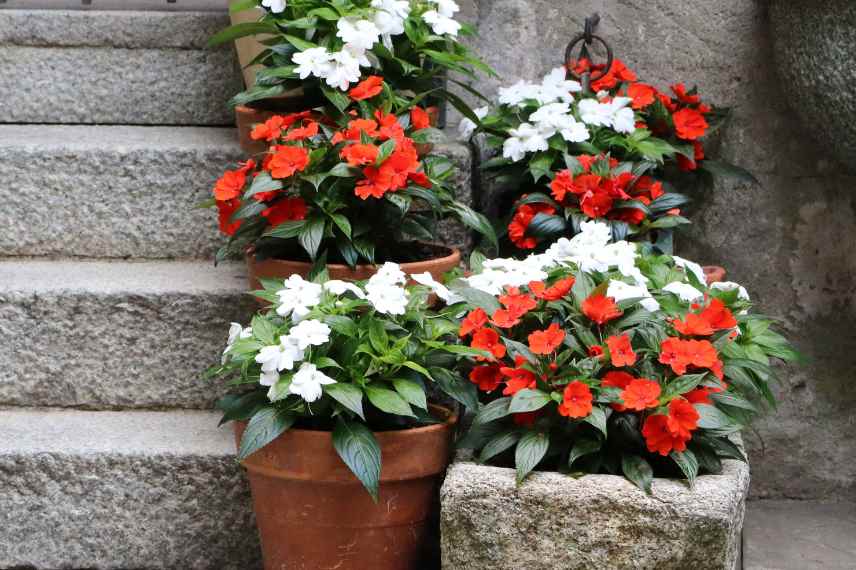
Planters, window boxes and small pots are the perfect containers for Impatiens. A sufficiently large basin also does them justice! Their vibrant colours deserve pairing with neutral or plain pots to best showcase the exotic charm these plants bring.
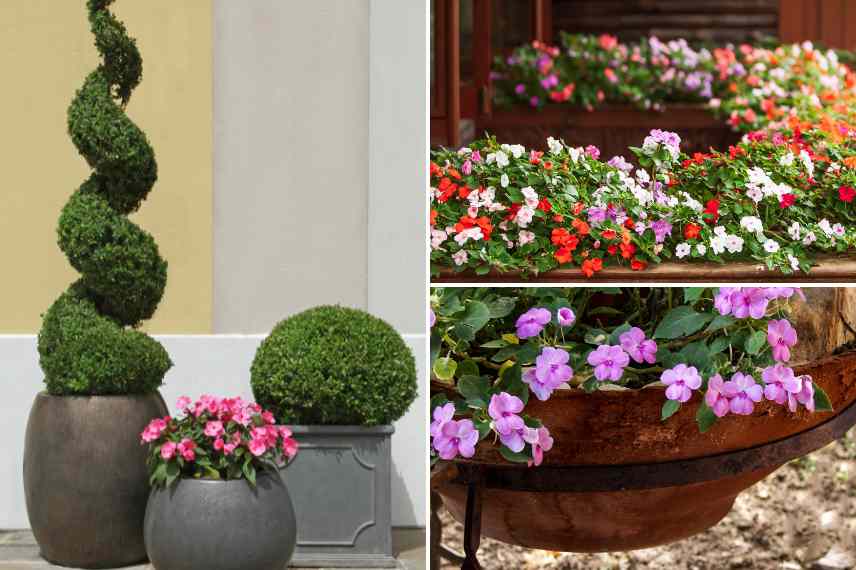
It is mainly the material that will be important for your Impatiens container planting: it must be able to retain moisture as well as possible, so we recommend directing your choice towards containers in stone when possible, or in plastic, zinc, or in composite materials (fibreglass or concrete).
→ Also read: Plastic, biodegradable or terracotta pots?
What growing medium should I use for Impatiens?
For Impatiens, as you’ll have realised, soil should remain cool and moist. In open ground, it thrives in rich, fertile and well-drained soil. For pot culture, you will need to recreate these conditions, ideally by mixing a little turf or leaf mould with a good potting compost for geraniums and flowering plants to provide nutrients, lightness and drainage.
How to plant Impatiens in pots?
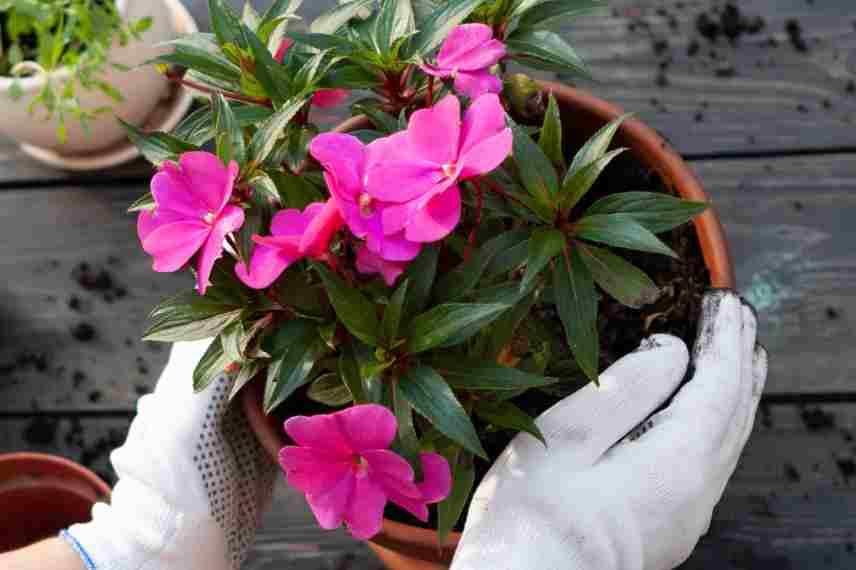
- Soak your pots in a basin of room-temperature water.
- Meanwhile, prepare your soil mix (potting compost + leaf mould and/or compost).
- Place a 2–3 cm layer of clay pebbles or small gravel at the bottom of the pot or planter, then fill with the growing medium.
- Transplant the Impatiens from their pots into holes of the same size made in the planter or container. You can space them 10 to 15 cm apart for a lush, massed display, a little more for New Guinea impatiens (20 to 30 cm).
- Gently firm the soil.
- Water thoroughly.
Care
The advantage of impatiens is that their upkeep is virtually zero, apart from watering, which is essential for them! Indeed, spent flowers fall off on their own, and, almost self-cleaning, they continually renew their flower buds. If the flowers do not drop off on their own, pinch them off just beneath the flower to remove them. No overwintering for them either, since the plant dies at the first frost.
Watering
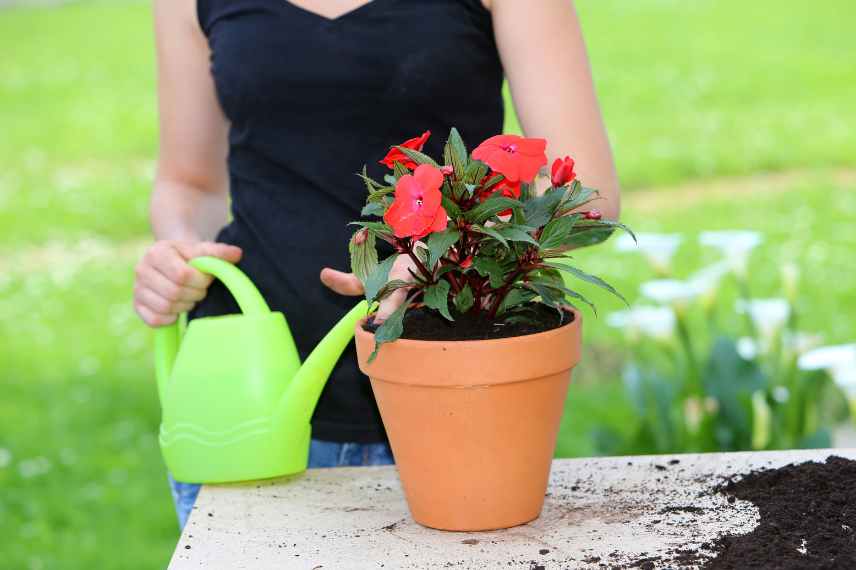
So it’s the key factor for these shade-loving beauties: cool, constant moisture. Never let Impatiens suffer drought. The foliage that begins to droop is a sign that the plant is short of water. Watering should be thorough enough to keep the substrate consistently moist. Depending on your region and temperatures, water about every 2-3 days, slowly, so the substrate absorbs all the water available.
Feeding
Think of supporting flowering with a liquid fertiliser, regularly, every 2 to 3 weeks, between June and September.
Pests
Young Impatiens plants may be susceptible to slugs, especially if you have sown your own seeds. To be on the safe side, read our tips in slugs: 7 ways to fight effectively and naturally.
- Subscribe!
- Contents
Comments