





























Growing dill in pots
Planting, harvesting, and use
Contents
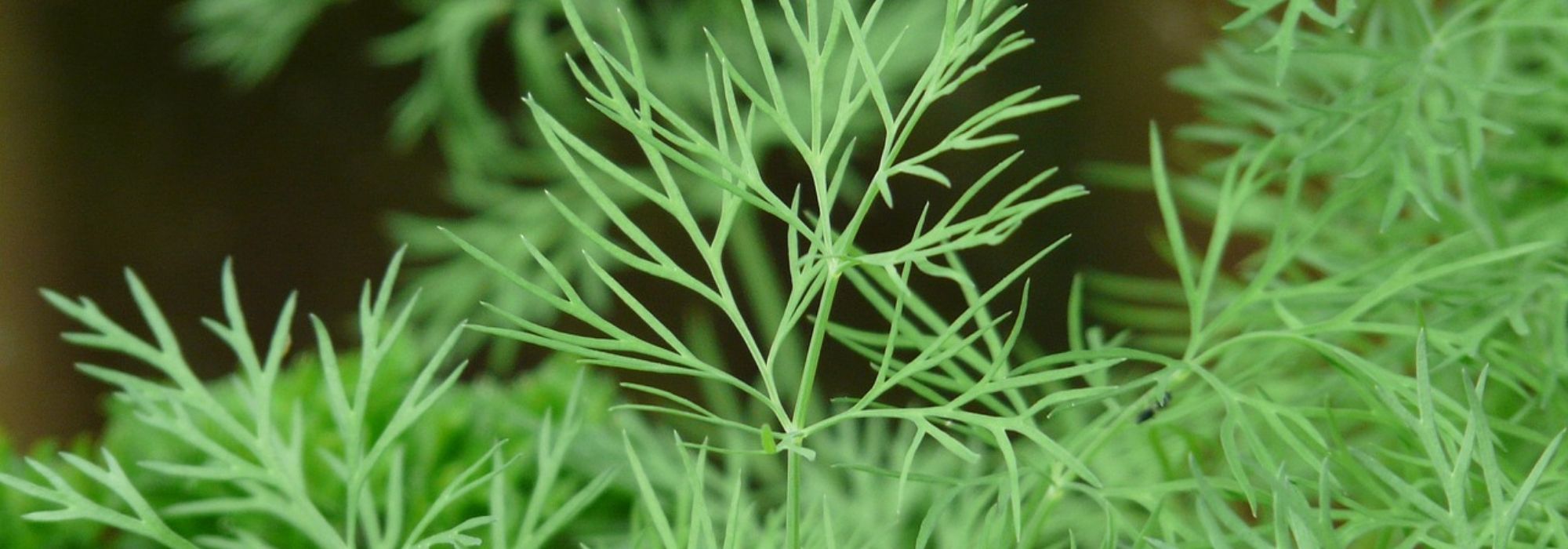
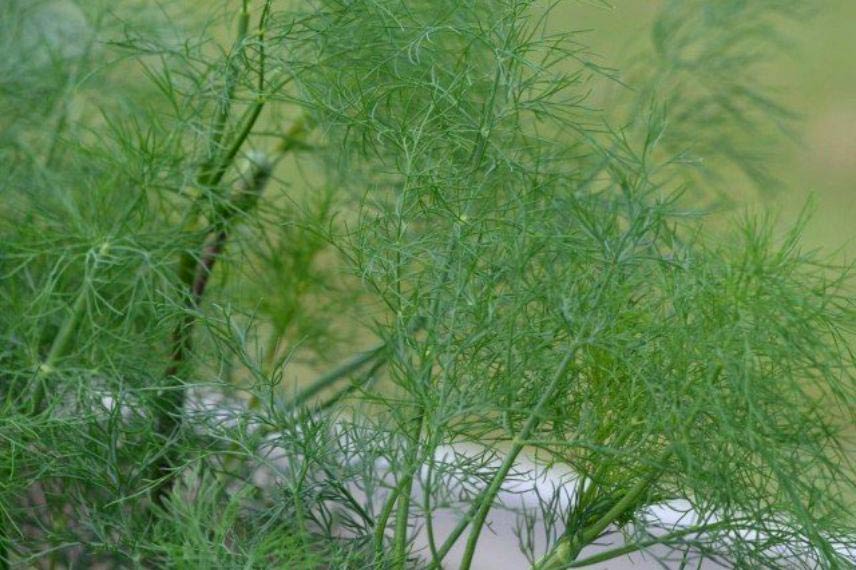
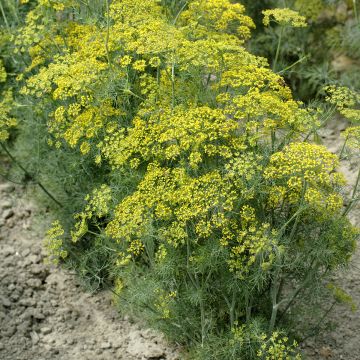
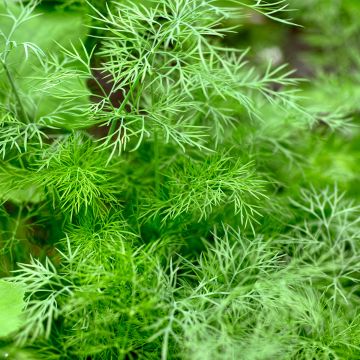
By its great similarity to fennel, dill is often nicknamed the “bastard fennel,” “stinking fennel,” or “false anise”: with their hollow stems topped by fairly tall tufts with aniseed scent, these two herbs produce greenish-yellow flowers in summer that gradually give way to small fragrant seeds. However, unlike fennel, dill has a bluish foliage, with a more mentholated aroma, and most importantly, it is an annual plant rather than a perennial…
Rich in vitamin C, dill is attributed with numerous virtues, both medicinal and therapeutic: anti-inflammatory, digestive, diuretic, and calming properties that can help alleviate headaches, coughs, or hiccups.
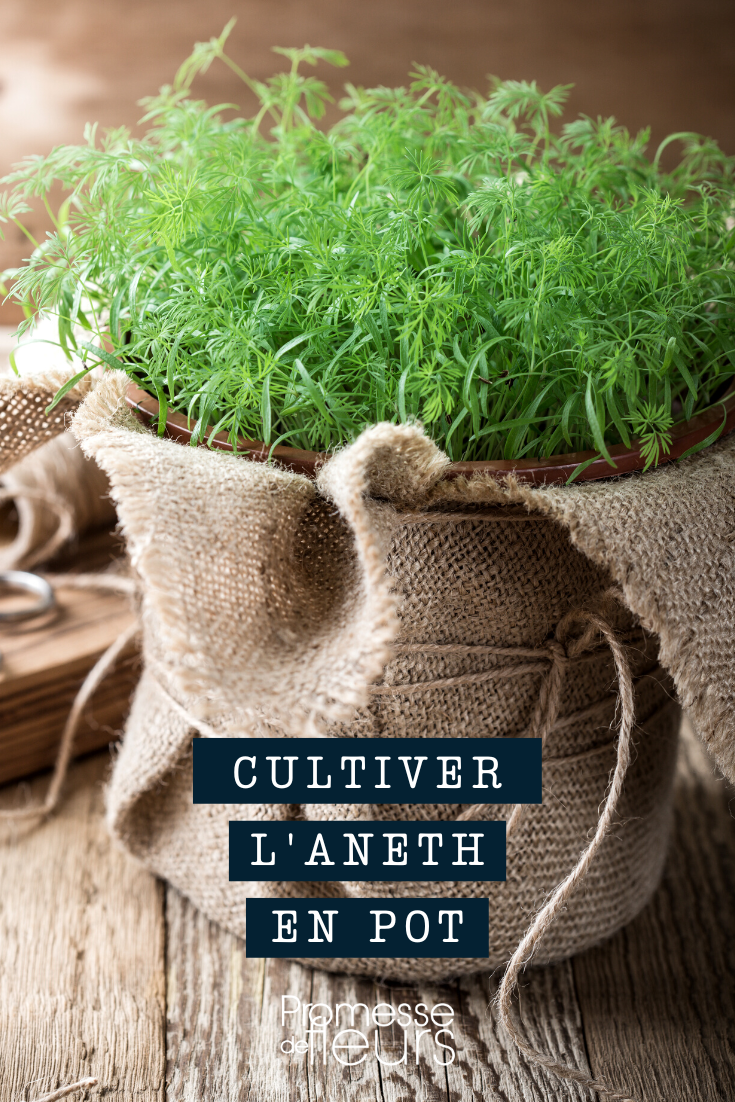
Easy and low-maintenance, dill can be grown both in open ground in a garden, and in pots on a terrace or balcony. In this article, we will focus on its pot cultivation, providing you with some tips, as well as its harvest and care, before giving you some ideas for use…

Which varieties to choose?
Based on a single species – Anethum Graveolens – dill is available in several varieties, including:
- Anethum Graveolens ‘Fernleaf’ is a dwarf variety (0.45 metre), very decorative.
- Anethum Graveolens ‘Dukat’ is, on the other hand, very fragrant.
- Anethum Graveolens ‘Mammoth’ is characterised by its great height, ranging from 1 to 1.5 metres.
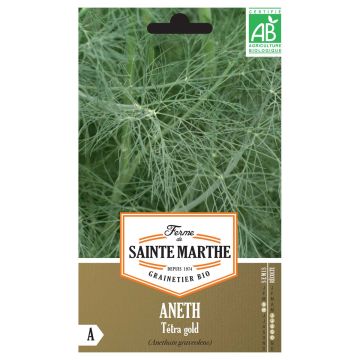
- Anethum Graveolens ‘Tetra Gold’, the most well-known, is also the one that offers the highest yield.
- Anethum Graveolens ‘Hera’ is renowned for the intensity of its aroma, its yield, and its resistance to bolting.
- Anethum Graveolens ‘Compatto’, characterised by a very compact habit.
To grow dill in a pot, it is recommended to favour the dwarf variety ‘Fernleaf’ or the variety ‘Compatto’, although ‘Tetra Gold’ is also possible.
Read also
Dill: sowing, planting, benefitsWhen to grow dill?
Growing dill in pots begins when the risk of frost has passed, from April-May depending on the region until July:
- If you choose to plant dill offered in pots, the best planting period is in April-May.
- If you prefer to sow, it can be done from February under cover and in April-May outdoors depending on your region.
Discover other Dill
View all →
Available in 1 sizes
Available in 1 sizes
Available in 1 sizes
Available in 1 sizes
Available in 1 sizes
Available in 1 sizes
Available in 1 sizes
Available in 1 sizes
Available in 1 sizes
What type of pot can you use to grow dill?
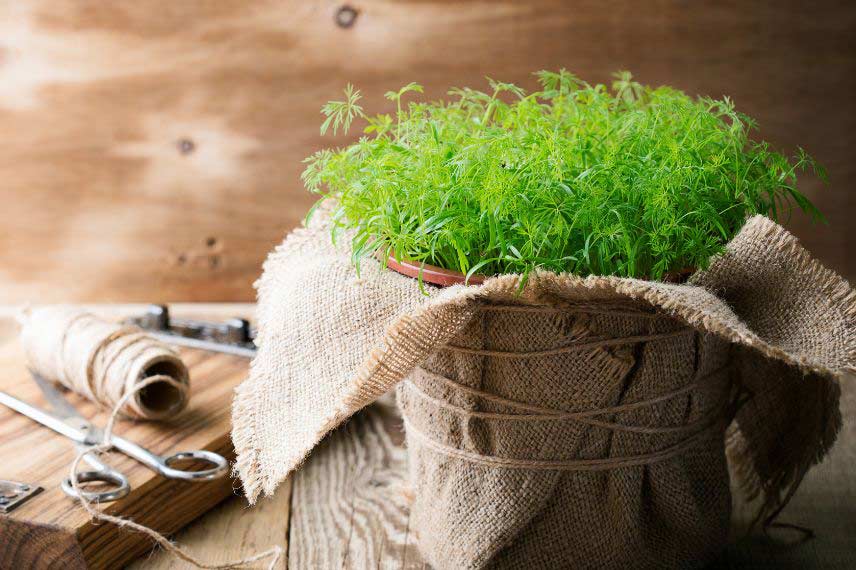
Dill can be grown in a wide variety of pots, such as terracotta, plastic, wood, or metal pots. What is important for the success of growing dill is that the pot has a good drainage system to prevent water stagnation, as excess moisture can damage the roots of the plant.
As dill can quickly reach up to 1.5 metres in height, if you want to give it the opportunity to express itself fully, it is recommended to choose a fairly large pot right from planting or sowing to allow the plant to grow and develop properly. Ideally, it should be relatively tall with a diameter of about 40-45 cm. However, if it is grown in a smaller pot or window box, this herb will remain smaller than in open ground or a large container.
Good to know: in a wide window box or large trough, note that dill dislikes fennel and parsley, and more generally, strongly scented herbs.
Read also
How to preserve dill?Which substrate to choose?
To grow dill in a pot, you can use a light and well-draining substrate, such as:
- An equal mix of garden soil and river sand.
- Garden soil enriched with compost or well-rotted manure.
- potting soil specially suited for aromatic plants
It is important to ensure that the substrate is well-drained to prevent root rot. It is also advisable to leave sufficient space at the bottom of the pot to allow water to drain freely. You can use a layer of gravel or clay balls.
How to plant dill?
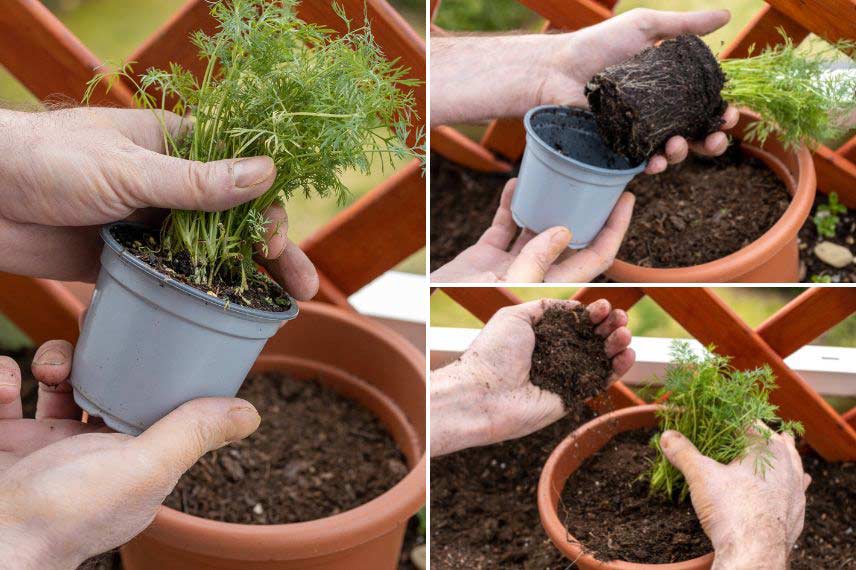
If you are planting young plants of dill directly:
- Moisten the root ball of the plant by immersing it in water while preparing your pot.
- Use a pot with drainage holes at the bottom.
- Fill the bottom of the pot with gravel or clay balls.
- Add your potting soil or your homemade substrate up to 2/3 of the pot.
- Position the root ball of the dill in the pot.
- Ensure that the root ball is slightly sunk, just below the level of the pot.
- Fill in with your potting soil or mixture.
- Lightly compact to ensure the pot is filled with substrate in a homogeneous manner.
- Water generously and check that no air pockets have formed; if so, fill with substrate.
How to sow dill?
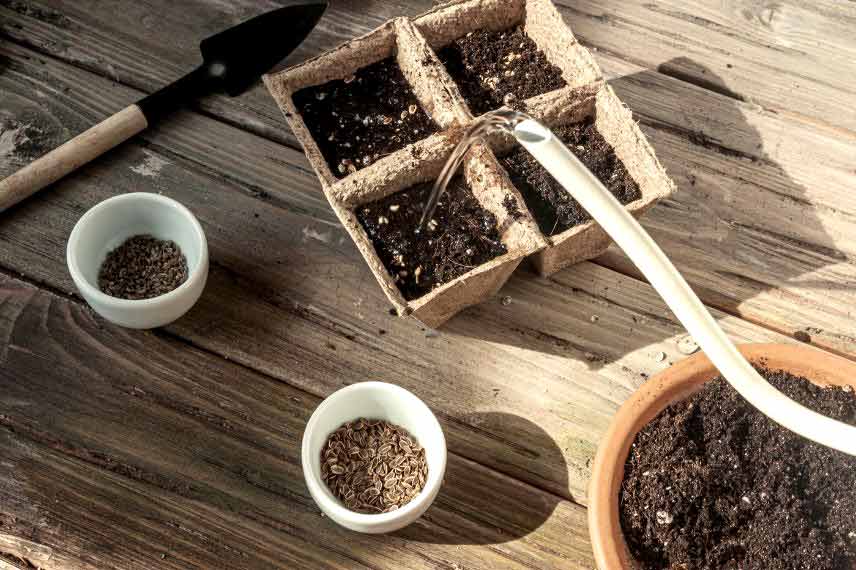
If you prefer to carry out your sowing:
- Fill a growing tray or pots with a mix of potting soil for aromatic plants and special sowing soil.
- Sprinkle the dill seeds over the surface of the soil, ensuring they are spaced adequately.
- Lightly cover them with a bit of potting soil.
- Water the substrate to thoroughly moisten the soil and help the seeds germinate. Continue to water regularly to keep the soil moist.
- Dill needs plenty of light to grow properly: place your pot in a bright environment, but out of direct sunlight.
- As soon as the dill plants appear, continue to water them regularly and expose them to light. Avoid letting them dry out between waterings.
- When the dill plants have grown sufficiently, you can transplant them into one or more larger pots to allow them to develop. Be careful not to damage the roots when moving the plants.
L'aneth préfère une exposition en plein soleil.
Requiring sunny exposure, it is necessary to find a spot next to a window indoors, in a room with a temperature ranging between 17 and 20 °C. Outdoors, on a balcony or terrace, it should be placed in the sun and protected from the wind.
Caring for potted dill
To support the growth of dill in pots, it needs to be watered regularly – especially during its growth period, otherwise the plant will quickly go to seed and die. While this precaution is absolutely unnecessary in open ground, it is essential for keeping the surface of the potting soil consistently moist. In this spirit, you may choose to mulch around its base.
Nutrient-hungry, dill requires rich soil: you can therefore support its growth by adding a handful of compost or universal fertiliser or one specifically for “herb plants” every 15 days.
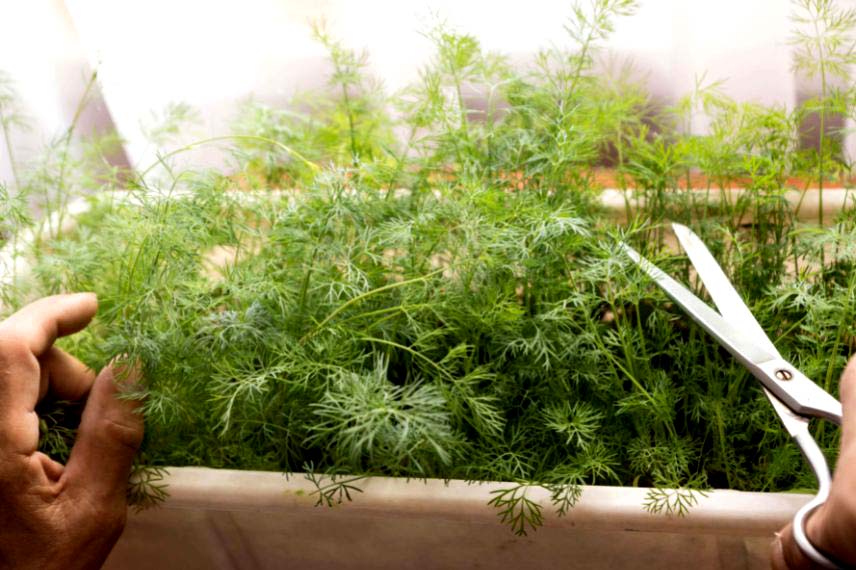
Dill does not require any special maintenance, although some gardeners recommend cutting the flower stalks as they appear to delay flowering and enhance intensity and fragrance. Pinching the stems encourages branching and denser growth. Regularly harvesting the leaves by cutting the stems close to the base promotes regrowth.
Otherwise, it is hardy and not particularly susceptible to diseases and pests: just monitor the foliage to prevent any potential slug or aphid attacks. If you notice shiny marks on the leaves, place a beer trap nearby by burying a small cup in the soil filled halfway with this nectar that is completely irresistible to them. Another solution is to place empty eggshells at the base of the dill or some ground coffee.
How to use this herb?
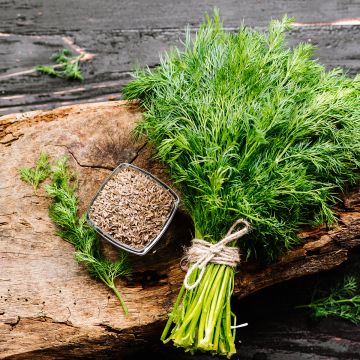
Harvesting can take place 4 to 6 weeks after sowing: the leaves of dill are picked as needed throughout the summer, while the seeds of the aromatic plant are collected later, ideally in September, when they are grey and dry.
Imperatively fresh, the leaves are commonly used in seasonings; they can accompany fresh cheeses, fish marinades, or salads. On a hot dish, they should only be added at the end of cooking. As for the seeds, they are more often used to flavour compotes or jams, as well as pickled preserves (notably gherkins, among the Anglo-Saxons).
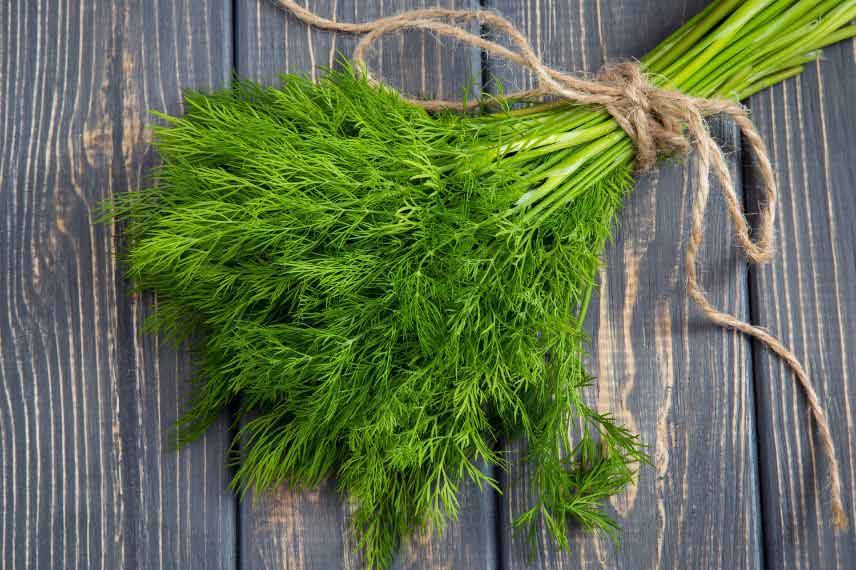
In Greek cuisine, chopped dill is mixed with grated cucumber, garlic, lemon juice, yoghurt, and mint. In Indian cuisine, it is cooked with rice and wilted spinach. In Scandinavian cuisine, it is served with sour cream and mustard on marinated fish and potatoes…
Good to know: once dried and enclosed in a piece of fabric, dried dill leaves can lightly scent your laundry.
- Subscribe!
- Contents
Comments