





























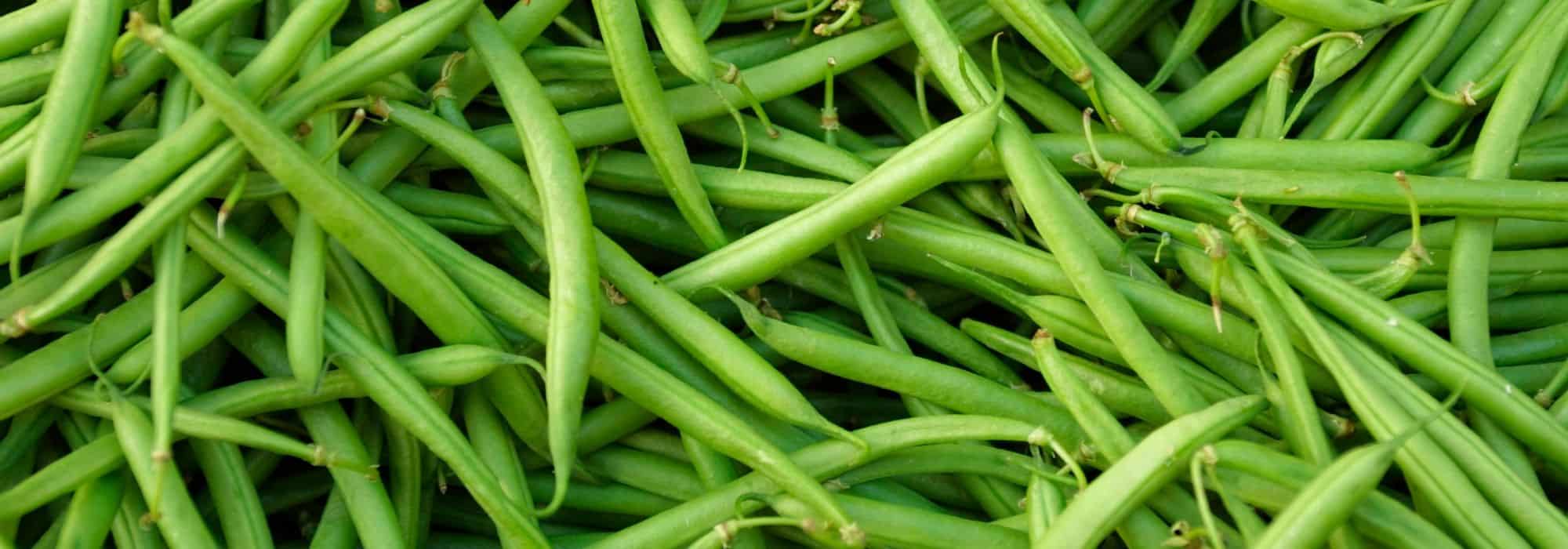
Growing dwarf beans
The advantages of prioritising dwarf beans
Contents
If there is a family of vegetables where the choice of variety to grow can sometimes be a dilemma, it is certainly the bean (Phaseolus vulgaris). This annual plant, the queen of vegetable gardens, is very easy to sow from mid-May and is harvested until October. Growing beans requires little care apart from some hilling, occasional watering, and a bit of weeding. As for the harvest, it is done in stages (just like the sowing!) and marks the summer. While cultivation is straightforward, choosing between dwarf beans, climbing beans, string beans, snap beans, shelling beans… is less so! I will give you all the reasons why I prefer to grow dwarf beans.

Dwarf beans, easier to grow
Dwarf beans are easily distinguished from climbing beans by their growth in the vegetable garden. The former benefit from determinate growth, while the latter have indeterminate growth as the plants can reach 3 metres due to their voluble stems. Thus, dwarf beans never exceed 20 to 60 cm in height and have a bushy and compact habit. They form a clump of green leaves that grow on well-ramified stems, allowing them to stand well without any support.
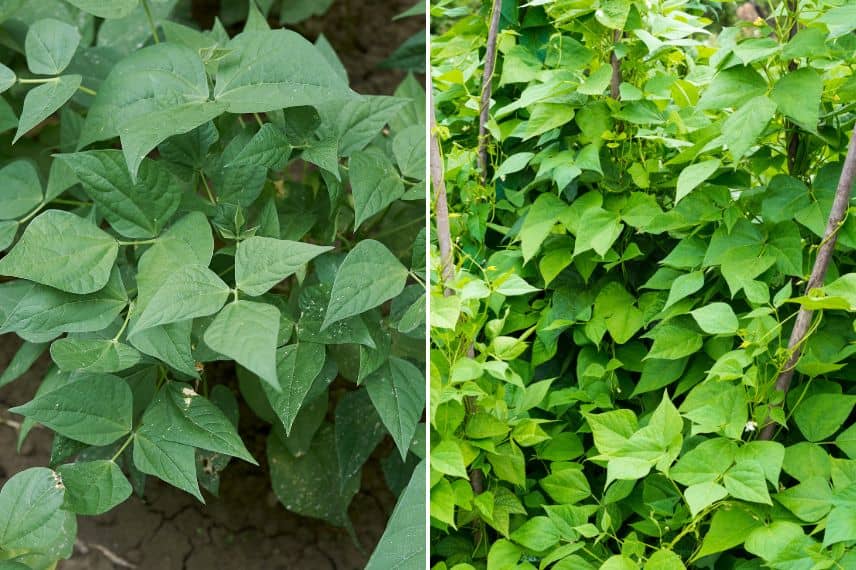
Dwarf beans require less work than climbing beans
In contrast to dwarf beans, climbing beans require the installation of supports and stakes to be maintained. While growing climbing beans is certainly more aesthetic, easier to harvest, and takes up less space in the garden, it is also more time-consuming. One must consider the installation of supports, which can be done in various ways: as a tent, in a tipi, with netting, fencing, using bamboo, wooden or metal stakes, or branches… Whatever method is chosen, it requires time as you must procure the supports, plant them firmly in the soil to withstand the wind, and tie them together to ensure they are well secured against the exuberance of the beans. Not to mention the uprooting of the bean plants, which requires… a bit of patience as the stems can be quite tangled!
With dwarf beans, planting the seeds is significantly simpler and quicker. Here’s how to grow them:
- In open ground, create a furrow 3 centimetres deep with a hoe or a hand hoe
- Sow the bean seeds in clusters or one by one in a line
- Cover the furrow and lightly compact it with the back of a rake.
- Water
Admittedly, I recognise that harvesting is more strenuous on the back, but the tasting quickly makes you forget this inconvenience. And who said gardening could be done without effort?
The multiple varieties of dwarf beans
In terms of dwarf beans, diversity is key! You can truly enjoy cultivating all the varieties classified into different categories:
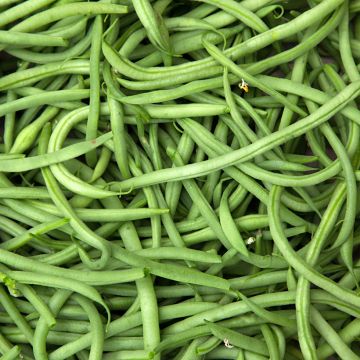
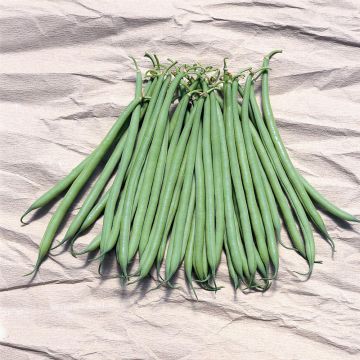
- String beans with fine, long, and straight pods like a filament! These dwarf beans offer excellent taste quality but must be harvested regularly to avoid becoming stringy. They require consistent watering. There are both traditional and heirloom varieties such as the Triomphe de Farcy and Fin de Bagnols, as well as newer varieties like Cupidon, Talisman, and Delinel.
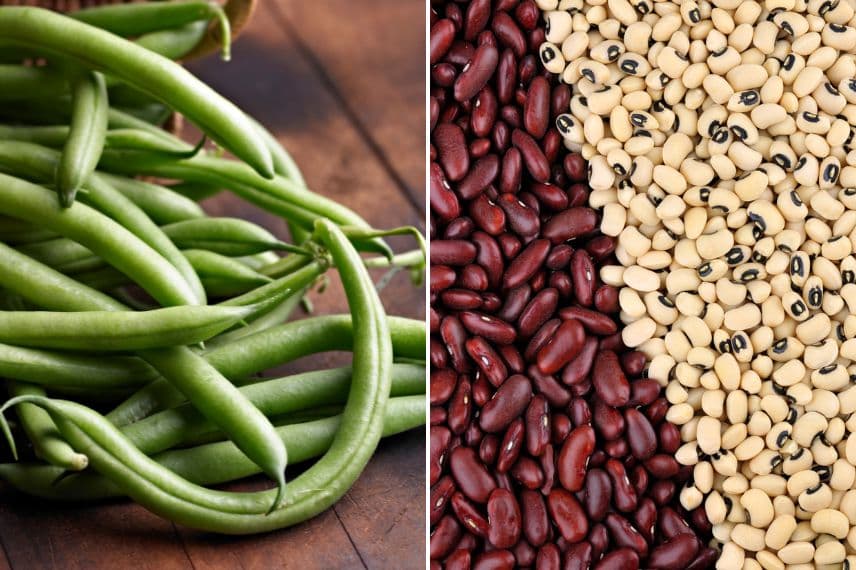
Dwarf beans come in various varieties
- Snap beans have slightly thicker pods than string beans, but they never become stringy, regardless of their ripeness. The Contender is a relatively old variety, while Castandel and Braimar are very interesting for their productivity.
- Stringless beans are new varieties that aim to be the perfect middle ground between the previous two categories. They have excellent flavour but rarely have strings. The variety Aramis is among the best.
- Shelling beans are consumed solely for their semi-dry or dry peas. Only the dry seeds are eaten. There are numerous varieties of these dry beans, including Michelet with long pods, Coco blanc, and Chevrier vert (flageolet).
Discover other Dwarf Beans
View all →
Available in 1 sizes
Available in 1 sizes
Available in 1 sizes

Available in 1 sizes
Available in 1 sizes
Available in 1 sizes
Available in 1 sizes
Available in 1 sizes
Available in 1 sizes
Available in 1 sizes
Dwarf beans in all colours
With beans, you can find them in all colours. Starting with the green bean, which dominates the market and is a staple. However, there are also dwarf green beans that display other colours:
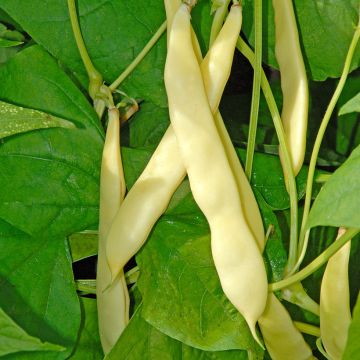
- Butter beans showcase a lovely yellow hue. Notable varieties include Major, which offers excellent yield, the mangetout Minidor with its fleshy pods, and Kinghorn, a productive variety that lives up to its name for the longevity of its harvest.
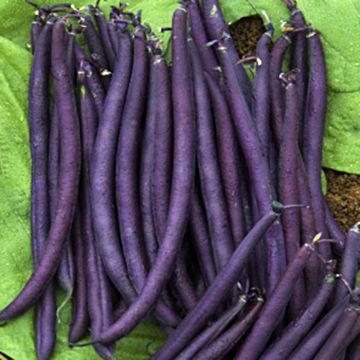
- Purple or violet beans are not only beautiful but also very tasty. Unfortunately, they lose their lovely colour when cooked. Purple Queen produces fine to extra-fine pods, while Velour is highly resistant to diseases.
- Red beans are typically varieties meant for shelling. Varieties such as Splendido and Big Borlotto display a marbled red both on the pods and the seeds.
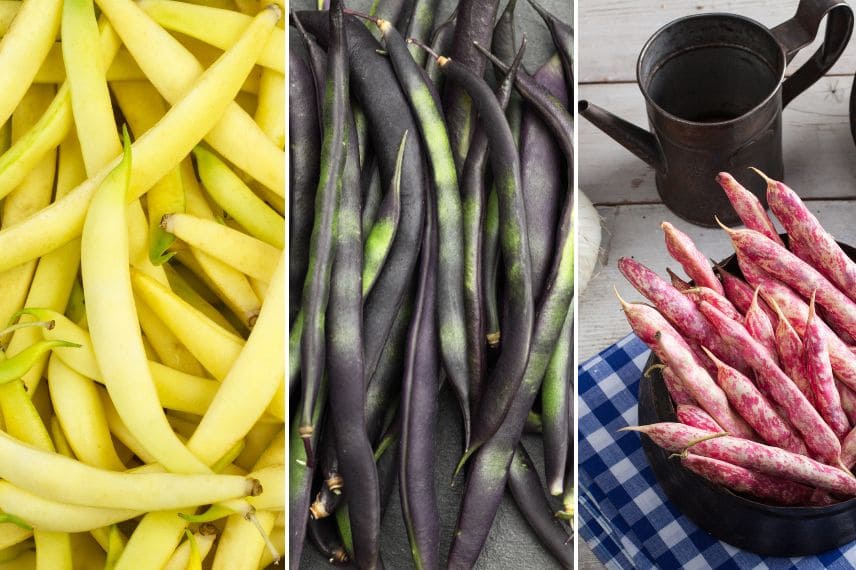 Dwarf beans come in various colours
Read also
How to choose beans?An interesting production
Let’s face it, dwarf varieties of beans are less productive than climbing bean varieties. Their average yield is estimated at 1 to 1.5 kg/m² for dwarf beans compared to 2 to 2.5 kg/m² for climbing varieties. However, as dwarf varieties benefit from an earlier harvest, it is wise to stagger sowings every 15 days to 3 weeks to extend the harvests. This way, you can achieve an equivalent yield. Moreover, dwarf beans require much less work.
Some dwarf bean varieties stand out for their productivity. The top performer is Aiguillon, but Delinel and Gourmandel also perform quite well in terms of yield.
An earlier harvest
Dwarf beans are well-known vegetables celebrated for their earliness. They are generally harvested and enjoyed 60 days after sowing, whereas it takes 90 days for climbing beans. Among these dwarf beans, some are champions of precocity. For instance, the variety Contender reaches ripeness 50 days after sowing. Similarly, Prelude and Soissons big foot dwarf are also notable for shelling beans.
- Subscribe!
- Contents
![[plant_guide plant="haricot-nain"]](https://en.promessedefleurs.eu/blogwp/wp-content/uploads/2022/07/planter-caladium.jpg "[plant_label]Beans[/plant_label] are easy to grow in the garden. They prefer a sunny location with well-draining soil. Sow the [plant_label]seeds[/plant_label] directly in the ground after the last frost date. Keep the soil consistently moist but not waterlogged. Harvest the [plant_label]beans[/plant_label] when they are young and tender for the best flavour.")
Comments