





























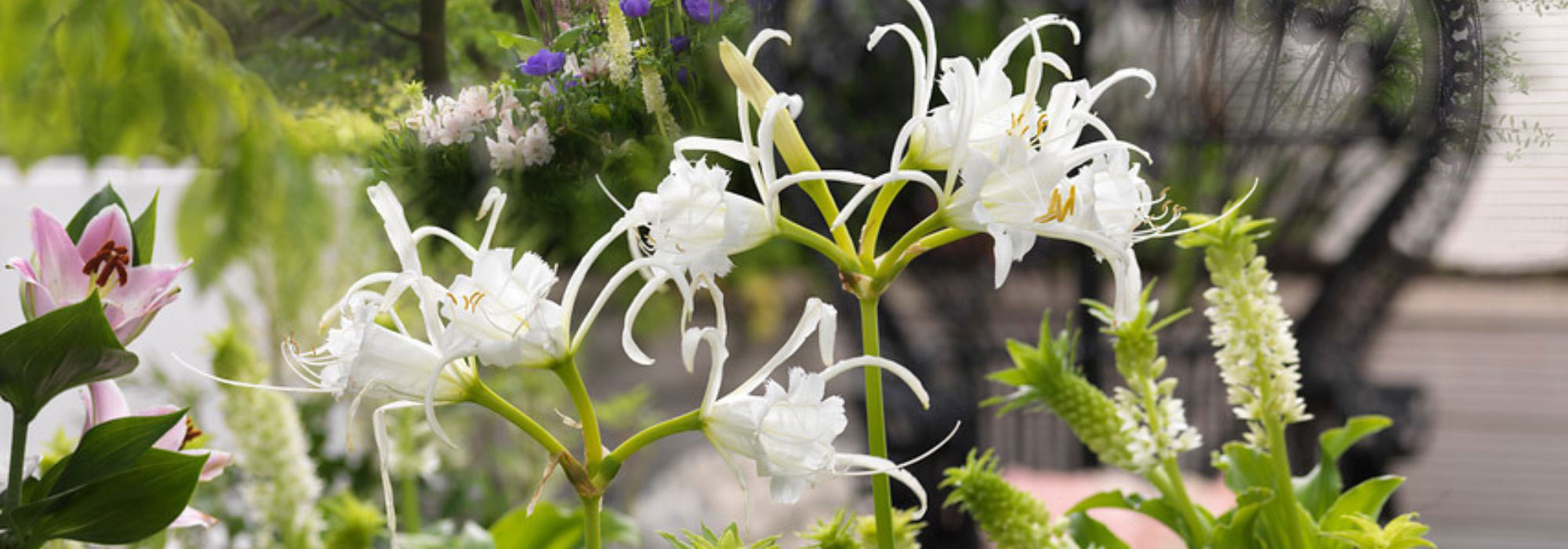
Growing Ismene in a pot
Our tips for enjoying beautiful Spider Lilies on your terrace or balcony
Contents
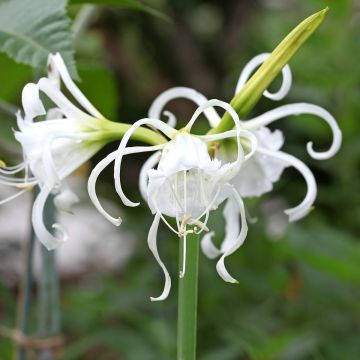
Also known as “Spider Lilies” or Hymenocallis, Ismene are beautiful bulbous plants with remarkable and original flowering. Indeed, their long flower spikes develop at the heart of generous clumps of large, ribbon-like, arching leaves; they bear crowns of white or yellow flowers with long, curved petals that resemble large spiders.
Tender, Ismene cannot tolerate temperatures below 5 °C; therefore, their cultivation in pots is essential. Follow our tips for growing Ismene in pots and enjoy their admirable spider-like flowers close to your home or on the balcony!

Which varieties to choose?
There are 40 species of Ismenes; the choice of the variety you decide to grow in a pot will depend on which one appeals to you the most:
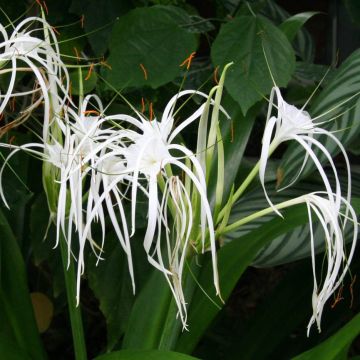
- The Hymenocallis festalis ‘Alba’ features a spring or summer flowering depending on the climate. This is stunning: from a tuft of striated foliage emerges a tall flower stem topped with an umbel composed of 6 flowers resembling large spiders, measuring 10 to 15 cm in diameter. They are white and delightfully fragrant. The flowers of this spider lily last a long time in a vase and can be used to create very elegant bouquets. In bloom, this Ismene will reach a height of 50 to 60 cm with a spread of 30 to 40 cm.
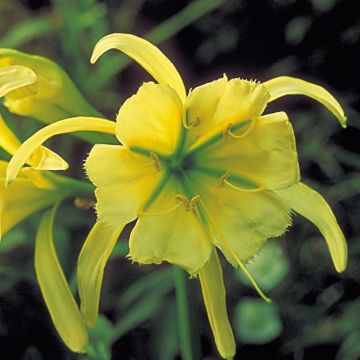
- The Hymenocallis festalis ‘Sulphur Queen’ features somewhat exotic-looking, sulphur-yellow flowers, striated with green. Depending on the temperatures, they bloom as early as June and are delightfully fragrant. It has thick, glossy, lanceolate leaves, from which emerge large cylindrical stems reaching 50 to 60 cm in height, each topped with 2 to 3 flowers.
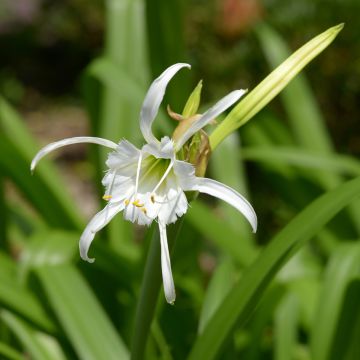
- The surreal beauty of Hymenocallis longipetala is unforgettable. This magnificent bulb produces white, intricately shaped and fragrant flowers from March to June, averaging 12 cm in diameter. They are composed of long petals resembling filaments. Its glossy, striated leaves are arranged in rosettes, and each plant provides 2 to 3 flower spikes that rise to 90 cm in height. Each spike carries 2 to 5 flowers.
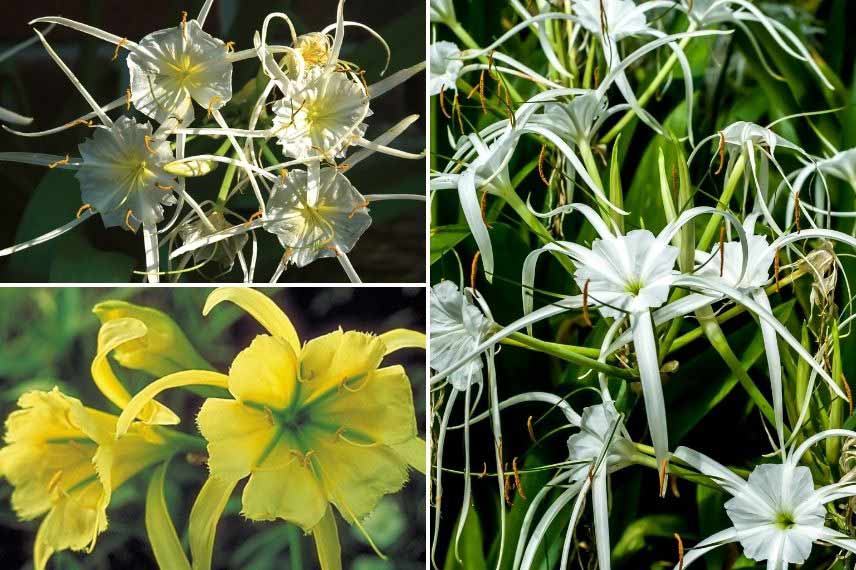
Hymenocallis festalis ‘Alba’, Hymenocallis festalis ‘Sulphur Queen’ and Hymenocallis longipetala
Read also
Planting Ismene bulbsWhat pot for the ismene?
Cultivated in large containers, Ismene plants thrive best. Terracotta pots, with their authentic and more eco-friendly appeal, are excellent choices for Hymenocallis. They can also be glazed or enamelled. However, a more modern pot or a zinc basin can also suit these plants: let your imagination run wild and match the style to your garden décor!
Adjust the size of the container, which can be a pot or a planter, to the size at ripeness of your plant. The root system must be able to develop properly; otherwise, the plant will not be as beautiful as it should be. A minimum of 20 cm in diameter and depth is therefore recommended. If the pot is larger, you can plant several bulbs; one bulb per 15 cm pot is the guideline.
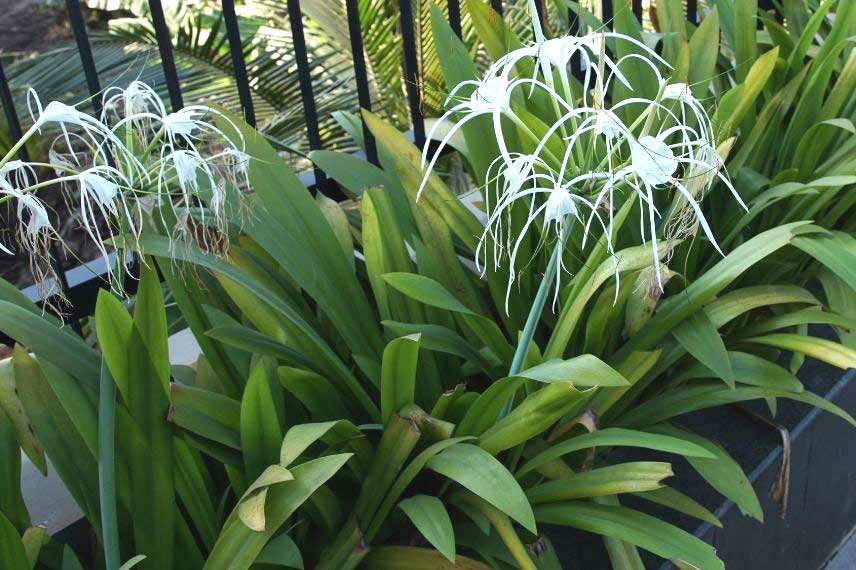
Ismene bulbs can be placed in a generous pot or planter
Discover other Ismene
View all →
Available in 0 sizes
Available in 1 sizes
Available in 1 sizes
Available in 1 sizes
Available in 1 sizes
Available in 1 sizes
What substrate for my Ismene in a pot?
Hymenocallis require a neutral, well-drained substrate rich in organic matter. It must be well-draining to prevent the bulb from rotting due to excess moisture. Feel free to improve drainage with coarse sand or small gravel before planting. You can choose apotting compost, which can be a light compost for balcony planting.
You can also create a mixture composed of equal parts:
- good garden soil,
- coarse sand,
- compost or potting compost.
To improve drainage, for example, install a layer of gravel or clay balls at the bottom of the pot.
Read also
7 exceptional summer flowering bulbsPlanting ismene in a pot
Plant your Ismene bulbs from May onwards. You can also plant them as early as February and keep them protected from frost (in a cold greenhouse or unheated conservatory), then gradually move them to a partially shaded area.
- Place a drainage layer at the bottom of the pot, made of gravel, broken pot pieces, or clay balls.
- Partially fill the pot with your draining substrate.
- Place the bulb(s) on the substrate, point facing upwards, so that they are level with the surface. Depending on the size of the pot, it is preferable to plant 3 to 5 bulbs in a pot, spacing them 10 cm apart.
- Fill in with the remaining substrate.
- Water and place the pot in a partially shaded area.
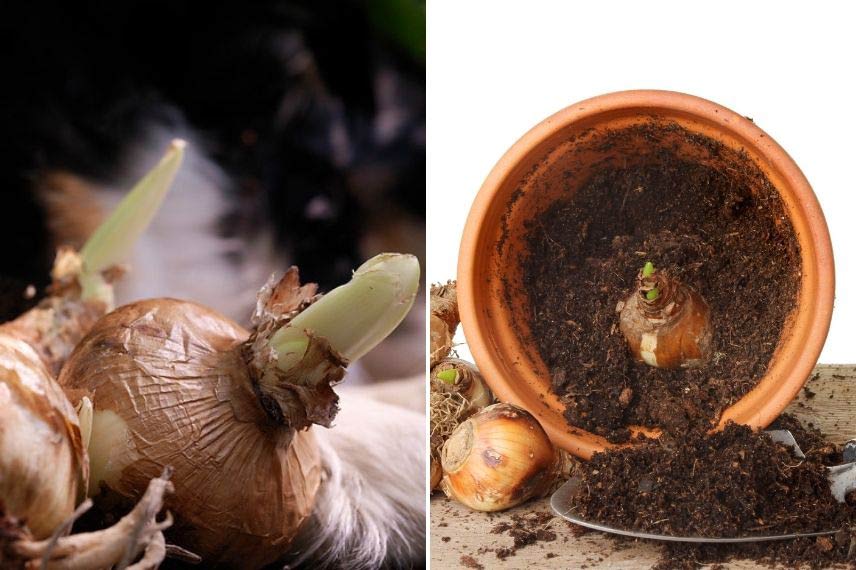
Ismene bulbs should be level with the surface of the substrate
Exposure and Location
Brightness should be bright without direct sunlight, and the ideal temperature should remain between 18 and 25 °C. Therefore, ideally place your Ismene in pots in a semi-sunny position, exposed to morning sun.
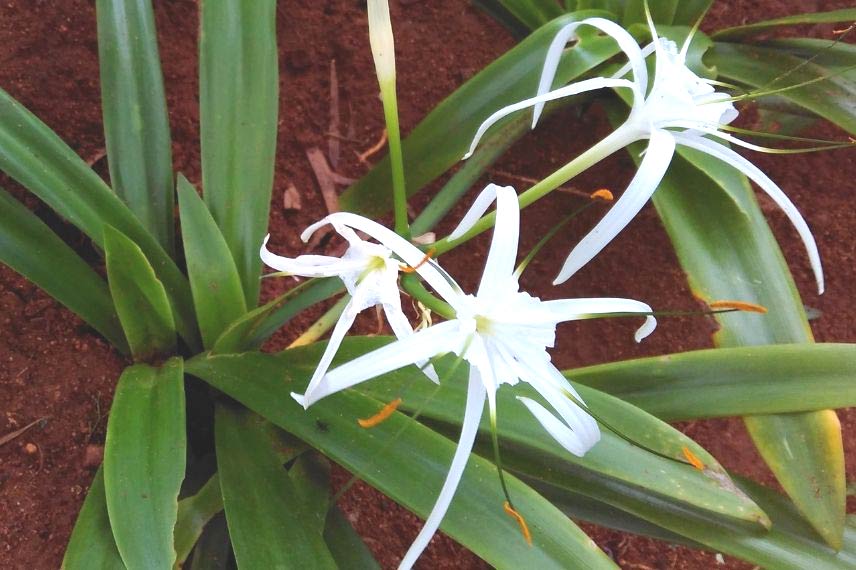
Ismene will appreciate a semi-shaded exposure
Watering and caring for pot-grown Ismene
- Ismene does not appreciate either a lack of water or excess; remember to water it while allowing the substrate to dry out a bit between each watering. Do not let water stagnate in the saucer.
- Provide an organic fertiliser at the start of the growing season, then regularly throughout the season according to the product’s recommendations.
- To encourage beautiful flowering, perform a top dressing in spring by adding a mixture of potting soil and compost to the surface.
- Remove faded flowers during the season.
- Vegetation disappears in autumn, while the bulb goes into rest in winter, in soil that will remain rather dry. Cut back faded leaves and flower stalks so the bulb can quickly replenish its reserves.
- As the cold approaches, winter your Ismene by moving it to a frost-free location that is bright and unheated. Then reduce watering, as the plant is in dormancy and the bulb could rot. You will bring the pot outside at the end of spring.
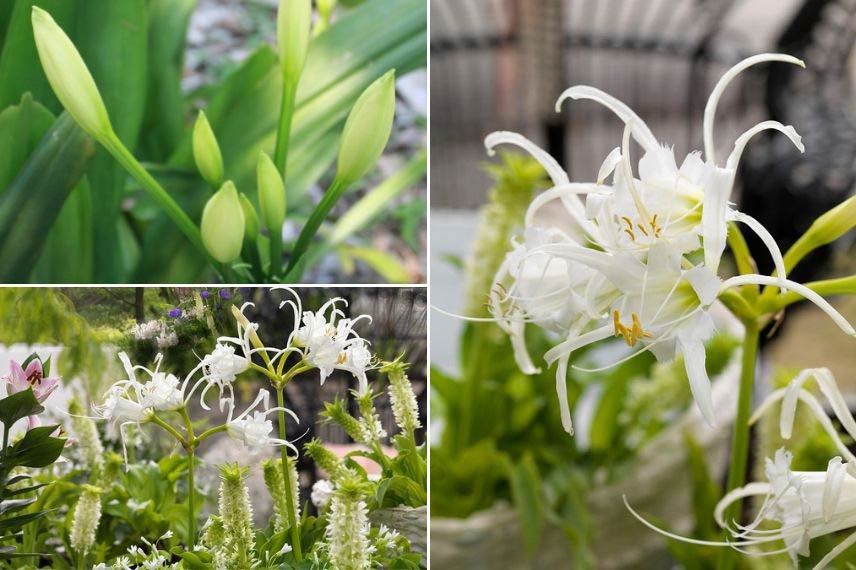 Bring the potted Ismenes outside when the vegetation has resumed and frosts are no longer a concern. They will need regular watering.

- Subscribe!
- Contents
 in a pot or container](https://en.promessedefleurs.eu/blogwp/wp-content/uploads/2023/03/Cultiver-lIsmene-en-pot.png "Growing Ismene in a container")
Comments