





























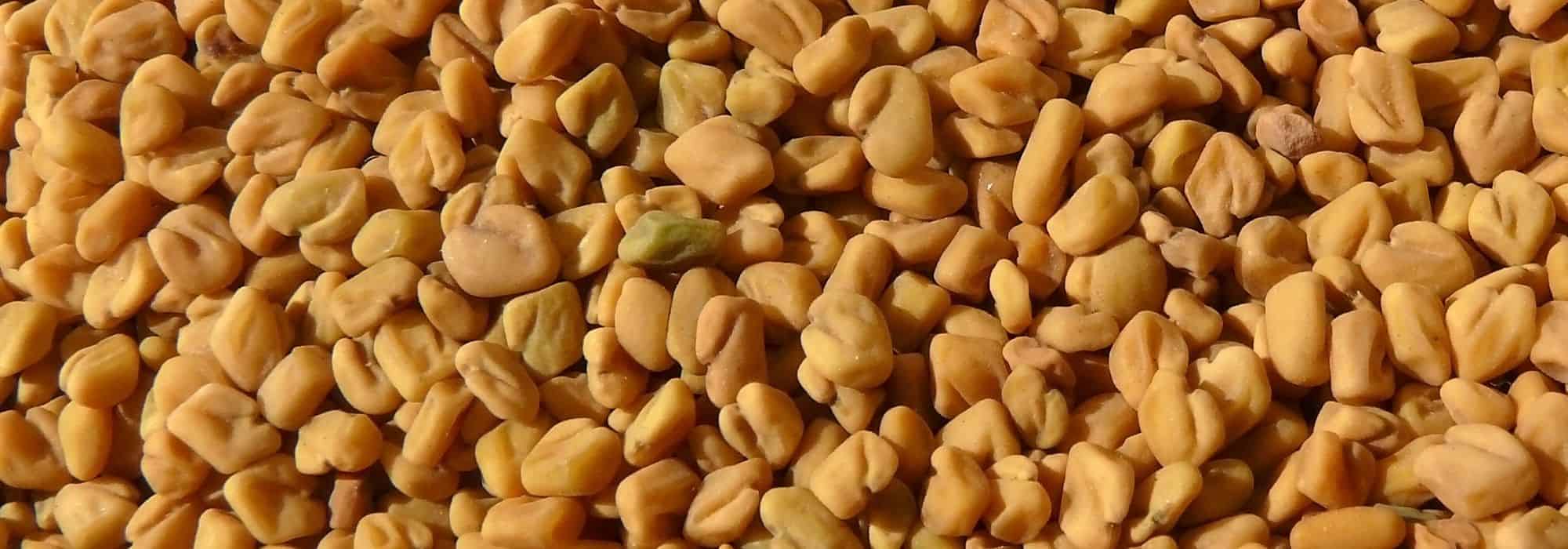
Growing medicinal plants: Fenugreek and its health benefits
How to grow fenugreek and reap its benefits?
Contents
Fenugreek (Trigonella foenum-graecum), also known as trigonelle, is a medicinal and aromatic plant in the Fabaceae family, used for millennia in traditional medicines such as Ayurveda in India or Chinese medicine. Originating from Asia, North Africa and the Mediterranean basin, it is valued as much for its medicinal properties as for its culinary uses.
This herbaceous plant with small yellow flowers and aromatic seeds is a flagship ingredient in many ancient cultures. In Indian cuisine, it is used in the preparation of dishes for its slightly bitter and spicy flavour, while in phytotherapy, it is recognised for its various applications. Whether as an infusion, powder, capsule or oil, fenugreek easily finds its place in everyday life.
Easy to grow at home, whether in a pot or in the garden, fenugreek grows quickly and requires little maintenance. In this article, discover the origin of fenugreek, its medicinal uses, and follow our tips on how to grow it and use it in a simple and effective way, while observing the precautions for use.

Origin and history of fenugreek
Fenugreek is an ancient plant whose origin traces back to the ancient civilisations of the Middle East, India and North Africa. Used since antiquity, it was already valued by the Egyptians for its medicinal properties and in embalming rituals. Its Latin name, Trigonella foenum-graecum, literally means ‘Greek hay’, as it was also used as animal feed.
Fenugreek subsequently spread to the Mediterranean region, where it found its place in Greek and Roman traditional medicine. In India, it is a very common ingredient in Ayurvedic medicine, used for its effects on digestion, energy and the immune system. Chinese medicine has also incorporated it for its warming properties, believed to stimulate the body and relieve certain digestive disorders.
Today, fenugreek is cultivated in many regions of the world, notably in North Africa and Asia, and remains a staple of natural remedies. In addition to its medicinal uses, it is widely used in cooking, as a food or spice, especially for its flavour reminiscent of maple syrup.
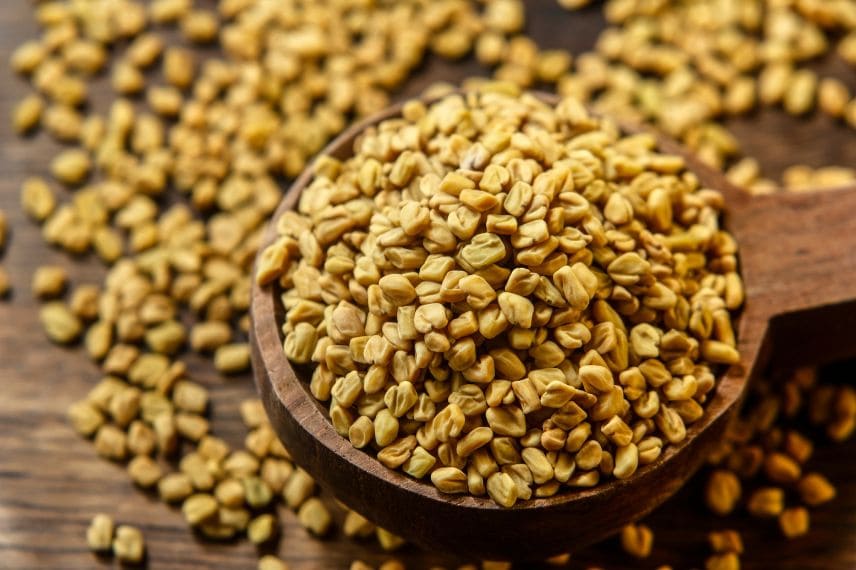
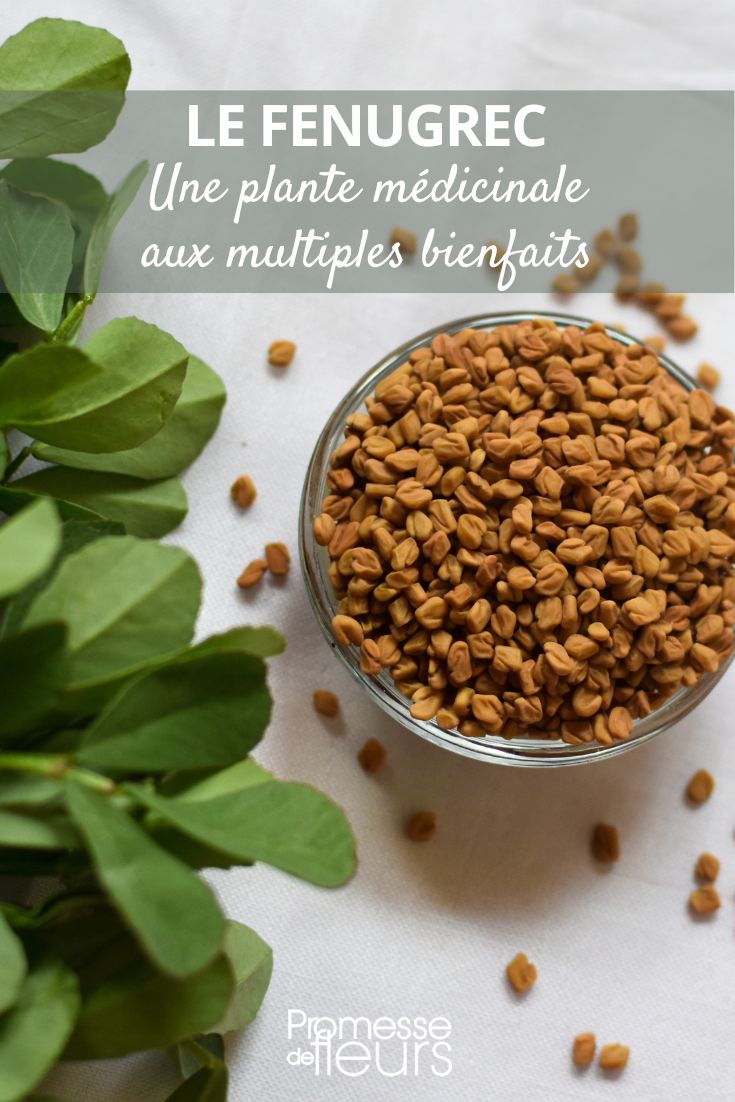
Trigonella seeds
Read also
10 medicinal plants to relieve headachesHealth benefits of fenugreek
Fenugreek is renowned for its numerous medicinal properties. Its seeds and leaves are believed to be rich in fibre, proteins, saponins (natural plant compounds) and vitamins, making it a valuable ally for health. Here are the main benefits of fenugreek:
Stimulate appetite and help with weight gain
Fenugreek is traditionally used to stimulate appetite and promote weight gain, particularly in people recovering from illness or having difficulty maintaining a stable weight. This use is common in certain cultures where it is consumed as part of the diet to increase energy.
Blood sugar regulation
Fenugreek is sometimes used as part of a balanced diet to help reduce blood glucose levels (the amount of glucose in the blood). Its fibres could play a role in reducing carbohydrate absorption. People with diabetes (including those with type 2 diabetes) should consult a healthcare professional before consuming it, as fenugreek could exert hypoglycaemic activity.
Effect on cholesterol levels
Fenugreek could also help to lower total cholesterol and LDL cholesterol, while increasing HDL cholesterol. This action is linked to the presence of soluble fibres and saponins, which help limit fat absorption in the body. However, these effects vary from person to person and require appropriate medical monitoring.
Breastfeeding support
Fenugreek is known for its galactagogue effects, i.e., it promotes the production of breast milk in breastfeeding women. This traditional remedy is widely used in certain cultures.
Digestive improvement and relief of stomach pains
Thanks to its fibres, fenugreek is used to improve bowel movements and relieve mild digestive disturbances such as bloating, constipation or heartburn.
Anti-inflammatory and antioxidant effects
Fenugreek possesses anti-inflammatory properties that can help relieve internal and external inflammations. Its antioxidants help protect cells from oxidative stress, contributing to the proper functioning of the immune system. It would also contain beneficial fatty acids for metabolic health.
Precautions for use and contraindications
As a dietary supplement, it is important to follow the recommended dosage to avoid any risk associated with excessive consumption. Start with small doses and monitor your reaction. If in doubt, medical advice is recommended, especially for people with specific health conditions.
High consumption of fenugreek can lead to side effects such as digestive disturbances (bloating, nausea) and a body odour reminiscent of maple syrup.
Fenugreek is not advised for pregnant women due to the risk of contractions. People undergoing treatment for diabetes or blood-clotting disorders should consult a healthcare professional before use, due to possible drug interactions.
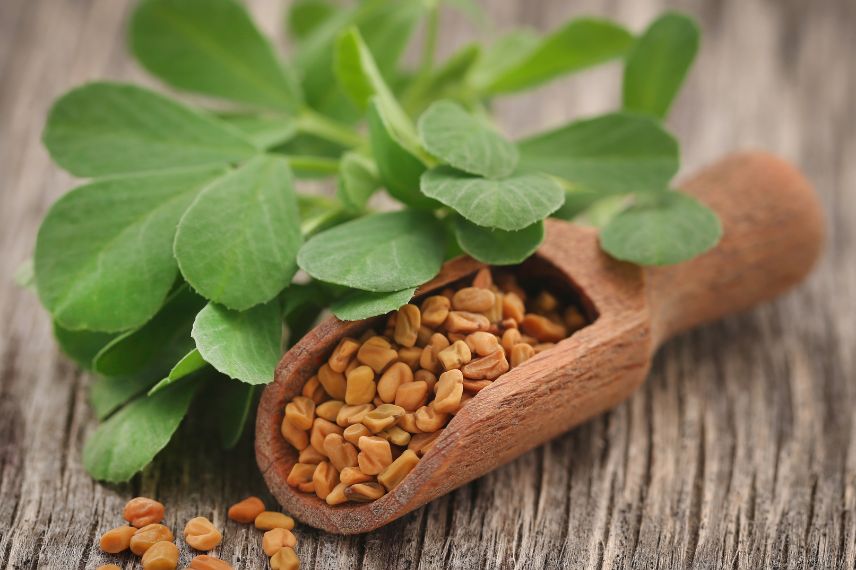
How to use fenugreek?
Fenugreek can be used in a variety of forms to benefit from its medicinal properties. Here’s how to take it simply and effectively.
Fenugreek seed infusion:
- Preparation : soak 1 to 2 teaspoons of fenugreek seeds in a cup of hot water for 10 minutes. Strain before drinking.
- Use : this infusion is traditionally consumed to support digestion or stimulate appetite. You can drink 1 to 2 cups per day, for a maximum period of 3 to 6 weeks.
Seed decoction:
- Preparation : boil 1 tablespoon of seeds in 500 ml of water for 5 to 10 minutes. Let cool and strain.
- Use : drink one glass per day to support digestion or use as a gargle to relieve sore throat. Drink one glass per day to support digestion. Limit use to 4 weeks in a row.
Fenugreek powder :
- Preparation : grind the seeds into a fine powder using a grinder.
- Use : this form is often used to incorporate fenugreek into daily food, particularly as a spice found in curries. Add 1 teaspoon to your dishes, sauces or in yoghurt. Take at most one to two times per day. Do not exceed 5 g of powder per day and limit intake to 6 consecutive weeks. Consumption of fenugreek powder is an easy way to enjoy its health benefits.
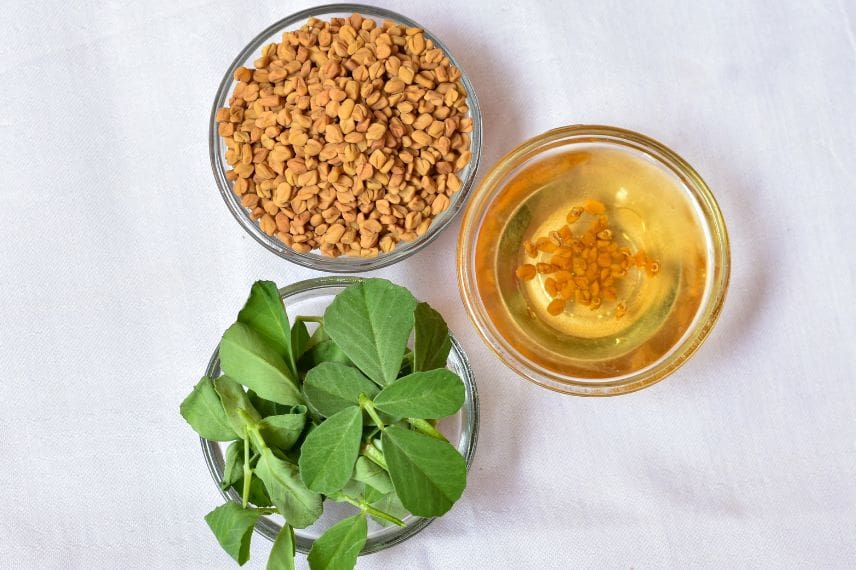
Fenugreek oil
- External use : apply fenugreek oil to the skin or scalp 2–3 times a week. For a massage, dilute it with another vegetable oil to avoid irritation.
In cooking
- Whole seeds or ground to a powder can be toasted to enhance dishes such as curries or stews. Fresh or dried leaves add an aromatic touch to soups and Indian breads. Indian cuisine uses fenugreek as an essential spice.
Read also
12 medicinal plants to reduce stressHow to grow fenugreek at home?
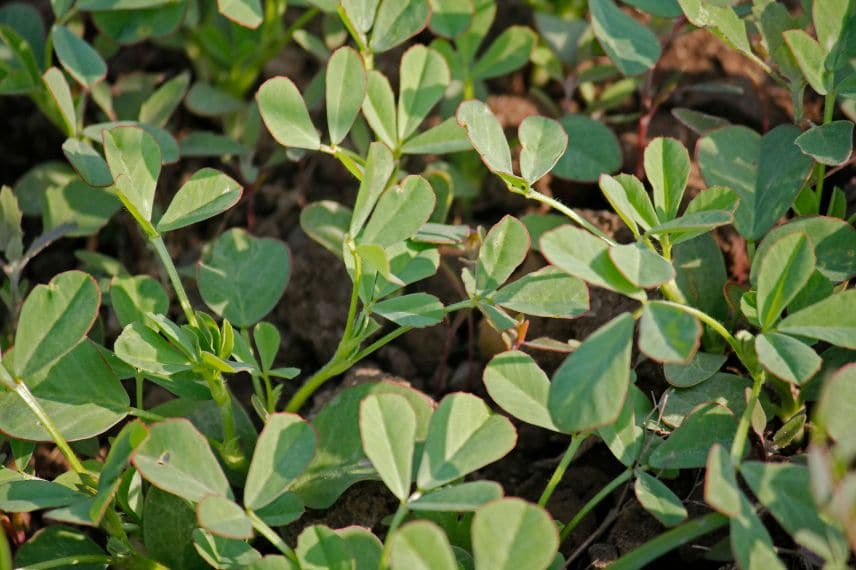
Fenugreek is an easy-to-grow annual plant, whether in the ground, in a pot or even in a window box.
Ideal conditions for growing fenugreek
- Light exposure: fenugreek loves light and grows best in full sun. It can, however, tolerate light partial shade.
- Soil: it prefers well-drained, light soil rich in organic matter. Slightly calcareous or sandy soils suit it perfectly.
- Climate: native to the Mediterranean region and North Africa, fenugreek enjoys hot and temperate climates. It does not tolerate frosts well, so favour spring or summer cultivation.
Sowing and planting
- When to sow? Sow your fenugreek seeds in spring up to early summer, as soon as the last frosts have passed.
- How to sow? Sow the seeds directly in the ground or in pots, 1–2 cm deep, 5 cm apart. Use a light growing medium and ensure the container is well-drained.
- Watering: fenugreek requires regular but light watering. Be careful not to saturate the soil with water to avoid root rot.
→ Find our comprehensive guide: “How to sow fenugreek?“
Care and cultivation
- Care: fenugreek grows quickly and requires little maintenance. It is advisable to weed around the plants to avoid root competition.
- Fertiliser: fenugreek is an excellent green manure. It enriches the soil with nitrogen, benefiting subsequent crops. At the end of the season, bury the plants directly in the soil or use them as mulch.
With little effort, you can enjoy your own fenugreek harvest, for both culinary uses and medicinal properties.
Harvest and storage of seeds
Fenugreek is a fast-growing plant, and its harvest can be carried out at different stages depending on how you intend to use it.
When and how to harvest fenugreek?
- Young shoots: you can harvest fenugreek leaves about 3 to 4 weeks after sowing, when they reach 10 to 15 cm. They can be eaten fresh in salads or cooked like spinach, as a leafy vegetable, and as a complement to other garden vegetables to soften its strong flavour.
- Seeds: for the seeds, wait until the pods turn yellow and become dry, usually 3 to 4 months after sowing. Cut the stems and hang them upside down in a dry, well-ventilated place. Once the pods are thoroughly dry, shell them gently to extract the seeds.
How to store fenugreek seeds?
After harvest, store fenugreek seeds in an airtight jar, away from light, moisture and heat. When stored properly, they can keep for up to a year without losing their properties.
- Subscribe!
- Contents
Comments