





























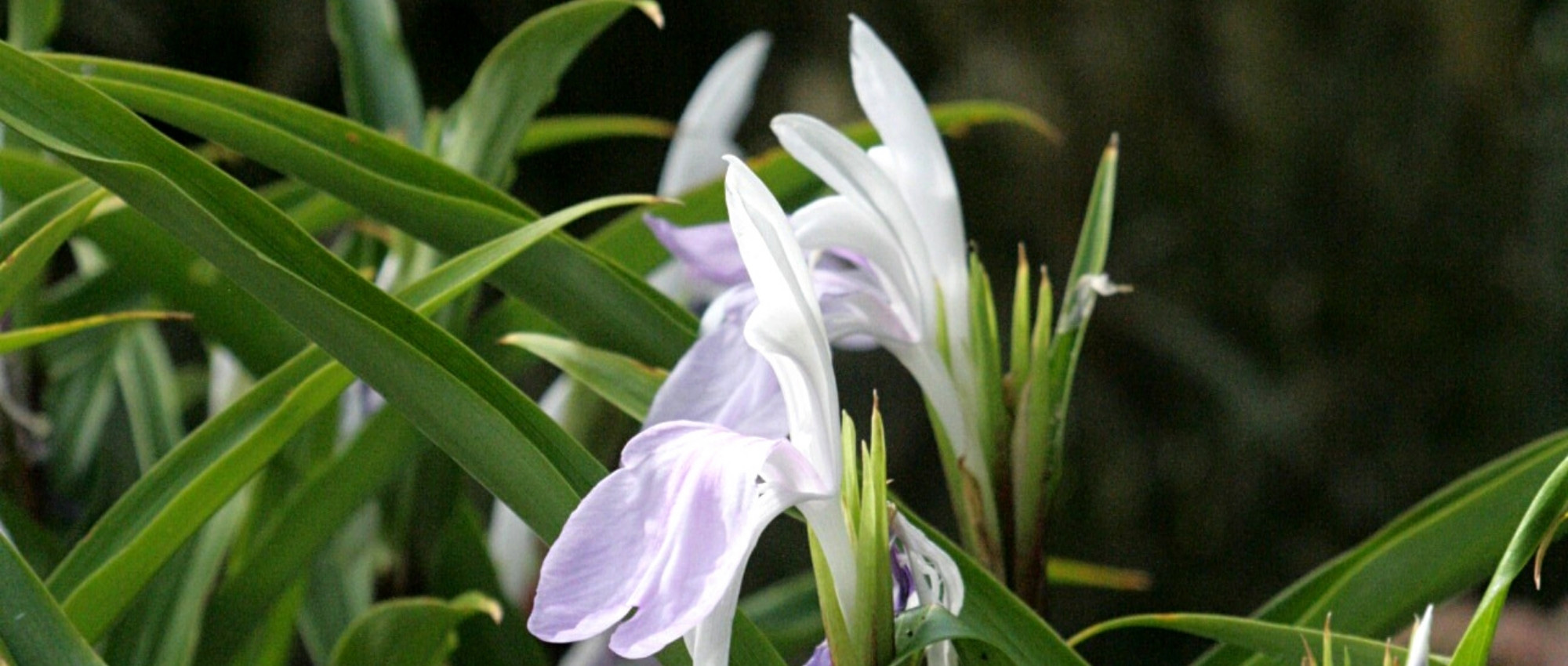
Growing Roscoeas in pots
All our tips for success
Contents
Roscoeas are very beautiful perennials that are still relatively unknown, offering summer flowers that closely resemble orchids, often in shades of purple or white, and sometimes yellow or red depending on the varieties. They also feature lovely lanceolate leaves, with some species having colourful foliar sheaths in dark red or purple. Roscoeas adapt very well to pot cultivation and are perfect for enhancing a terrace, courtyard, or semi-shaded balcony. Discover all our tips for successfully growing Roscoea in pots!
And to learn everything about Roscoeas, feel free to check our complete guide “Roscoea: Planting, Growing, and care.”

What type of pot to choose?
To grow Roscoea, you can choose a terracotta or plastic pot. The former has the advantage of being more aesthetically pleasing, permeable to water and air, which helps prevent the roots from rotting in case of excess moisture. This means that watering will need to be more frequent, as the substrate dries out more quickly. Plastic pots are also suitable. They have the advantage of being cheaper and lighter, making them easier to handle, and allow for slightly more spaced watering.
The ideal pot is at least 25 to 30 cm in diameter and depth. Larger pots allow for several Roscoea plants to be installed together, creating a more visually appealing effect. The pot must have drainage holes at the bottom to allow excess watering to escape.

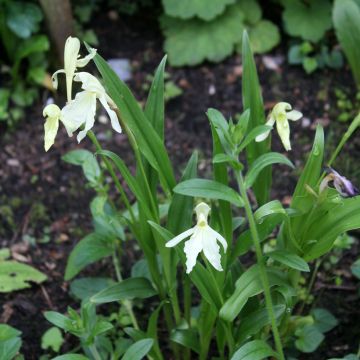
Roscoea humeana: type species and variety with white flowers, grown in a pot (photos: peganum)
Read also
Roscoea: Planting, Growing and CaringWhich substrate to choose?
Roscoea requires a rich, well-draining substrate, as it is sensitive to stagnant moisture that could cause its tubercles and roots to rot, especially in autumn-winter when it is in dormancy. You can create your own substrate by mixing potting soil, garden soil, and coarse sand, supplemented with a bit of well-decomposed compost.
Discover other Roscoea
View all →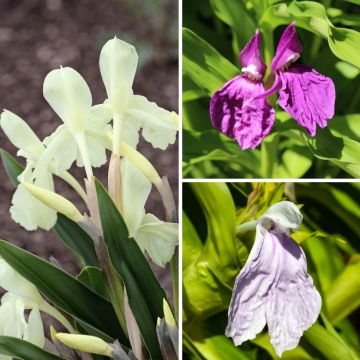
Available in 0 sizes
Available in 2 sizes
Available in 1 sizes
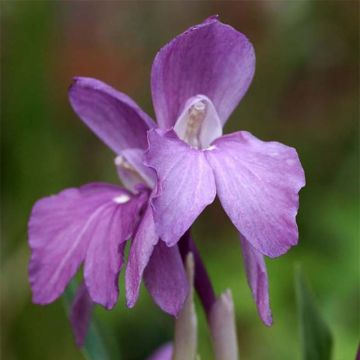
Available in 1 sizes
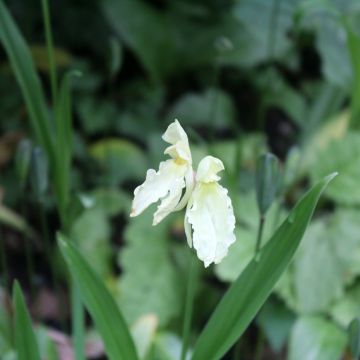
Available in 1 sizes
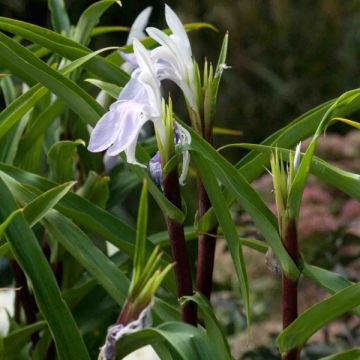
Available in 1 sizes
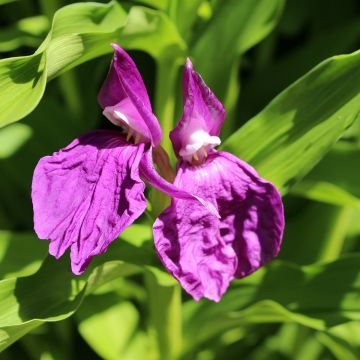
Available in 1 sizes
Available in 1 sizes
Available in 1 sizes
When and how to plant?
The best time to plant Roscoea is in spring, around April.
1) Place a drainage layer at the bottom of the pot, made up of clay balls, gravel, or broken pots, about 5 cm thick. This will help drain excess watering.
2) Next, place some of the substrate in the pot.
3) Arrange the Roscoea tubercles. They should be buried 10 to 15 cm deep.
4) Cover them with the substrate, then lightly compact.
5) Water generously.
6) All that’s left is to place the pot on your terrace or balcony, in partial shade.
7) You can add a thin layer of mulch on the surface of the pot to insulate the collar from moisture, while keeping the substrate fresh for longer, which will allow you to space out watering. Mulching also has aesthetic benefits and limits the growth of weeds in the pot.

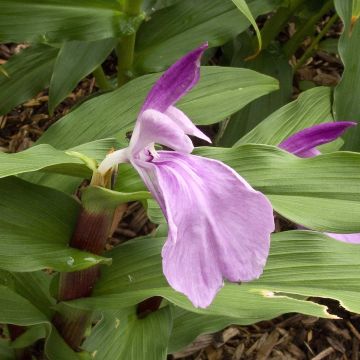
Roscoea wardii and Roscoea humeana (photos: Leonora Enking / Nasser Halaweh)
Read also
Pairing ideas with RoscoeaHow to care for a Roscoea in a pot?
Roscoeas require moisture during their growing season, so waterings should therefore be regular in spring and summer. Water once or twice a week during this period, using rainwater if possible, and allow the substrate to dry briefly between waterings. Do not let water stagnate in the bottom of the pot. Once flowering is finished, you can reduce watering, then stop completely when the plant enters dormancy in autumn. Feel free to add a layer of mulch on the surface of the pot to keep the substrate fresh for longer.
You can make some applications of fertiliser in spring and summer, as in pots the mineral elements in the substrate are limited and deplete quickly. A few applications of fertiliser will support the plant’s growth and encourage generous flowering. For example, use a liquid fertiliser rich in potassium, which you will dilute in the watering water, at a rate of one application per month.
The Roscoea is quite hardy, capable of withstanding temperatures dropping occasionally to –15 °C. As a precaution, you can place a thick layer of mulch over the stump in autumn to better insulate it from the cold. However, if you live in a region with a harsh climate (montane or semi-continental climate), do not hesitate to bring the pot under cover (unheated) in autumn to protect the Roscoea from the cold, then take it out again in spring.
We recommend removing faded flowers as you see them, both for aesthetic reasons and to encourage the plant to produce new flowers.
You can repot the Roscoea in spring, using a pot that is slightly larger than the previous one each time. This allows you to renew the substrate and accommodate the plant’s growth by giving it enough space to develop.

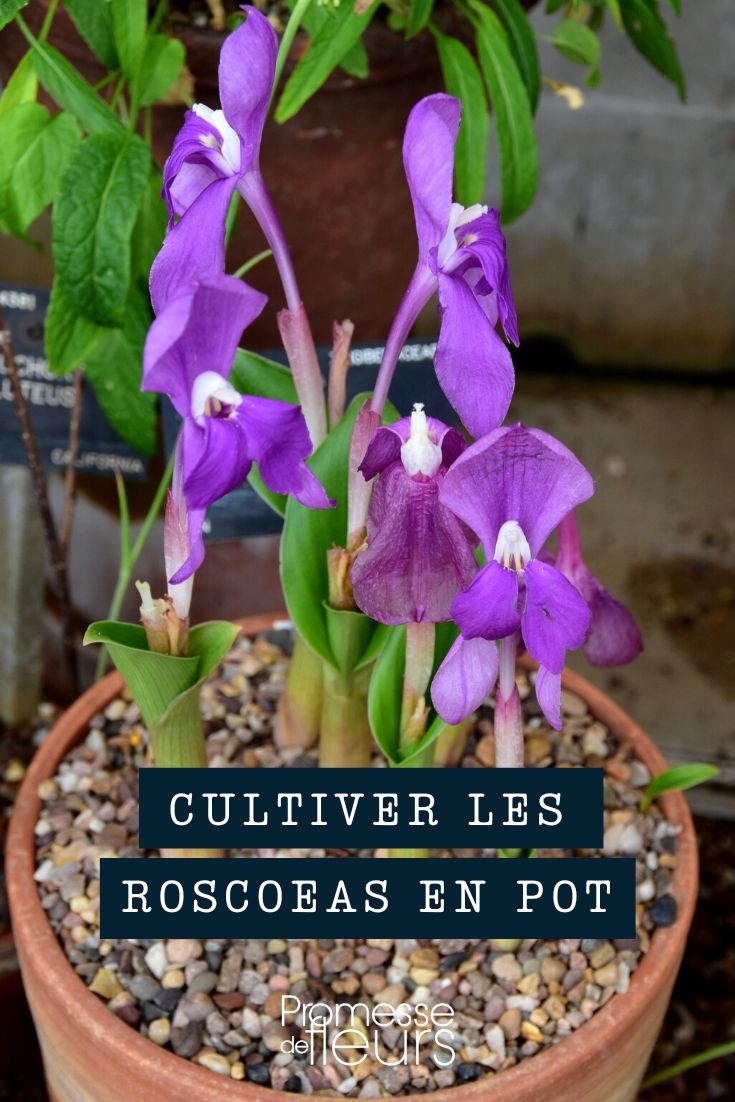
Roscoea purpurea ‘Red Gurkha’ and Roscoea cautleyoides (photos: Leonora Enking / Daderot)
For further reading
- To find out everything, browse our guide on Roscoea: planting, growing and care.
- Subscribe!
- Contents
Comments