





























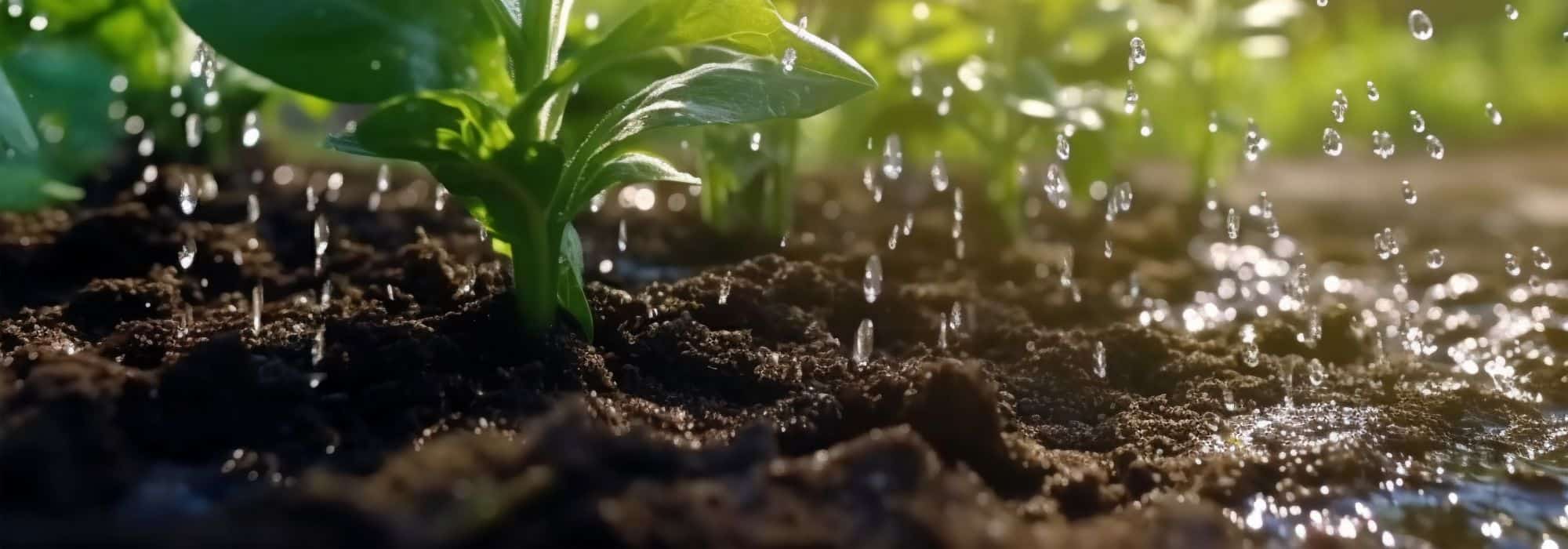
How can I improve water retention in the soil?
Our tips for moisture retention and drainage
Contents
Despite the rains or the gardener’s careful watering, certain soil types (sandy, stony, shallow) do not retain water and the plants seem to struggle to quench their thirst. Others, on the contrary, are not draining well enough. You may have noticed it in your own garden: water retention in the soil is crucial for plant health. A soil capable of retaining water effectively, without excess, ensures constant hydration of the roots, essential for healthy and vigorous growth. Discover in this article our tips and techniques for improving water retention in your garden according to your soil type.

Understand and adapt your approach according to soil type
The first step towards better water retention is understanding the nature of your soil.
Soils vary greatly in display – some are clayey and heavy, others are sandy and light. A clay soil, for example, naturally retains more water, but can become too compact, which prevents air from circulating properly. Conversely, a sandy soil offers excellent aeration, but retains water poorly, requiring more frequent watering. A loamy soil is generally well balanced.
To determine your soil type, a simple test is to take a handful of damp soil from your garden and try to form a ball. A clay soil will form a compact ball, whereas a sandy soil will crumble easily.
For greater accuracy, you can also perform the sedimentation test; to do so, head over to Olivier’s article: Determine the texture of your soil: clayey, sandy, silty.
Once you have identified the nature of your soil, you can start working on suitable solutions. For example, for a clay soil, incorporating organic matter can help improve its structure and porosity, while for a sandy soil, adding compost or potting soil can increase its water-holding capacity.
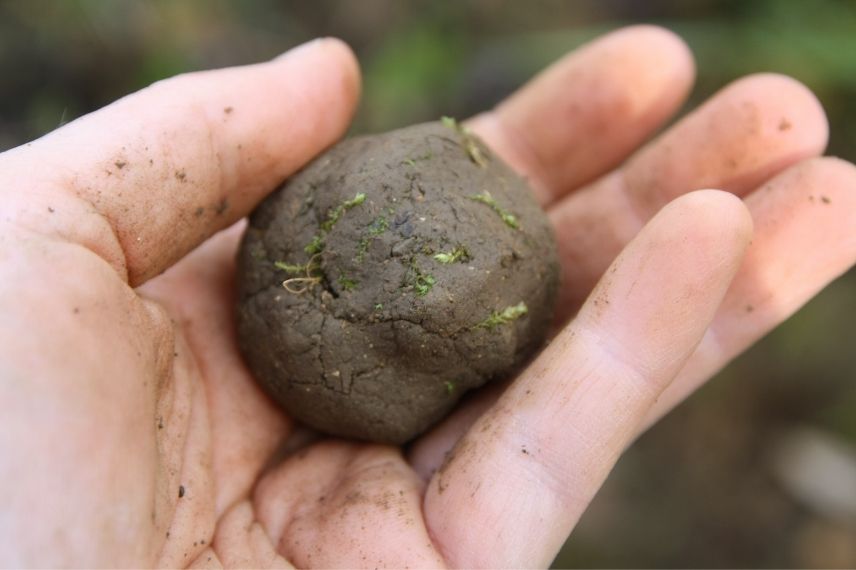
Ball test (here, a clay soil)
The importance of organic matter for an improved water retention
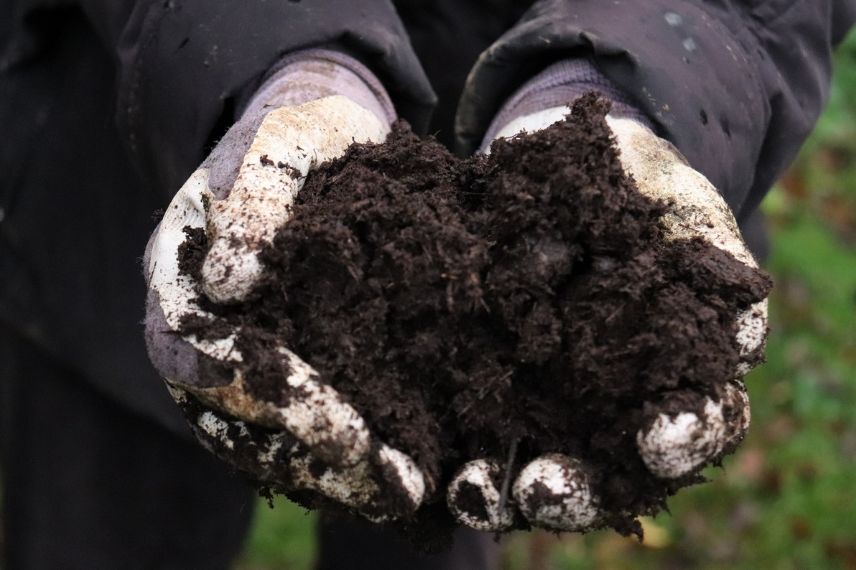
Adding organic matter is one of the most effective methods for improving water retention in all soil types. Organic matter, in the form of compost, decomposed manure, potting compost, or dead leaves, acts like a sponge, retaining moisture and releasing it slowly into the soil. This is particularly beneficial during dry periods, when water becomes a precious resource.
In sandy soils, this organic matter increases the soil’s capacity to retain water and enriches the soil with essential nutrients, promoting healthy plant growth. It also improves the soil structure, increasing its porosity and its ability to retain water while allowing adequate drainage.
If your plot is at the anlage stage or during planting, mix 1/3 mature compost or manure (or potting compost) with 1/3 garden soil.
Then apply it one to two times a year at the base of the plants, with the first in autumn (for example, dead leaves as a mulch) and the second in spring. This will again supply essential nutrients to maintain the richness of your soil and the health of your plants.
For clay soils too, adding organic matter can reduce compaction, allowing better air circulation and improving water drainage.
Mulching techniques to conserve soil moisture
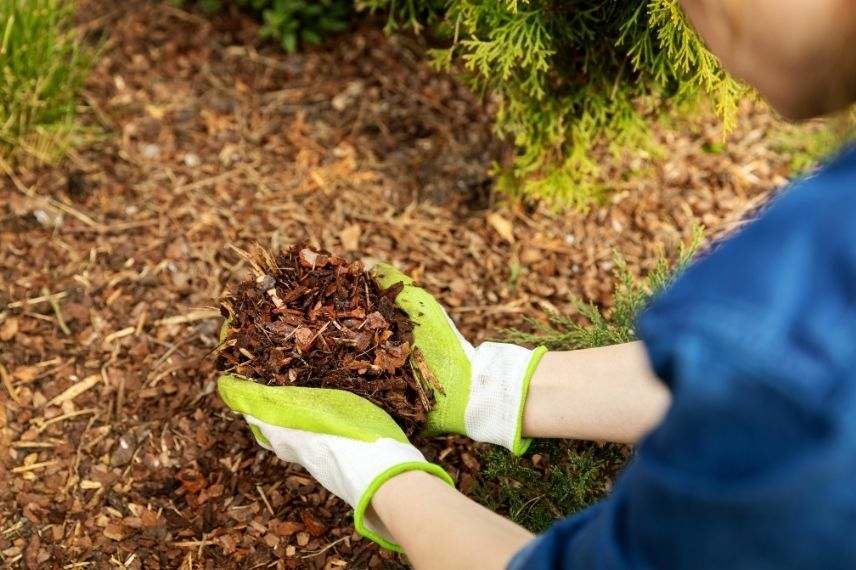
Mulch is an essential technique for improving soil moisture retention. By covering the soil surface with organic materials such as straw, wood chips (or RCW), or even fallen leaves, you create a barrier that reduces water evaporation. This helps keep the soil cooler and moister, especially during the hotter months of summer, and also provides protection against frost in winter.
Mulching also has the advantage of adding organic matter to the soil as it decomposes, thereby improving its structure and fertility. This method is particularly beneficial for plants that require consistently moist soil, such as ferns or hydrangeas.
In addition to its advantages in terms of water retention, mulch helps control weeds, reducing competition for water and nutrients. It is important to regularly refresh the mulch layer to maintain its effectiveness.
→ For more information, read our articles: Which mulch for the vegetable garden? and The different organic mulches to help you choose.
Soil amendments to improve soil porosity and water retention
In some cases, improving soil structure can also involve the use of amendments such as perlite and vermiculite. They can be particularly effective, especially in heavy and compacted soils.
Perlite and vermiculite are minerals that, once added, increase soil porosity, allowing better air and water circulation. This helps roots access the necessary moisture and prevents waterlogging, which can be detrimental to plants.
Expanded clay, meanwhile, is ideal for improving water retention in sandy soils.
These amendments are particularly useful for potted plants or raised beds, where control of soil texture and display is crucial.
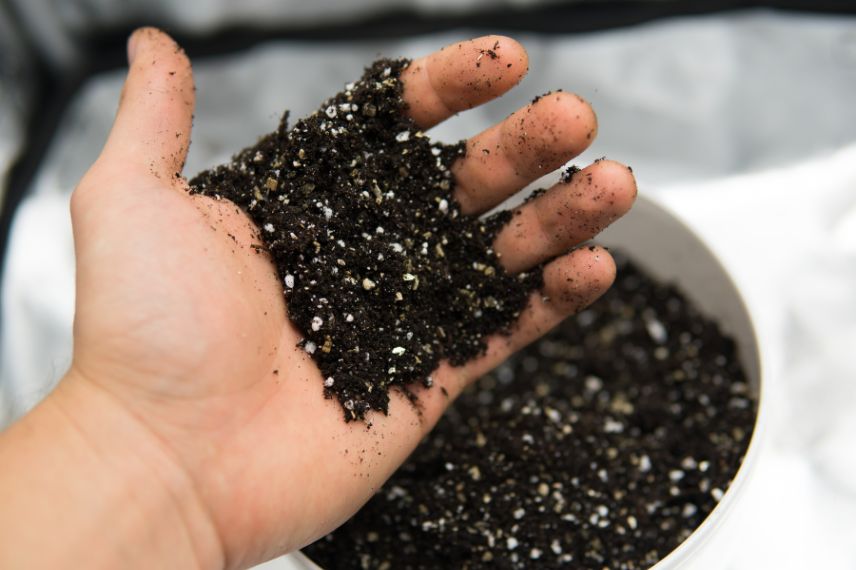
Perlite facilitates drainage of water
Choosing plants suited to your soil type
Choosing plants according to soil type should not be neglected if you want to optimise water retention. Some plants thrive in moist soils, while others in drier conditions. By selecting plants suited to the nature of your soil, you reduce the need for watering and maintenance.
For example, in clay soil that retains water well, plants such as the hostas, the Astilbes or the Siberian iris will thrive. These plants enjoy the constant moisture that this soil type can offer.
Conversely, for sandy soil, choose drought-tolerant plants such as the lavenders, the sedums or the ornamental grasses. These plants are suited to drier conditions and require less water.
By choosing plants suited to your soil, you create a garden that is not only beautiful but also sustainable and environmentally friendly. This approach reduces water consumption and maintenance requirements, while promoting a healthy garden ecosystem.
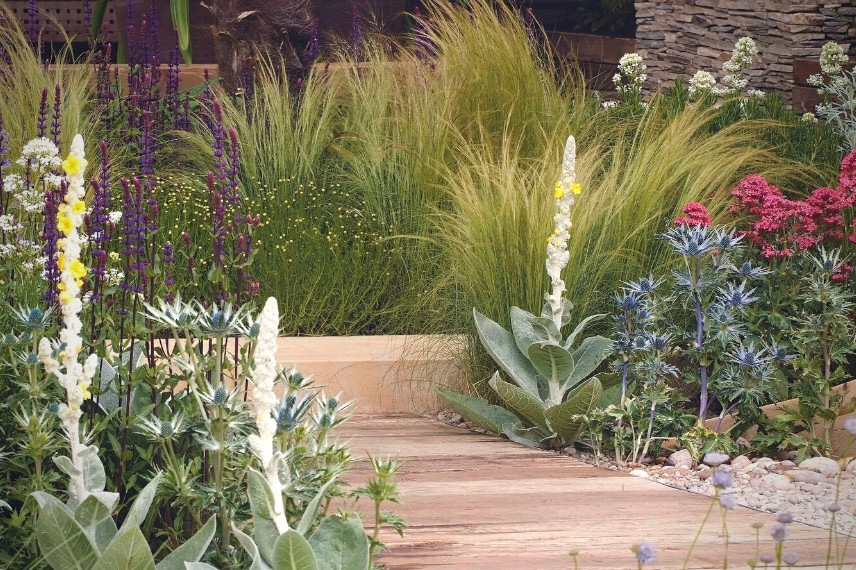
Efficient and cost-effective irrigation
A well-planned and efficient irrigation is essential to maximise water retention and ensure plant health. Using drip irrigation systems or “soaker hoses” (porous hoses) is an effective method for delivering water directly to plant roots, where it is most needed. This reduces water wastage through evaporation and ensures deep, even soil moisture.
Watering early in the morning or in the evening, when temperatures are lower, minimises evaporation and allows water to infiltrate deeper into the soil. This is particularly crucial during periods of drought or intense heat. Prioritise rainwater for irrigation, as it is less hard, and do not hesitate to install rainwater harvesting systems.
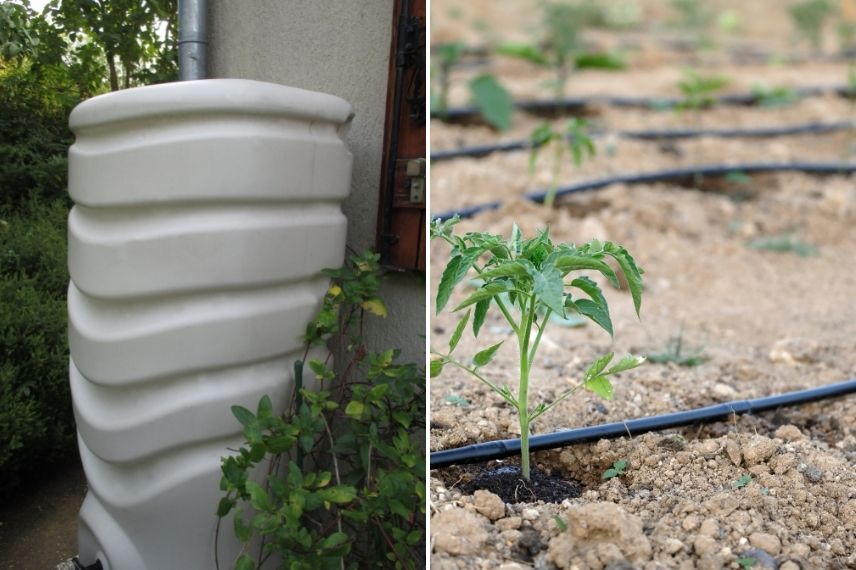
The water butt connected to the micro-porous hose helps reduce the watering workload
- Subscribe!
- Contents
Comments