





























How to arrange pots on a terrace?
for a harmonious decor
Contents
Terraces are both a place for relaxation and sociability, where one enjoys resting as much as hosting. It is also a space that we love to decorate with greenery, placing beautiful flowering or leafy pots here and there. However, before arranging your pots in every corner of the terrace, it seems wise to first observe the area. Decorating the terrace can be quite an art!
Discover our tips for arranging your pots on the terrace.

Take into account the layout of the premises
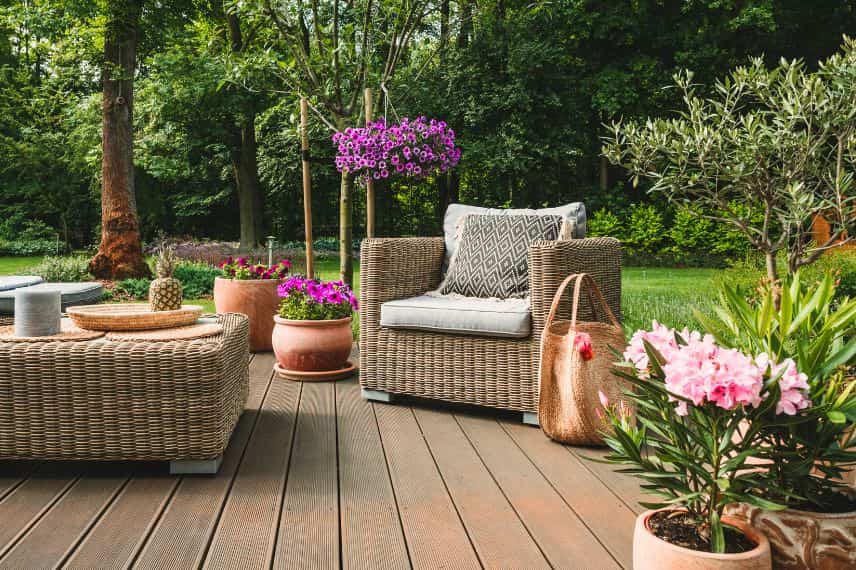
Firstly, you need to consider the layout of the area. The door openings must remain clear, but it is also possible to block the secondary opening of a French door by placing a flower box or some flowering plants in front of it.
Similarly, the pathways and circulation routes must remain accessible, so avoid cluttering them with flower pots. Also consider the elements on the terrace: table, sun lounger, barbecue, parasol, or water storage. You should be able to move easily around these elements. Avoid placing thorny plants, such as roses or Berberis, too close to avoid any accidents. These small prickly bushes should be placed in the background.
Also take a look at your terrace or balcony from the inside! It is indeed very pleasant to admire your flowers from your living room or kitchen, especially when bad weather prevents you from stepping outside.
Don’t hesitate to make use of the elements surrounding your terrace. For example, you can use a wall to install a trellis and let beautiful climbing plants, such as Clematis or Black-eyed Susan, grow on it. You can also install a pot holder or hanging baskets of Calibrachoas, Petunias, or Lobelias to create stunning floral cascades. Also consider window boxes on the sill to accommodate a flowering perennial.
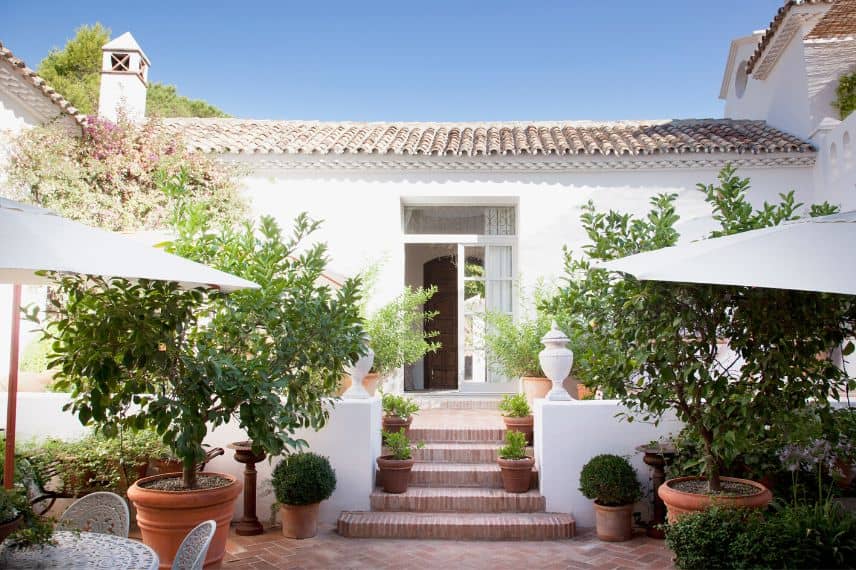
A lovely symmetry of potted shrubs in terracotta on a terrace
Read also
8 mistakes to avoid on your terracesDepending on the exposure
Before arranging your potted plants, consider the orientation of your terrace. Indeed, you will need to select your plants based on sunlight exposure. Additionally, brightness can vary throughout the day. Shaded corners will accommodate plants sensitive to heat. For example, Agapanthus will thrive in full sun, while a campanula will prefer a semi-shaded position, and Hostas will flourish in the shade.
Note that some plants prefer to be sheltered from strong winds, for instance, against a house wall or in a planter in front of a window, which can be an important factor in choosing the right location.
→ Feel free to browse our advice sheets: what to plant in the north, south, east, and west.
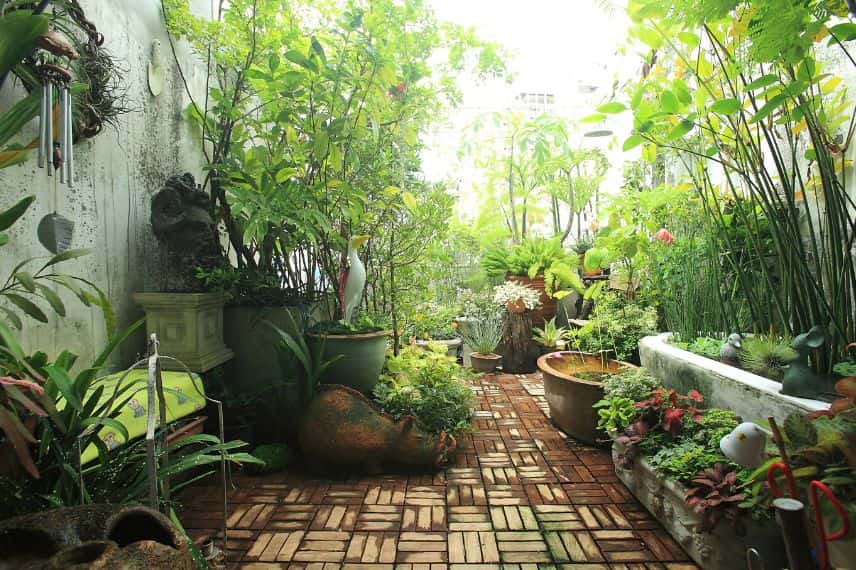
A shaded terrace with lush vegetation, featuring numerous flower pots and plant containers
Depending on the theme of the terrace
When choosing your pots and plants, you need to consider the theme of your terrace. For example, for a contemporary atmosphere, you would opt for modern pottery in muted colours, often white, black, or anthracite grey. Additionally, you should arrange the flower pots in small groups or, conversely, spaced out in a strict and regular manner. In a country garden, you would prefer terracotta pots, wooden containers, or lovely baskets as decorative cache-pots. You would then group the pots, flower boxes, and plant stands for a lush effect. One last example: to create a flea market vibe, you could transform an old zinc basin, a teapot, and many other unusual items into decorative cache-pots, placing them both on the ground and at height, for hanging. In short, before you begin, it’s best to define the atmosphere you would like to create to avoid any discordant notes.
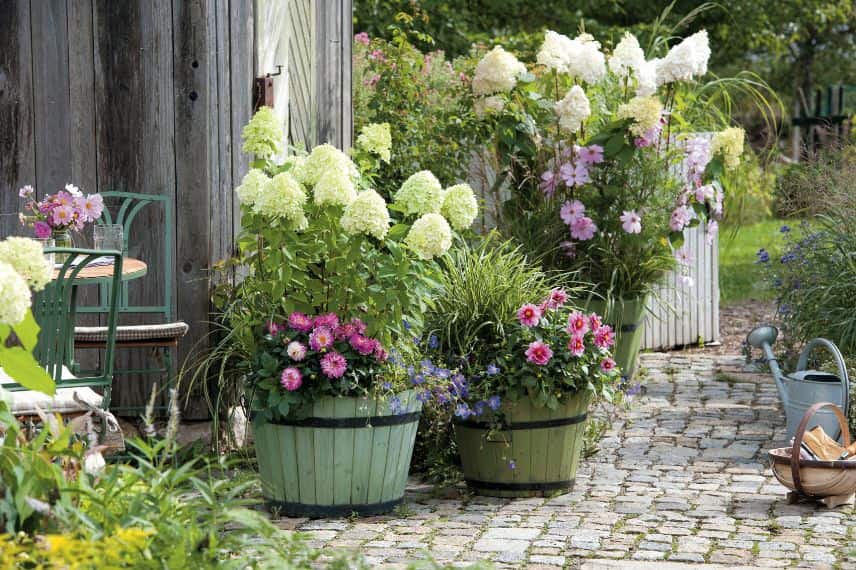
A lovely wooden pot as a decorative cache-pot for a cottage atmosphere
Depending on the size of the pots
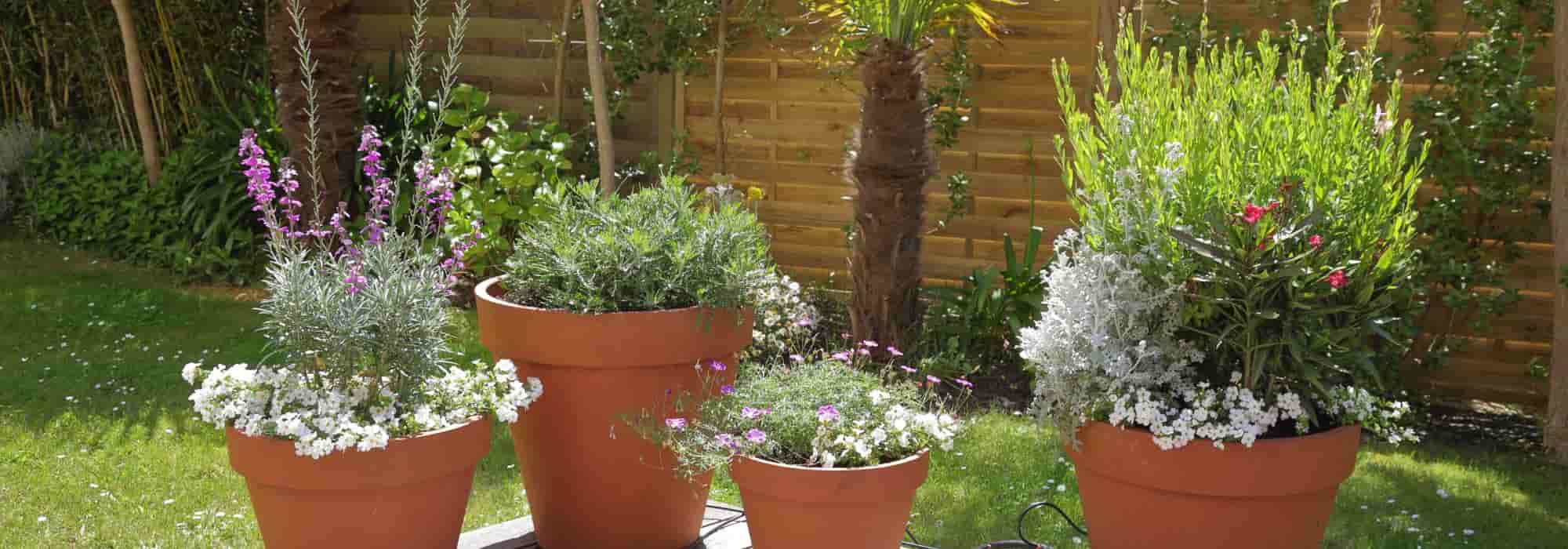
For a harmonious visual, group several pots together, placing the larger pots at the back and the smaller pots at the front. This will create volume and a sense of abundance, rather than leaving the flower pots solitary. Also vary the sizes and shapes of your containers, adapting them to the sizes of the plant species they hold. You can also play with the different silhouettes of the plants: tall or bushy, trailing habit, cascading flowers, dense cushion-shaped silhouette, etc.
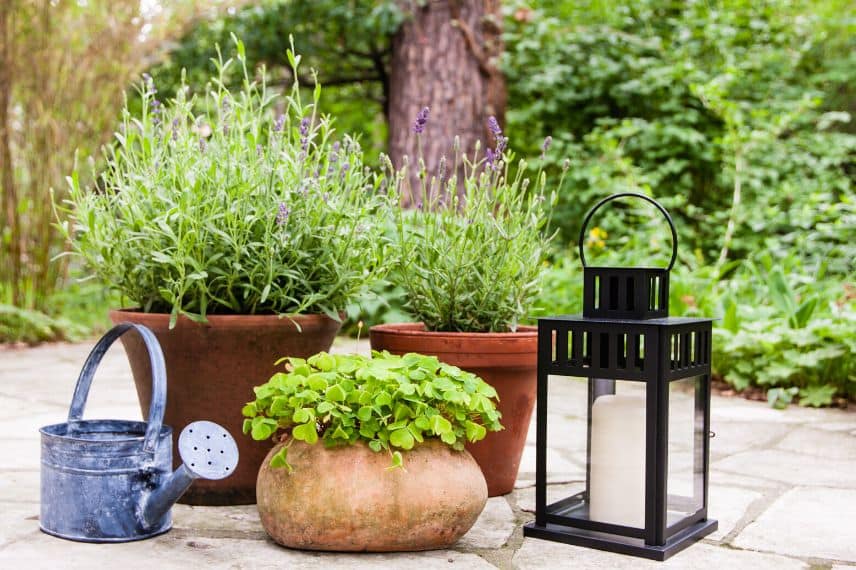
Place the larger pots behind, and the smaller ones in front
Based on the colour
Depending on your tastes and the atmosphere you want to create (romantic, exotic, rustic…), combine pots based on the colour of the foliage and the flowers. For example, you can play with shades of a single colour or pair two opposite colours, such as black and white, in a contemporary setting. Don’t hesitate to grow perennials with different flowering periods to ensure your terrace is always in bloom.
The colour of your pots and planters should not be overlooked either. Pfor a harmonious effect, it is preferable to match pots of the same colour or shade (for example, in grey tones). Also consider using the same material (plastic pots, terracotta, woven resin, polypropylene, etc.). Take into account the colour of your terrace furniture to avoid creating a patchwork of too many colours.
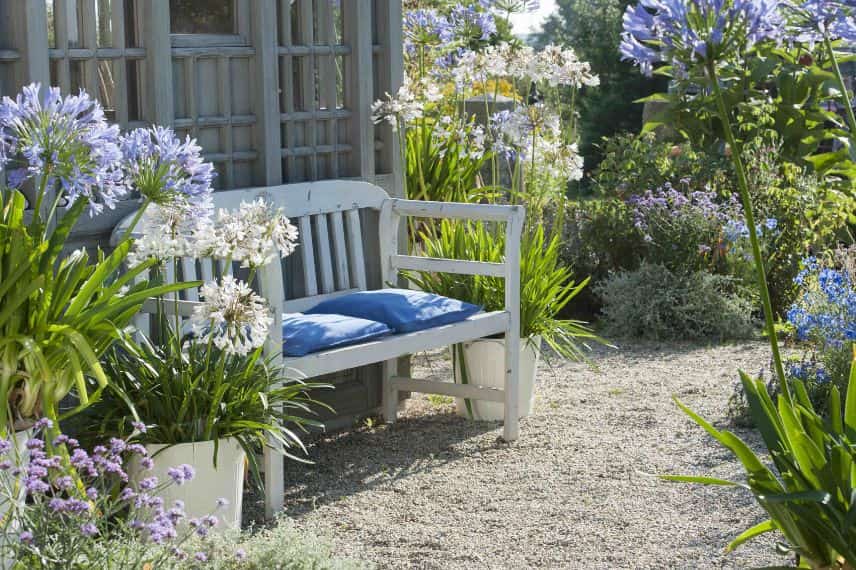 A marriage of blue and white for a harmonious terrace</caption]
According to the needs of plants
To facilitate care and maintenance, it is beneficial to group together plants with similar needs. These needs may include watering, fertiliser application, or pruning periods. This will make care easier and save you time. For example, you can group a Carex, a Hakonechloa, and a Fuchsia that require a substrate that is always slightly moist and therefore have the same watering needs. Similarly, you can also place flowering annuals together to make it easier to remove faded flowers and thus stimulate the production of new flower buds.
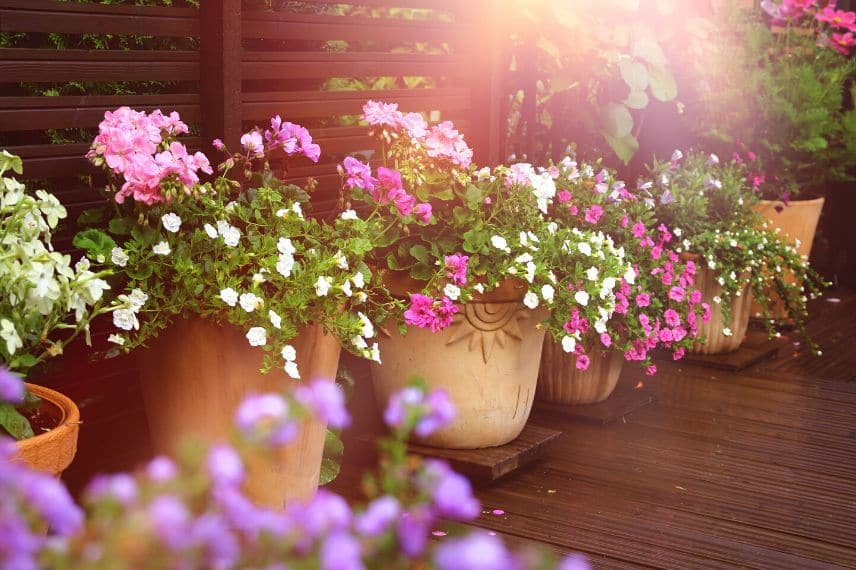
Grouping pots of annuals on the terrace makes their maintenance easier
- Subscribe!
- Contents
Comments