


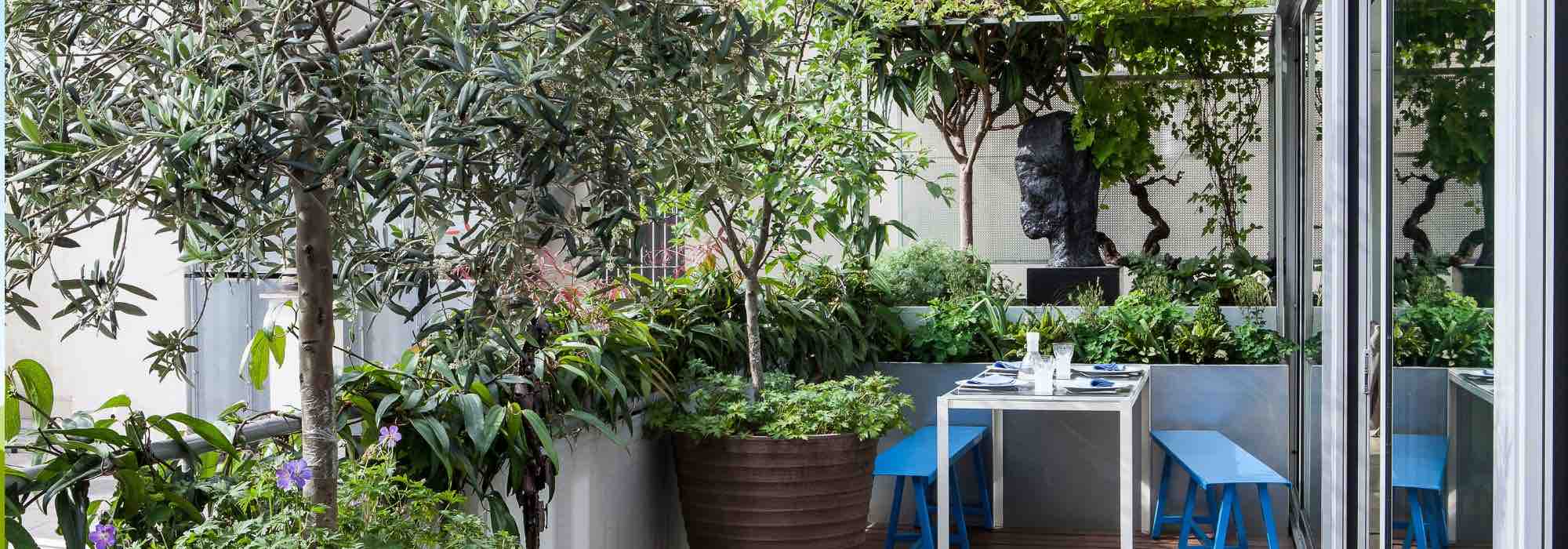
How to best design a terrace in a windy climate?
Our tips for getting the most out of your terrace despite the wind
Contents
Wind is a natural element that we regularly face. But some regions and outdoor spaces can be more exposed to it and experience gusts that are sometimes violent. To prevent this and make the most of your terrace, a few adjustments will be needed.
Discover our tips here to organise a pleasant terrace despite the wind.

Terraces exposed to wind: what constraints apply?
If your terrace (or even your balcony) is exposed to wind, it can quickly become an unpleasant place: gusts can send outdoor items flying and materials may be damaged. It is also difficult to enjoy a moment of rest and make the most of the space when the wind keeps blowing.
On the plant side, these extreme conditions will inevitably affect their growth and development: broken twigs, abortive flowering, damaged fruits, leaves that blow about, etc. The climate can also be more extreme due to regular gusts: a drier feel in summer or a sense of cold and damp in winter. Foliage and flowering can therefore be less abundant and less attractive.
As such, it is wise to find a layout that will help limit the wind’s impact so you can enjoy your outdoor space.
Before you start, make sure to observe your surroundings carefully to determine the direction of the prevailing wind.
Choosing plants suited to growing on a terrace
On a windy terrace, the plants you choose should meet several criteria in order to grow properly:
- they should be suitable for pot culture or restricted space, so have a modest habit and/or growth not too rapid;
- they should tolerate pruning as needed;
- they should, of course, be tolerant of strong winds;
- they should suit your exposure type (very sunny, partly sunny, or shaded…).
Within our wide plant range, there are fortunately many specimens able to meet these criteria. Choose from the numerous terrace plants available:
- shrubs (Amelanchier ‘Smoky’, the dwarf cherry laurels, the Photinias, the Japanese spindle trees, Chalefs, the Viburnums, the Cotoneasters, the Aucubas, the non-spreading bamboos…)
- dwarf and pot conifers (Lawson cypress, dwarf black pine, Japanese white pine, Blue Spruce…)
- climbing plants that easily cling themselves thanks to their trailing stems, their crampons or their tendrils (small trumpet vines such as the Campsis tagliabuana ‘Summer Jazz Gold’, ivies, star jasmine, passionflowers…)
- perennials (heathers, brooms, euphorbias, sages, Santolines, Sedum, Sempervivums, Achilleas or small grasses such as some Miscanthus species…)
- pot-grown edibles (fruiting varieties such as strawberries, redcurrants, raspberries, dwarf fig trees, grapevines…)
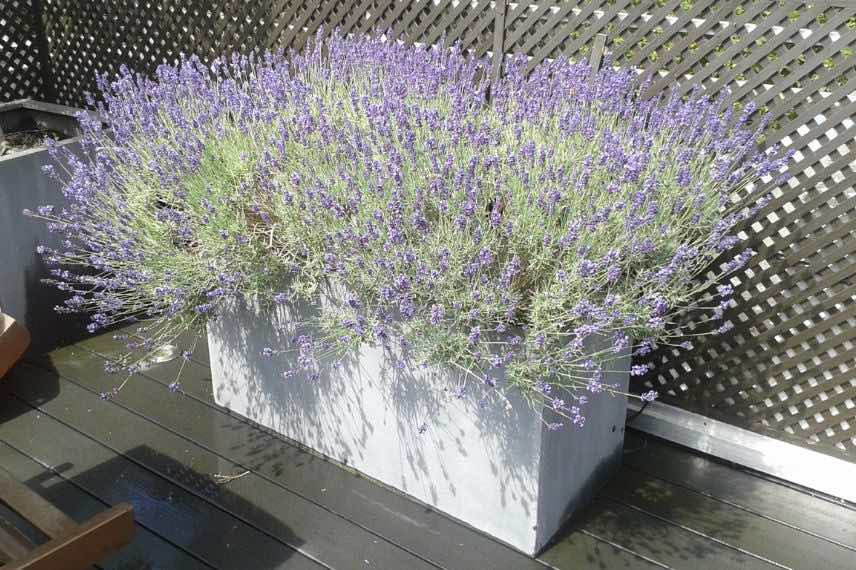
- Mediterranean plants for well-exposed terraces, accustomed to dry conditions, sometimes windy and/or laden with sea spray (rosemary, lavender, dwarf palms…)
- groundcovers with a spreading and dense habit that tolerate wind better, such as crenate holly or rockroses, as well as plants with a rounded, stout habit that naturally helps to resist wind.
To avoid mistakes, you can also rely on native plants of your region: these wild plants grow on their own and have the advantage of being perfectly adapted to the climate of the habitat. If the area is windy, they will therefore be naturally resistant to this constraint.
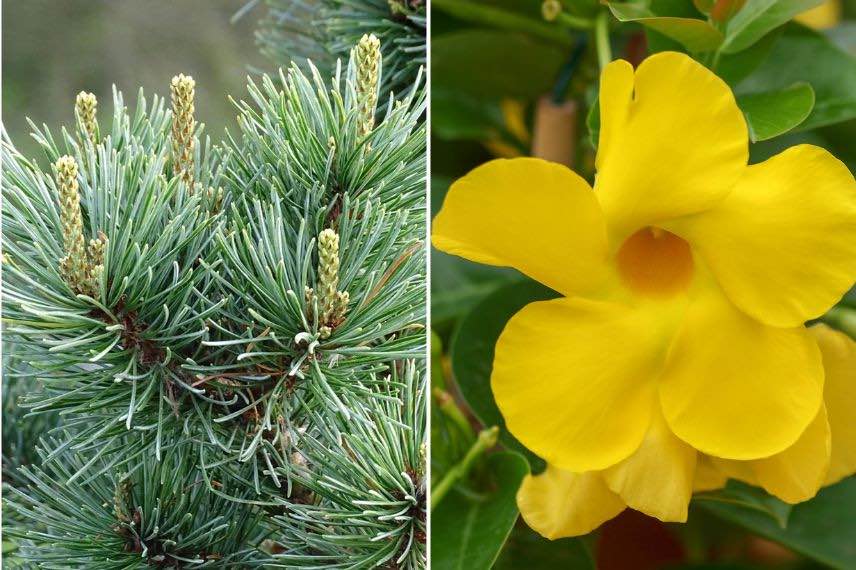
Dwarf conifers (here Pinus parviflora ‘Negishi’) and climbing plants (here a yellow-flowered trumpet vine) make good choices on a wind-exposed terrace
Optimise growing conditions
To ensure your plants survive and grow well on a windy terrace, a few precautions should be taken.
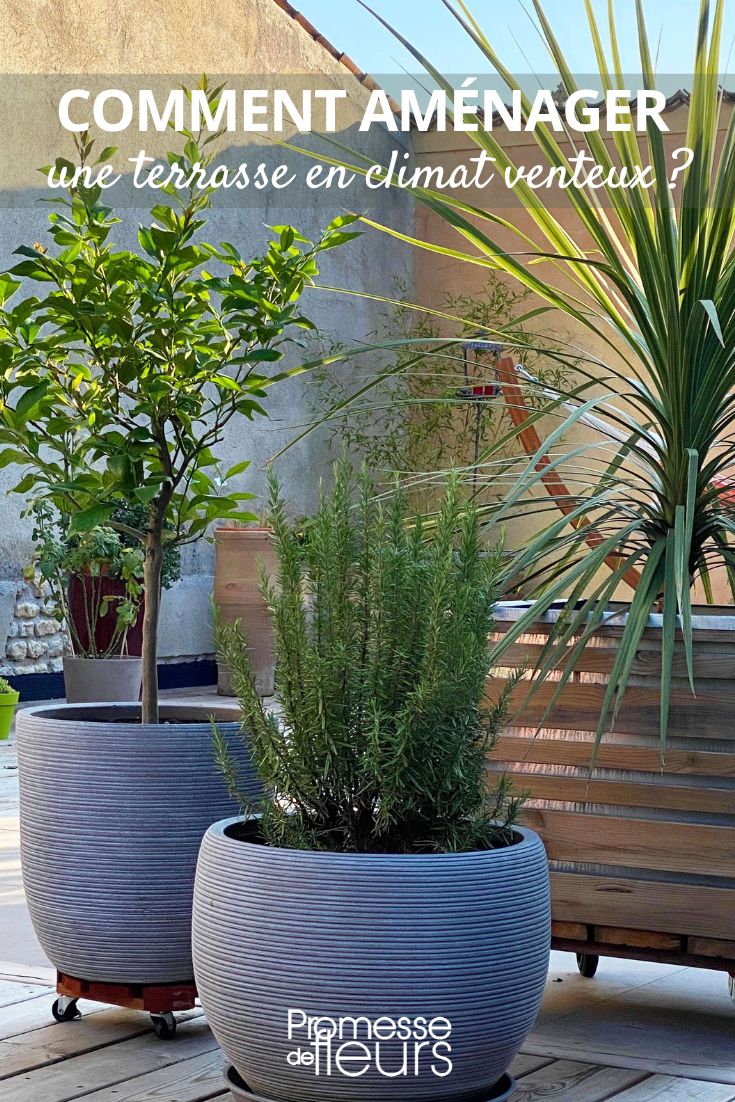
- Choose heavy, stable containers, that will not be at risk of tipping over in the wind.
- Mulch your planting to limit the adverse effect of wind on the substrate (desiccation, surface crust…). For this, avoid mulches that are too light (mulches too light (flax or hemp flakes in particular), which may be blown away at the slightest breeze and no longer be able to perform their role. Prefer clay balls, mineral mulches based on gravel, pebbles and pozzolana or paving slabs.
- Stake the young plants for the first two years of growth, so that they can develop properly.
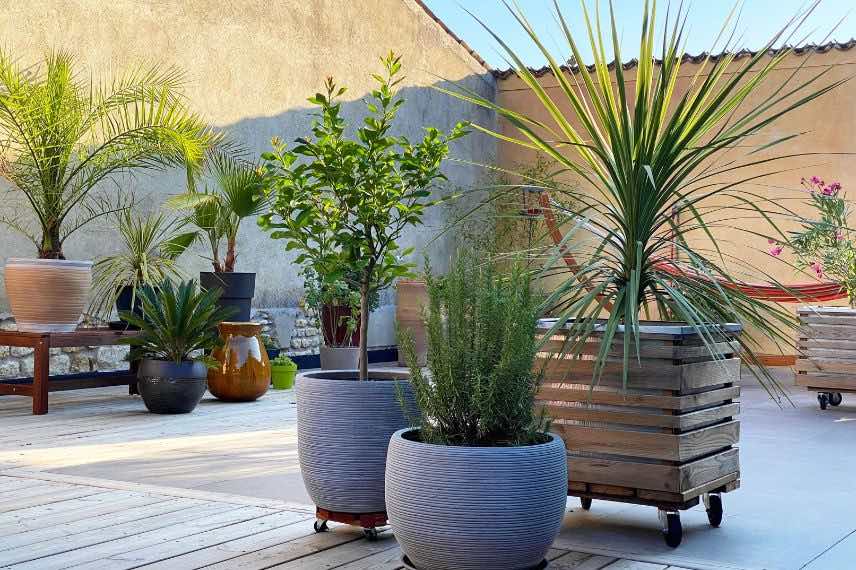
On a windy terrace, install pots made from a heavy material to prevent tipping
Read also
6 perennials to grow on a windy balconyInstall windbreaks
To protect your terrace from the wind, there are several solutions to choose from, for all budgets, tastes and terrace styles. The aim is to filter the wind to reduce the strength of gusts, but not to stop it completely, to avoid creating new air movements that could prove more damaging.
- The windbreak hedge. It is an aesthetic and effective solution, filtering the wind while providing a leafy screen that can also serve as a privacy screen on the terrace. Many shrubs are well suited to creating a windbreak hedge, thanks to their fairly dense foliage. The ideal is to create a multi-species hedge, which will be less prone to disease and more favourable to biodiversity. Choose from the shrubs listed above to form your hedge. If you don’t have soil space on the terrace, you can opt for a large, deep planter spanning the length, or for several containers arranged in a staggered pattern.
- Slatted screens or outdoor claustras. They also filter the wind and make it easy to define a space. Available in wood, aluminium, brushwood, PVC, or composite… They come in various forms and materials, to suit the aesthetic you want and your budget.
- Fences or trellises. They are relatively economical and can easily be vegetated, particularly with climbing plants, to enhance aesthetics.
- Pergolas. These arrangements are very popular on terraces because of their versatility. They shelter from the sun’s rays, they shelter from the wind, but also allow you to create a genuine green cocoon by training a handsome climbing plant over them. In wood, in aluminium, or with adjustable slats… You’ll be spoilt for choice for the terrace.
- Parasols. Ideal for protecting the dining or reading area, as well as from the wind and the sun’s harsh rays. Choose a heavy, weighted parasol base so the parasol cannot topple in even a breeze. Cantilever parasols, more modular, are specially designed to withstand gusts and inclement weather.
The perforated screens filter the wind. This filtration is what is sought in a windy place (© Gwenaëlle David Authier)
Landscaping and plants to avoid
Logically, all items that can easily blow away and risk breaking if they fall will be avoided on a windy terrace.
This applies to furniture as well as decorative items or plant containers.
Avoid plastics that are too light and prefer, for example, wood, aluminium, concrete or wrought iron.
As for plants, avoid:
- plants with fragile, brittle shoots, or tall flowering stems that require wind-sheltered exposure, such as large Dahlias, agapanthus, Cannas or Alliums;
- tender plants (the wind will accentuate the cold and promote desiccation of the aerial parts, especially since container-grown plants are always less hardy than those grown in the garden), such as fuchsias or abutilons;
- large, delicate foliage, such as that of banana plants or Colocasia;
- columnar or stemmed plants, which will be too sensitive to gusts due to their vertical silhouette;
- fragile, short-lived flowering plants, such as Hibiscus, rockroses, Magnolias or the trumpet creepers.
- Subscribe!
- Contents
Comments