





























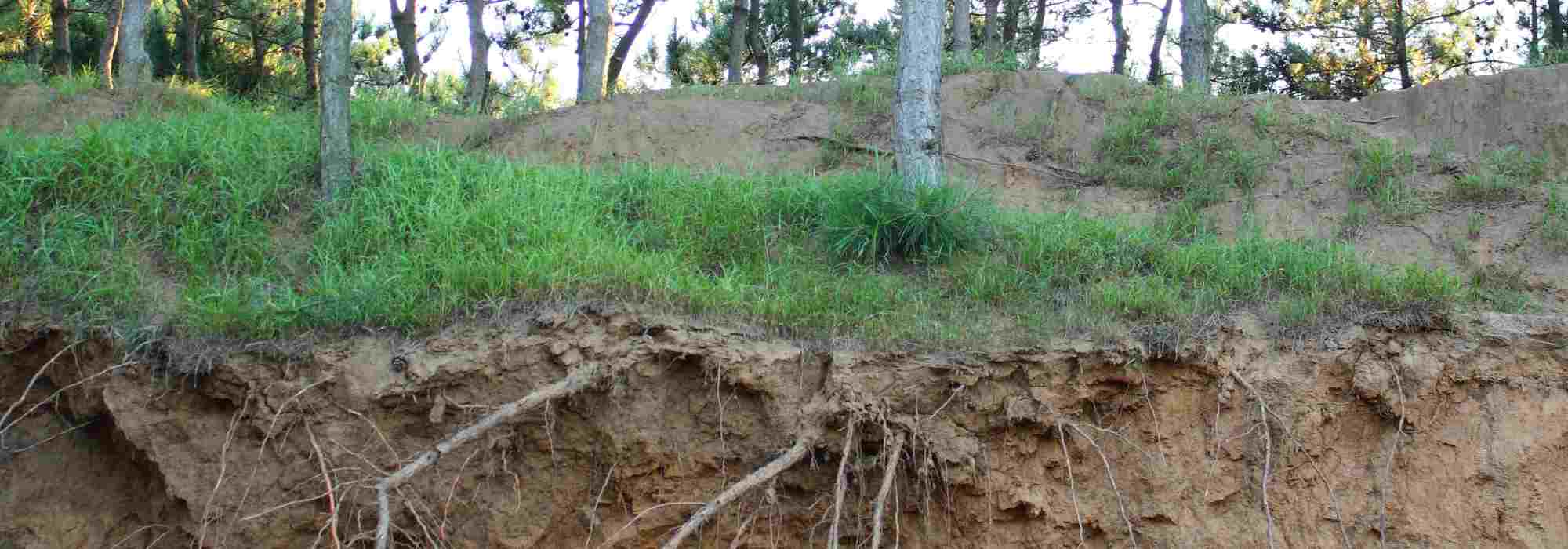
How to combat soil erosion in the garden?
to maintain the fertility of your soil
Contents
Soil erosion is a form of soil degradation caused by the detachment and subsequent movement of particles, along with suspended materials, which will no longer be present in the soil but will end up in watercourses and wetlands. This erosion contributes to the impoverishment of our lands and to water pollution, further reducing the biodiversity of wetland environments.
This type of erosion in our gardens and crops can be caused by wind, weather conditions, temperature, gravity, or human activity. Let’s explore what we can do at home, in our gardens or small farms, to reduce soil erosion.

What is erosion?
Soil erosion is a form of degradation. This erosion is a detachment and subsequent displacement of the elements from the humus-bearing surface layer of the soil, the fertile part of the soil. These soil particles, referred to as “suspended matter,” are no longer found in the soil, contributing to its impoverishment, but will end up in wet environments (watercourses, marshes, ponds, oceans…), negatively impacting the biodiversity of these areas.
In the garden, this erosion can be caused by:
- water: the action of rain, waves, and water runoff;
- wind: caused by the wind.
- However, outside our gardens, erosion can simply be due to gravity, temperature effects (frost and thaw in particular), ice, or human action (deforestation, overgrazing, naked soils, removal of hedges, soil compaction…).
The degree of soil erosion depends on the rate of water infiltration and the soil’s water retention capacity, as well as the intensity of precipitation or wind. A naked, compacted soil with an impermeable crust on its surface will be highly susceptible to erosion. Conversely, a healthy and living soil, with good structure and water permeability, will be less prone to erosion.
Globally, soil erosion is a major concern regarding soil fertility (and consequently the agricultural yields of these soils), the loss of biodiversity in aquatic and wet environments, and even the safety of human dwellings and infrastructure.
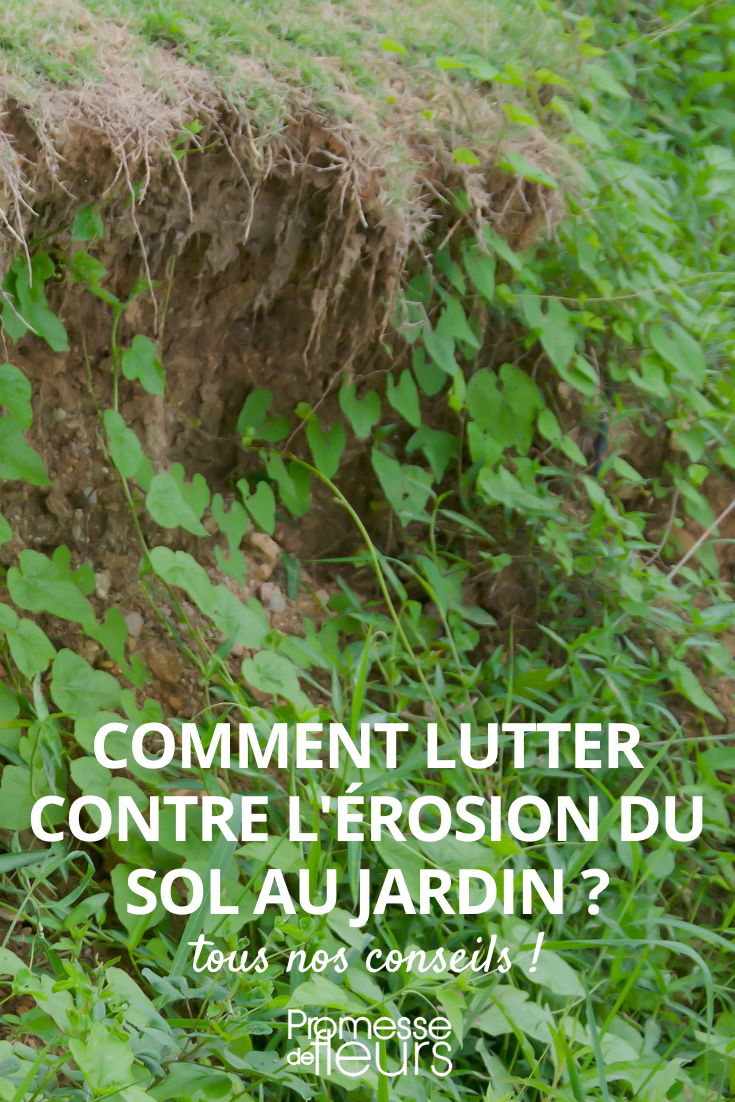
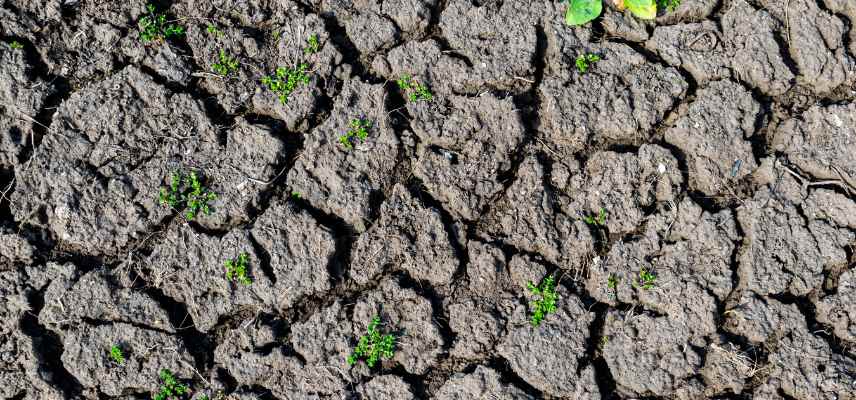 A naked and compacted soil
Means of control: cover crop
To limit runoff, ground cover is the best solution. The roots of plants hold the soil and loosen it to facilitate water infiltration into the soil. Additionally, the branches of trees help filter wind and rainwater that can sometimes fall in excessive amounts over a short period.
- Planting trees and bushes of different sizes: the idea is not to stop the wind as a wall would, but rather to filter it and thus limit its negative impact. The roots of woody plants will also help retain the soil and facilitate water infiltration;
- Planting groundcover plants: we will avoid leaving the soil bare as much as possible. Perennials and groundcover bushes are ideal for greening soil under trees, on slopes, and between shrubs… Let’s not forget to sow a ground cover in parts of the vegetable garden that are no longer producing. Green manures such as phacelia, mustard, or rye will be perfect in these areas;
- A simple mulch (wood chips, straw, dry grass, miscanthus…) can also be used against soil erosion in places where planting is not possible.
Nota bene: some plants have a deep and ramified root system. This is the case with ivy, periwinkle, Japanese Kerria, bush honeysuckle… In any case, do not hesitate to multiply different species. The root network will only become denser.
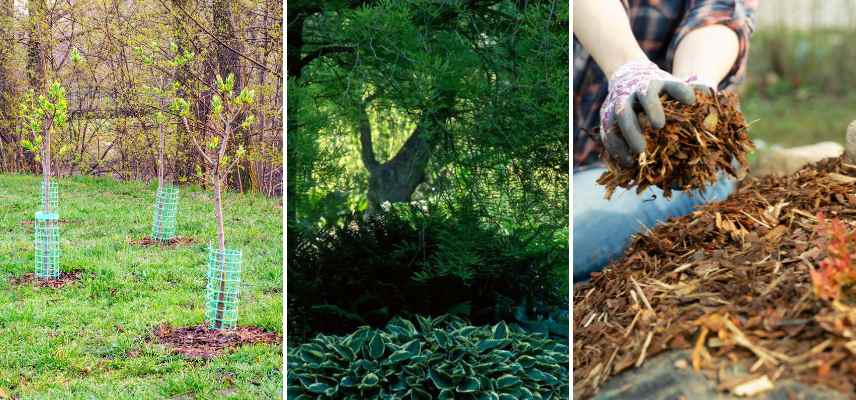
Planting, greening soils, and mulching to combat soil erosion
Other methods to combat erosion
Creation of Levels
To limit a steep slope, and thus significant erosion, levels or terraces can be created. These terraces should be planted and supported by retaining walls or large logs.
Excavation of Drainage Channels
The idea is to guide excess water to prevent it from carrying away suspended materials. This water can be collected later or directed to a drier area.
Installation of Stoneworks
The addition of stones, the creation of rockeries, or even walls helps to retain the soil and partially improves its drainage. Here too, planting in the stoneworks will further contribute to better soil retention.
Avoid Soil Compaction
The structure of soil is fragile, and every good gardener must protect it to maintain its fertility. Avoid compacting your soil by walking on it continuously or by using heavy machinery. Also, favour light soil work: no digging, but simple decompaction with a biofork or a spading fork, or light raking.
Important! Let’s not forget that a living and well-structured soil is less prone to erosion, particularly regarding water erosion. Don’t hesitate to regularly add organic matter, leave fallen leaves on the soil, avoid heavy soil work and biocides, add compost, and promote biodiversity…
Installation of Erosion Control Nets
There are also erosion control nets made from coconut fibre. These can assist you in an emergency while waiting for future landscaping or plant growth.
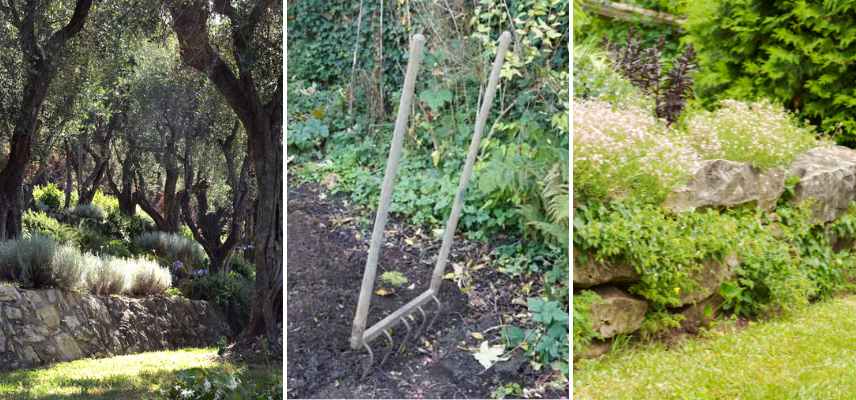
Creation of levels such as terraces or here restanques in Provence, natural soil work, and rockeries are also good ways to combat soil erosion in the garden
- Subscribe!
- Contents
Comments