





























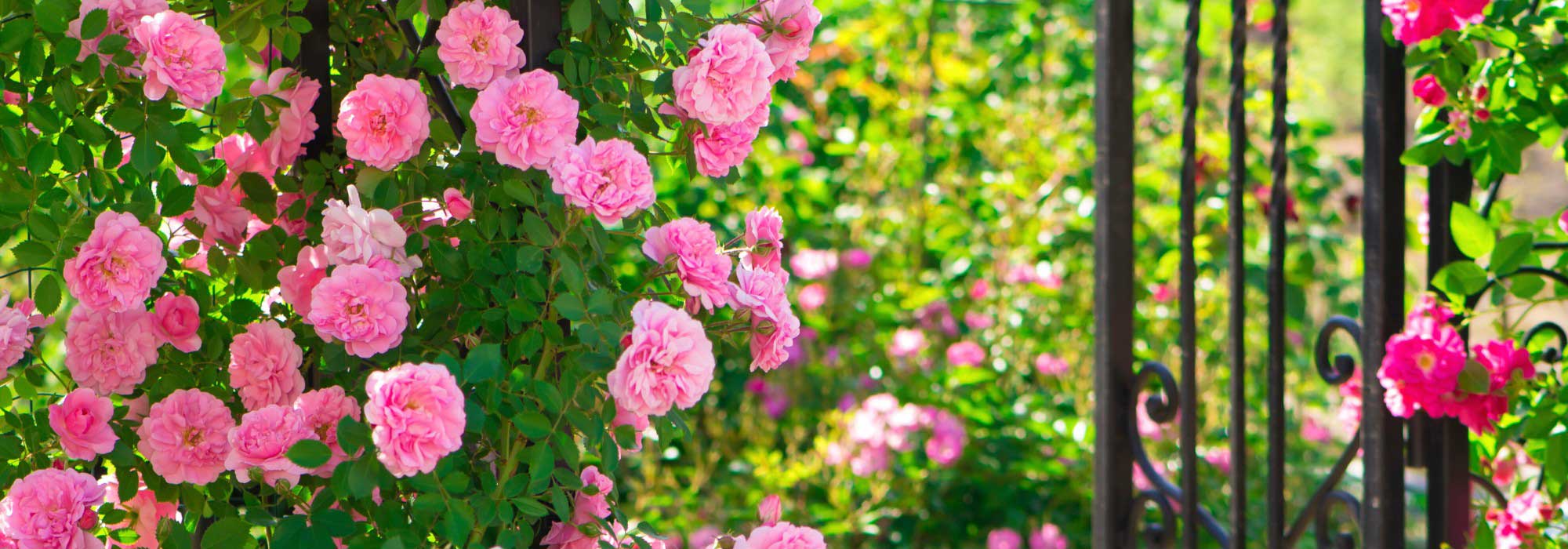
How to design a romantic garden?
Practical tips for a charming space
Contents
Charm, tenderness, voluptuousness and opulence are perfect adjectives to describe a romantic garden. Inspired by 18th-century English gardens, this style is built on a delicate blend of pastel hues, soft textures, an abundance of flowers and intoxicating fragrances. The graceful curves, the winding paths, and secret corners create an intimate and tender atmosphere, ideal for daydreaming. Discover how to create at home a garden imbued with poetry and romance!
And select the right plants from our collection for a romantic garden!

What is a romantic garden?
The romantic garden sits within the tradition of eighteenth-century English gardens, where nature was staged to evoke feelings of gentleness and contemplation. This type of garden is characterised by a soft, intimate and bucolic atmosphere, conducive to daydreaming where an impression of opulence and delicacy prevails. We are far from French-style gardens laid out to perfection, resting on symmetrical shapes and geometric effects, but closer to the English garden that leaves room for the natural. Soft curves, winding paths and secret corners are typical elements of this style, inviting wandering and discovery. The aim is to create a refugium, tranquil and imbued with poetry. The ambience of a romantic garden rests on a subtle blend of natural elements and sophistication, where the vegetation appears to grow freely while being carefully orchestrated.
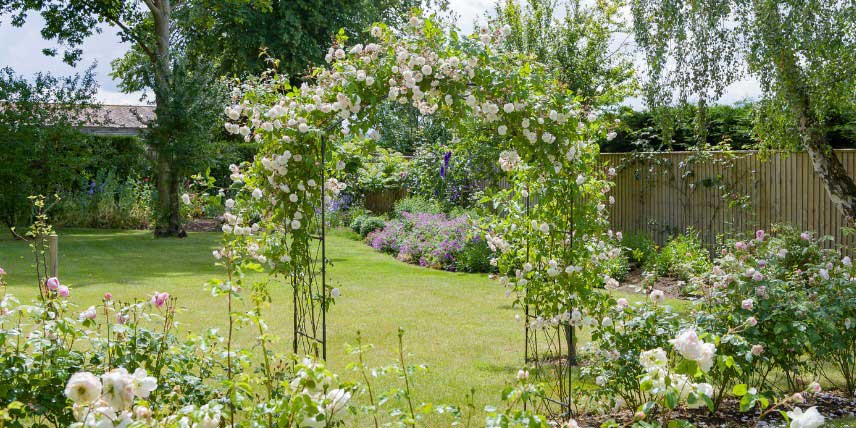
The romantic garden creates a very gentle and poetic ambience
The layout of the romantic garden
Sinuate curves and meanders of paths or borders convey a sense of fluidity and naturalness, reminiscent of English gardens. The design of a romantic garden largely rests on the layout of the paths, which should be sinuate, bordered by lush and fragrant vegetation. The gentle curves and small gravel paths, unexpectedly winding, stimulate curiosity, while avoiding the rigid linearity that characterises French formal gardens. They invite you to gradually discover the garden, and can lead to secret corners, as you wander, to a shaded arbour or to a secluded bench, for example.
Pastel palette
The romantic garden is inherently soft and soothing. Powder pink, delicate lavender-blue, lilac, pale yellow, peach, salmon, or creamy white — with this delicate romantic palette, you can infuse your garden with a touch of poetry. The palette, serene, inspires tranquillity, elegance and refinement. These tones, far from being monotonous, complement and harmonise to form a living tableau with hints of an English garden, evoking both freshness and tenderness. For example, the roses, essential, with petals delicately tinted pale pink or cream, are perfect for creating beds full of charm, as well as the peonies, with their large globe-shaped flowers in shades of pink and white. The Astrantias add a touch of purity with their star-shaped flowers in pink or white. While pink-toned phlox add a tender and soothing note. The Potentillas and Avens with apricot hues offer a subtle and warm contrast. For a romantically bucolic atmosphere, campanulas, ceanothuses and lavenders distil blue-tinged or white touches, enhancing the softness of the whole. Pastel hues are not limited to the flowers. Velvety foliage like that of Stachys byzantina, of Senecio ‘Angel Wings’, or feathery and wispy like those of Artemisias, cosmos and fennel or certain grasses such as the Stipa tenuifolia, bring a velvety texture that invites a caress. They contribute to this soft and enveloping ambience and help soften the lines of the garden, reducing overly strong contrasts. This chromatic coherence helps avoid visual cacophony while giving the impression of a natural profusion.
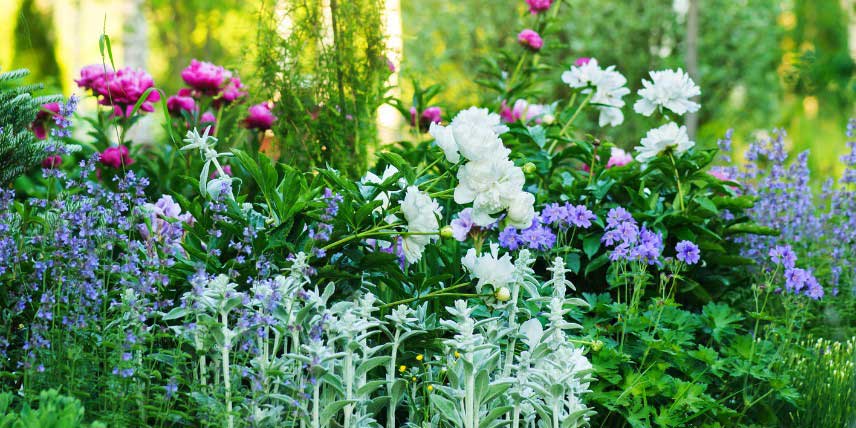
The plants of the romantic garden come in soft hues: mauve, blue, pink, white, silvery…
Read also
7 Daylilies for a romantic gardenOpulence and Fragrances
Exactly! The romantic garden is characterised by a certain opulence, but the aim is to create an effect of floral abundance without tipping into excess. To orchestrate this botanical symphony, you need to play with heights and volumes, while respecting colour and texture combinations. Flower beds should look natural, as if they had always been there, while being carefully arranged. Perennials, bushes, climbers and annuals are arranged in layers. The vegetation is generous, lush, composed of particularly floriferous plants. For example, perennials with dense foliage can serve as a backdrop to more delicate flowers, while climbers add verticality and movement. Finally, don’t forget borders of boxwood or lavender, which will define the edges of your beds and bring a touch of classic elegance. This also involves letting nature express a certain spontaneity. Self-sown seedlings, plants that self-seed or spread slightly beyond their original area reinforce the impression of freedom and naturalness.
Fragrances galore
In a romantic garden, nature becomes tender, generous and fragrant! Roses must be at the heart of the garden. Fragrance is one of the components of this type of garden. It teases the sense of smell and excites the senses. Fragrances must be omnipresent, blending with one another to create an intoxicating olfactory cocoon. The garden should reveal itself floriferous and continue to bloom, from summer to frost, in a fragrant cloud. Prefer plants with a soft, enveloping fragrance, by drawing from the most fragrant roses, of course, but also from the jasmines (in a mild climate) and the Trachelospermum jasminoides, honeysuckles or lilacs. Don’t forget fragrant perennials such as lavender, phlox or verbena. By pairing roses with other perennials and climbers, you will create lush and intoxicating scenes.
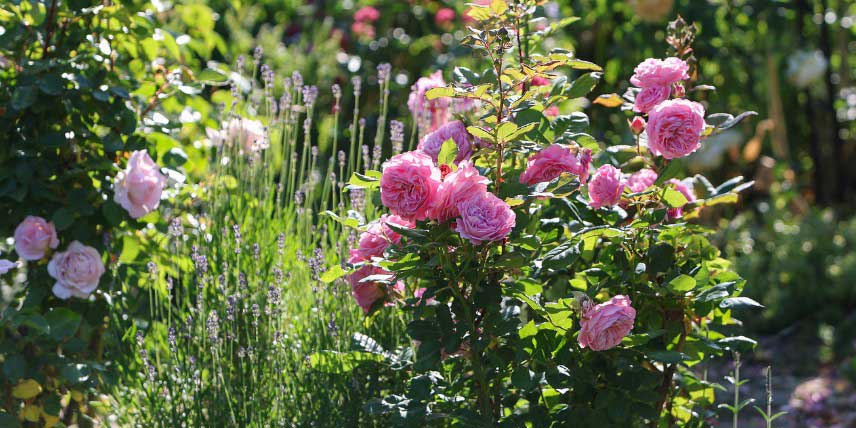
Integrate fragrant plants, such as roses of course, but also lavender, jasmines, honeysuckles…
Which plants for a romantic garden?
For a romantic garden, the plant palette should bring softness (white and pink!) and fragrance to create an atmosphere steeped in poetry. Here is a selection of romantically inspired plants, in addition to those already mentioned above:
- Roses, again and again! They are the emblem of the romantic garden, embodying charm, poetry and softness all by themselves. Their blooms, opulent and delicately scented, whether climbing roses that climb pergolas, or shrub roses, bring a touch of elegance and refinement. The rose is available in all its forms, symbolising the very essence of romance. Old varieties, such as ‘Pierre de Ronsard’ or ‘Mme Alfred Carrière’, but also the David Austin rose ‘Emily Brontë’, ‘Eglantyne®’, the climbing rose ‘Albertine’, the shrub rose ‘Jardin des Tuileries’, are must-haves with their pastel tones ranging from pale pink to cream-orange, their opulent flowers and their intense fragrance.
- Fragrant perennials: peonies, phlox, lavenders, poet’s carnations, Mignardise carnations, daylilies, valerians.
- Annuals: sweet pea seeds, delicate cosmos, annual honesty seeds.
- Light, graceful perennials: columbines, foxgloves, yarrow, asters, Astilbes, Bleeding-heart, Veronica longifolia (Veronica longifolia), thalictrums, gypsophilas, hollyhocks, delphiniums, lilies, lupins, forget-me-nots and campanulas.
- Bulbs: tulips, daffodils.
- Climbers: clematis, wisterias, star jasmine, honeysuckles.
- Shrubs and bushes: Hydrangeas (Hydrangea macrophylla with large spherical inflorescences, Hydrangea serrata and Hydrangea involucrata, all in a delicate touch), buddleias, tree mallows, Ceanothus, caryopteris, abelias, deutzias, camellias, chaste tree, lilacs, shrubby veronicas, tamaris, crape myrtles, magnolias.
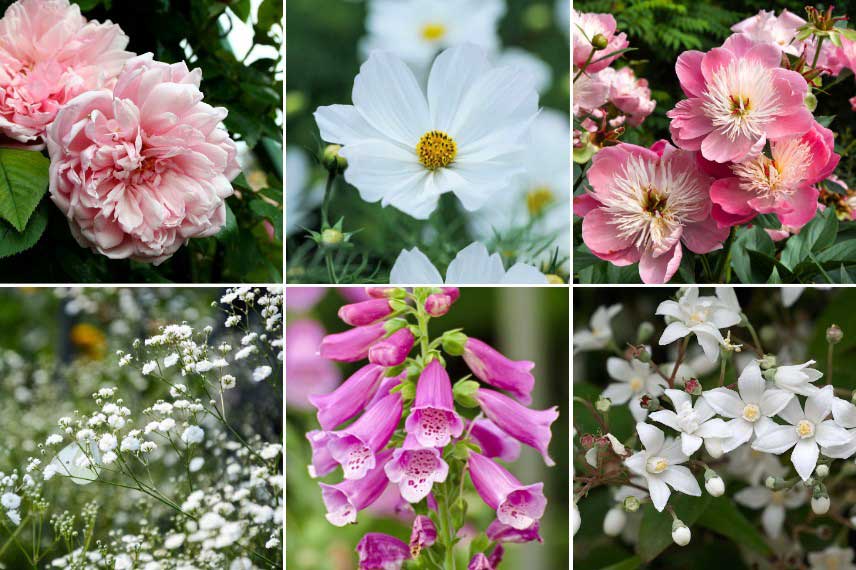
Some ideas of plants to include in a romantic garden: rose ‘Albertine’ (photo: Spedona), Cosmos ‘Purity’, Paeonia lactiflora ‘Bowl of Beauty’, Gypsophila paniculata, Digitalis purpurea and Deutzia setchuenensis ‘Corymbiflora’
Decoration tips
Decoration should be designed to showcase the plants while reinforcing the poetic and serene atmosphere of the romantic garden.
Pergolas, wrought-iron arches and arbours are perfect for supporting climbing roses and clematis, creating flowering, shaded walkways. A romantic garden lends itself to creating small hidden spaces, conducive to privacy, tucked away behind lush hedges or green screens. Old wooden benches, a small wrought-iron table, placed in secret corners, invite relaxation or reading, away from prying eyes and the bustle of daily life. Old planters, stone vases, filled with flowers or trailing plants, bring a classic and elegant touch. Natural materials such as weathered wood, patinated stone and wrought iron bring a touch of vintage charm. It is also interesting to incorporate a few decorative elements, such as stone statues, a fountain, wrought-iron objects, hanging birdcages, zinc watering cans or enamel jugs to complete this charming atmosphere.
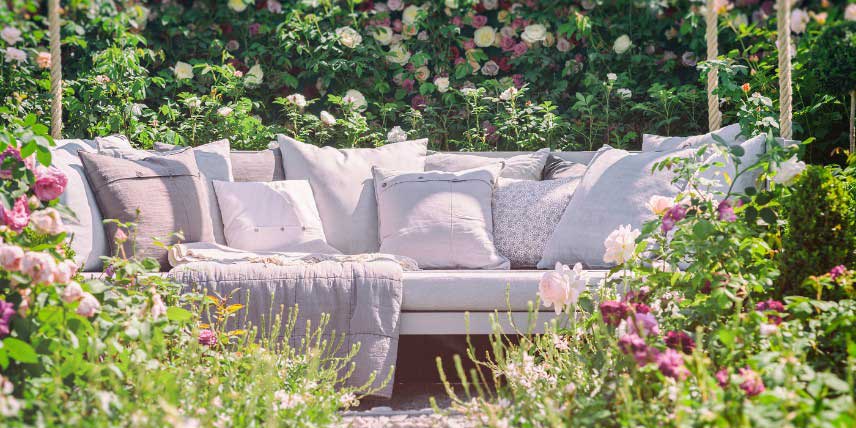
Introduce into your romantic garden cosy corners for relaxation, with garden furniture, armchairs, sofas, and decorative elements
- Subscribe!
- Contents
Comments