





























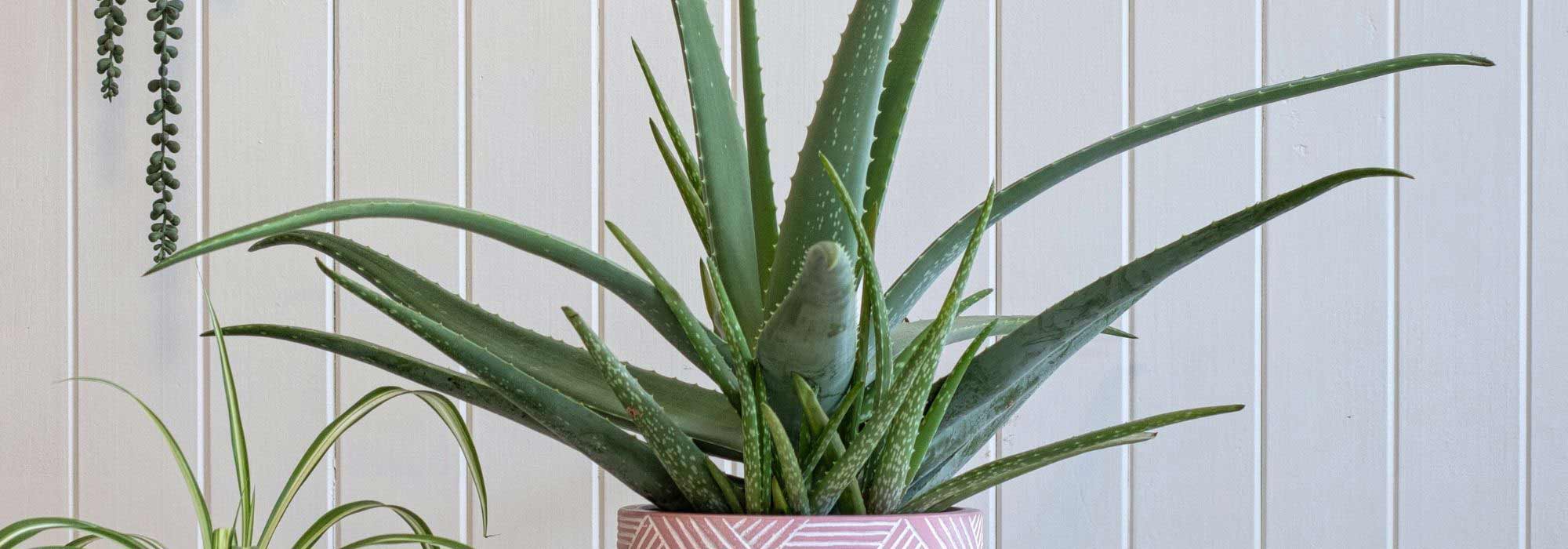
How to grow Aloe vera?
Our tips for successfully planting and maintaining, whether in the ground or in pots
Contents
Whether for harvesting its gel with a thousand virtues or simply to enjoy the exotic aesthetics of its fleshy leaves, you can easily grow Aloe vera at home.
Cultivation in open ground will be reserved for the mildest regions of our territory, but the plant adapts very well in pots. Undemanding, easy to care for, and not very susceptible to diseases, it is simple to grow, even for beginner gardeners.
Here are all our tips for planting and caring for Aloe vera.
In addition, discover our complete guide: “Aloes: planting, growing, and care.”

Which Aloe is it?
Aloes encompass various succulent plants, whose leaves contain juice. These are plants that thrive in heat and dryness, producing leaves clustered in a rosette, with a thick and fleshy texture.
Aloe vera or Barbados aloe (Aloe barbadensis) is one of the species in the genus. This perennial is regarded, like Aloe arborescens, as a medicinal and cosmetic plant due to the gel that can be extracted from it.
Its silhouette reaches about 60 to 80 cm in height and 50 cm in spread at ripeness, making it suitable for growing both in the ground and in containers.
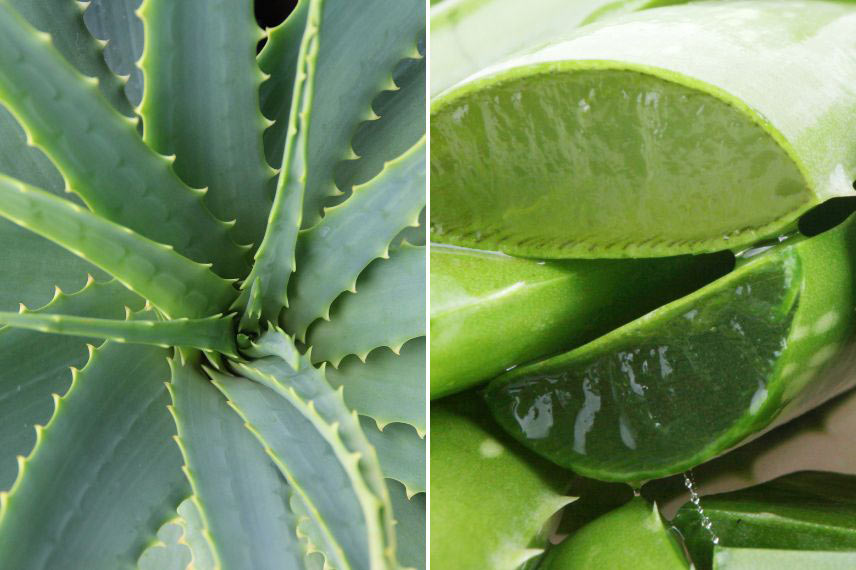
Aloe vera is a fleshy plant whose leaves contain a gel widely used for its cosmetic and medicinal properties
When to plant an Aloe vera?
Potted Aloe vera can theoretically be planted all year round. However, the most suitable period remains spring, between March and May.
In open ground, planting will also take place in spring, starting from April. The temperatures are milder and the soil is warmed.
Discover other Aloe
View all →
Available in 1 sizes
Available in 1 sizes
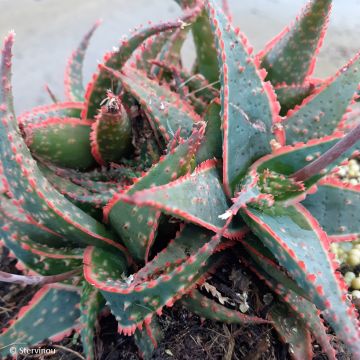
Available in 1 sizes
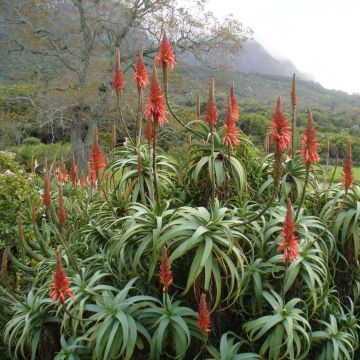
Available in 1 sizes
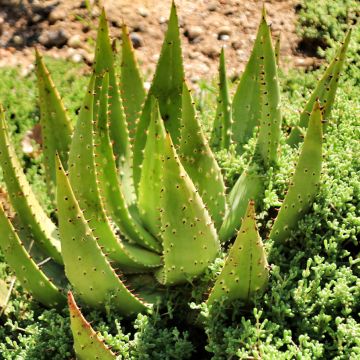
Available in 1 sizes
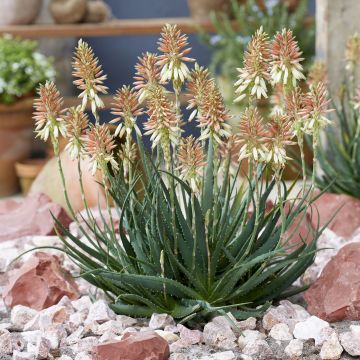
Available in 2 sizes
Available in 1 sizes
Available in 3 sizes
Available in 1 sizes
Available in 2 sizes
Planting Aloe vera in the ground
Aloe vera can be grown outdoors in Mediterranean regions where it does not freeze (USDA zones 10a and 10b). Our plant cannot tolerate frost and should not be exposed to temperatures below approximately 2°C.
Do you live in one of these areas with mild winters? Feel free to explore our tips in the article “Designing a garden where it never freezes.”
Location
For your Aloe vera grown outdoors, choose protected locations that are not subject to excess moisture, which can be fatal for the roots.
We recommend placing it on a mound, slope, or in a rock garden to promote natural drainage. Avoid high-traffic areas: the leaves can be brittle, and their thorns, even if soft, can slightly scratch or catch on clothing.
The soil should be light and well-draining (water should flow through without pooling), sandy or gravelly. Heavy, clay soils must be worked and lightened. To do this, add sand, gravel, or clay pebbles.
Choose a bright location, but sheltered from the scorching midday sun, which could damage the foliage.
Allow a space of at least 60 to 70 cm wide from other plants to enable the plant to develop properly.
Aloe is very drought-tolerant, making it perfect for a Mediterranean-inspired garden or a dry garden.
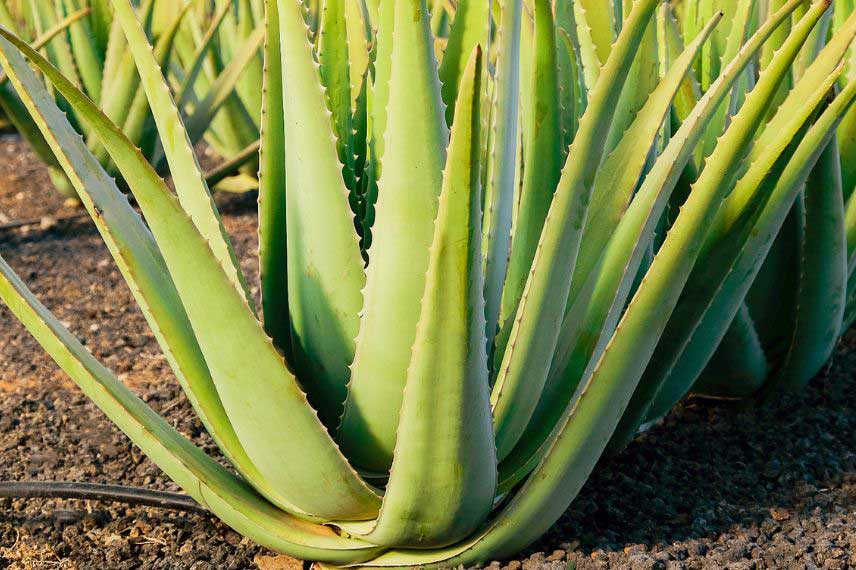 Aloe prefers well-draining soils and sunlight
Planting
- Dig a planting hole about 1.5 to 2 times the volume of the root ball, wider than deep, as the roots develop horizontally.
- Add a drainage layer: coarse sand, clay pebbles, perlite, …
- Place the root ball in the centre of the hole and add soil or potting mix until the roots are covered without burying the leaves.
- Firm down with your fingers.
- Water generously.
Read also
Choosing an Aloe for your gardenPlanting Aloe vera in a pot
Potted Aloe vera can be grown both indoors and outdoors, provided it is protected from winter frosts. It acclimatises well throughout the year in our homes, as well as on a balcony or terrace during fine weather.
Container
Choose a container with a drainage hole, which will allow excess rainwater or watering to drain away effectively.
You can opt for a pot, a trough, or a planter, ideally wider than tall. The roots are not very deep but do spread horizontally. The size depends on the root ball of your plant. For a young plant, a container of about 20 to 30 cm in diameter is generally sufficient at the start.
Prefer terracotta containers: being porous, they ensure better aeration of the substrate and retain less moisture than plastic ones.
Substrate
Aloe vera prefers light, well-drained soils that are low in organic matter.
You can choose a special cactus and succulent compost, or make your own mix. For this, use:
- half horticultural compost or half compost for planters and pots
- half coarse sand
- a handful of clay balls, perlite, or pumice to optimise drainage (optional)
Planting
- Install a drainage layer of about 3 to 5 cm at the bottom of the container (clay balls, gravel, broken terracotta, etc.)
- Fill with substrate to about halfway
- Place the root ball in the centre of the container, then fill with substrate, ensuring it covers the roots without burying the leaves
- Lightly compact with your fingers
- Water generously at the base of the plant
- Add a layer of clay balls or gravel on the surface (optional)
Avoid placing a saucer under your container to prevent water from stagnating. If you do use one, consider using a cache-pot and remember to empty it about twenty minutes after watering.
Exposure
Aloe vera thrives at temperatures ranging from approximately 18°C to 25°C.
If your potted Aloe vera stays indoors all year, make sure to find it a bright spot, but not scorching during the hottest hours of the day. Direct sunlight can indeed dry out the foliage, which may turn yellow or brown. Thus, if the room it is in faces south, move it a few metres away from the window.
Your Aloe vera can be placed outside during fine weather. From mid-spring to mid-autumn, position it in a bright spot, but again, not scorching. Remember to gradually acclimatise the plant by first placing the pot in partial shade for a few days before moving it to a brighter location.
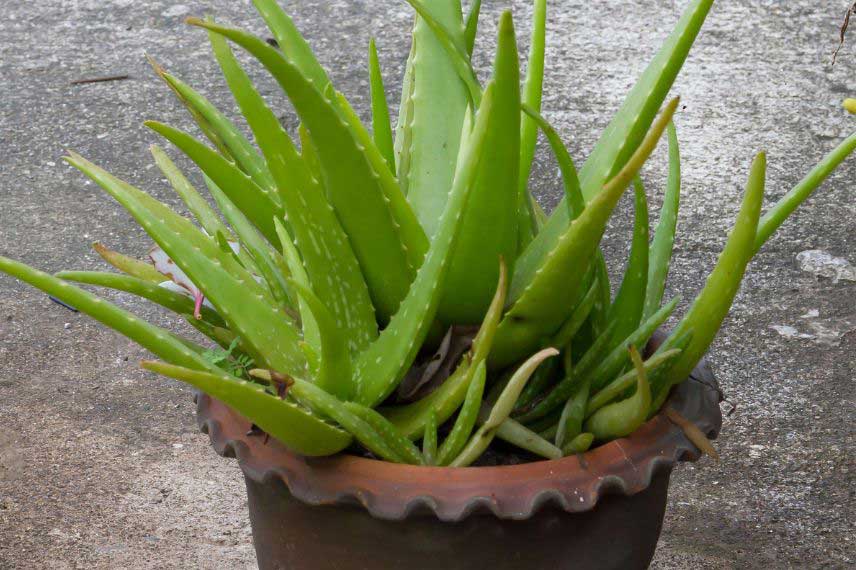 Potted Aloe vera can be grown both indoors and outdoors, protected from frost
Aloe vera care
Undemanding and low-maintenance, our perennial will require almost no care to thrive. Only cold and stagnant moisture can be fatal to it.
However, pot cultivation will require a bit more care than a specimen grown in the ground.
Watering
The advantage of succulents is that simply touching their leaves reveals the first signs of thirst. If the leaves are plump and firm, all is well; the plant still has reserves. Conversely, if they start to soften, it’s time to water.
Very drought-resistant and accustomed to arid environments, Aloe vera does not need much water.
Prefer less frequent but generous watering rather than several small waterings. This limits water stress and allows the medium to dry properly between waterings.
In the ground, pay attention to watering during the first year, while the plant establishes itself. After that, apart from prolonged drought, rainwater and dew will naturally suffice to hydrate the plant.
In pots, from spring to autumn, expect to water approximately once every 10-15 days. Increase to once a week in case of prolonged drought. In winter, reduce watering to about once a month.
Prefer rainwater to tap water and use water at room temperature.
Fertilisation
Accustomed to poor soils with few nutrients and minerals, Aloe vera are not greedy.
In the ground, no fertiliser or compost is therefore necessary.
In pots, fertilisation is not essential, but it can support the plant’s growth. Use a liquid fertiliser for cacti or succulents, diluted in the watering water, in spring.
Pruning
Pruning is not necessary to maintain Aloe vera.
In autumn, you can simply remove old leaves if they are dried or damaged. Use a clean, sharp knife or pruning shear for this. Cut at the base.
Pruning leaves on mature specimens (at least 2 or 3 years old) allows you to harvest the famous Aloe vera gel, which has many uses (care, cosmetics, food, etc.).
After flowering, in early spring, cut the flower spike at the base.
Note: flowering rarely occurs in pots, but it is still possible. At my place, two Aloe vera in containers spend the winter in a conservatory, and one of them rewarded me with a lovely bright yellow spike last year.
If your plant remains indoors, dust the leaves several times a year with a clean cloth or a slightly damp sponge.
Repotting and offsets
Aloe vera in containers should be repotted every 2 to 3 years in spring. Choose a container slightly larger than the previous one. Ultimately, a container about fifty centimetres in diameter will suffice for the plant’s final size.
In the ground or in pots, after the third year of cultivation on average, the plant will produce offsets. These “baby” Aloe vera grow around the base of the plant. Once they are large enough (at least 4 leaves and about ten centimetres tall), you can gently separate them from the mother plant. Use a clean, sharp tool for this. Cut while ensuring some roots are attached to the offset, then let them dry for a day before repotting individually.
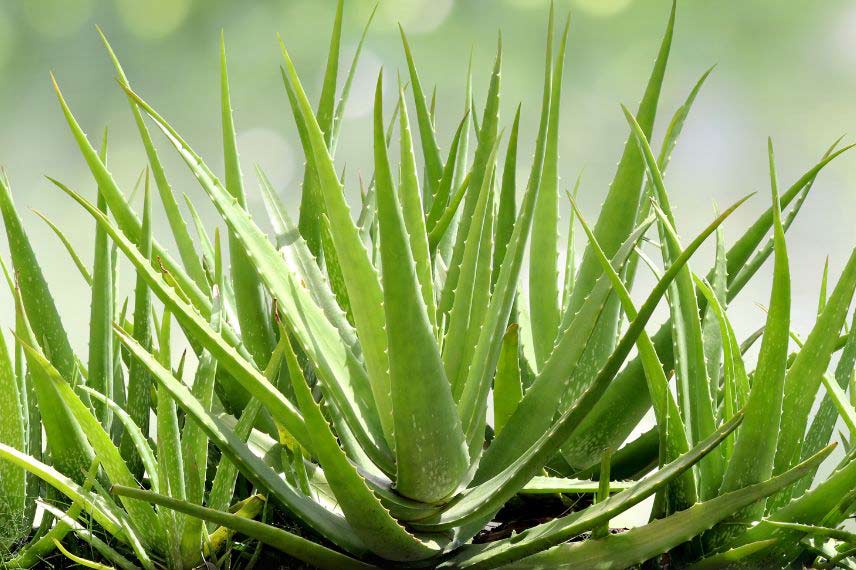
Aloe vera is capable of producing many offsets
Diseases
Aloe vera is not a plant susceptible to pests and diseases.
Indoors, dry atmospheres can, however, attract mealybugs, either cottony or scale. Wipe the leaves with a solution of water mixed with black soap (one tablespoon diluted in one litre of warm water).
To learn more about these insects, consult the dedicated article “Mealybug: identification and treatment.”
In case of an aphid attack, use the same solution as a spray on the affected areas.
Wintering
Sensitive to cold and not hardy, Aloe vera grown in pots must be protected from negative temperatures in winter.
If it has spent the warm season outdoors, bring your pot inside in autumn as soon as the nights drop below 10°C. Place it in a bright room, but not necessarily heated. In winter, Aloe vera can indeed tolerate cooler temperatures, around 10°C to 15°C, in a greenhouse or conservatory.
- Subscribe!
- Contents
Comments