





























How to grow autumn biennials?
Best planting and maintenance practices for beautiful early spring flowering
Contents
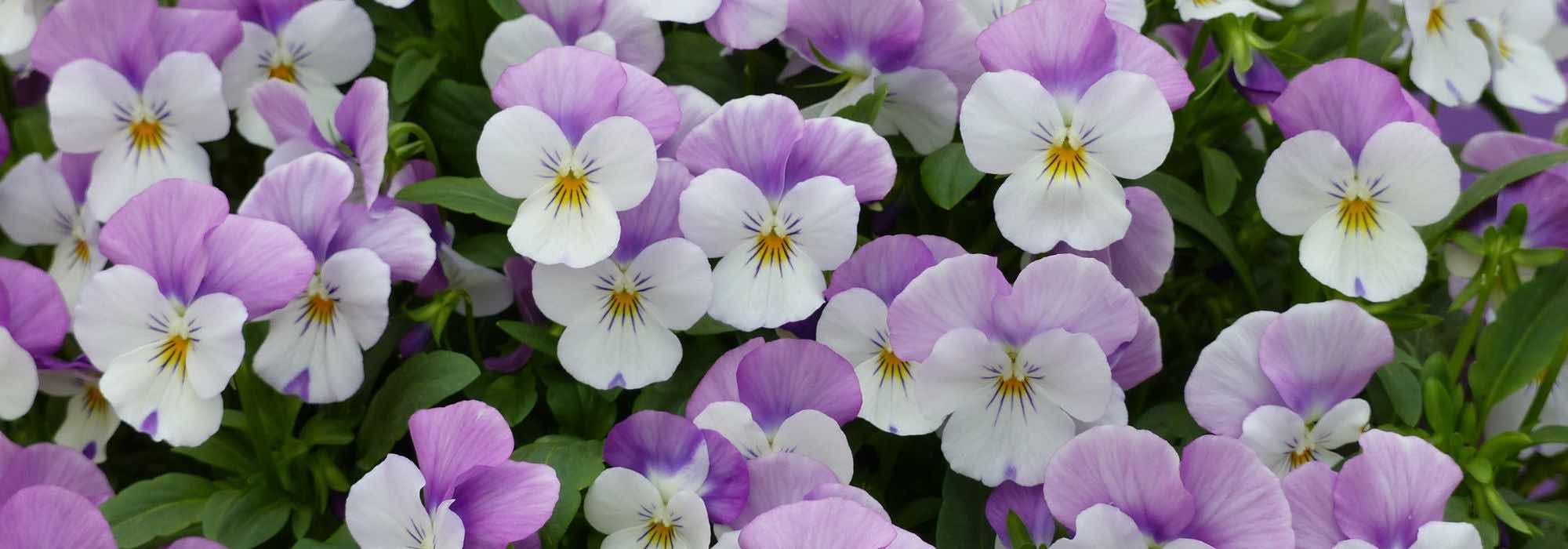
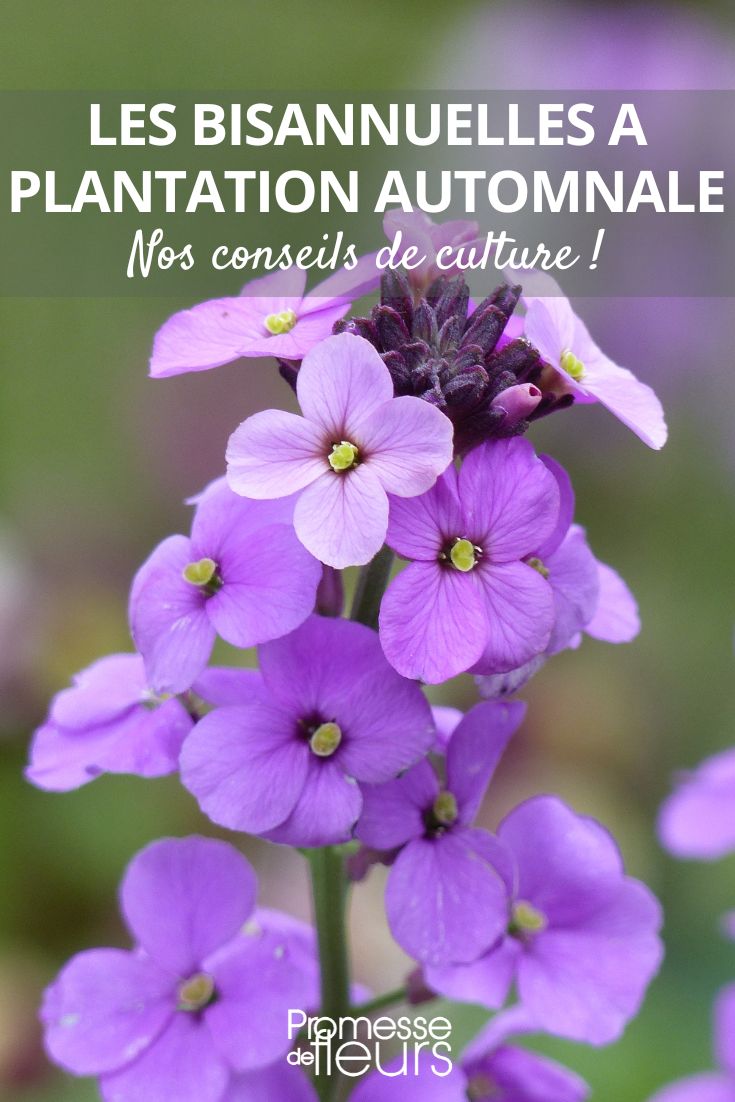
Wallflowers, pansies, primroses, daisies, honesty… You’ll surely know some autumn biennials! autumn biennials! These are plants that are generally easy to grow, enchanting us with their spring flowering, which is long-lasting and colourful.
But they have certain peculiarities, particularly regarding their life cycle, which will require a few adjustments to ensure successful cultivation.
Discover so here are our tips for growing autumn biennials in the garden.

A few reminders about the life cycle of autumn biennials
Biennials differ from their annual counterparts, whose life cycle lasts only a year, but also from perennials, which live for several years. Their life cycle will indeed extend over two years. They will therefore live longer than annuals, but shorter than perennials.
In the first year, they begin by developing their root system and their aerial parts (stems, leaves), often in rosettes. They will thus build their energy reserves. Then they will continue their growth and will flower in the second year. Finally, after this flowering, they will produce seeds to reproduce, before dying. This is why they can sometimes give the impression of being perennials.
Unlike annuals, autumn-biennials have the advantage of flowering as soon as the end of winter or at the very start of spring, when the garden is not yet at its most lively. They are often frost-hardy and robust, which explains their ease of cultivation.
Biennials can be sown, but also bought as plug plants (very young plants) or in pots.
Take your growing constraints into account
Not all autumn-biennials appreciate the same growing conditions. To achieve successful flowering, it is essential to understand their needs.
Ask yourself first about the area where you plan to plant them.
- How is it exposed? Is it bright, lightly shaded or shaded?
- What is the soil like? Is it heavy and dense (clayey), light (sandy), rich in organic matter, poor, rocky, etc.?
- What is the climate like in your region? Cold, humid or rather mild in winter? Very dry and hot in summer, or rather temperate?
- What are the site conditions for cultivation? Is it windy or sheltered?
Exposure
- In full sun, opt for gillyflowers.
- In sunny, but not scorching exposure (half-shaded in southern France), plant for example pansies, horned violas and daisies.
- In half-shaded exposure, opt for primroses, the Honesty or forget-me-nots.
- Shade will suit certain varieties of primroses, such as the double primrose double Primula Rubens Antique Rose F1 or the double primrose Belarina Baltic Blue.
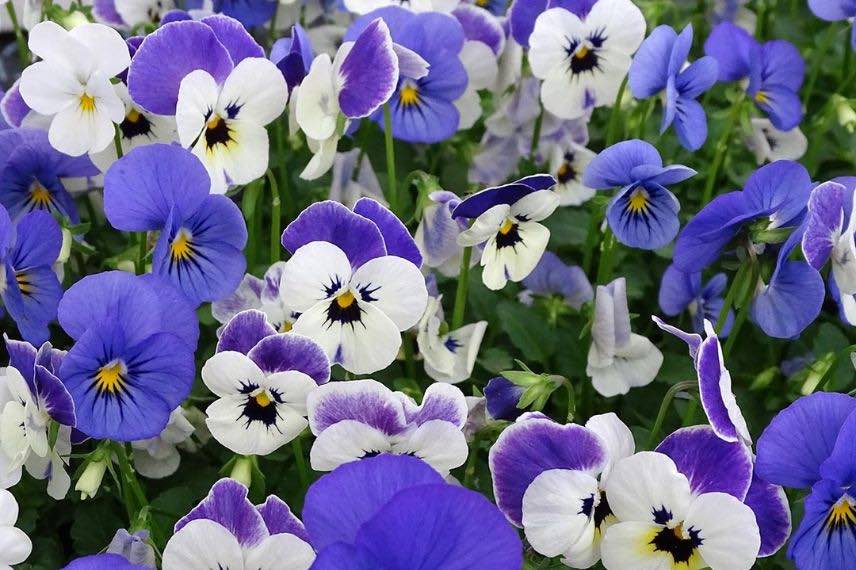
Viola cornuta prefers sun exposure that is not scorching. Here, ‘Sorbet Blue’
Hardiness
Some autumn-biennials are very hardy, such as daisies, forget-me-nots and honesty.
The hardiness of forget-me-nots and pansies remains fairly good for most of our regions (down to about -15°C).
However, some wallflowers (Erysimum ‘Winter Spirit’, Erysimum cheiri) are more frost-sensitive.
The substrate
Most autumn-biennials prefer soils rich in organic matter but well-drained, which allow excess water to drain away.
The substrate should often stay moist, i.e., damp but not waterlogged.
But some of them will prefer poor, very light soils, even rocky and sandy. This is the case for Ravenelle wallflowers, which tolerate drought well.
For container growing, choose a window-box potting compost or a flowering-plants potting mix.
Opting for the right use
Biennials are plants that can be grown just as well in a bed as in pots, in borders, in an informal hedge, in woodland or even in the kitchen garden. Don’t worry if you don’t have a garden: they also work beautifully in window boxes to brighten balconies, terraces or window sills. They are often planted in masses to create a striking display of colour and volume.
However, not all species lend themselves to the same use. Wallflowers, primroses or Money Plant, for the larger varieties (between 80 cm and 1.5 metres) and with upright silhouettes, will be better suited to flower beds. In borders, prefer pansies, forget-me-nots and daisies.
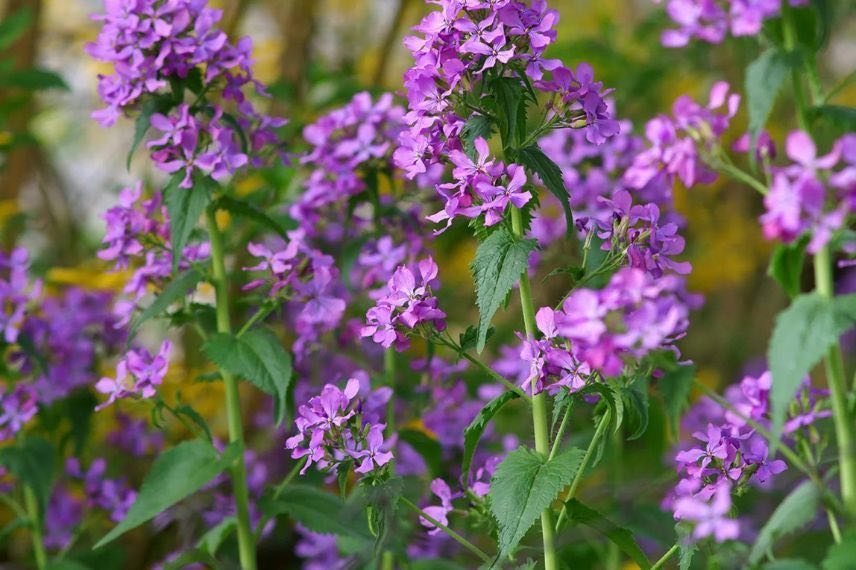
Pope’s Money, with fairly substantial growth, should be planted in open ground
Choosing the right time for sowing and planting
Here again, the planting period can vary depending on the biennials. Most will be planted or sown from late summer to autumn, like forget-me-nots. They thus benefit from the still-mild conditions of the season, but cooler and damp, and before the first frosts. Then they will benefit from the winter cold spell to bring on their flowering: this is known as vernalisation.
For autumn-biennials planted in pots or window boxes, plan to set them out from September for plug plants and up to November for pots.
Autumn sowing of biennials
Sowing is usually done directly in situ (the fragile roots of some biennials may not tolerate transplanting, as is the case with carnations).
- Work the soil to loosen it and ensure it is well-drained. Remove any large clumps of soil, vegetation and stones.
- If needed, add some river sand or gravel to lighten the substrate.
- Level the soil with a rake.
- Sow by broadcasting, taking a handful of seeds and scattering them over the soil.
- Cover with a thin layer of seed compost.
- Water gently to avoid moving the seeds too deep.
- Keep the soil moist in the following weeks until germination.
- Thin out to leave one young plant every 30 to 40 cm, selecting the strongest.
Autumn biennial planting
You can find autumn-blooming biennials in garden centres and online in mini clumps or in pots.
- Dip the clump in a bucket of water for a few minutes before planting to rehydrate it thoroughly and help it establish.
- As with sowing, prepare the soil by removing large clumps of soil, weeds and stones.
- Dig a planting hole roughly twice the volume of the clump.
- If the soil is heavy, add drainage materials to the bottom of the planting hole, such as sand or gravel.
- For biennial plants that prefer fertile soil, add a handful of well-rotted home-made compost, well-rotted manure or any other organic fertiliser (dried blood, ground horn…).
- Place the clump in the planting hole, handling the roots with care to avoid damage.
- Backfill with soil to cover the entire clump.
- If planting in a mass bed, allow about 30–40 cm between each plant.
- Gently firm the soil with your fingers to settle the substrate.
- Water well.
- Water regularly during the first weeks after planting, so that the plant can develop its root system.
For container planting, the process is similar. However, be sure to choose a pot with drainage holes, so that the water from irrigation or rain can drain away.
Autumn biennial care
Most autumn-biennials require fresh substrate, i.e. one that stays evenly moist and never dries out completely. In case of prolonged drought, remember to water them.
Do not hesitate to mulch around the base of your plants, to limit evaporation and retain moisture in the soil for longer. This will also help limit the growth of adventives (weeds), which can compete with our biennials.
If the biennials are grown in pots, watering should be more regular, since the substrate dries out more quickly than in the ground. Also remember winter watering if they are kept in a sheltered position away from rain. In this case, fertiliser for window boxes and pots or for to stimulate flowering (potassium-rich), as the substrate loses its nutrients more quickly. Whether solid (stick, granules to mix into the substrate) or liquid (to be diluted in the water used for watering), always follow the usage instructions on the product packaging.
During flowering, remove spent flowers as they appear, to encourage the production of new buds. Otherwise the plant will exhaust itself producing seeds. Use a clean, sharp pruning shear. If you want the plant to self-seed in place (or simply to enjoy the aesthetics of its flowering, as with the money plant), nevertheless keep some flowering stems.
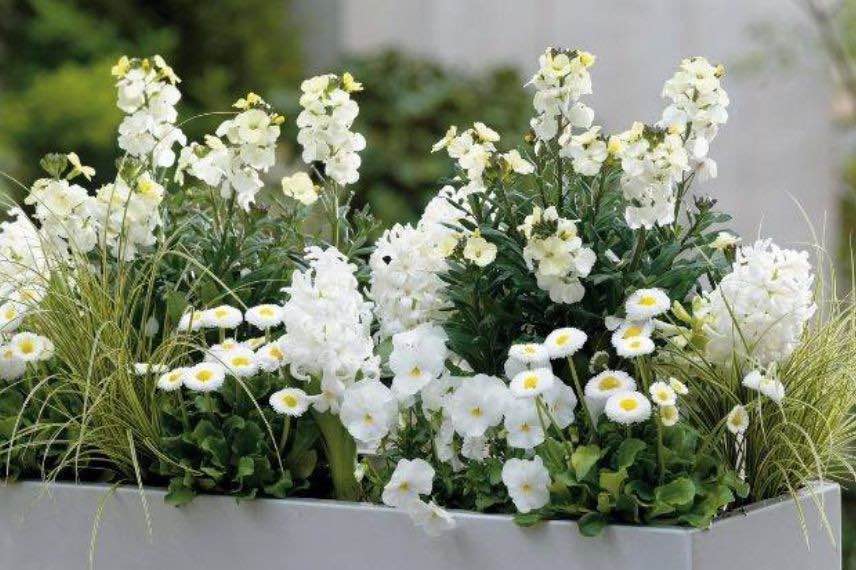
Biennials planted in pots require more watering
- Subscribe!
- Contents
Comments