





























How to grow an avocado in a pot?
Our planting and care tips
Contents
Growing an avocado in a pot is a rewarding experience that lets you enjoy the beauty of this exotic tree, even in a small space. Whether you live in a flat, simply have a small balcony, or a conservatory, greenhouse or garden, it is entirely possible to grow an avocado tree at home, but only some of these conditions will yield fruit. This practical guide will accompany you from the planting stage to the daily care of the tree, including specific recommendations for choosing the pot, the substrate and fertilisers. Follow our advice to maximise your success and eventually enjoy the fruit of your labour.

Some details on avocado fruiting
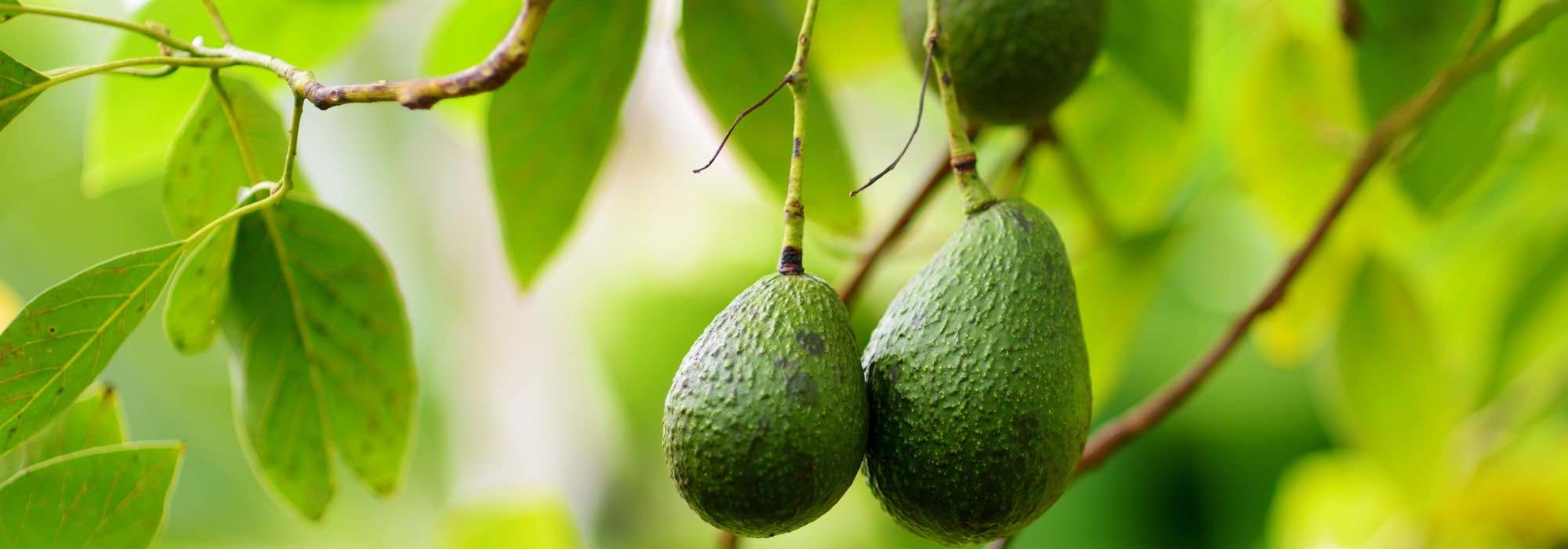
If you want to bear fruit, the best place to grow it is in a greenhouse, as it provides warm temperatures, ample light and high humidity—conditions highly conducive to the development of the avocado tree.
In the southernmost regions, where outdoor cultivation is possible, you may also hope to bear fruit, provided you water very regularly and have a well-sheltered and sunny site. If you can, plant your bush in an area where the atmosphere is not dry, sufficiently surrounded by greenery, near a water source—these conditions will promote ambient humidity. It is particularly during the fruit-forming phase that a high humidity is necessary.
The avocado tree can also be grown on a balcony or even as a houseplant, but in this case it is an ornamental plant, with a shrub-like habit and glossy, attractive foliage that you will enjoy, but you should not expect fruiting.
Note that what we are talking about here is planting a nursery avocado plant, because growing from an avocado stone is fun and rewarding, but does not allow the shrub to develop sustainably.
The avocado tree possesses a unique self-pollination ability thanks to its flowers that open in two stages: first as a female flower, then as a male flower at a second opening. However, it is recommended to grow several avocado trees near one another to encourage pollination.
Avocado trees begin bearing fruit after around 4 to 8 years of growth depending on the conditions.
Read also
5 exotic bushes with winter floweringWhat type and size of pot should I use for my avocado tree?
To grow avocado in a pot, choose a terracotta pot. Porous, this material allows better air circulation for the roots, and the potting mix dries more quickly, which is an advantage for growing avocados. The pot must have drainage holes to prevent water from stagnating at the bottom.
The roots of young avocado plants develop rapidly, so opt for a minimum pot size of 25 cm in diameter for your new acquisition.
Then, choose, as with all pot-grown plants, a size only slightly larger than the previous pot at each repotting.
What substrate does avocado prefer?
The avocado needs a very free-draining, light, moisture-retentive substrate, kept constantly moist. That is to say, it has high water requirements, but water must pass quickly through the substrate and not stagnate.
So choose a potting mix with good water retention, rich and light. It should ideally be slightly acidic, with a pH between 5 and 6, as indicated on the back of the bag of potting mix (as with the water-retention figure that should be high) or on the technical data sheet if you buy online.
For this hungry plant, choose a quality potting mix, not budget-priced, or you risk seeing your plant languish.
The special citrus-tree potting mixes are perfectly suited, or those for the Mediterranean plants. If you plan to harvest the avocado fruits, choose a potting mix approved for organic cultivation.
With a well-chosen potting mix, no need for extra components to mix in, simply make sure you have expanded clay pellets, of pouzzolane or gravel and organic mulch.
When and how to grow an avocado in a pot?
Only one period is suitable for potting up avocado in a pot: spring, between March and May depending on how mild the climate is, for an avocado tree planted outdoors. For a plant grown in a greenhouse or indoors, spring is also the only suitable time, between March and April.
Here’s how to proceed:
- Remove the root ball from its nursery pot and, if necessary, tease out the roots.
- Dip it in a basin of water while you prepare your pot.
- Add a drainage layer of a few centimetres at the bottom of the pot in the form of clay balls, gravel or pozzolana.
- Pour in your substrate to about one third of the pot.
- Position the root ball of your avocado tree, ensuring that the collar of the shrub is at the surface level of the pot.
- Check that the plant’s appearance and orientation please you and that it is upright.
- Top up with the substrate, gently and evenly tamping down.
- Fill up to a few centimetres below the rim of the pot and tamp down again.
- Water thoroughly.
- Once the water has been absorbed, add a little more substrate if necessary, if air gaps have appeared.
- Water again.
- Mulch to a depth of a few centimetres.
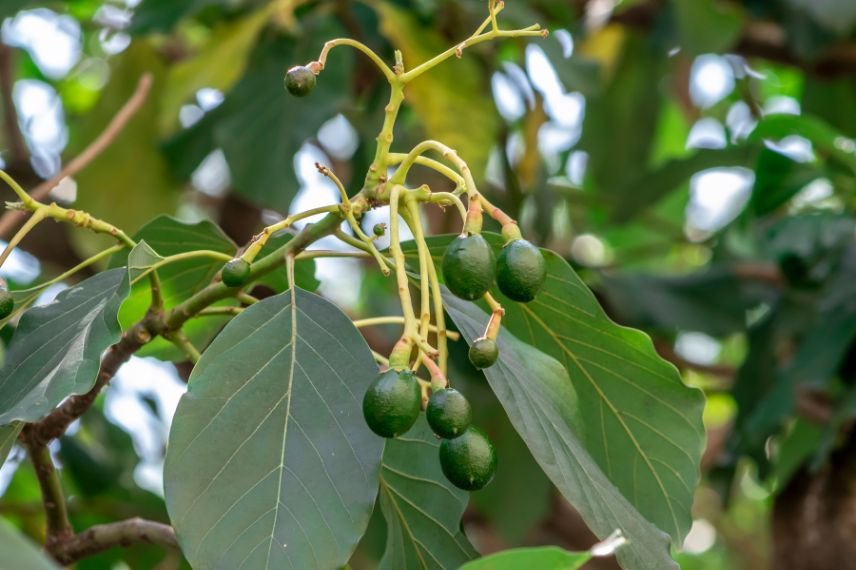
The avocado tree forms beautiful leaves, not as large in a pot
Where to plant your avocado tree?
For healthy growth, the avocado tree requires a very bright environment. When temperatures rise, from spring or late spring depending on the region, don’t hesitate to place it outdoors if you can: balcony, terrace, courtyard, garden. However, acclimatise it gradually to light.
Indoors, prioritise placement near a window with excellent exposure to light. It is, however, important to monitor browning on the leaves, a sign of excessive sun exposure, particularly due to the magnifying effect caused by windows.
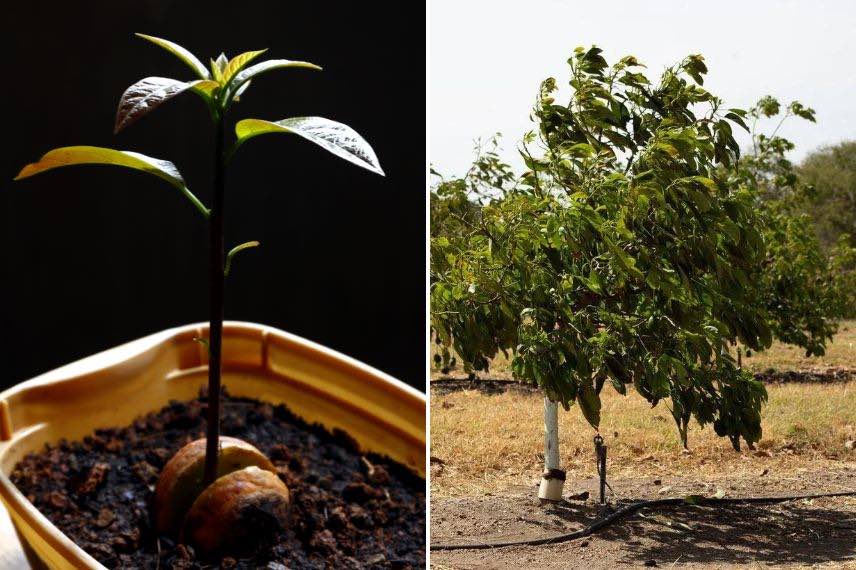
From a stone, you won’t obtain a lasting result in the long term. On the right, a young plant in the ground can be seen. In a pot, with a nursery plant, the shrub will reach between 2 and 3 m in height at maturity
Watering and fertilising a pot-grown avocado tree
We are addressing crucial topics not to be neglected: the avocado requires regular, careful watering and frequent, appropriate fertilisation.
Watering
If you have grown citrus before, you are in familiar territory. Maintain regular watering, avoiding excess. Keep the growing medium consistently slightly moist, but not waterlogged. This is where the quality of the growing medium you have chosen with care becomes your ally if it drains well.
Water the avocado tree as soon as the surface of the potting soil dries.
When your bush is older, you can space out the watering more.
Cool cooking water from organic vegetables provides a significant source of minerals beneficial to the avocado; set it aside to water the shrub.
If you grow it indoors, regularly mist the foliage with a mister to raise the ambient humidity.
Fertiliser
To support its growth and maintain its health into adulthood, it is advised to fertilise the avocado tree regularly, from March to October, with a fertiliser suitable for foliage plants.
Choose a fertiliser higher in nitrogen (N), to promote the vegetative development of the bush. Phosphorus and potassium requirements are limited. However, provide magnesium, zinc and iron which are very beneficial.
Prefer natural options to enrich the soil, such as the crushed horn and the dried blood, which provide around 10 to 15% organic nitrogen, as well as well-decomposed compost applied as a top-dressing to the surface of the pot.
Incorporating seaweed into the growing medium also provides a rich combination of nitrogen, potassium, calcium, iodine and magnesium. The use of coffee grounds on the surface enriches it with potassium, magnesium and nitrogen.
Pruning and overwintering of avocado trees
Pruning
Potted avocado trees require pruning at the start of spring. Regularly prune the bush to encourage its branching and prevent it from growing into a long, gangling stem. On older avocado trees, a simple removal of dead wood suffices.
Overwintering
The avocado tree is not used to cold weather and should be protected. As it can withstand brief frosts of around -5°C, in the milder climates of our country, in Mediterranean and Atlantic regions, you can leave it outdoors, provided you completely cover it with a winter protection fleece and give it a sheltered, sunny position.
Otherwise, bring it indoors to a greenhouse, conservatory or frost-free, bright room.
- Subscribe!
- Contents
Comments