





























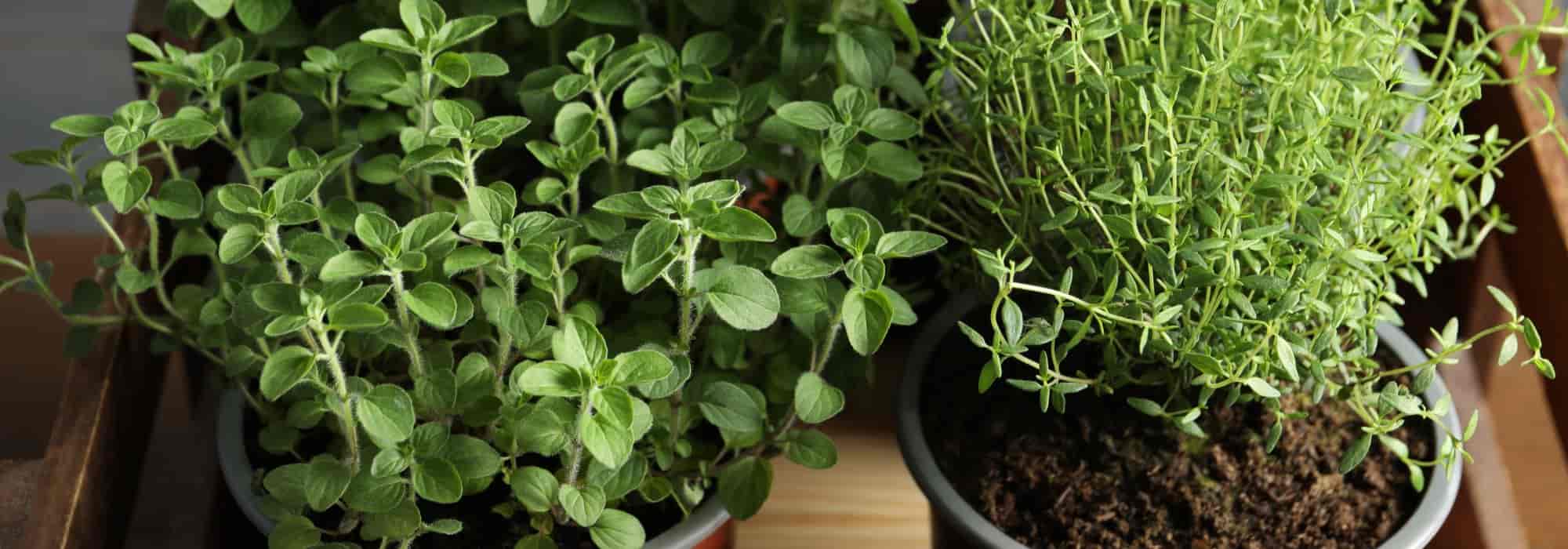
How to grow herbs indoors during winter?
All our tips for growing herbs in your kitchen during the cold season
Contents
As a savvy cook, you have taken the precaution of stocking up on herbs to continue flavouring and enhancing your dishes throughout the winter. Indeed, most herbs freeze or dry quite easily. However, freezing and drying often cause them to lose their aroma, flavour, or texture. Nothing beats fresh herbs for adding zest to a sauce, salad, pasta dish, meat, or fish, or even for preparing a pesto, infusion, or cocktail…
In winter, most aromatic plants can be grown indoors. With varying degrees of difficulty and success. However, it is entirely possible, provided you give them a minimum of care.
Discover which aromatic plants can be grown in our homes, and especially what growing conditions you need to provide them.

Why grow herbs in winter?
Obviously, growing your herbs indoors during winter in your kitchen or conservatory ensures that you can enhance your salads or cooked dishes with fresh herbs. Indeed, herbs adapt quite well to pot cultivation indoors. You can simply harvest them as needed, even in winter. This way, you’ll have a constant and continuous supply of fresh herbs at your fingertips. These fresh herbs are bursting with flavour, as well as nutritional benefits since they are rich in vitamins, minerals, and antioxidants. Those lucky enough to have a garden, terrace, or balcony can continue to grow these herbs outside as spring returns. A simple windowsill can also suffice.
In winter, these fresh herbs also have the advantage of filling the atmosphere with their fragrance. Just brushing them with your hand or lightly crumpling the foliage releases their aromatic scents. They bring the fragrances of the garden into the home.
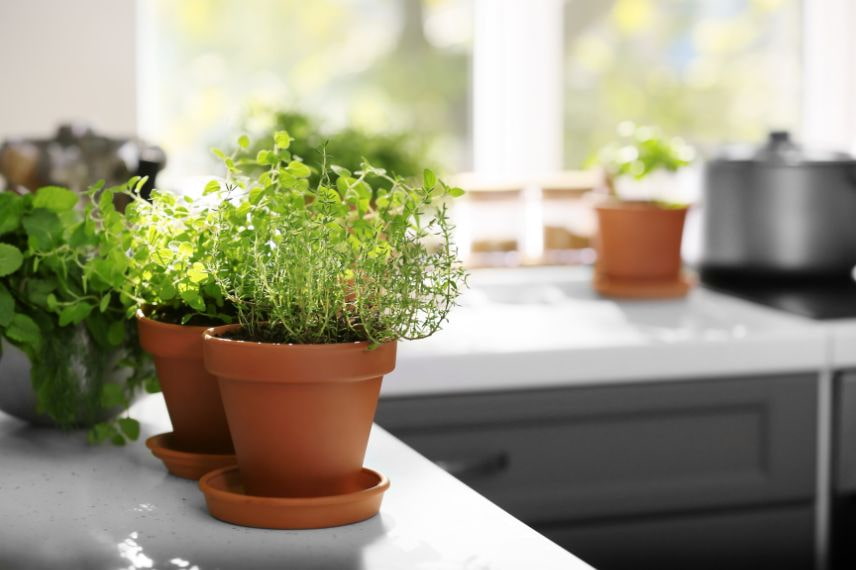
In winter, it’s easy to grow your herbs in pots to have them fresh at hand
Finally, the last advantage of growing your herbs indoors in winter is purely economical. It is indeed much less expensive than buying herbs from the store, whether dried or frozen.
Practically all herbs survive indoors in winter. Perennial herbs simply need to be taken and replanted in pots indoors. In contrast, some like mint, thyme, and rosemary are perfectly hardy and can remain outside.
As for annual herbs (parsley, basil, coriander…), you should take the precaution of sowing a few seeds at the end of summer, around September, to bring them indoors by October.
Read also
7 essential aromatic plantsWhich herbs to grow indoors in winter?
All aromatic plants adapt well to pot cultivation indoors, even in winter! While some will be easier to grow and maintain, particularly the perennials with evergreen foliage, it is essential to provide them with the best growing conditions and attentive care.
During the winter period, you can cultivate indoors:
- Mint: this is an ideal aromatic to plant in a pot due to its tendency to spread. Indoors and in a pot, its foliage persists. All varieties of mint can be grown this way.
- Thyme: it should be planted in a wide pot of 20 to 25 cm. Choose a variety like the compact winter thyme (Thymus vulgaris ‘Compactus’) with lovely green foliage or golden lemon thyme.
- Rosemary: it grows very well in a wide pot of 30 cm, but as it is very hardy (down to -15 °C), it can also be grown outdoors in winter.
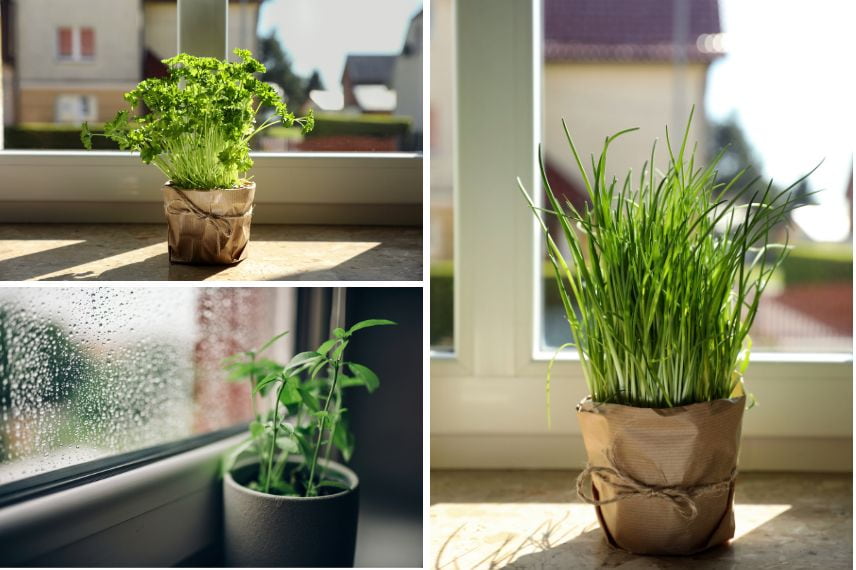
- Chives: it should be planted in a pot of at least 15 cm in diameter, alone. Very hardy (down to -20 °C), it can also remain outside. It is even recommended to expose it to a bit of cold and frost to encourage robust growth.
- Summer savory: it is grown in a deep pot at a fairly warm temperature. It is preferable to choose a perennial savory (Satureja montana).
- Tarragon: this is a very frost-sensitive perennial that must be brought indoors in winter.
- Parsley: flat or curly, parsley is sown in September to be harvested throughout winter. It requires a pot that is deeper than it is wide.
- Chervil: like parsley, chervil is sown in early autumn to spend the winter warm.
- Coriander: frost-sensitive, coriander is annual. However, it can be sown in September in a warm spot to be harvested in winter.
- Basil: basil plants can be brought indoors in winter to be preserved. However, it requires regular watering without being excessive and plenty of light.
- Oregano: hardy down to -15 °C, oregano grows very well in pots indoors.
How and where to grow them?
To grow and maintain your herbs in pots throughout the winter, it is essential to transplant them in early autumn, during the first days of October. You can either take a clump from your garden or purchase a young plant in a pot. Annual herbs should be sown in September to allow for harvesting in winter. Indeed, herbs like parsley or chervil take quite a while to germinate.
Need for Plenty of Light
Some herbs can be planted in the same pot or container, provided they require the same growing conditions. For instance, thyme thrives alongside rosemary, oregano, and summer savory. Basil can be paired with chives and tarragon, but due to its relative fragility, it is better off alone in a pot. You can also sow parsley and coriander together. Others, like mint or chives, should be planted alone.
Regardless, all these herbs have a vital need for light, especially in winter. Ideally, they should be placed near a window but out of direct sunlight (if there is any during the heart of winter!). Logically, the pots or containers of herbs should be installed in the kitchen, within easy reach, but a conservatory can also be suitable (as long as it’s not too cold). For many of these herbs, a temperature of 18 to 20 °C is perfect. However, they should never be placed near a heat source like a radiator or an oven! Also, ensure there are no draughts, as herbs cannot withstand them.
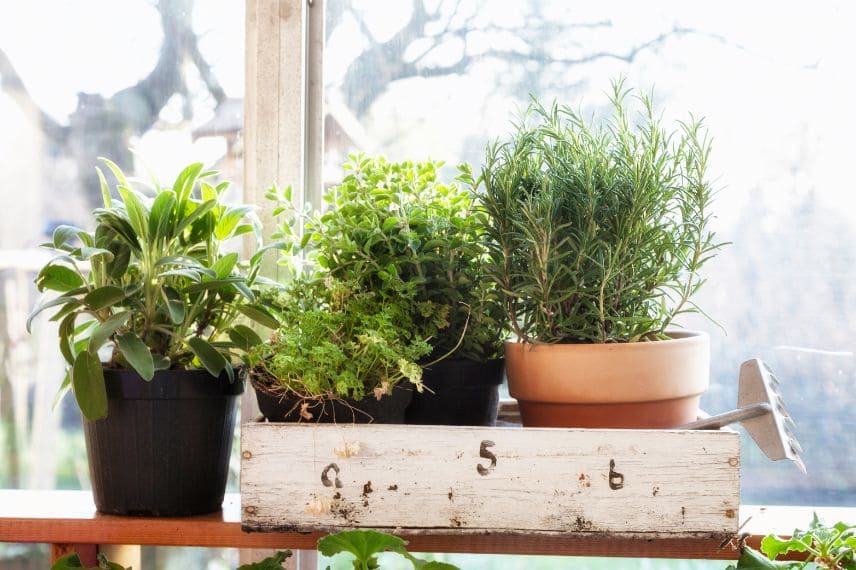
In pots, herbs need maximum light in winter
The Importance of the Container and Substrate
Pot or container, it doesn’t matter… However, the container must be wide and deep enough to accommodate your herbs. A pot with a diameter of 25 to 30 cm and a depth of about 20 cm is sufficient. As for the choice of material for the pot, it depends on your preferences and decor. Naturally, terracotta pots are always preferable, but PVC containers are perfectly acceptable as long as they are not exposed to frost. The key is that they have drainage holes.
The substrate should consist of a mixture, in equal parts, of garden soil and a quality universal potting mix or a special potting mix for vegetables and herbs. You can also add sand to lighten the substrate if your garden soil is a bit heavy. And don’t forget the layer of clay balls or gravel at the bottom of the pot to promote drainage. Indeed, most of these herbs cannot tolerate excess moisture, which would rot their roots.
Read also
7 aromatic plants for shadeWhat care do aromatic plants need in winter?
In winter, unlike most other indoor plants, watering must be regular for herbs. Except perhaps for thyme, rosemary, and savory, which tolerate a drier substrate more easily. Therefore, chives, parsley, chervil, basil, and so on should be watered every 3 to 4 days in small amounts. The substrate should be moist without being waterlogged. It is also essential not to let water stagnate in the saucer or cache-pot. However, the potting soil should never be dry.
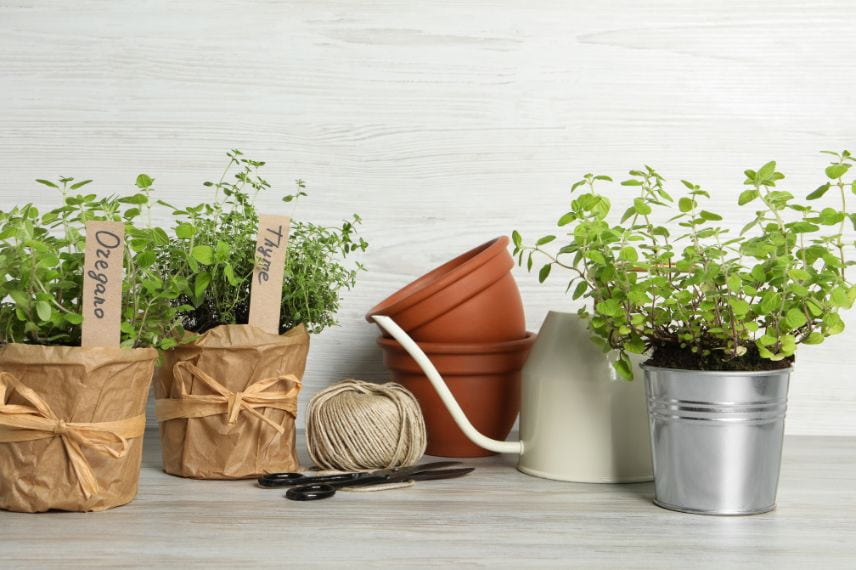
Herbs, grown in pots in winter, need regular watering
Fertilisation is unnecessary for these herbs.
As soon as the nice days return in spring in April, feel free to take the pots outside (of course, if temperatures are sufficiently high). And remember to bring them in at night, as no one is safe from spring frost. Outside, start placing your pots in partial shade to avoid leaf scorch.
- Subscribe!
- Contents
Comments