





























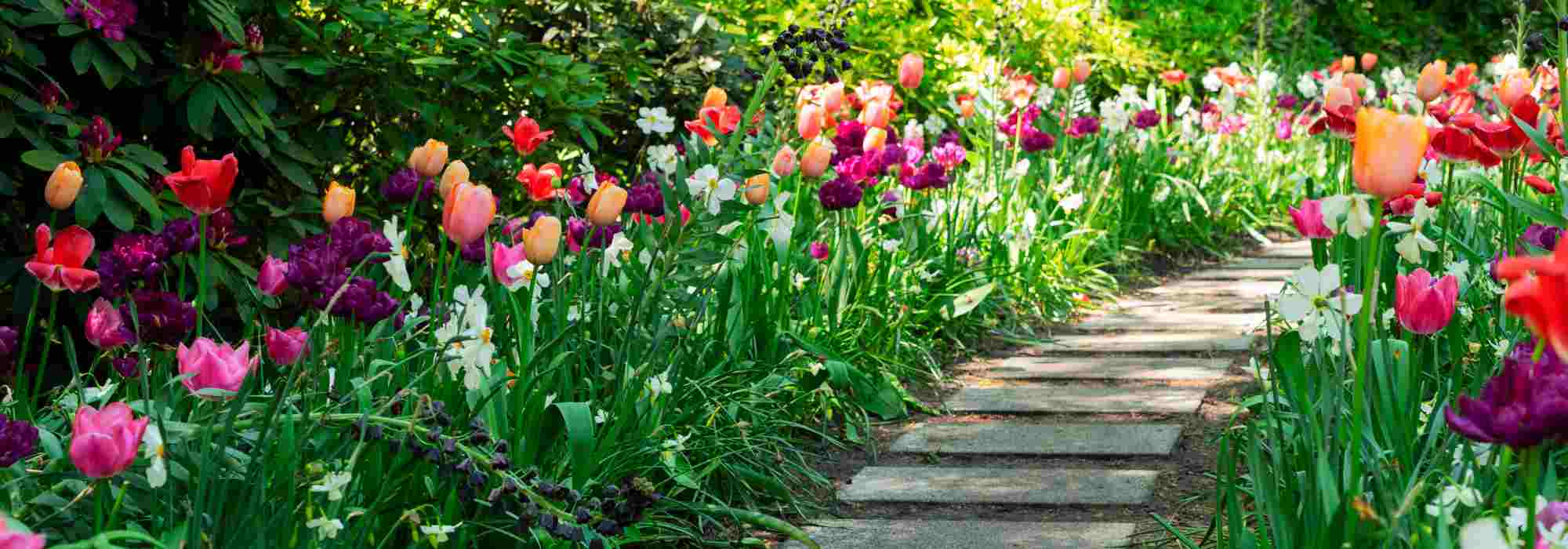
How to get an attractive, flowering garden at the start of spring?
Our tips to brighten up your garden as soon as the sunny days arrive
Contents
Spring is a season eagerly awaited by all gardeners, a time that offers the spectacle of nature’s renewal after the winter lull. We all want a beautiful and colourful garden from the very start of spring! But as with every season, not all plants bloom at the same time, and we’ll need to plant wisely to achieve flowers that will bloom early and, little by little, stagger their flowering.
Which plants to grow and what tasks to carry out to give the garden a proper spring welcome? We’ll tell you everything!
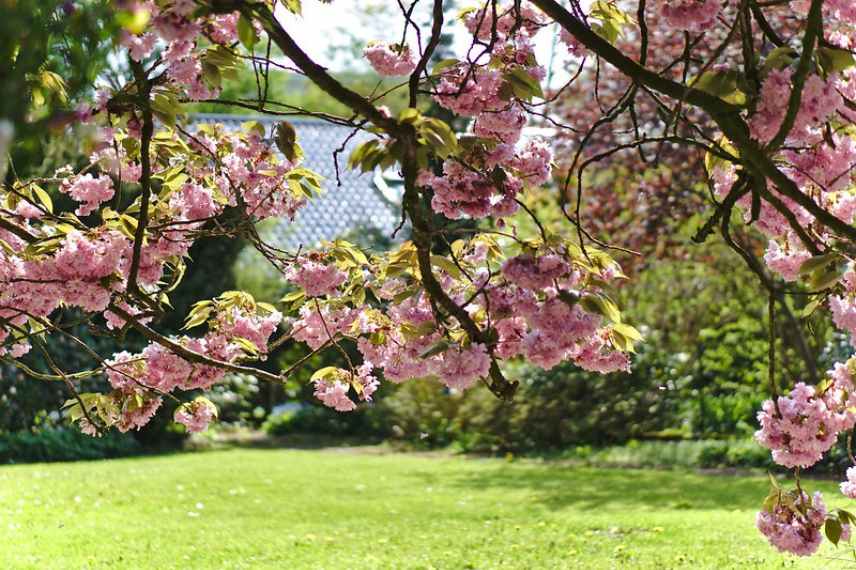
The first flowering enchants the garden (© Jochen Spieker)

Plan ahead!
To ensure the garden looks its best from the first signs of milder weather, it’s best to plan ahead! Because many of the flowers colouring the garden by March are produced by bulbous plants called spring bulbs, which must be planted a few months earlier… that is, in autumn. They do indeed need a cold spell to bloom prolifically and are planted during their dormant period. So, to enchant borders or pots from the outset of fine weather, be sure to buy and plant your favourite bulbs in advance, between September and November. The more you wait (you can theoretically still do this in December), the later the flowering will be…
→ My tip: Do your shopping early from the end of summer to have the widest choice possible, especially for the more obscure or collection bulbs.
Also read: Planting spring‑flowering bulbs.
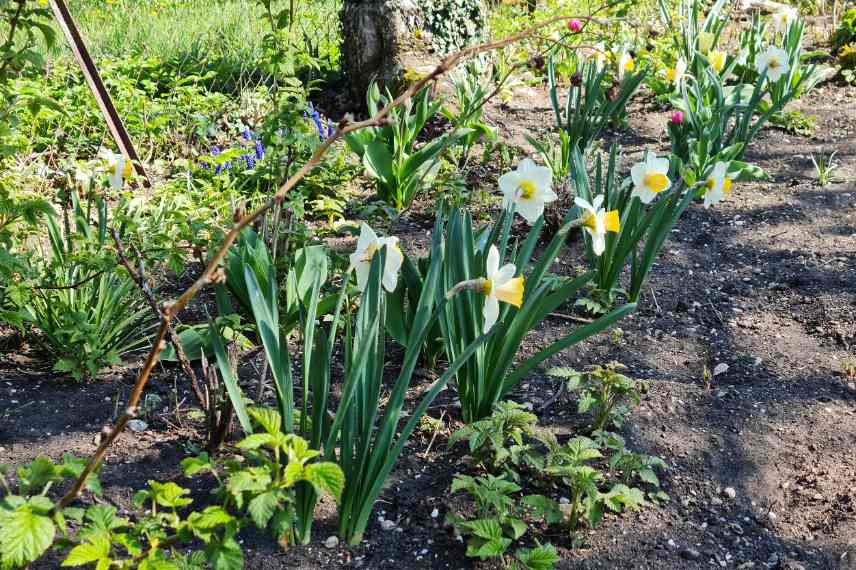
Daffodils, like other bulb flowering plants, should be planted in autumn
Read also
What are phenological indicators?Choose early-flowering plants, all in fresh condition
Nature is gradually waking from its lethargy thanks to early-flowering plants. If the garden has already taken on a touch of colour with hellebores, snowdrops, and winter-flowering shrubs (often for a long time), the choice of plants that look good at the very start of spring will mainly be perennials or bulbous plants with early flowering, but also small shrubs. The colour palette ranges from white to violet, passing through yellow, orange, red… and even green!
Here’s a selection of essentials for a garden that looks beautiful in March–April:
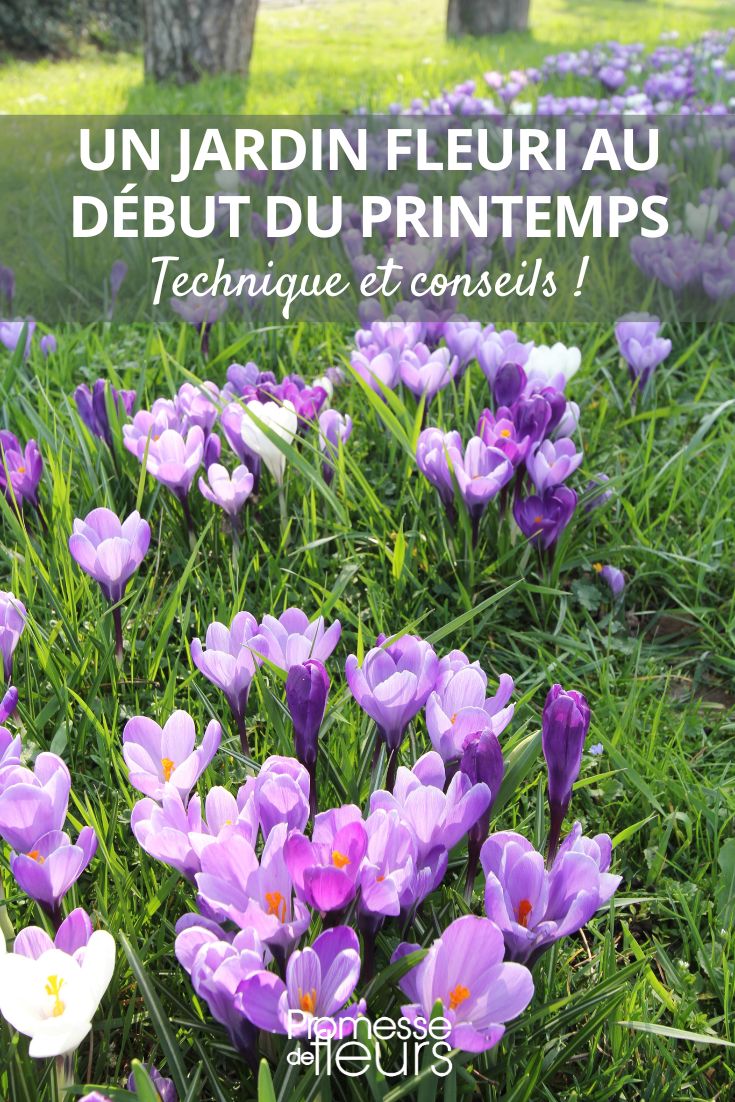
- Bulbs : they are simply indispensable! With an infernal quartet: early tulips and botanical tulips, narcissi, crocus and hyacinths.
The chionodoxa, scillas, Eranthis hyemalis, Erythroniums, Anemone blanda and nemorosa, muscari, alliums and fritillaries will also poke their heads out at the very start of spring, especially some early Allium varieties such as the Allium triquetrum. - Early-perennial plants : primroses lead the way with violets, but also Pulmonarias with spotted foliage, Bergenia, Aubrietias, Ficaria, blue Omphalodes, Iberis sempervirens and the silver basket which often begins flowering as early as April
- Climbing plants : primarily on the list are wisterias, Clematis armandii and Clematis macropetala, Holboellia latifolia, but also Hardenbergia violacea and Jasminum mesnyi in mild climates.
- Trees and shrubs : those that bloom on bare wood are ideal for bringing a splash of spring air: we particularly like Cercis, Japanese quinces and magnolias, but also ornamental cherries, forsythia, Kerria japonica or Japanese Kerria, lilac, and the flowering currant. The Skimmia, already handsome in buds in mid-winter, now reveal their little flowers.
→ My tip: choose a garden style (English, contemporary, rural, naturalistic…) and weave in their iconic plants, without forgetting colour coherence (if needed, consult our Colour Inspiration tips)
Also read: 7 early-spring-flowering bulbs; 8 primroses with exceptional flowering; 10 perennial plants with early-spring flowering ; 9 climbing plants with early-spring flowering and 10 shrubs with early-spring flowering.
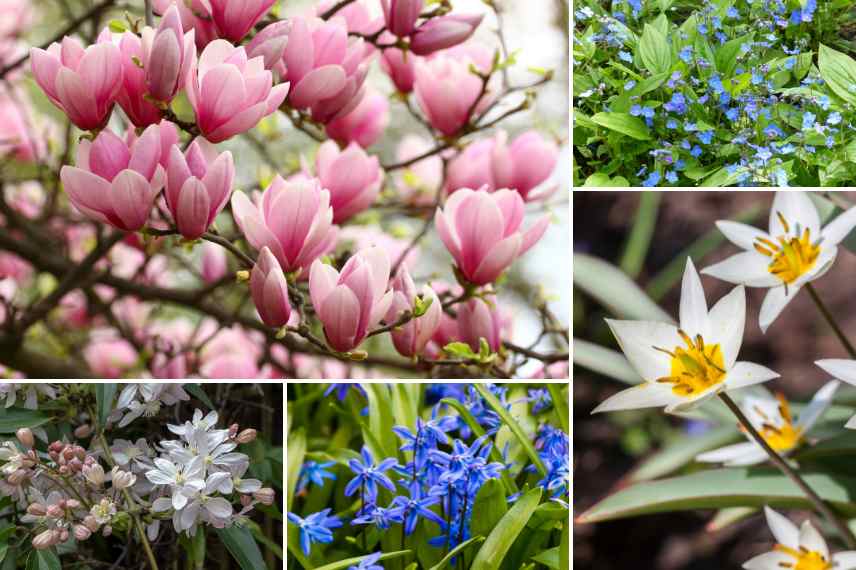
An explosion of fresh colours wakes the garden with magnolia, Omphalodes, Clematis armandii, scillas and botanical tulips (here Tulipa turkestanica)
Caring for the garden after winter
Even if we’ve done a bit of tidying up the beds in autumn, it’s good form to pamper your garden with a thorough spring-clean! For that, nothing beats a quick check-list to make sure nothing is missed as you tour the garden.
- This will mainly concern the pruning of existing shrubs, especially those that are summer-flowering, but also roses and all trees or shrubs with evergreen foliage, including conifers. We always prune during a frost-free spell, and we start pruning Cornus with decorative wood to ensure their renewal and colour next winter. Be careful not to prune your spring-flowering shrubs which will soon be flowering.
- We’ll also get busy cleaning and preparing the soil: March is the right month to apply well-rotted compost or manure to certain plants that need it after winter, such as peonies.
- Finally, perennial borders will also be pampered: we remove weeds that are starting to grow, we cut back the remaining dry stems on plants we may have forgotten in autumn, or left in place to protect the more fragile ones, we prune the grasses. The edges of the beds will also deserve our attention to make them neater. The perennials have usually started to form tufts of leaves at their base and some have sometimes produced seedlings. We can leave them in place or move these seedlings (it’s not too late) to a place we deem more interesting. Finally, it’s also the time to divide perennials and thereby increase the garden’s vegetative potential.
- Let’s not forget the terrace, which, under the effect of rain and lack of light, often becomes mossy or dull. Time to roll up your sleeves to restore its shine as the brighter days approach… Also check the condition of benches and tables you’ll want to bring out quickly onto paths or the lawn.
→ My tip: prepare a small plan of tasks to do so you don’t get overwhelmed.
Learn more with : Care of perennial plants: our tips through the seasons, What to do in the garden in February? ; What to do in the garden in March? ; Care of fruit trees ; Grasses, those that are pruned, those that are clipped and Pruning borders: a chore more than effective.
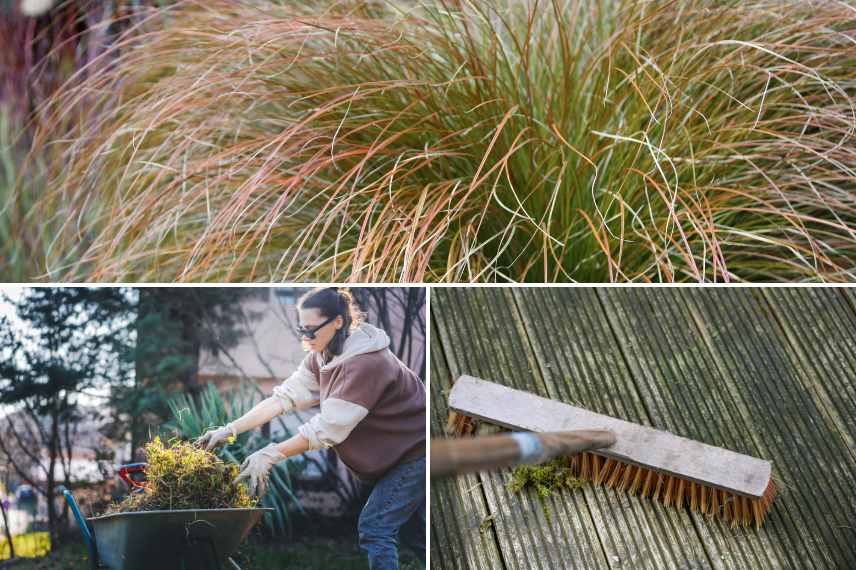
Cleaning of plants, as well as the lawn, beds and terrace surfaces
Read also
How to prune early flowering bushesPlan and create
In these early days of spring, the garden will soon be dressed in its finest finery, and among them, the glow of stunning climbing plants such as Clematis montana, Clematis alpina, or evergreen Clematis armandii. These are also days when we’ll have a go at sowing annual climbing plants such as Ipomoea.
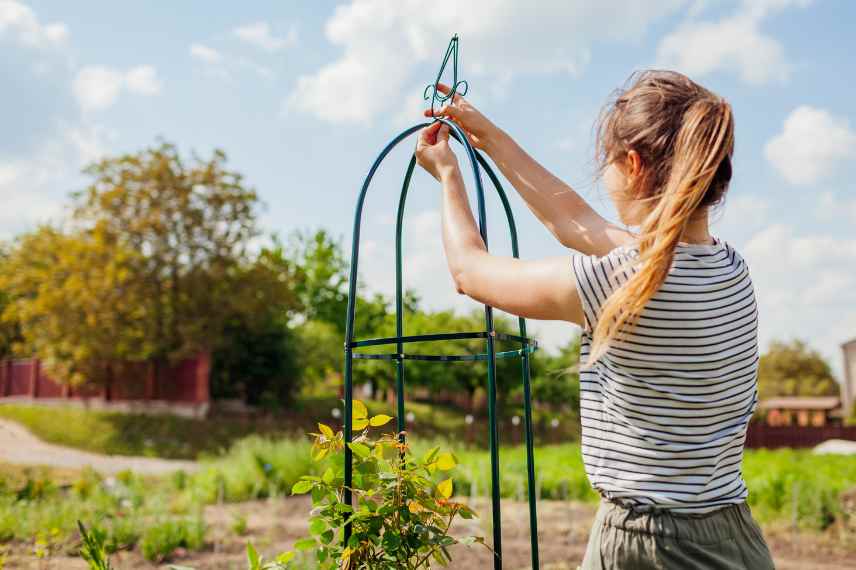
So, if you haven’t taken advantage of the depths of winter to install pretty structures in the ornamental garden to welcome them, such as trellises and arches, or romantic obelisks, there is still time: think of a few places to place them, and which rose or climbing plant you will choose for this romantic display.
In March or early April, it’s also still possible to create a few new flower borders and garden features.
→ My tip: take your time planning it in December or January, drawing on your books, magazines, or online reading when there are fewer tasks to do in the garden.
Also read : Why and how to design different spaces in the garden? How to create beautiful borders in the garden?Crafting a beautiful border bed: common misconceptions
- Subscribe!
- Contents
Comments