





























How to plant an Opuntia in the ground?
Planting and care tips for a prickly pear cactus in the ground
Contents
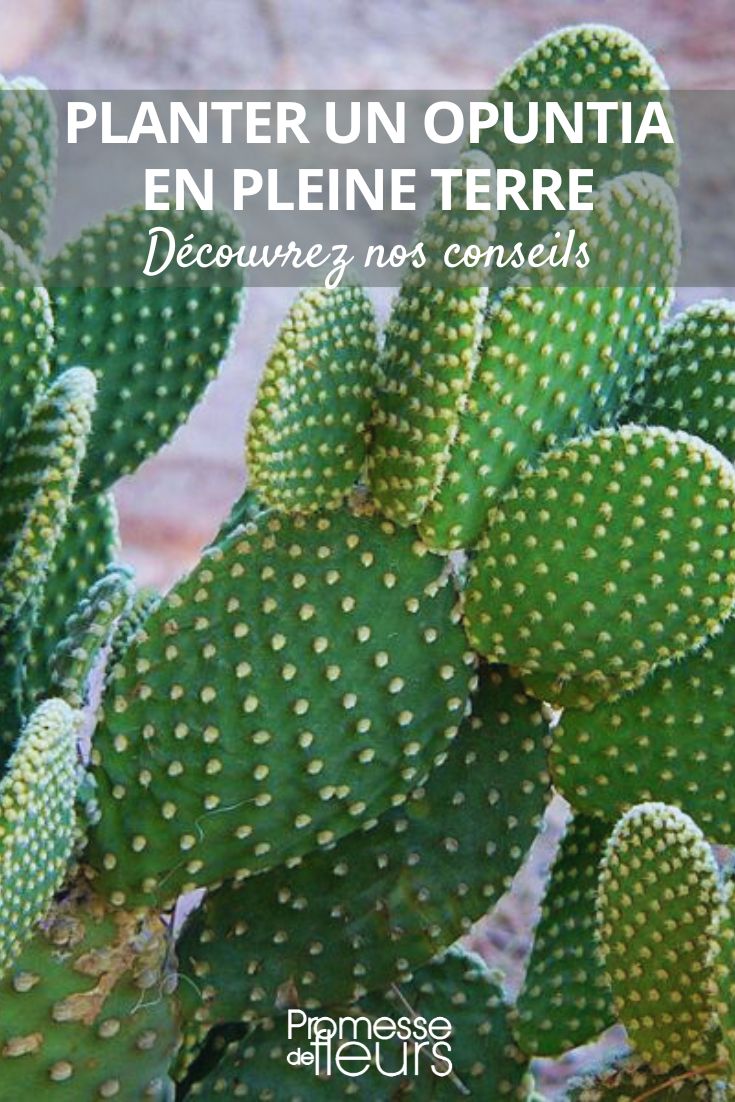
Also known as prickly pear cactus, Opuntia consists of flat, paddle-shaped pads, dotted with thorns and that can bear colourful flowers in spring or summer. Planting Opuntia in the ground is an excellent idea to bring an exotic touch to your garden. Native to the American continent and the Mediterranean region, this hardy cactus thrives particularly in hot, dry regions. To thrive, it needs sun and warmth, as well as well-drained soil. Some very hardy varieties can also be grown in the ground in colder regions. To successfully plant and maintain your Opuntia in the ground, discover the most suitable varieties and follow our planting and care tips.

Which varieties are suitable for planting in the ground?
Opuntias can be grown in open ground in hot, dry regions with mild winters, such as Mediterranean regions. For colder regions, there are very hardy Opuntias that can withstand subfreezing temperatures down to -20°C, the key is to plant them in well-drained soil and in full sun.
Among the hardiest, you can choose for example :
- Opuntia engelmannii var. rastrera: hardy down to -20°C, this prickly pear cactus can be planted in open ground in almost all regions, even those with a montane climate. It forms a low shrub about 60 cm tall with heart-shaped pads. It flowers from May to June, producing cup-shaped flowers in pale yellow or pale pink, which eventually turn orange. This close relative of the well-known Barbary fig yields round violet fruits. Plant it well away from foot traffic, as its sharp spines and the fine spines on its fruits, which are not always visible, can cause injury.
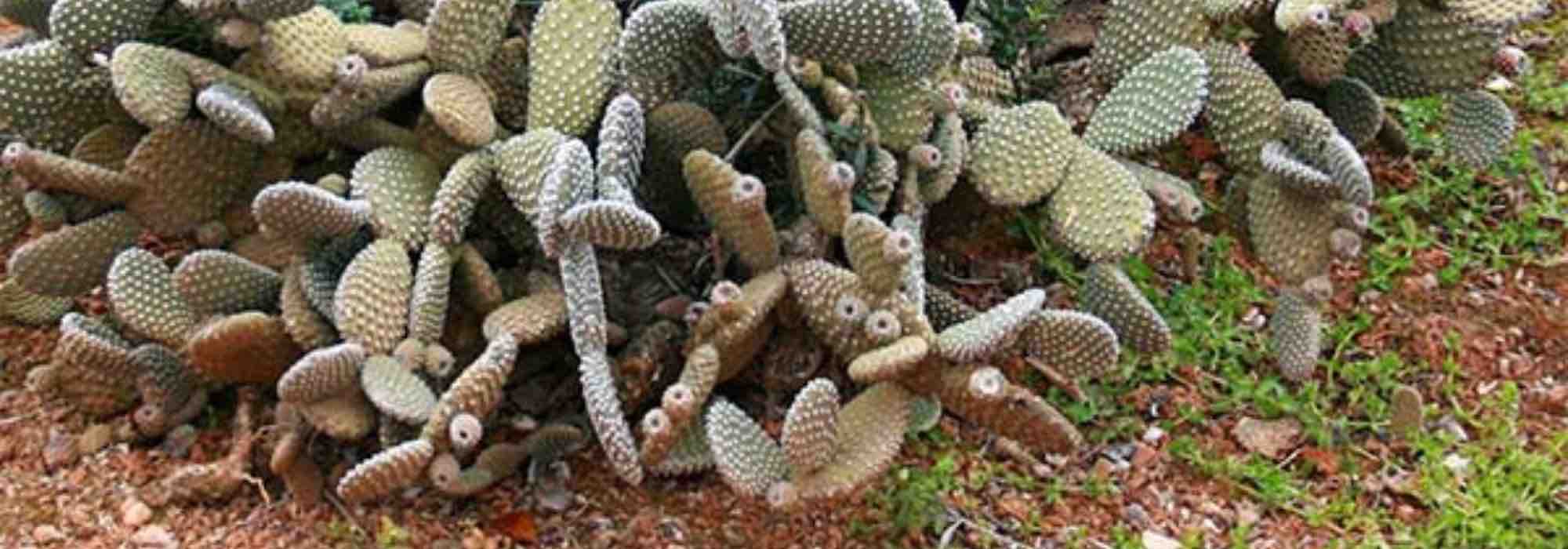
- Opuntia compressa ‘Millevaches’ – Eastern prickly pear: another hardy prickly pear cactus that is spineless. It is a small Barbary fig about 30 cm tall that sprawls along the ground and bears pale lemon-yellow flowers in May and June. The flowering is followed by the appearance of small edible fruits, for which you will first need to remove all the fine, transparent spines.
- Opuntia phaeacantha ‘Mojavensis’: another very hardy prickly pear cactus that can withstand down to -20°C, but it is larger, reaching a height of 2 metres. This Barbary fig relative forms large pads of a bluish-grey colour, covered with white spines with a red base. In May and June, it bears yellow flowers, followed by edible red fruits, from which you should remove the spines carefully before picking and consuming.
Many other Opuntias are hardy down to -18°C and can be grown easily in open ground, provided the soil is well drained. Among them, discover:
- Opuntia engelmannii var. lindheimeri : at maturity, it reaches 2 metres in height and bears bright orange flowers from June to September.
- Opuntia engelmannii var. linguiformis : distinctive with its elongated pads like tongues reaching for the sky, it reaches a height of 1.5 metres and bears yellow-orange flowers between May and June
- Opuntia scheeri : about 1.2 metres tall, it is formed of glaucous green pads covered with decorative golden spines. Its flowering occurs from May to July, yielding salmon-coloured flowers turning to lemon-yellow
- Opuntia howeyi : more compact, this Opuntia grows to 60 cm tall and bears small round bluish pads dotted with numerous white to yellow-brown spines. In June and July, it produces pale yellow flowers, followed by bright red fruits.
- Opuntia sanguinicola : 40 cm high and 1 m wide, this prickly pear grows easily in a well-drained border. Its glaucous-green pads are sparsely spiny and bear decorative cinnamon-coloured glochids. Between May and July, it bears yellow-orange flowers with a red centre.
- Opuntia phaeacantha var. angustata : reaches a height of about 1.3 metres with an identical width. It bears citron-yellow flowers, then orange from May to July, followed by purplish-red fruits. Its pads carry long, very pale spines.
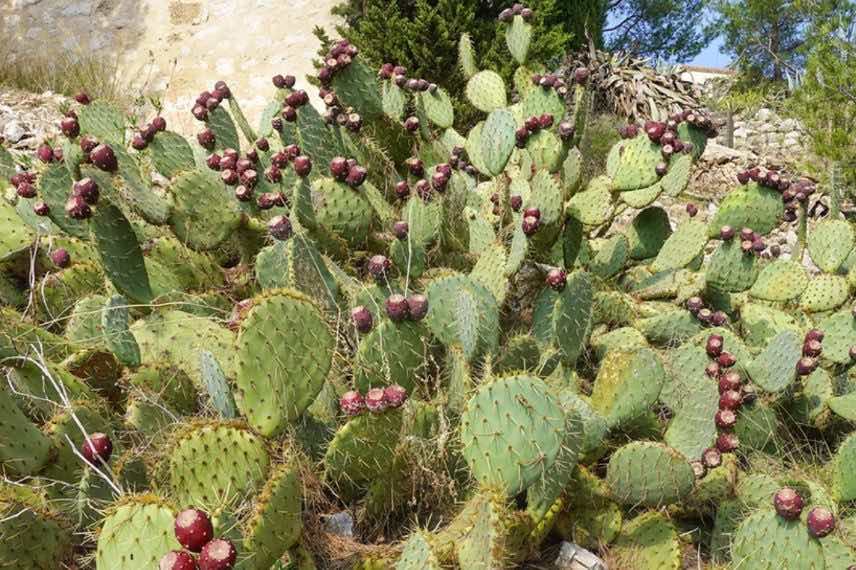
The Opuntia engelmannii var. rastrera is one of the hardiest
How to plant an Opuntia in the ground?
Planting an Opuntia in the ground requires following certain steps to ensure good growth and healthy development of the plant.
- Choosing a location: The Opuntia needs a sunny exposure and well-drained soil. Avoid areas where water stagnates, as excess moisture can cause root rot. Install it, for example, against a south-facing wall.
- Soil preparation: the soil should be light and well-drained. A mix of garden soil, sand and gravel is ideal. You can also plant it on a mound or on raised, sloping ground to help water drain away.
- Planting period: aim to plant in spring or summer, avoiding periods of extreme heat.
- Planting:
Dig a hole twice as wide and deep as the root ball of your cactus.
Place a layer of gravel at the bottom of the hole to improve drainage.
Position the Opuntia’s root ball in the centre of the hole.
Fill the hole with the soil, sand and gravel mixture, ensuring to pack firmly around the roots. - Watering: water lightly after planting to help the plant settle in. Thereafter, water moderately or not at all. In winter, greatly reduce watering to avoid excess moisture.
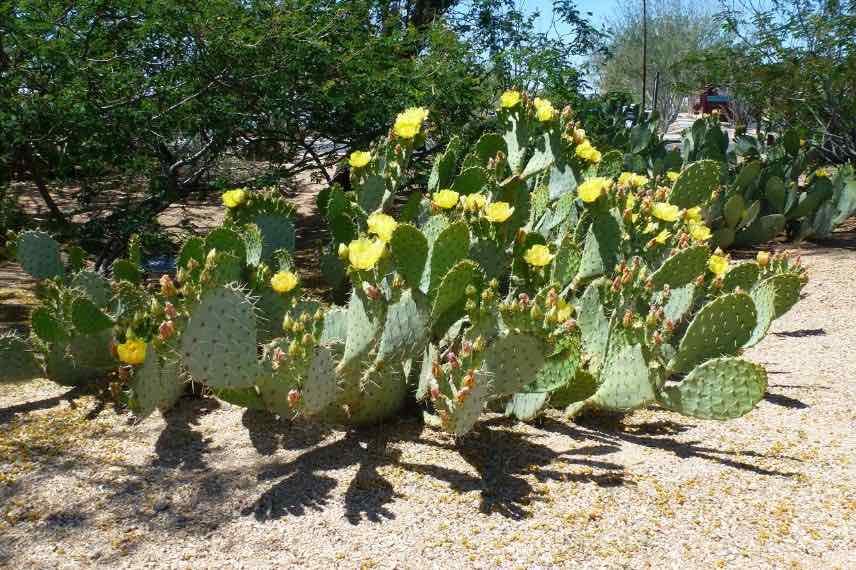
Plant the Opuntia in full sun. It flowers in spring
Caring for an Opuntia in the garden throughout the seasons
Opuntia is a hardy plant that requires little maintenance once well established. By following these tips, you will enjoy a cactus that is healthy and decorative all year round.
Care of your Opuntia varies with the seasons. Here is how to look after your cactus throughout the year.
Spring:
Watering: gradually increase watering as temperatures rise.
Fertilising: you can apply a cactus-specific fertiliser once a month to stimulate growth and flowering.
Summer:
Watering: during periods of intense heat, water once a week. Make sure the soil is thoroughly dry between two waterings.
Pruning: remove damaged pads or diseased to maintain a healthy plant.
Fertilising: you can apply a cactus-specific fertiliser once a month to stimulate growth and flowering.
Autumn:
Reduction of watering: start reducing watering to prepare the plant for winter.
Protection: depending on the hardiness of your Opuntia and the climate in your region, you can protect the cactus with a winter fleece or by mulching the base of the plant.
Winter:
Minimal watering: Opuntia goes into dormancy during winter. Water only if the soil is very dry.
Cold protection: to consider if the Opuntia is not hardy and winters are cold.
For more information, discover our complete Opuntia range as well as our care guide on the cultivation and planting of Opuntia.
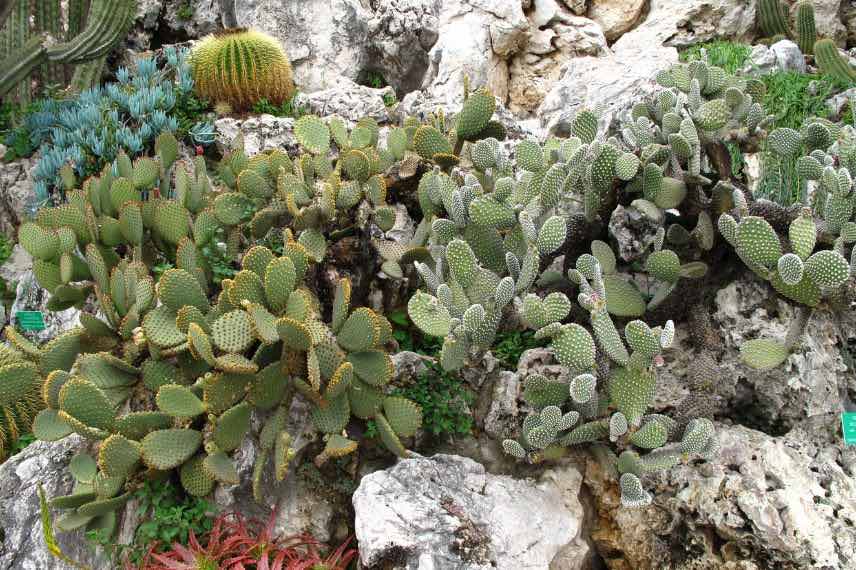
You can plant Opuntias in a large rockery with other cacti and succulents
- Subscribe!
- Contents
Comments