





























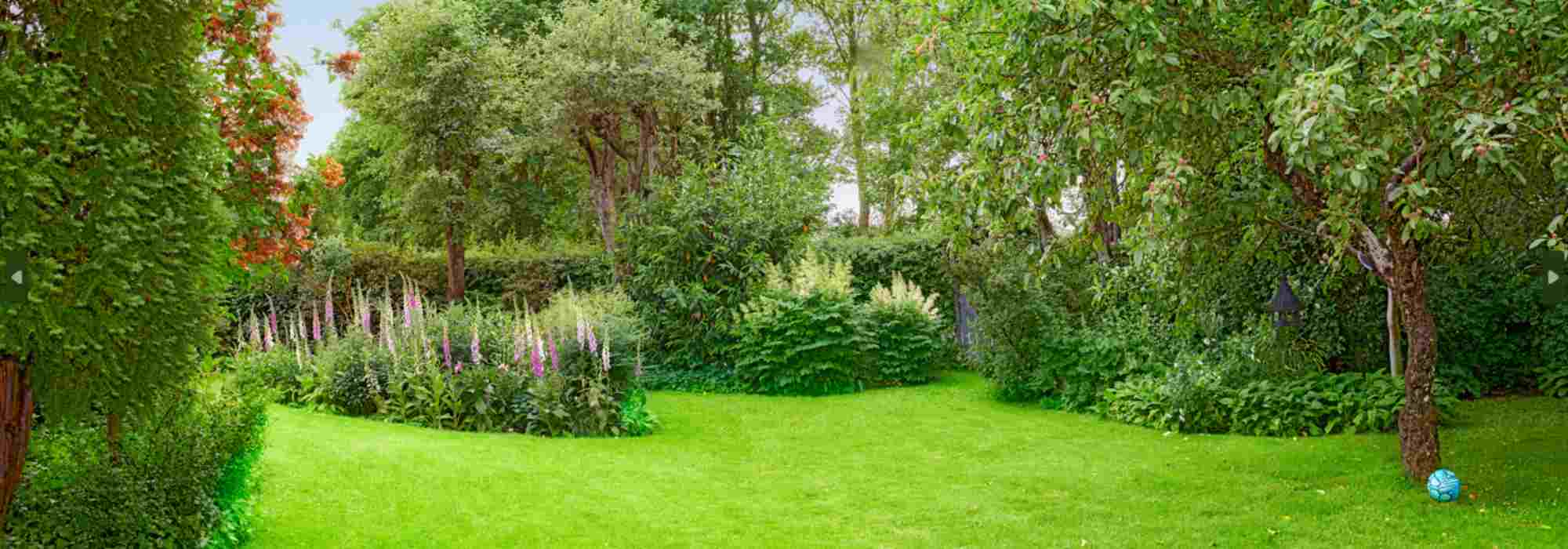
How to position trees correctly in a garden?
Regulations and aesthetic guidelines for placing your trees
Contents
On bare ground, or a sparsely wooded garden, it can sometimes be difficult to gauge how large a tree will be at maturity, and more prosaically to know where and how to plant new trees. Yet trees, the most structural elements of the garden, deserve that you pause and think twice before you take up your spade and dig a hole in your plot! This article will help you ask the right questions before planting a tree in your garden: better assess strategic locations according to the shape and style of your garden, and place the trees in your outdoor space to show them off to best effect.
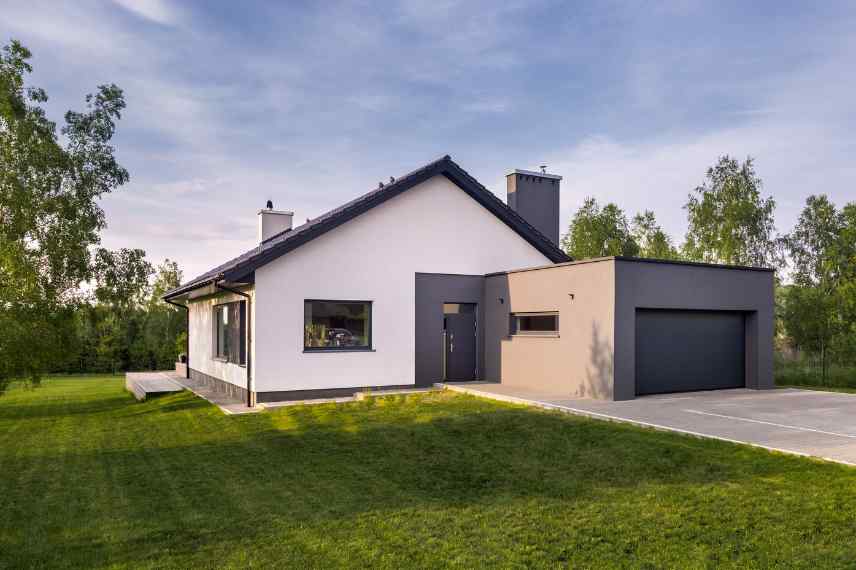 When the page is blank or nearly so…

Understanding a tree's canopy spread
Between the young tree purchased from a nursery and the mature tree that will take at least two decades to come into full expression, there’s a world of difference… And it’s not always easy to picture, with a few more years, that tree in a 3/4-litre pot you’ve just bought in a container, which currently looks little more than a tall stem.
And yet… you will need to project ahead a little and imagine it in its optimum development, the one that is always shown on the labels: its height, but also its spread, in other words the extent of its branches and crown. To help, a site plan scaled to the garden allows you to trace the trees’ circumferences as circles, and thus to better grasp the space and their footprint on the ground.
When talking about canopy spread and the ground footprint in the long term of a tree, you should also keep in mind the principle of proportion and balance of masses. Again, a plan, even crude but to scale, will help you. If a park or very large garden gives you considerable latitude to plant several large trees, maintain a harmonious dynamic in a small garden with what is commonly called small trees or large bushes (up to 7 m in height), so as not to visually saturate the space. The architectural balance of your garden depends on it! To help you, note that on an area of about 500 m², one can accommodate a tree of 8 to 10 m in height, and that it is often (though this depends on the desired effect) considered a one-third proportion of the so-called upper stratum (above 8 m).
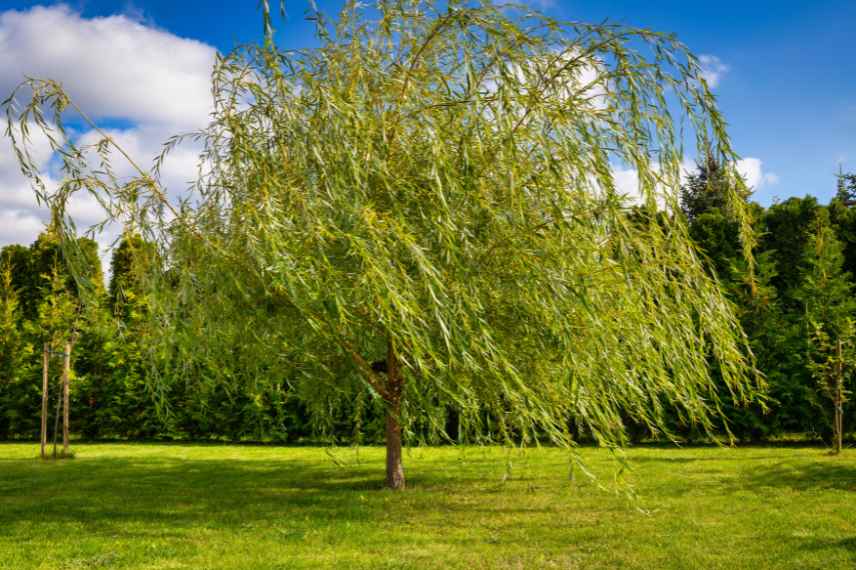
A weeping willow, still young, will have an even greater footprint in adulthood.
Read also
Which trees to choose for a park?The right tree in the right place
Once the tree has been chosen, having regard to its hardiness relative to the region, it is essential to ensure that the exposure will be favourable to it, a primary condition for the tree to grow well, but also, and this is the major criterion, that the soil is suitable for it. These two factors are vital for any plant and even more so for trees, the largest plantings in a garden.
If part of your garden is waterlogged for part of the year, you will also need to adapt the planting, including trees, which must be able to survive these particular living conditions. Finally, wind exposure can hinder the establishment of certain species, and conversely, windy coastal areas accept certain trees that are resistant to violent weather conditions.
In all cases, the shade cast by the tree should not be neglected: check, according to the sun’s path, how the shading will impact the house or other areas of the garden already planted with trees so as not to compromise the growth or development of shrubs or trees already in place. The volume of the trees should not overwhelm the rest, but rather enhance it, while the tree canopy should remain sufficiently open to let light through.
Read also: 7 trees for a south-facing garden; Designing a flood-prone garden ; Plants resistant to sea spray; Pruning trees for transparency. ; Light in the garden: exposure, sunlight, shading and brightness.
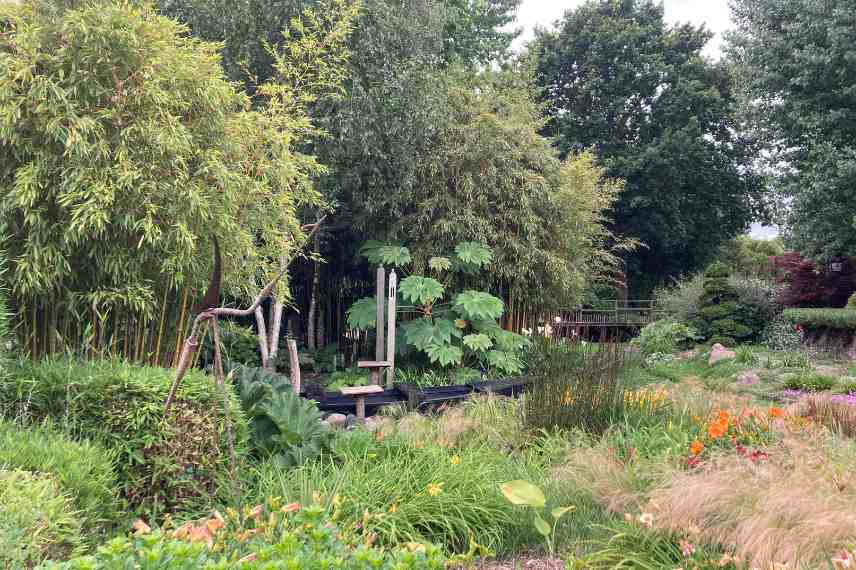 In this garden, the trees placed at the back help to showcase the lower strata and the shrubs (photo Gwenaëlle David Authier).
Around the house: beware of the root system
Some trees are known for their root systems that can affect foundations or the various networks and pipes running beneath the ground. They also irreparably damage terraces and paved areas, not to mention swimming pools or drainage systems.
It is therefore wise to gather as much information as possible about the chosen species if it is to be planted near a building or a specific landscape feature, although this information is not easy to find in manuals or on the internet.
One can already easily imagine the importance of the root system by visualising its reach directly beneath the crown of the tree, for many trees whose roots are spreading or shallow. And consider a distance of six metres as a reasonable distance between a house and a tree. But this depends on the species. The best course is always to consult a nursery specialist.
The trees known for their formidable root system near houses are notably oaks, willows, cherries, Paulownia…
→ For more information, consult our articles: Different types of root systems, Plants with running roots; how and where to plant them? and Which trees should not be planted near a terrace?
Read also
10 good reasons to plant a treePlanting distances
If we misjudge the canopy spread of a tree at maturity, it can end up too close to another tree, hindering its growth, or worse, to a house from which it blocks the view and casts too much shade.
Everything, of course, depends on the height and spreading of the tree, but the minimum planting distance between two sizeable trees will, of course, be at least equal to their spreading at maturity. Always check the tree’s characteristics, and calculate your distances from the trunk. In relation to a building, be even more prudent and plant no tree closer than 6 metres. Remember that too many trees kill a tree!
→: Learn more at Hedges, shrubs and trees: what planting distances?
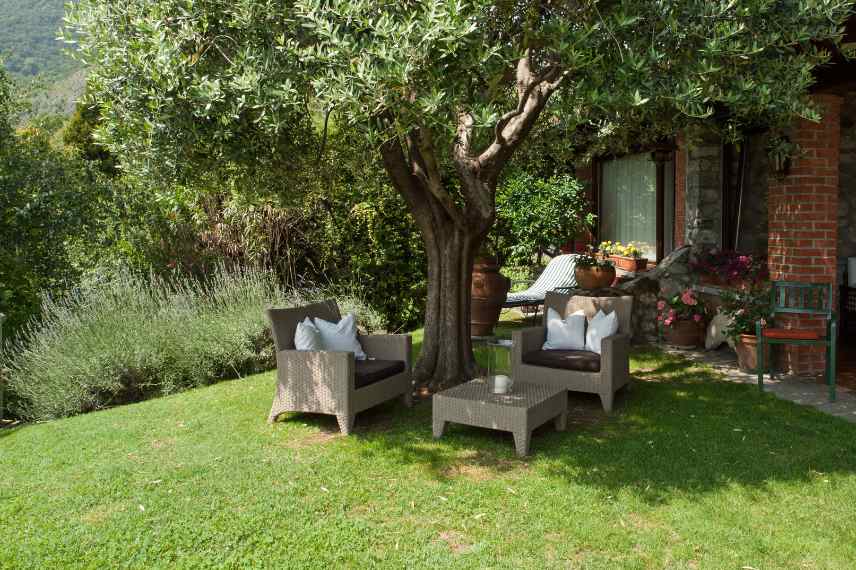
Unless you want shade immediately next to a house, avoid planting within 6 metres of walls.
Property boundaries: be aware of current regulations
Planting trees at the back of the plot is one way to create a vanishing point and draw the eye towards the distance. It’s often along the boundary that trees are planted in small and medium-sized gardens.
When planting a tree at a boundary, it is obligatory to observe certain planting distances, whether for trees or bushes. To that end, if you do not know the exact boundaries of your garden, which can occur in rural areas, have a precise survey carried out—a boundary survey with a land surveyor.
In town or countryside, the rule is the same: a minimum distance of 2 metres must be observed between the centre of the tree trunk and the neighbour’s boundary, whatever its form (hedge, screen, wall, fence…). This, regardless of the anticipated height of the tree when mature.
Note: if a tree has existed for more than thirty years, there is a thirty-year prescription and its felling cannot be imposed (Articles 672 and 673 of the Civil Code).
→ Also read: Tree planting, what does the law say?
Tree placement by function
If trees form the main mass of vegetation in a garden, they usually have a particular vocation beyond their ornamental value. Trees are traditionally planted for the following reasons:
- To provide shade: with their proportions, trees are the ultimate shading elements. One considers a tree at around 7 m in height, but some reach mature heights of 15–25 m. It is therefore always best to refer to the mature size of a tree, to avoid ending up with shade larger than expected. A nurseryman or a landscape gardener will always assist in this choice, and a plan of your garden and its various elements allows you to position the specimens as effectively as possible with a graphical representation of their volume. This is essential in the case of a bare garden, where different trees will be planted so that they do not hinder one another, nor the rest of the vegetation, or encroach beyond limits imposed with respect to a building.
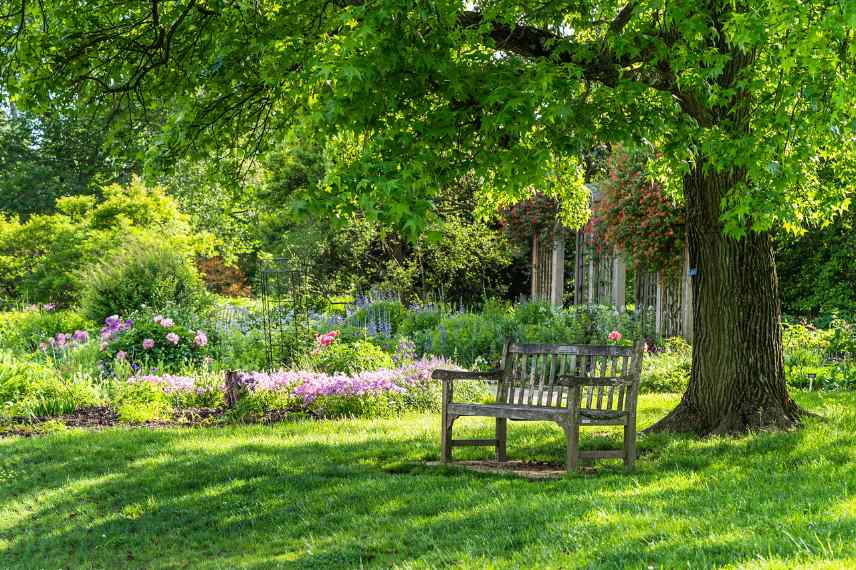
- To punctuate the space: with shading, this is the main role of trees, as they add rhythm to a garden by their stature and verticality. They are planted at strategic points to ensure the necessary visual order along the horizontal lines. Be careful not to place them too symmetrically in a rural or natural garden; favour schemes that balance the masses of trees. They should not float aimlessly in the middle of a large open space. Group them, plant them in a layout that respects harmonious proportions across the site.
- To screen a neighbouring view: in this case, trees will be planted at the boundary of the plot, although shrubs that can be pruned to a desired height are often preferred. But an unsightly electricity pole, a tall building or structure overlooking your garden deserves the installation of one or several trees to obscure the surroundings. They thus frame and typically encircle a wall or the perimeter of the garden. The resulting vegetation screen will of course be evergreen by choosing trees with evergreen foliage.
- To form a hedge or to edge a path: with columnar or fastigiate trees, it is possible to create very beautiful alignments of trees in large gardens or parks. Again, be sure to assess and anticipate the development of the crowns, and calculate the appropriate planting distance.
- To establish an orchard: in this dedicated space, the alignment in rows or the staggered arrangement of high-stem fruit trees is common in classic-type gardens, but a natural-style garden will favour a random planting of trees.
- To create an architectural setting: A tree that is particularly aesthetic, by its foliage or silhouette (Ginkgo, Araucaria, weeping willow, oak, conifer…), or even by its flowering (Japanese cherry, Liriodendron, Paulownia…), can stand on its own and should be highlighted from planting on a lawn. This remarkable tree, planted as a solitary specimen, generally becomes the garden’s totem tree, a visual landmark, and a protective tree under which one feels comfortable on hot summer days. Depending on the shape of the garden, it can be placed symmetrically or centrally in a line of sight, or offset along a horizontal axis. But always think of being able to admire it from several places in the garden, and also from inside your house! A grove of trees also offers a highly ornamental visual focal point in a garden. It can serve as a vanishing point. The grove provides an intimate setting and, when there is a little space, becomes a considerable asset of the garden, perhaps placed in a somewhat out-of-the-way area to create a surprise.
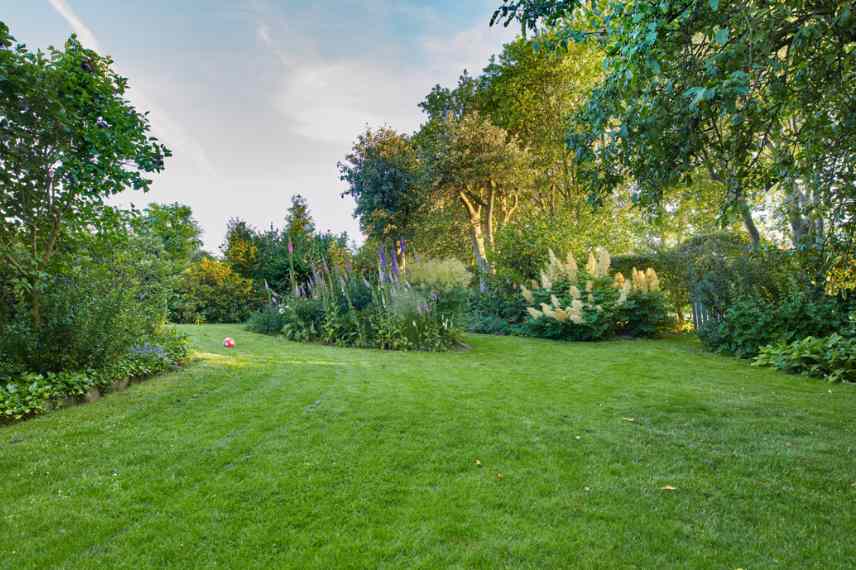
→ Read also: 10 shade trees, dense or light shade: the trees you need ; 10 good reasons to plant a tree ; 7 essential shade trees, 7 evergreen trees ; Trees and shrubs: the different habits; 7 trees with striking foliage and form.
Note: At Promesse de fleurs, we recommend different usage types to guide you on how best to highlight a subject. The “Type of use” filter lets you tag items as: isolated as a specimen, hedge, or bed-border, which are most appropriate for trees.
Position the trees to suit the garden's style
Garden style also somewhat determines the placement of trees, or the way they are staged:
- An urban, contemporary or classical garden
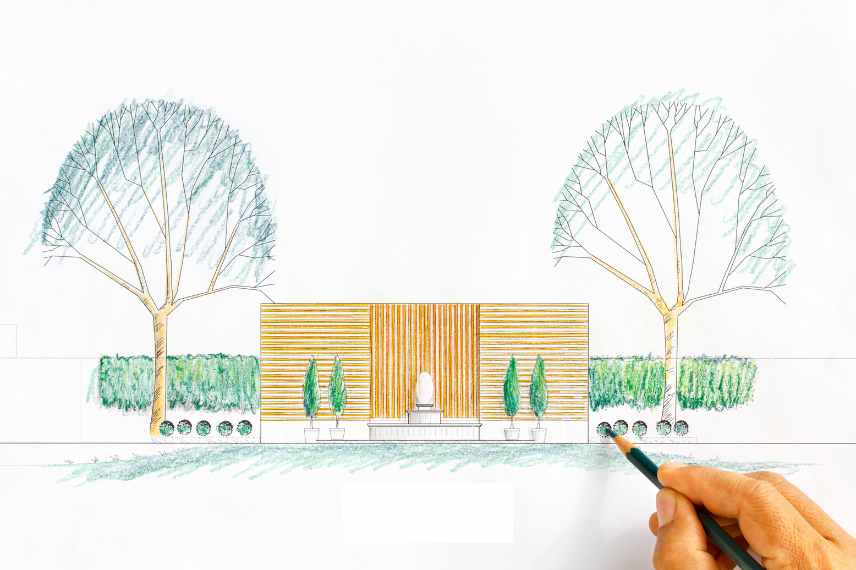
These are the three garden styles that allow the symmetrical placement of trees, which will reinforce the site’s classicism and pared-back elegance. The species are also chosen for their graphic character, emphasising a vertical effect.
- An English garden
The sinuous design of the paths is usually accentuated by the presence of a few fine ornamental trees. They can be planted as pairs of trees, or in groves. The options are varied, and the presence of a few trees or large bushes in coppice shoots enhances scenes within large massifs. The proportion rules here are different, and off-centre placements are favoured, usually a third of the way along a horizontal line.
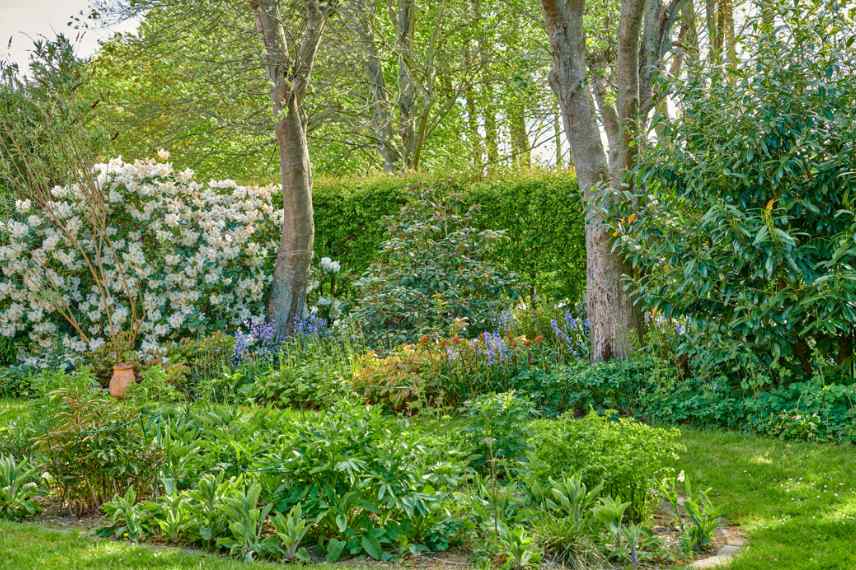
There is great freedom within an English garden…
- A large garden or country garden
This is a garden where freedom is greater, the trees do not follow any geometric logic. Natural planting is preferred here. In parks, creating an arboretum gives free rein to a collection of unique trees, often planted according to their family or geographical origin.
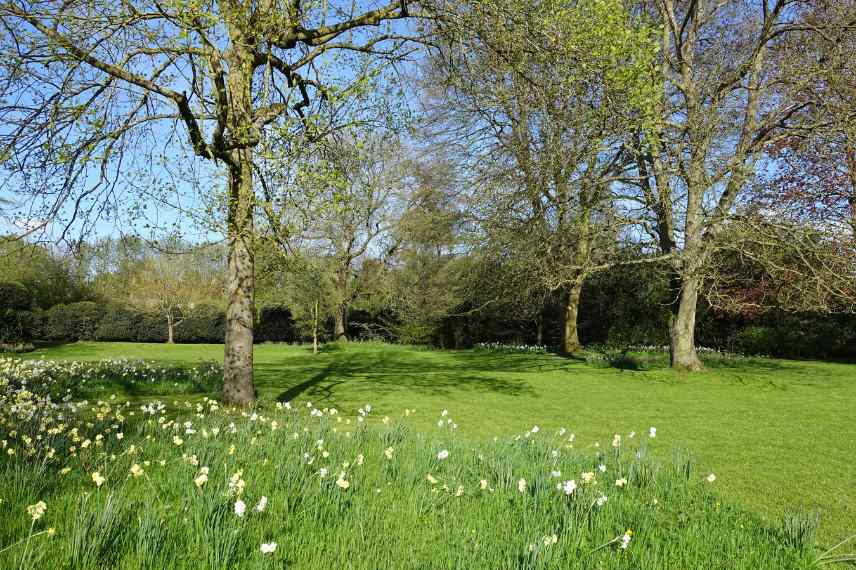
In this garden, the trees seem placed very naturally, occupying much of the space.
- A garden with a swimming pool
This is a special case, where care must be taken to avoid the fall of leaves, flowers or fruit, which you want to avoid: a tree should therefore be set well back. The pool coping will also not tolerate fruit that stains at certain times of the year.
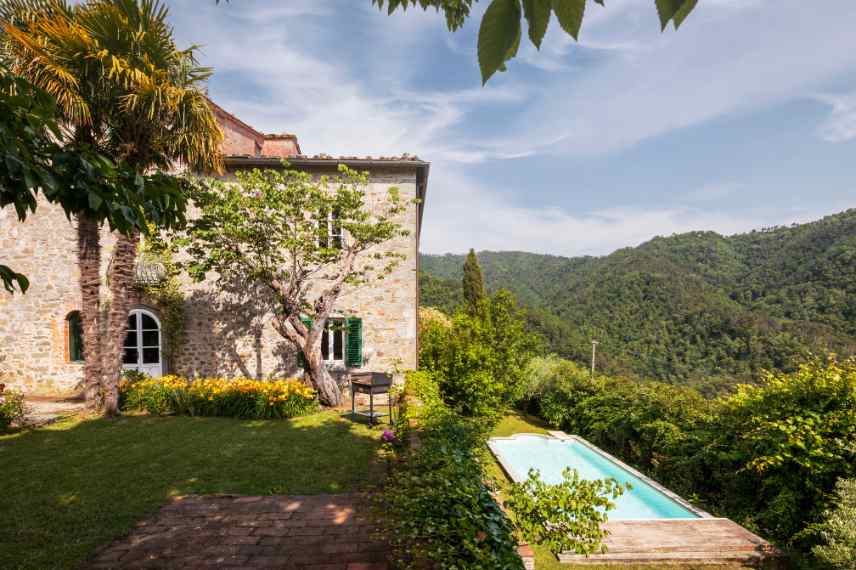
Here, the pool is kept far enough away from a tall stratum, for shade and for leaf fall.
- Subscribe!
- Contents
Comments