


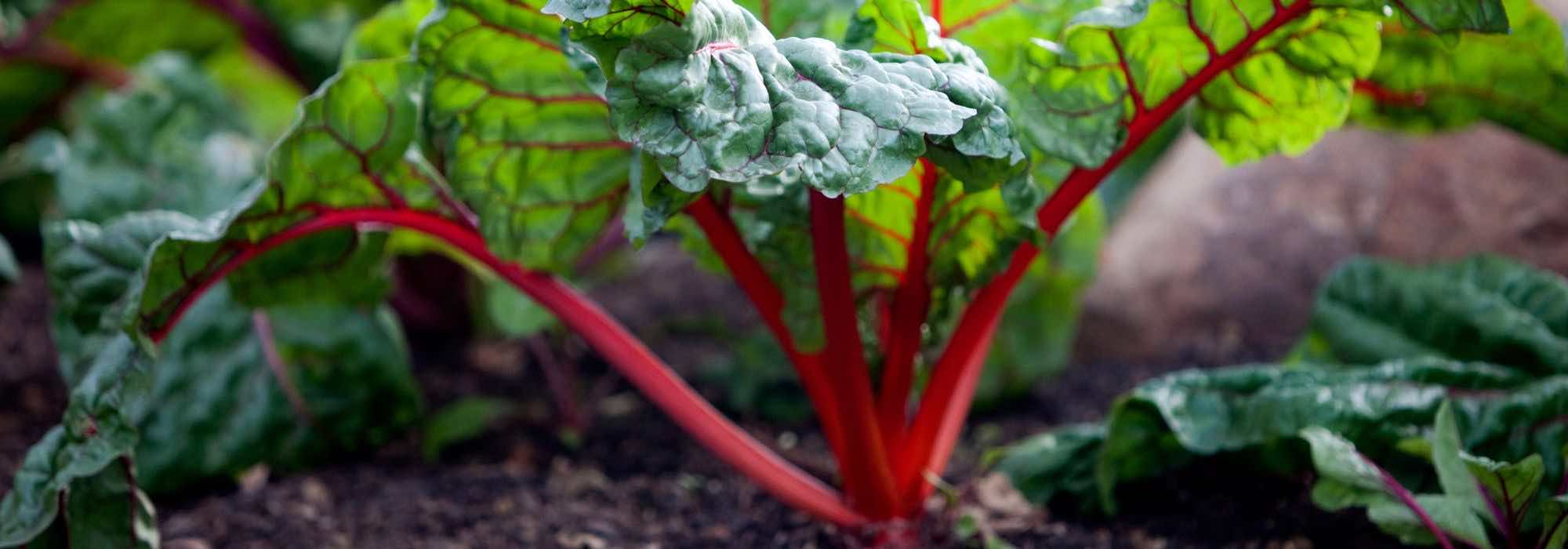
How to successfully grow Swiss chard?
Our tips to easily achieve a bountiful harvest of this leaf vegetable in the kitchen garden
Contents
Swiss chard: no matter what name you prefer to give it, it corresponds to the same vegetable, called Beta vulgaris in Latin. As beautiful as it is tasty, it comes in many varieties, sometimes incredibly colourful. It is the leaves and stalks that are eaten and cooked.
If growing it is fairly easy and doesn’t require much maintenance, a few steps will ensure you obtain an abundant harvest. Here are our tips for a successful crop, from sowing to plate.
And for more details on growing Swiss chard, consult our comprehensive guide: “Swiss chard: planting, growing, harvesting”.

The different varieties of Swiss chard to grow
There are many varieties of Swiss chard, mainly distinguished by the colour of their stems: red, white, yellow or pink, they are rarely overlooked in the garden, paired with luxuriant foliage. Stemmed varieties are distinguished from cut-and-come Swiss chard or spinach beet, in which only the young leaves are eaten.
You will have a choice of several varieties, such as:
- the Swiss chard ‘Charlotte’, a stemmed variety with bright red stems and large green leaves turning bronze towards the end of the season;
- the Chard ‘Blonde de Lyon’, a highly productive variety with undulate leaves borne on white stems;
- the Swiss chard with yellow stems, stems of a sunny colour;
- the Swiss chard ‘Rhubarb Chard’, with red stems that contrast with the foliage;
- the Swiss chard ‘Lucullus’, a late variety best suited to autumn and winter crops.
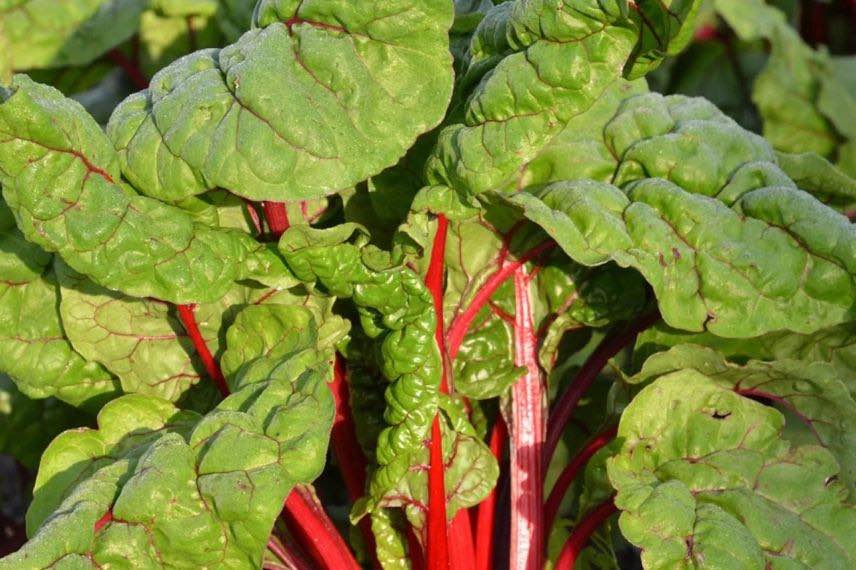
Swiss chard ‘Charlotte’ with red stems
Read also
Get plenty of recipe ideas with chard!Steps for planting Swiss chard
Sowing period
Sowing Swiss chard in situ begins in April or May, depending on the region. It will take place in soil that has warmed and free from any frost risk. Germination is possible from 10°C.
However, you can certainly start sowing in pots or seed trays under cover from March to achieve an early harvest. Transplanting can, however, be a little delicate and will require care to avoid damaging the root system.
In regions with particularly mild winters and very hot summers, sowing can be advanced directly in place.
There are also late varieties, whose sowing will be carried out mainly from May to July, for a harvest in autumn and winter.
Site
Swiss chard prefers sunny exposures, but not scorching ones. In southern regions, therefore opt for a shadier or partly shaded exposure during the middle of the day.
Note that some varietiesNevertheless tolerate heat better than others, such as the green Swiss chard with white ribs or the blond Swiss chard with white rib.
The sowing
Sowing in place is done in cool, moist soil (watered a few days beforehand) and loose (previously worked to be pliable). Provide Swiss chard with soil rich in organic matter. In the winter preceding sowing, incorporate into the soil manure, compost or a vegetable fertiliser.
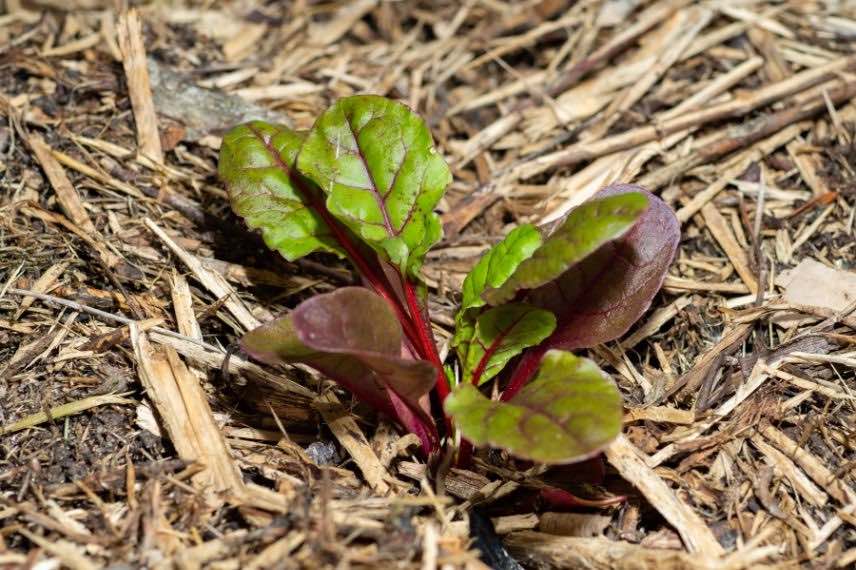
Young Swiss chard plant after sowing
Here are the step-by-step sowing stages.
- With a rake, loosen the surface soil and remove any stones or weeds.
- Sow in clumps, that is, placing in each dug hole a batch of 3 Swiss chard seeds, about 40 cm apart. You can also opt for a shallow furrow sowing, keeping the same spacing.
- Cover with fine soil to a depth of about 1 cm.
- Water gently, to avoid risking moving the seeds in the soil.
- Keep moist until germination.
- Thin out to keep only one plant (the strongest) every 40 cm, as soon as the Swiss chard has produced its first 3 or 4 leaves.
If you do not wish to go through this sowing step or if you have not had time to get started early enough, it is obviously possible to purchase Swiss chard plants. They will then be sold in pots or in clumps and available from garden centres and market gardeners. Before transplanting, remember to soak your plants for a few minutes in room-temperature water to rehydrate them well.
Care for Swiss chard in the vegetable garden
Watering
Swiss chard appreciates soil that remains moist, i.e., never dries out completely. A lack of water can indeed make the stalks and leaves fibrous and unpleasant to eat. Water regularly as soon as the soil surface feels dry, especially in hot weather. Prefer rainwater to mains water if you can.
To keep moisture around the bases of your chard for longer, install a thick mulch. It will also help with weeding and limit weed growth.
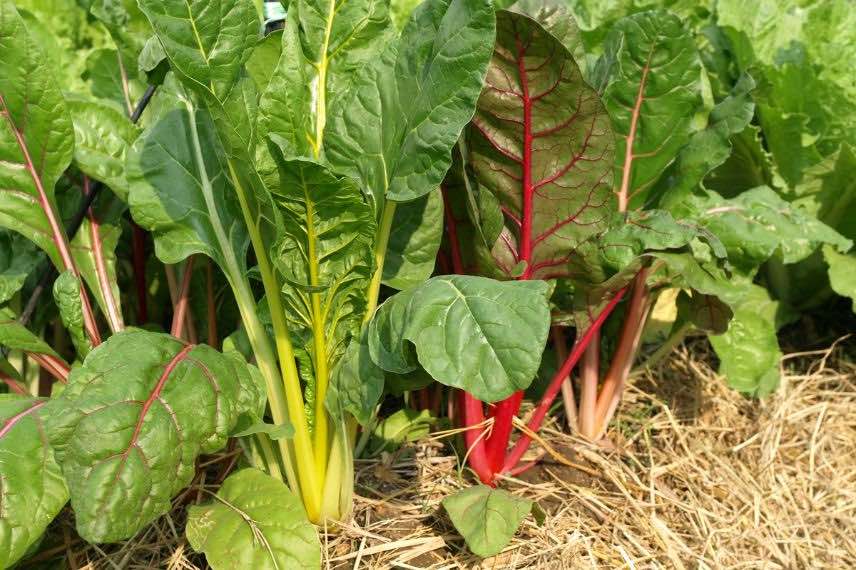
Mulching the soil of your vegetable crops is well worth it
Other care
Carry out regular hoeing (by hand or with tools) to limit weed growth that can compete for resources.
Cultivation (hoeing) will help aerate the soil, especially if it is heavy and clayey. This step promotes healthy root development by preventing crowding.
If your chard begins to flower, cut the stems as they appear to prevent seed set, which would limit leaf production.
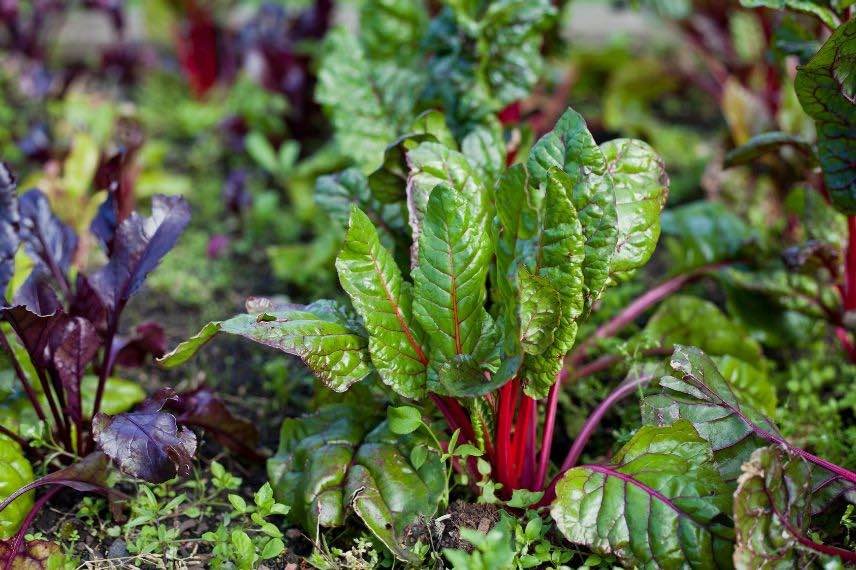
Hoe and weed around the clumps of Swiss chard
Pests and diseases
Swiss chard can be susceptible to certain fungal diseases (fungal), such as mildew. To limit the risks, avoid watering the foliage and practise crop rotation: do not replant chard or related crops in the same spot year after year. Wait at least 3 to 4 years.
In prevention, you can spray Bordeaux mixture or plant manures.
Regularly inspect your chard to act quickly if you spot aphids or flea beetles.
Slugs and snails may also fancy the young leaves.
Overwintering
In regions with harsh winters, Swiss chard may disappear completely, while in milder regions they can stay in place (average frosts below -6°C). A thick mulch will help protect them.
The chard is generally grown as an annual. It is actually biennial: the plant dies after flowering, which occurs in the second year.
Harvest
Harvesting of Swiss chard occurs about two months after sowing, as needed. Depending on the planting period, it will take place between June and October.
Begin by harvesting the outer, largest leaves when they are firm. Always leave some leaves in place so production can continue.
Harvesting is done by hand, pulling the leaves or cutting at the base with a clean knife.
The leaves and stalks of chard can be stored in the fridge for a few days.
- Subscribe!
- Contents
Comments