






























First garden: our tips to start
The essential steps to succeed in your first garden
Contents
Having a first garden is an exhilarating adventure, a moment that typically coincides with buying a home, and sometimes with a new life or the expansion of the household—key moments in life. But a lack of experience often makes us hesitate about what to do and what to plan: we often don’t quite know where to start. There is, however, a tried-and-tested timeline to see this project through.
How to start a garden and avoid beginner’s mistakes? What planting choices should you make? What is the best time to get started? Follow our tips and the essential steps to approach this creative phase with calm! There’s no reason you can’t succeed!

Observe, enquire, discover
Not easy to dive headfirst into garden design when it’s your first time! And in this field, it’s better not to rely on beginner’s luck… A garden is a living thing.
One thing is certain: designing a garden requires time for observation and documentation. Don’t skip this stage of discovering gardening and assessing the site.
- Observe your plot to understand its characteristics, strengths and weaknesses, with which you will always work (sloping site, large garden, coastal garden, mountain garden, shade garden, dominant hedge, etc.). It is always advisable to observe your garden across the four seasons, i.e. for at least a year. This is long, but it gives time to fully appreciate the space you have, to learn about the pH of your soil, to determine shaded, sunny, cooler or damper areas, in short to better know your new playing field to determine the best locations for your plants! Also observe your neighbourhood to see which plants grow well in gardens. This will give you, among other things, an idea of its hardiness.
This step also helps you consider the different needs you have and your expectations for the garden: an ornamental garden only, an edible garden focused more on the vegetable plot, a garden with limited scope because you don’t want to invest fully… - Learn the basics of gardening: read as much as you can, especially general gardening books for beginners, to grasp the rudiments and familiarise yourself with the domain’s specific terms. Prefer publishers specialising or with a good range in gardening (Ulmer, Horticolor, Terre vivante, Rustica éditions, Eyrolles, etc.). Second-hand books are also interesting and economical for a first approach to gardening! The internet is another source of information, and you will quickly find a favourite site, a blog to glean advice and inspiration (perhaps ours?!). Make sure to spot reputable sites, as the web’s abundance is sometimes contradictory. Interacting with your neighbours and friends lets you combine the useful with the enjoyable and benefit from enlightened and often reliable advice.
- Discover gardens near you or during your holidays in various seasons is also an excellent way to define what you like or dislike in landscaping, to familiarise yourself with habit, foliage and flowering, while spotting plants that tempt you (botanic gardens are invaluable, as plants are labelled). Even if these gardens are larger than yours, note down your ideas as you discover them (take notes, photos, or even film some favourite spots). Finally, visit the best local nurseries in the area!
→ Check out our sections on gardening books and garden visits in the blog and gardening for beginners in our advice space, a mine of information! Also read: our article Light in the garden: exposure, sunlight, shading and brightness.
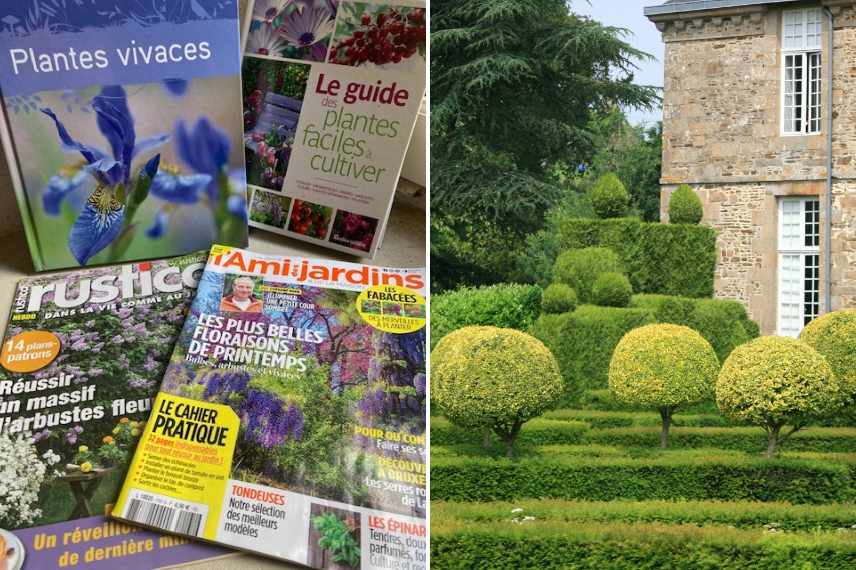
Take time to read up and to explore beautiful gardens…
Read also
7 ways to learn how to start gardeningWhen is the best time to get started?
The first year after moving in is often spent on interior improvements. We have seen that a preparatory phase is essential, and it’s pleasant to do it in the warmth of mid-winter, so you can get stuck in at the first fine days of the year. If you move in in spring, and you want to enjoy your garden for the summer already, which is understandable, resist the temptation to plant everything and install a few pretty pots for the terrace—a way to get a feel for things and create a temporary display.
Because planting the majority of plants is ideal in autumn, when the soil is still warm and the rains allow a good establishment of the root system. The right timing to start a first garden and give yourself the best chances of success is therefore the period before the onset of cold weather, i.e. September or October.
On the other hand, you can tackle hard landscaping works (paths, earthworks, the construction of a low wall or a pergola, raised beds, etc.) in winter, the ideal period. However, that is probably not what you will start with in the garden, unless you’re a whiz with a screwdriver and a mini-digger… The vegetable patch, for its part, will ideally be ready for spring, the sowing period.
→ A quick tour of our section “How to Fail” can help you: How to Fail at Planting Your Trees in 5 Lessons?, How to Fail at Planting Your Perennials in 6 Lessons?, as well as the Best Times to Plant, and Planting on Saint Catherine’s Day: mistakes to avoid.
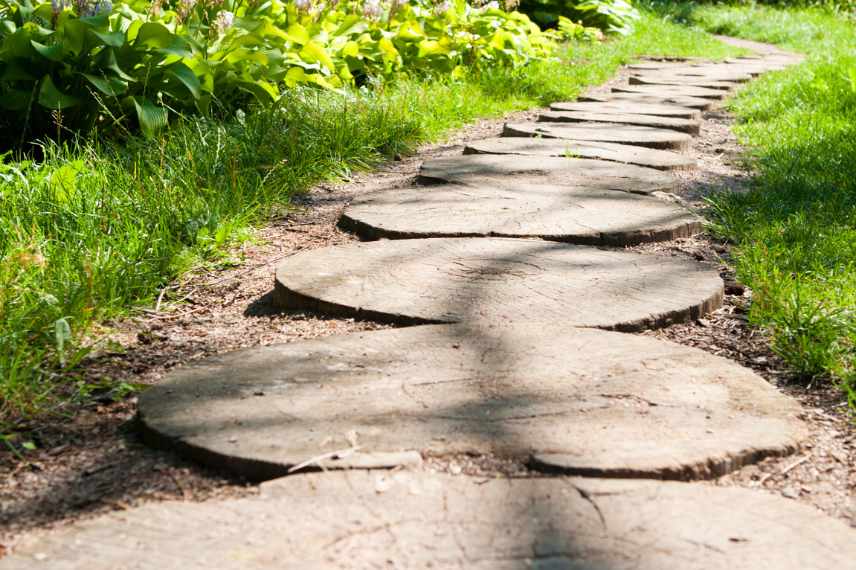
Ideally plant in autumn, but you can carry out some landscaping such as winter paths.
Draft your garden plan and opt for single designs
When you’re not a natural DIYer, you don’t tackle complex projects or redo your bathroom on your own. For a garden, it’s the same! Over the years you learn from your successes and mistakes, but when you start, you give yourself every chance of succeeding by choosing simple and effective projects.
Every garden starts with a plan, however rough it may be (you can just draw a few “patches” to determine the main zones, and that will do for now). Not only will this help you think things through, but it will also prompt you to ask the right questions: am I putting in too much and everywhere? have I positioned the relaxing area correctly? is the size of the lawn appropriate? will I be able to manage the maintenance on my own if it’s a large garden…
Start by drawing a plan of your garden, with the walls and structures in place, as well as its orientation. You will focus on the main layouts, taking your uses into account (previously considered and refined during your approach phase, see above): car parking space for the car, dining area, seating area, children’s play area, vegetable patch, activities to hide (washing line, compost…), water feature, garden shed or greenhouse. It is at this stage that we integrate the important separators in a garden (green wall, screen, trellises and pergolas, fence, low wall, small hedge) to multiply the spaces (Jean-Christophe explains it in detail in Why and how to design different spaces in the garden?
Once these zones are placed on the plan as hatched areas, mark them out with ground pegs or marking sprays. You will have a better idea of the volume allocated to planting and, if necessary, you can adjust accordingly. This zoning, among other things, helps you calculate how many plants you will need, which isn’t always easy when you start gardening, where we tend to plant too closely.
Keep it simple in the first garden designs: prioritise attractive borders, and if you wish, a straightforward stone paving that is easy to install yourself with the help of tutorials and videos on the internet.
As for landscape features specific to the garden (drainage and lighting, paving and various pathways, pond, pergolas), but also built elements (low walls, stairs…), I advise you to incorporate them into your development plan and carry them out before planting if they are major works that could damage your ground or if you plan to sow a lawn. Don’t pretend to be a mason or a landscape gardener; these are technical trades… If you’re aiming to eventually include a simple path, this can be done afterwards by yourself once you have a bit more experience, because the important thing is to plant as soon as possible, which is often forgotten, young plants taking two to five years before they fully come into their own.
→ Use our articles Planting density: everything you need to know and the helpful tips in the book I Want a Garden Right Now!
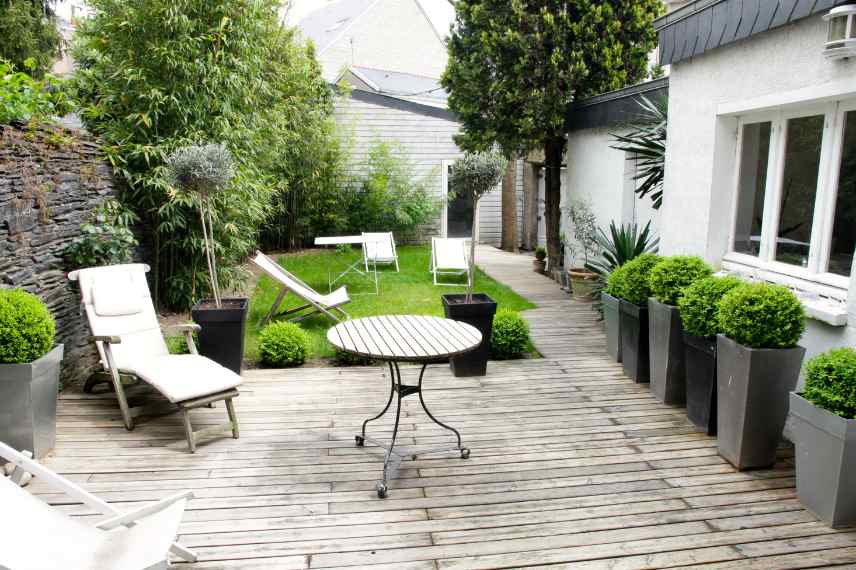
Small or large garden, the distribution of the different spaces is crucial to your thinking: here the terrace, the path and the lawn area have been well planned and are sufficient to structure it well.
Define your own style and priorities
So it’s high time you started planting.
One rule I consider essential when I see the various missteps many amateur gardeners make in ornamental gardening: do not plant without at least some harmony or coherence.
Don’t start by buying a little of everything that pleases you as you wander around garden centres or nurseries.
How to do it? Define a garden style that you have identified during your initial approach phase (English garden, exotic garden, Japanese or Zen garden, contemporary garden, Mediterranean garden, nature garden, enclosed garden…), or think in terms of distinct zones if you want to bring several atmospheres to the garden. But group the plants that make up each zone. You can always transplant, but that saves time at the outset.
If the aesthetics of a garden are highly subjective, try to envisage it also in terms of colours, if possible from the outset. Avoid cacophony and a multicoloured look, not really in vogue these days. Prefer a colour palette in tonal shades, which will be less tiring over time.
Our sections on Colours, the various garden designs and the ideas for plant combinations will certainly give you plenty of ideas!
Another basic rule: think in terms of plant priorities, by which I mean that trees should be considered early in a garden, so they can be planted quickly… in order to enjoy them as soon as possible, especially in bare gardens.
→ How to ruin your garden design in 7 lessons?; 10 landscaping tips for designing your garden; How to ruin colours in the garden in six lessons?.
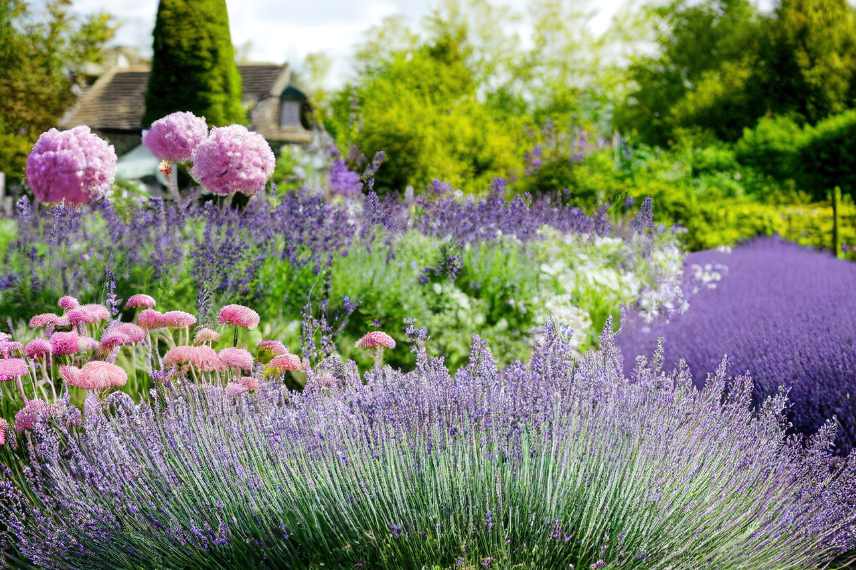
Colours and style will give your garden a strong personality
Bare garden or already planted?
Case studies of established gardens
Some gardens are often already in place by previous owners. They have planted trees and laid out a number of flower beds. You will inevitably go through a settling-in phase.
-
- Take stock of what you don’t like (you did this in the first step of our timeline) and dig up or gift these plants to family, neighbours or friends.
- But keep the trees in place, especially if they are thriving and show no signs of weakness or disease. Trees are, in fact, essential elements of a garden, a high stratum that is generally slow to establish. Some shrubs poorly placed — masking a view or thriving — could be transplanted in autumn to a location that seems more suitable to you.
- Prune anything that has grown too large.
- If some plants are too dense, divide-them and move them to more appropriate locations. This will improve their growth and balance the visual appearance of the garden.
- Always ensure harmony and balance with the existing garden when integrating new plants, unless you intend to redesign it entirely.
→ Also read : Why prioritise old trees, the unsuspected importance of ancient trees? ; Pruning in transparency and How to revive an overgrown garden, step by step.
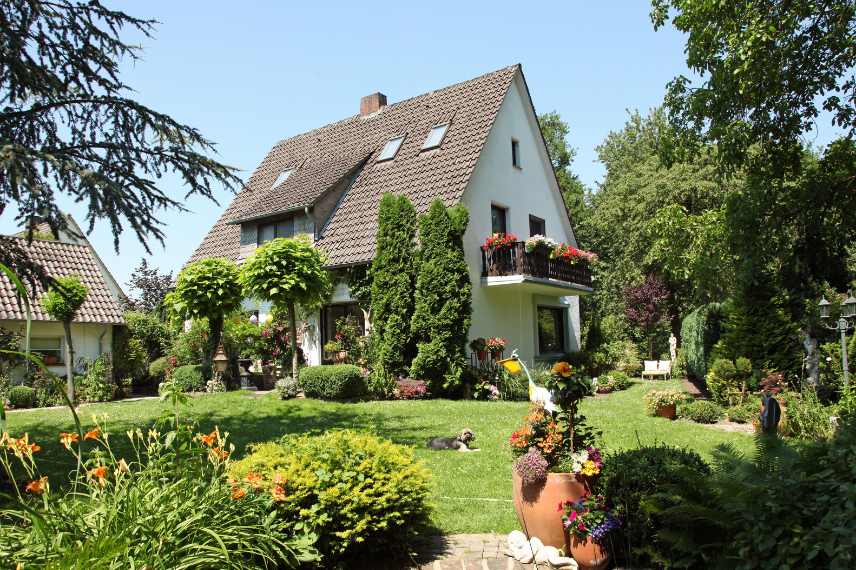
We don’t necessarily like everything in a mature garden, but keep most of the arboreal stratum, the best cooling in summer.
Case studies of bare gardens
If your garden is, conversely, bare of all vegetation, or if you are taking over a bare plot where everything has to be created, you will have more work. Here are the essential steps not to overlook:
-
- A weeding, mowing or clearing in the case of neglected gardens will be your first action. Prefer digging with a spade when possible; a rotavator destroys the soil structure.
- Consider sowing green manures if you do not plan to plant immediately (clover, phacelia or mustard) to enrich the soil, prevent erosion and smother weeds.
- An amendment (compost, well-rotted manure) will be put in place once the soil is turned to restore fertility, particularly in allotment gardens or fallows.
- If your garden is that of a new housing estate, you should prioritise planting a privacy hedge to gain privacy. Do check the imposed constraints (see our article Garden on a housing estate: how to lay out and personalise it).
- Important rule: take it step by step, start with one or two beds near the house to get the hang of it!
In both cases, highlight existing features such as an old wall, a well, a beautiful fence…
→ Also read: the weeding naturally, How to clear a bramble area? ;
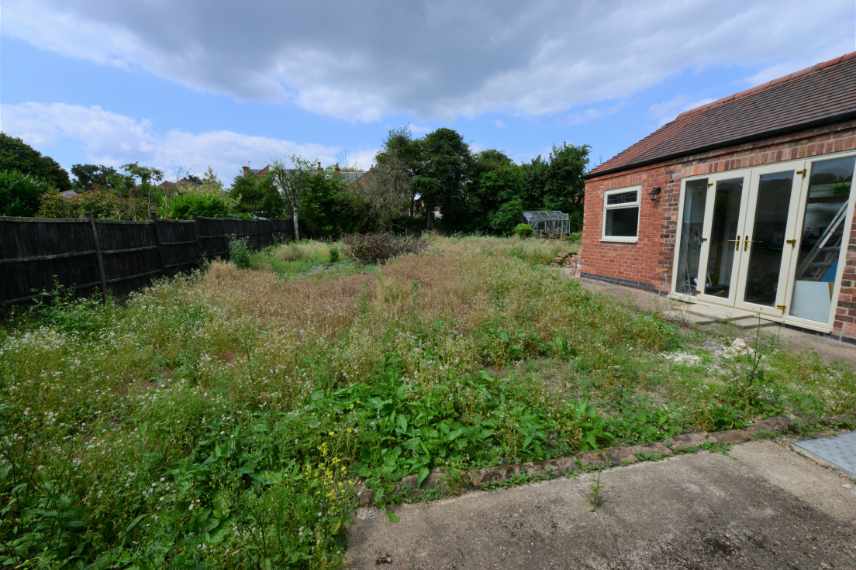 In a garden bare of any vegetation, you will have a clearer layout… which isn’t always easier!
Organising plants in the space
Once the plants are chosen, you will plant them in the pre-defined areas. This is arguably the trickiest part, sometimes intimidating. In addition to soil and sun exposure, you must take into account the pruning and growth of the plants at maturity, especially the trees, which is not easy to visualise when starting a garden. It is also advisable to create harmonious shapes for the planting beds.
The basics to keep in mind for a first garden are certainly the following: a flowering that extends across several seasons, the presence of a tall and middle stratum with trees and bushes and evergreen bushes for the structure and a low groundcover stratum to keep maintenance to a minimum. Finally, over the seasons, a bed evolves. Some plants will disappear, others will multiply. It is therefore essential to be ready to make adjustments and to reorganise your bed if necessary.
→ We help you design your garden well with : How to position trees correctly in a garden? ; Creating a beautiful shrub bed: myths and misconceptions ; How to create a beautiful shrub bed? ; How to create a beautiful border of perennials? ; Designing a four-season garden ; 7 successful plant combinations for a full-sun border. Also discover Ingrid’s tips in How to easily create a bed on a lawn area?
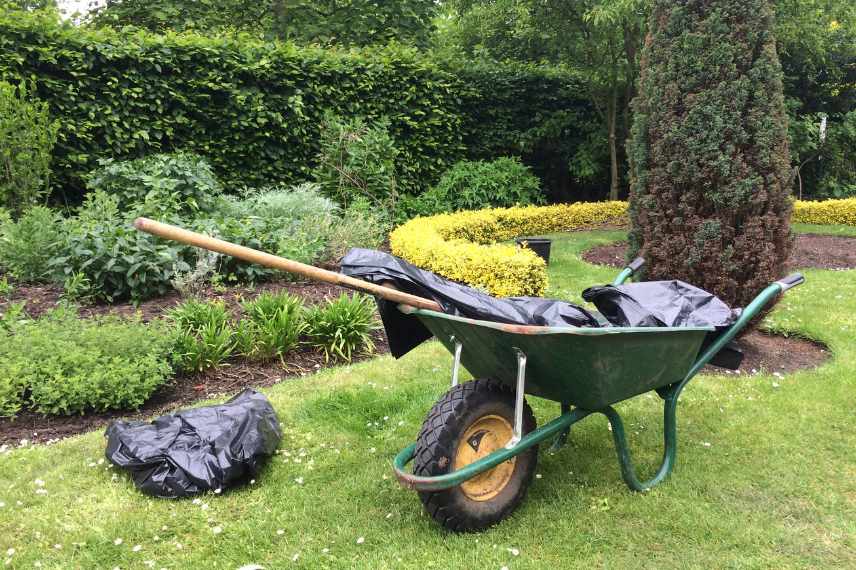
Placing plants correctly is an art, but at the outset, align with the garden boundaries; it’s much easier.
Choosing the right plants
As a beginner, avoid, as far as possible, the disappointments that could discourage you. Opt for easy-to-grow plants that grow quickly and are virtually foolproof, whether trees, shrubs, perennial plants, or annuals or biennials, such as hardy geraniums, asters, spiraeas and lilacs, calendulas and maples or cherry trees.
When you know little or nothing about plants, there are two things to remember above all: Choose plants suited to your soil and to the different exposures and prioritise local plants without having to worry about hardiness.
Finally, if your first garden is at a holiday home, consult our tips and the low-maintenance plants, suited to this garden where you’re not always on hand to look after it on a daily basis.
→ Read also: 9 easy perennials for beginners, 5 easy spring bulbs for beginners, Perennial plants: how to choose ? ; 6 hardy bushes ; 7 foolproof bushes ; Low-maintenance garden: 5 trees and bushes suitable for any climate.
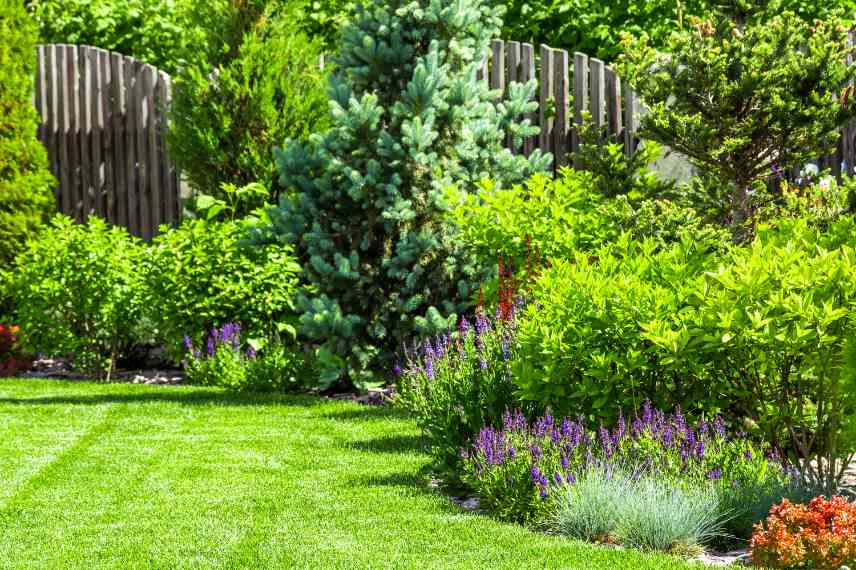
You will need three types of plants: trees, bushes, and groundcovers, which are ornamental in their foliage and/or flowering. Perennial plants complete the picture!
Top tips for a successful first garden
Use garden calendars
Rely on garden calendars that list the main tasks and chores month by month. They will help you greatly at the start. You will find them easily in many books, gardening magazines and websites. At Promesse de fleurs, the garden calendar is here!
Adjust your budget
Setting up a first garden inevitably costs money, since you need to equip yourself with essential gear (a lawnmower, pruning and planting tools), and you’ve often just finished work on the house, which reduces the expenditure you had planned for outdoor space. The extra cost of landscaping by a landscaper also strains the budget.
Then, on the plant side, identify those that are inexpensive to buy, visit plant exchanges, install bulbs that will naturalise (they propagate quickly and naturally), sow a few plants that self-seed, and easy-to-grow perennials, etc. Some evergreen bushes are essential, but they can be expensive too, due to their slow growth. If needed, leave space in your beds to incorporate them from the second year of establishing your garden.
→ 7 affordable trees to landscape your garden on a budget ; 5 inexpensive bushes for a beautiful garden on a budget.
To use free planning software?
It can be helpful if you need help drawing up your initial plan. Some online design software are fairly well made and reassuring in the not-so-easy process of drawing up a new garden. Nothing beats, in my view, the groundwork and expertise of a landscaper or a garden coach if your garden is large!
Be patient
Finally, don’t be tempted to do everything at once. Rome wasn’t built in a day… and your garden won’t be either! Before it looks like something out of magazines, it will take a few years, but that’s one of the joys of gardening—to see it grow and transform over time. You’ll have a few setbacks, which can happen to beginners as well, but you’ll also always have a second chance in the garden. You’ll also gradually catch the gardening bug and create a garden in your own image… that’s exactly what we wish for you in this wonderful adventure!
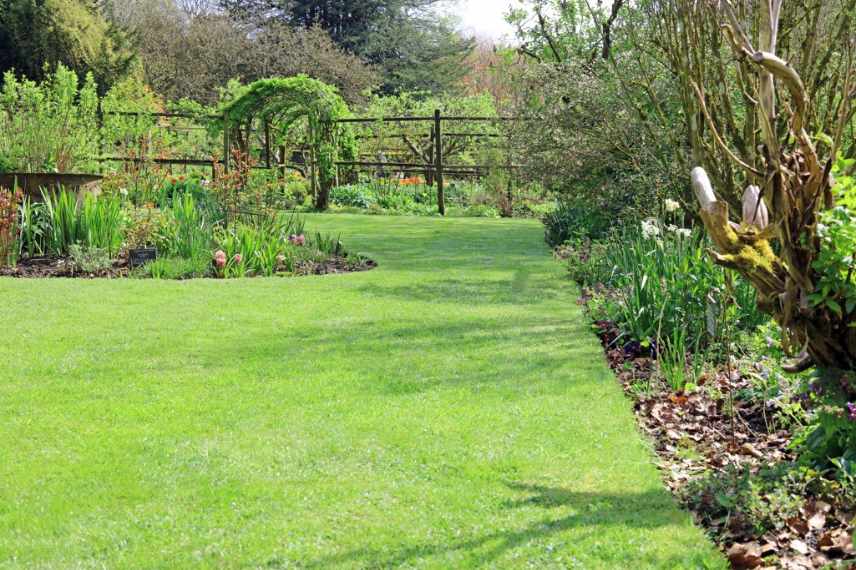
Step by step, your garden will become more beautiful over the years!
- Subscribe!
- Contents
Comments