


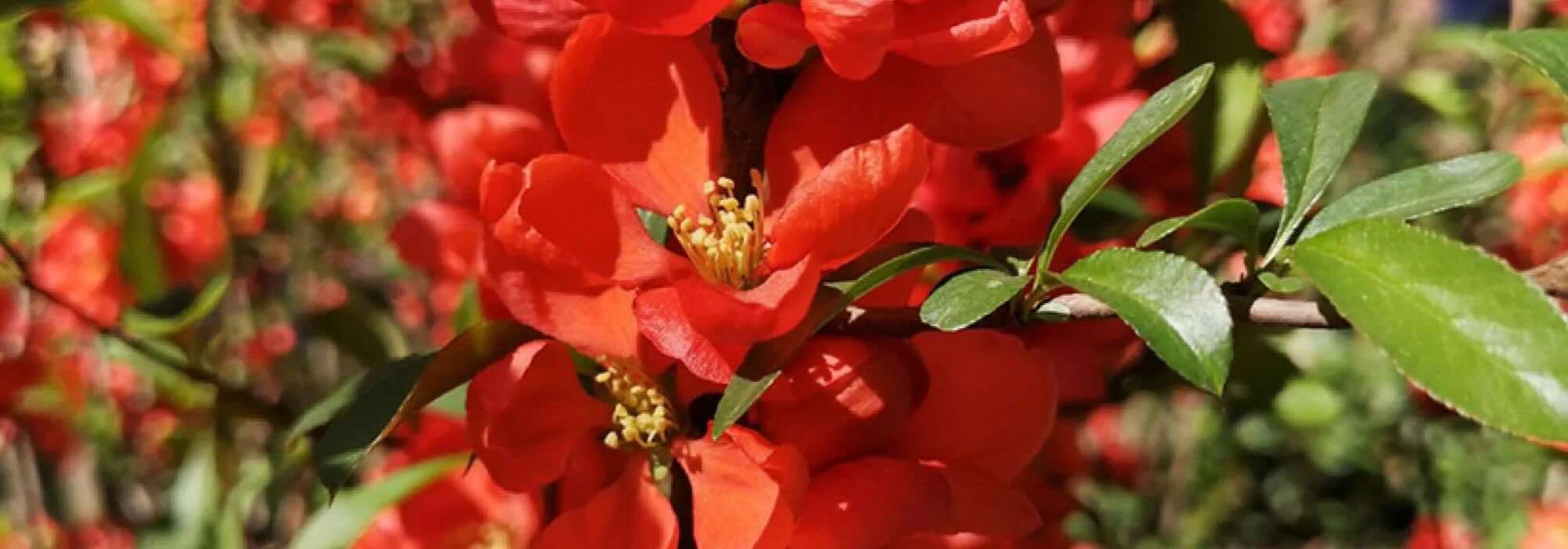
Japanese quince with red flowers: a splash of colour in the heart of winter
The best varieties
Contents
At the end of winter, when nature slowly comes back to life, the Japanese quince with red flowers offers a true spectacle in the garden. On its still naked branches, vibrant bouquets of red flowers burst forth with intensity, illuminating hedges, flower beds, and terraces. Hardy, robust, and low-maintenance, this bush is a must-have for those looking to combine beauty, ease of care, and diversity of forms. Discover the most beautiful varieties of red quinces, ideas for harmonious combinations, and some practical tips.

Why choosing a Japanese quince with red flowers?
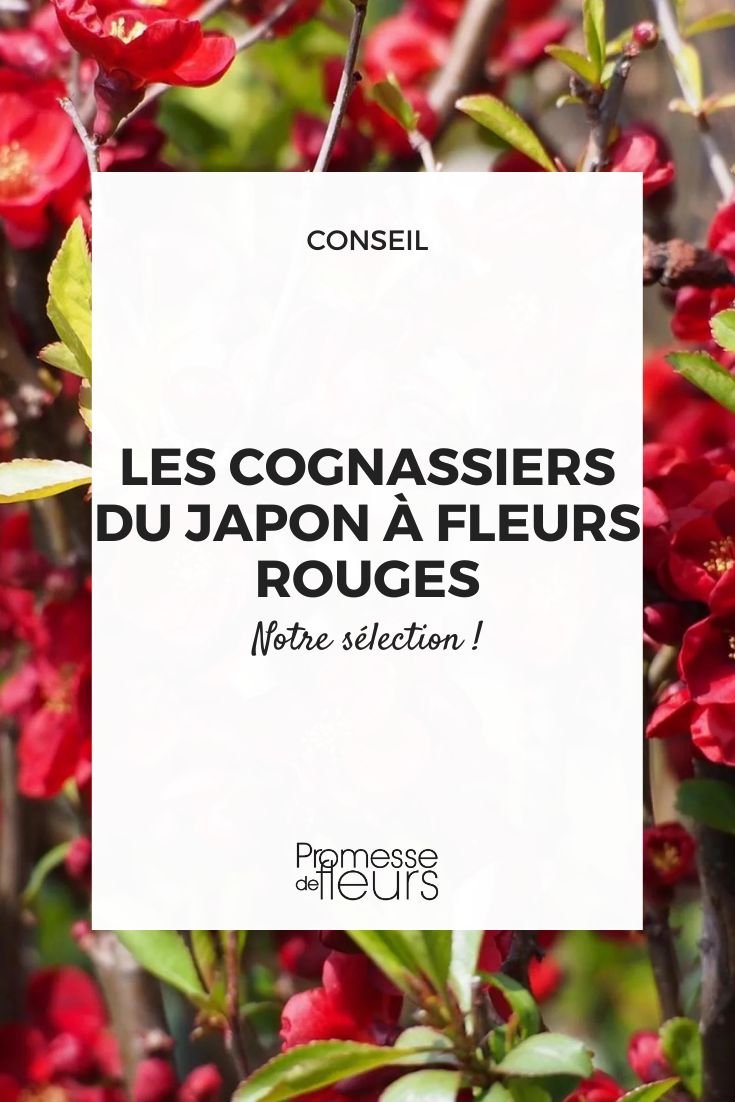
From the end of winter, while nature is still asleep, the Japanese quince awakens, offering a spectacular display of flowering. Its bright red, garnet red, or crimson flowers (for the red-flowered cultivars) burst forth on the bare branches, creating a striking contrast with the still-sleeping landscape. This explosion of vivid colours makes the quince an essential feature in winter and early spring garden scenes. Unlike other spring blooms, which are softer and pastel, the powerful red of the quince inevitably catches the eye. It energises the space, brings warmth, and breaks the monotony of winter greys.
Depending on the varieties, the flowers can take on different shapes, ranging from the simple and elegant corolla to double flowers resembling dense, opulent pom-poms. Each of these forms has its own charm, but all stand out for their ability to sharply contrast against the bare branches. This play of contrasts between the delicacy of the flowers and the raw appearance of the wood enhances the graphic effect of the bush. The spectacle is all the more striking as it occurs at a time when few other plants are in bloom, giving the quince a prominent place in the garden at the end of winter.
Unlike other spring shrubs whose flowering lasts only a few weeks, the quince can bloom over an extended period, from February to May depending on the regions and climatic conditions. Its ability to produce new waves of flowers, even after a cold snap, is a significant advantage. Each day, new flower buds open. This staggered rhythm makes the quince a major player in the visual dynamics of the late winter to spring garden.
Where to plant a Japanese quince?
To make the most of its flowering, it is advisable to plant it in full sun or partial shade, where its flowers will fully flourish. Beyond its flowering, the Japanese quince is robust, hardy, and easy to maintain. It grows quite quickly and thrives in both ordinary and poor soil, adapting to stony or slightly calcareous terrains. Its powerful root system allows it to tolerate periods of drought, making it an interesting choice for low-water gardens. Its moderate yet regular growth enables enjoyment of its vibrant blooms from the first years following planting.
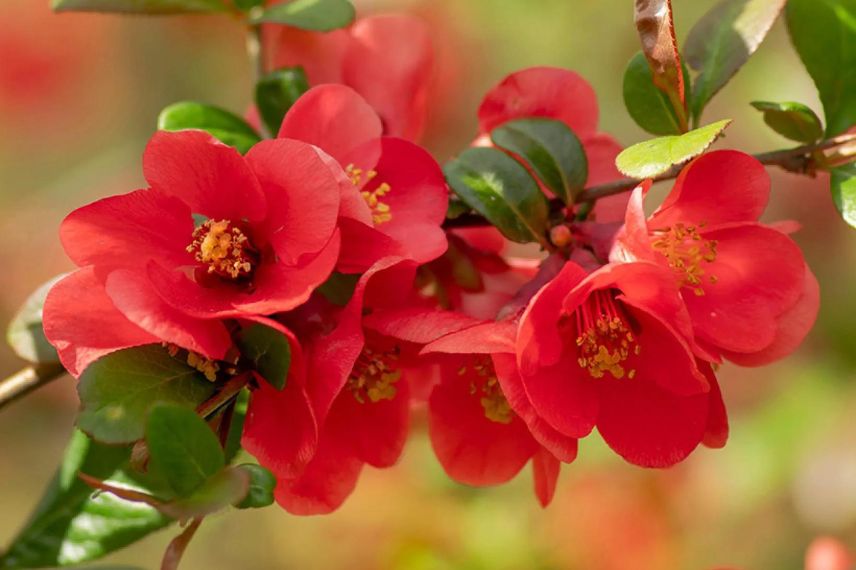
The botanical species Chaenomeles japonica
The most beautiful cultivars of flowering red Japanese quinces
Chaenomeles japonica (the wild Japanese quince)
The wild Japanese quince is the most classic and emblematic form of the species. With its thorny branches and bright red flowering, it stands out for its hardiness and ability to integrate perfectly into defensive or country hedges. Its flowers, measuring 3 to 4 cm in diameter, emerge directly from the naked wood from February to April, creating an intense display of red bouquets with golden hearts. This bush, reaching 1.5 m in height, also produces small, fragrant yellow quinces, perfect for jams. Self-sterile, it fruits best in the presence of another quince nearby.
Chaenomeles speciosa ‘Scarlet Storm’
‘Scarlet Storm’ is a recent variety, appreciated for its large double flowers reminiscent of camellias. Their dark, deep red, almost garnet hue gives the bush a particularly refined appearance. Unlike other varieties, its branches are thornless, making it easier to maintain and cut flowers for bouquets. Hardy and low-maintenance, this variety does not produce fruit, allowing the bush to concentrate all its energy on flowering, visible from March to April.
Chaenomeles japonica ‘Cido Red’
This variety is prized for its dual ornamental and gastronomic interest, offering vibrant flowers in spring and a beautiful harvest of fruit in autumn, as yes, the fruits of the Japanese quince are edible! Its bright orange-red flowers light up the garden in spring, while its quinces, measuring 7 to 8 cm in diameter, are highly fragrant and rich in vitamin C, perfect for making jellies, quince pastes, and compotes. The ‘Cido Red’ does not exceed 1.5 m in height and is easy to grow, even in poor soils.
Chaenomeles speciosa ‘Red Kimono’
‘Red Kimono’ is distinguished by its bright scarlet flowers and lack of thorns, making it perfect for family gardens. From March, its bare branches transform into true flamboyant bouquets, dressing the garden in warm and intense colours. Generous and hardy, it blooms abundantly on the previous year’s branches. Its upright habit, reaching 1.5 m in height, makes it an excellent choice for flowering hedges or borders. Highly melliferous, it attracts bees to the garden and allows for stunning bouquets indoors.
Chaenomeles × superba ‘Etna’
‘Etna’ captivates with the depth of its dark scarlet red, which beautifully complements the natural hues of the naked wood of its branches. Its flowering occurs slightly later than the others, in April-May, thus extending the display of quinces in the garden. Its simple flowers, formed of 5 to 8 petals, appear on thorny branches and cluster in bouquets along the branches. With its rounded and dense habit, it forms a wide and vigorous bush, measuring up to 2 m in spread. This quince is perfect for structuring a flowering hedge and adding a touch of glowing red in spring.
These five varieties of red-flowering Japanese quinces illustrate the diversity of forms, habits, and colour intensities found within this group. Whether chosen for their flowers, fruits, or silhouette, they all offer an explosion of red in the garden and a spectacle that never tires.
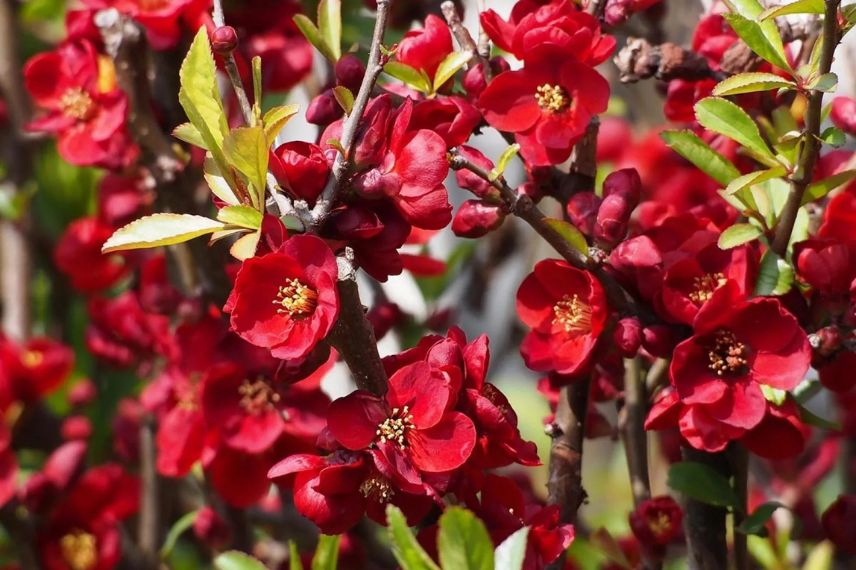
The stunning ‘Etna’
How to enhance red quinces in the garden?
In a hedge, a bed, in a pot, or trained against a wall, the Japanese quince knows how to stand out while harmoniously associating with its neighbours. Here are some ideas to accompany it.
The Japanese quince is primarily a major asset for free or defensive hedges. Its bushy habit, often armed with thorny branches, makes it an excellent natural protector. To enhance this barrier effect, it can be combined with other defensive bushes such as berberis, hawthorn, pyracantha, or even Poncirus trifoliata, all known for their formidable thorns. By integrating some vigorous climbing roses like ‘Mermaid’, you can create a hedge that is both impenetrable and aesthetic. In addition to their deterrent role, these shrubs provide a succession of colourful blooms throughout the year.
In a country hedge, the Japanese quince can play a more decorative role. Its branches, flowering as early as the end of winter, blend beautifully with other early-flowering shrubs such as forsythias, Abeliophyllum (or white forsythia), and Japanese kerria (Kerria japonica). These shrubs, like the Japanese quince, brighten the garden with vivid hues (yellow, white, and red) as nature awakens. The combination is particularly effective in a mixed hedge or at the edge of a vegetable garden, where it also attracts pollinating insects thanks to its melliferous flowers. For fragrant associations, you can include winter honeysuckle (Lonicera fragrantissima), which blooms before the Japanese quince, as well as modest lilacs and buddleias, which will extend the flowering effect after spring ends.
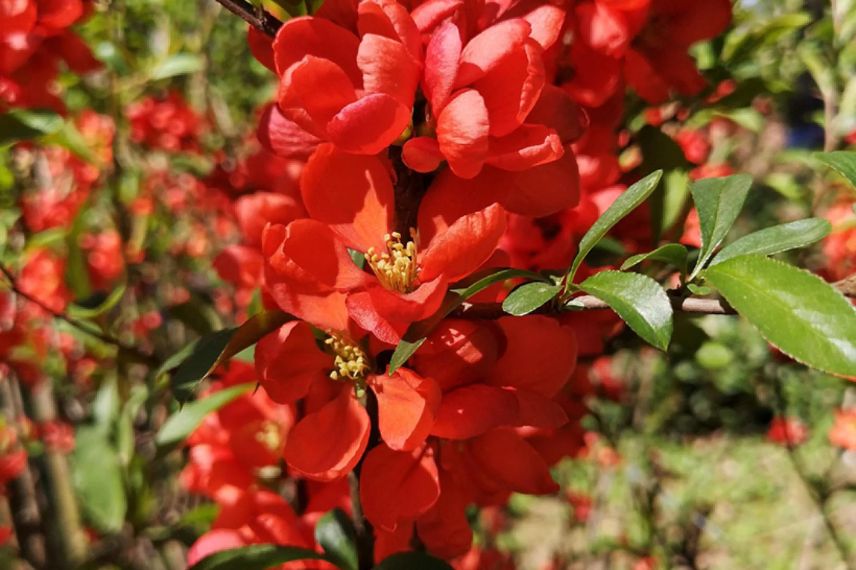
At the edge of the vegetable garden, ‘Cido Red’ is melliferous, decorative, and provides you with delicious fruits in autumn
When planted alone, it quickly becomes a focal point, especially when choosing varieties with intense red flowers. However, it can also structure a bed, accompanied by shrubs and perennials to play on contrasts of shape and colour. The blue of creeping ceanothus or rosemary pairs wonderfully with the bright red flowers of the Japanese quince. You can also combine the Japanese quince with spring bulbs like daffodils or tulips, whose flowering often coincides with its own. For foliage, the silvery tones of wormwoods or the purple foliage of physocarpus (Physocarpus opulifolius) create interesting contrasts. By playing with the shape and height of neighbouring plants, you can achieve dynamic and attractive beds.
The Japanese quince can also be staged in a more contemporary manner, in a pot or on a terrace. Its compact dimensions and hardiness make it an ideal option for small spaces. Planted in a large container, it can be combined with spring bulbs (such as muscari and crocuses) or late winter flowering perennials like hellebores. This gentle combination allows you to enjoy flowers from February to May.
Finally, for those who wish to utilise walls and facades, training the Japanese quince is a clever and decorative solution. Easy to shape on a wall exposed to the south or west, it benefits from being paired with winter jasmine (Jasminum nudiflorum), whose bright yellow flowers precede those of the Japanese quince. The two plants alternate, ensuring a floral continuity from winter to spring.
The stems of the Japanese quince, adorned with red buds or fully opened flowers, can also be cut and arranged in a tall vase, to decorate the interior of the home with a touch of wild nature. This practice, highly appreciated in floral art, allows you to enjoy the beauty of the garden even indoors.
- Subscribe!
- Contents
Comments