























Lagerstroemia, crape myrtle: 7 stunning varieties with mauve and purple flowers
Discover the most beautiful varieties
Contents
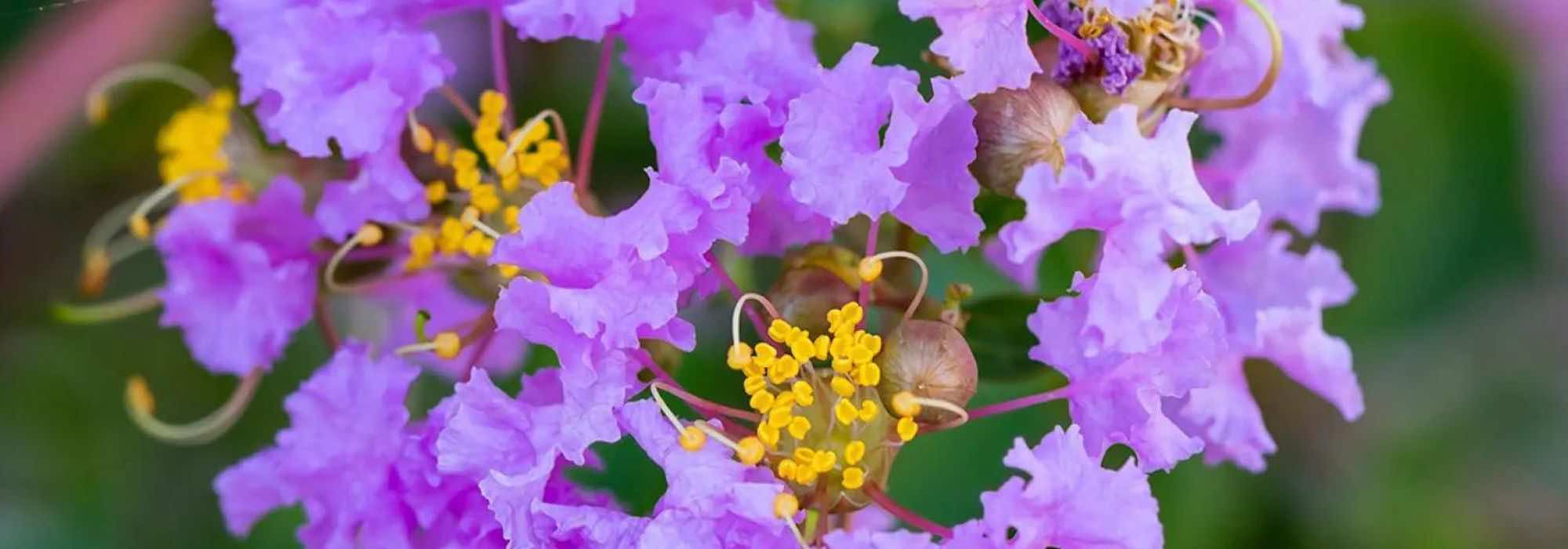
Lagerstroemia are shrubs appreciated for their splendid summer flowering, their ornamental foliage with beautiful autumn colours, their coloured bark and their elegant silhouette. In this article, let’s explore together seven exceptional varieties of crape myrtle, specially chosen for their magnificent mauve and violet flowering, each with its characteristics and strengths, to enhance your garden or patio. These colours bring a touch of refinement and depth to any green space. These crape myrtles are sure to inspire you to create a vibrant and lively garden.
→ For full information on crape myrtle, consult our complete guide: Lagerstroemia, crape myrtle: planting, growing and care.

Lagerstroemia indica 'Violacea'
The Lagerstroemia indica ‘Violacea‘ stands out for its light violet summer flowering, reminiscent of Mediterranean bougainvilleas. An old cultivar, Lagerstroemia indica ‘Violacea’ is uncommon in trade. It reaches 4 m in height with a 3 m spread at maturity. Its flowering, from July to October, features mauve flowers with yellow stamens, progressing to white. The deciduous foliage, red then dark green, takes on yellow or red hues in autumn. Its bark, beige and reddish-brown, adds to its charm.
Crape myrtles thrive in the Southwest gardens, preferring Atlantic humidity. They can also acclimatise in cooler areas, with a suitable site. To showcase Lagerstroemia indica ‘Violacea’, a display of roses, Artemisia and of lavenders is particularly striking.
Lagerstroemia indica 'Violet d'Eté Indyvio'
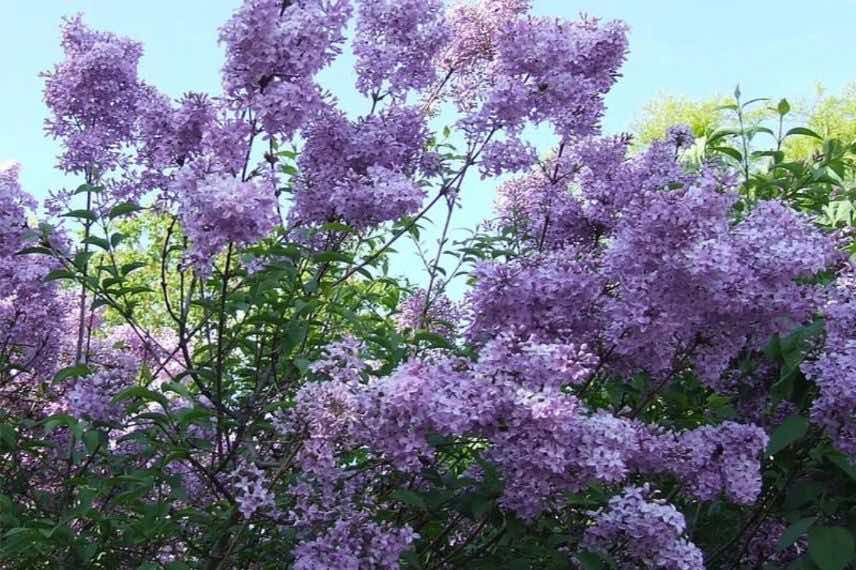
The Lagerstroemia indica ‘Indyvio Summer Violet’ is a remarkable crape myrtle for its early flowering in deep violet tones, enhanced by golden-yellow stamens. It also features dark green foliage, red new shoots in spring and colourful bark. Well suited to temperate regions, vigorous and hardy, it is ideal for the garden or in a pot on the terrace.
Lagerstroemia indica Black Solitaire 'Purely Purple'
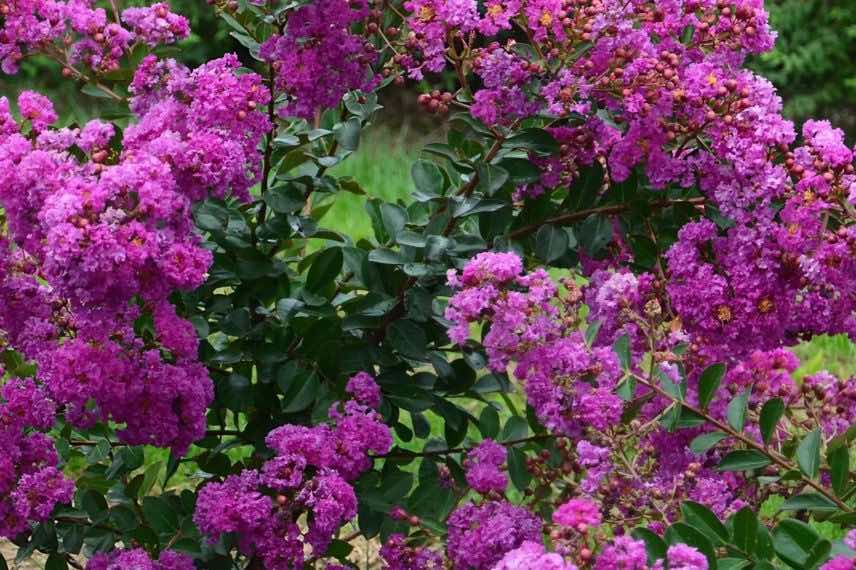
Lagerstroemia indica Black Solitaire (Black Diamond) ‘Purely Purple’ is part of the ‘Black Diamond’® series. It offers crepe-papery mauve-purple flowers, vibrant in summer, contrasting with its almost black foliage. Resistant to powdery mildew, cold and moderate drought, it is perfect for small gardens and container gardening thanks to its relatively compact habit.
‘Purely Purple’ is hardy to Zone 7b and ideal in Zone 8 and warmer climates. This shrub has a bushy, ramified habit with a rounded crown, reaching 2.5 m in height and 2 m in width at maturity. Its flowering, from late July to September, consists of dense panicles of a very vivid colour, further enhanced by golden-yellow stamens. The deciduous foliage, burgundy-chocolate-violaceous, becomes more purplish in autumn. Its bark, smooth and colourful, adds to its appeal.
The Lagerstroemia ‘Purely Purple’ is well suited to standalone planting, in a shrub border or a flowering hedge. It pairs harmoniously with Nepeta, Salvia sclarea or Aster laevis, to mauve and pink tones. The Stachys byzantina with silvery foliage also complements its dark foliage. In a pot on the terrace, it makes a striking display.
Lagerstroemia indica 'Petite Canaille' mauve
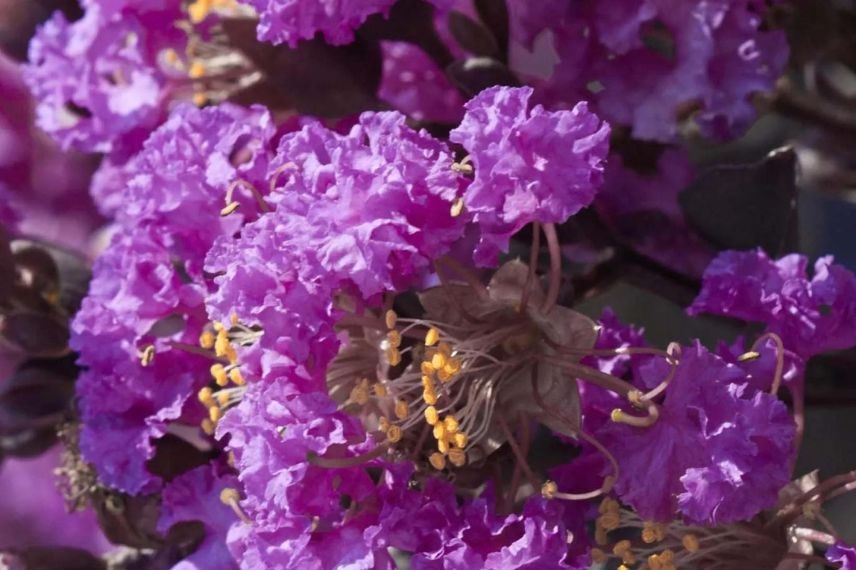
The Lagerstroemia indica ‘Petite Canaille’ mauve develops a dense, very compact habit, red-marbled bark and abundant mauve summer flowering, which makes it an appealing choice. Loving sun and heat, it is an excellent choice for enhancing outdoor space on a terrace or a small south-facing garden.
Lagerstroemia indica 'Eternal With Love'
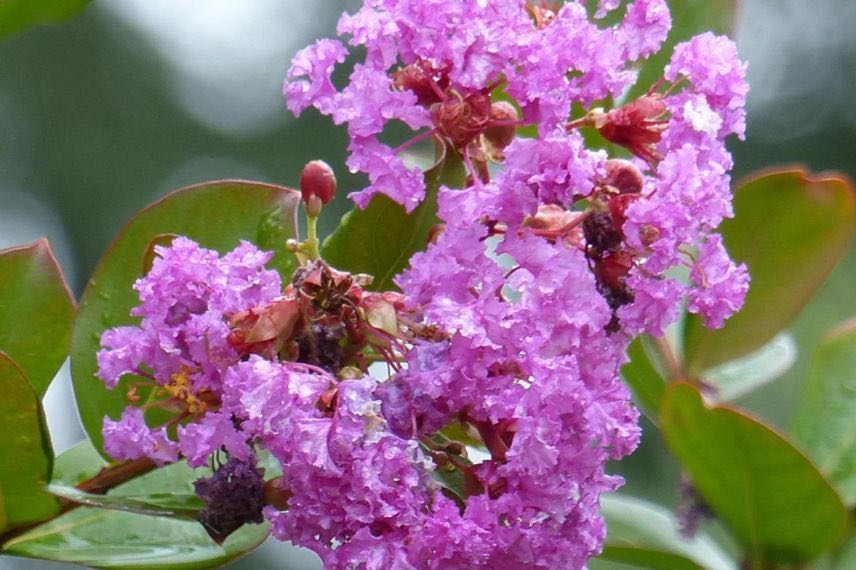
The Lagerstroemia indica ‘Eternal With Love’, with a compact habit, stands out for its clusters of vivid violet flowers in summer and early autumn. Selected for its hardiness, it is suitable for small gardens and pot culture, even in cold regions. It thrives in full sun in fertile, light soil.
Lagerstroemia indica 'Enduring Lavender'
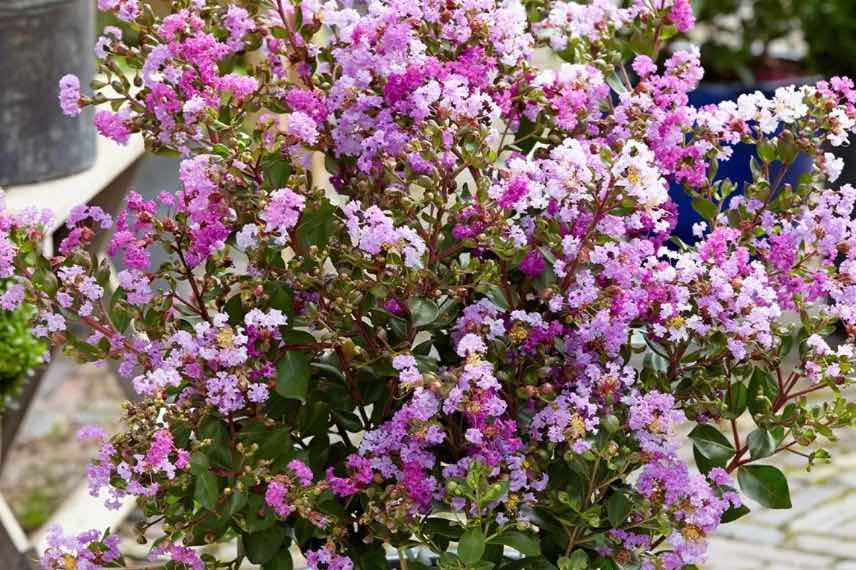
The Lagerstroemia indica ‘Enduring Lavender’ is a compact crape myrtle variety, reaching around 1.5 m across when mature, with lavender-mauve flowering throughout the summer. Ses jeunes pousses pourpres deviennent vert foncé luisant, puis rouges en automne. Il est lui aussi tout à fait adapté aux petits jardins et à la culture en pot.
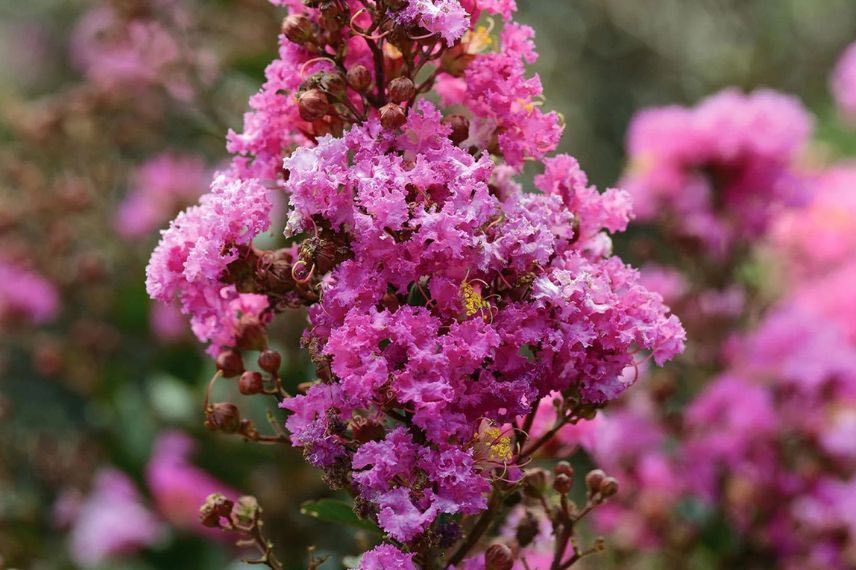
Lagerstroemia indica 'Cordon Bleu'
The Lagerstroemia indica ‘Cordon Bleu’, very hardy, it charms you with its remarkable lavender-blue summer flowering, in a shade blue-tinted enough to be rare among these shrubs. Its modest size, not exceeding one metre in height and 80 cm wide, makes it an ideal plant for small gardens, whether planted in the ground or in a large pot or container, to adorn, for example, a terrace or balcony.
- Subscribe!
- Contents
Comments