





























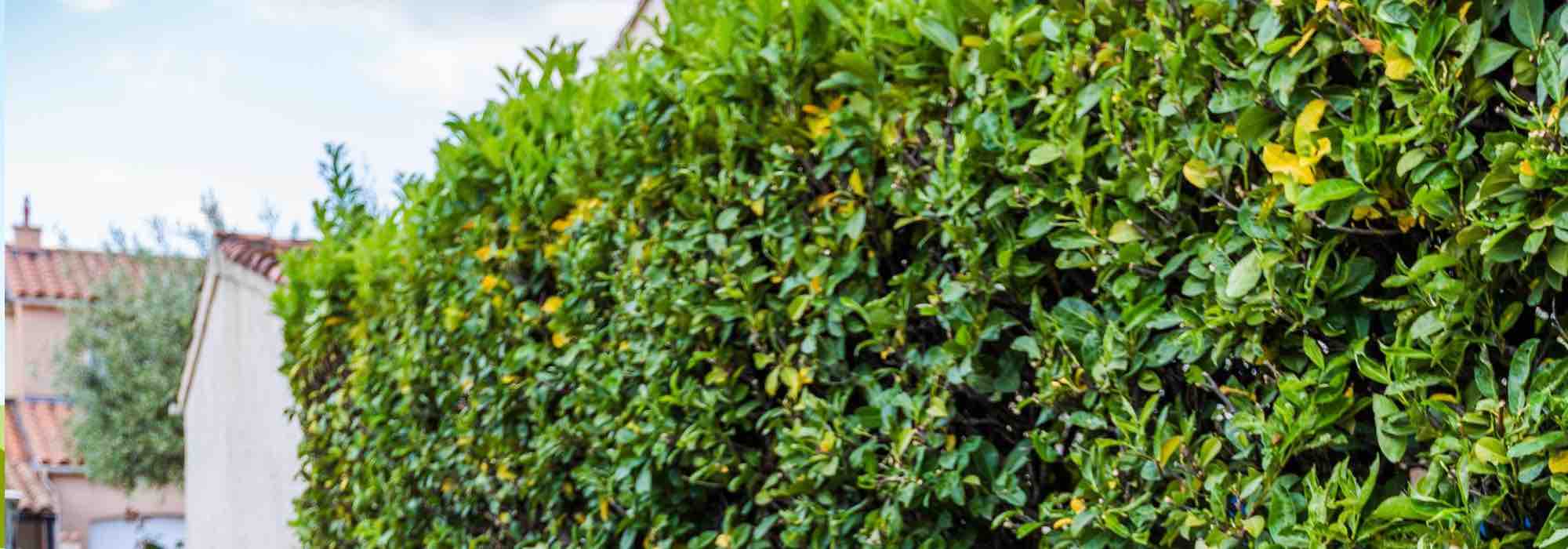
Laurel hedge: variety selection, planting, and maintenance
Our tips for choosing and planting a laurel hedge
Contents
Laurels represent varied bushes: the vernacular name laurel is used for species belonging to different families. Here, we focus on the species of laurels with evergreen foliage that make good subjects for forming a hedge present all year round. They can have spring or winter flowering, or edible foliage. They do not all have the same growing conditions. If they are less likely to thrive, ensure you plant at the right time of year, carry out regular pruning, and provide the necessary care in terms of watering and fertilisation. With proper maintenance, your evergreen laurel hedge will protect your garden for many years.
Discover in this article which species of laurel to choose for a hedge, how to plant it, and how to maintain it.
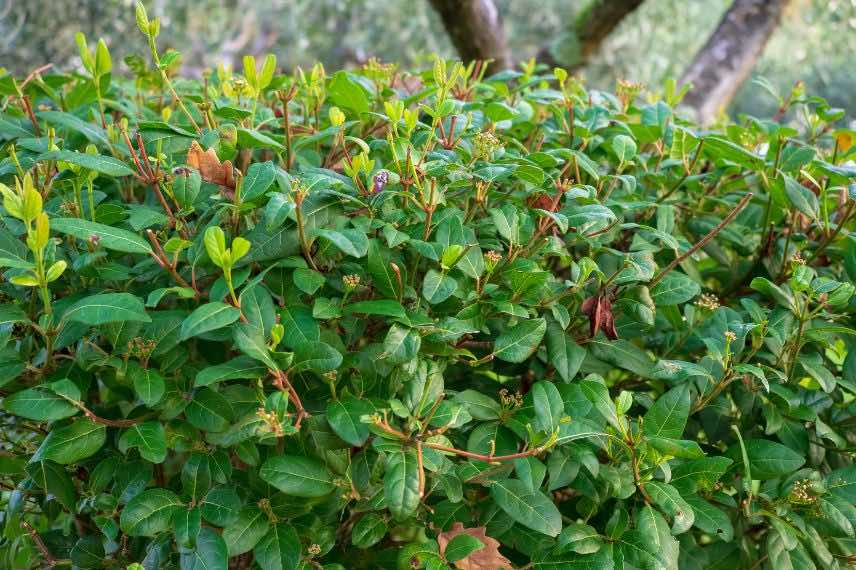
A hedge of Viburnum tinus

What species?
Laurel hedges are a popular choice for many gardeners due to their dense, evergreen foliage, which provides privacy and is reliable all year round. There are different species of laurel suitable for forming evergreen hedges, including cherry laurel, bay laurel, Portuguese laurel, rose laurel, and viburnum tin. Each species has its own characteristics, so it is important to choose the one that best suits your situation.
Regarding the best species of laurel for an evergreen hedge:
- The cherry laurel (Prunus laurocerasus) is one of the most commonly used. It grows quickly, has dense foliage, and produces white flowers in spring, followed by small black berries. It thrives in all soils except very chalky ones and in any exposure. It is a very economical choice. However, it is considered invasive in Europe.
- The bay laurel (Laurus nobilis) is also very popular, with its glossy, aromatic foliage. It is the “true” laurel, used to flavour dishes (and the only one). It grows more slowly than cherry laurel but offers a more formal aesthetic and is well-suited to pruning.
- The Portuguese laurel or Prunus lusitanica is a good choice for a trimmed hedge in any soil, even very chalky. It offers white spring flowering in fragrant, fluffy clusters, followed by red fruit, then black. It is hardy down to about -15° C. It is more ornamental than cherry laurel and drought-resistant once established.
- Finally, the viburnum tin (Viburnum tinus) is valued for its evergreen leaves and white or pink flowers in winter. It is useful in orchards as it harbours predators of certain fruit pests. It prefers very well-drained soils and is both easy to care for and ornamental.
One of the great qualities of laurel hedges is their ability to grow quickly. Cherry laurel, in particular, is known for its vigorous growth. However, it is important to note that the growth rate can vary depending on the region, soil conditions, and local climate. Under optimal conditions, cherry laurel can grow 30 to 60 centimetres per year. Other species of laurel may have a slightly slower growth rate.
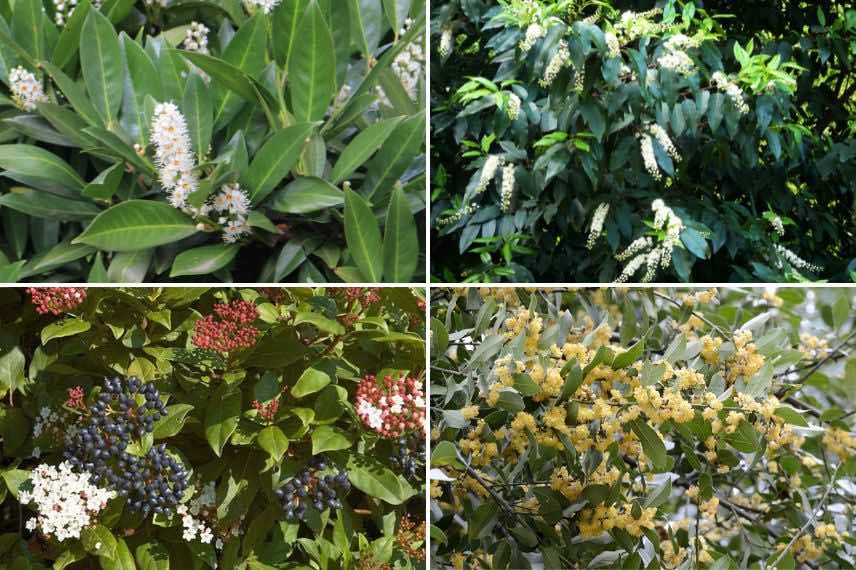
Clockwise: Prunus laurocerasus, Prunus lusitanica, Laurus nobilis, Viburnum tinus
Read also
Flowering of the oleanderWhen to plant?
The ideal time to plant a laurel hedge is in autumn or spring, when temperatures are moderate and rainfall is more frequent. This allows the plants to establish themselves more easily before the extreme conditions of summer or winter. If you have the choice, for bushes, autumn planting is always the preferred option to give them time to establish their root system before the following summer.
Make sure to choose healthy, quality young plants with well-developed roots.
How to plant?
If your hedge is planted along the boundary of your property, the bushes must be placed at least 50 cm from the neighbouring property if their adult or pruned height is less than or equal to 2 m.
To plant the laurel hedge:
- Mark the positioning of your future hedge using a string line.
- Soak the root balls of the bushes in basins of water during preparation or for 1 hour to moisten them.
- Dig a trench approximately 45 centimetres deep and wide.
- Work and loosen the soil with a garden fork. Remove any stones.
- Add a layer of drainage with gravel, pouzzolana, or sand at the bottom of each planting hole.
- Enrich with compost or good quality potting soil.
- Install the young plants spaced 60 centimetres to 1 metre apart, depending on the desired hedge density. Ensure that the top of the root ball is level with the soil and that they are positioned upright.
- Fill the trench with garden soil or potting soil, lightly compacting to eliminate air pockets.
- Create small basins around each bush.
- Water thoroughly after planting to encourage root establishment.
- Mulch with organic mulch.
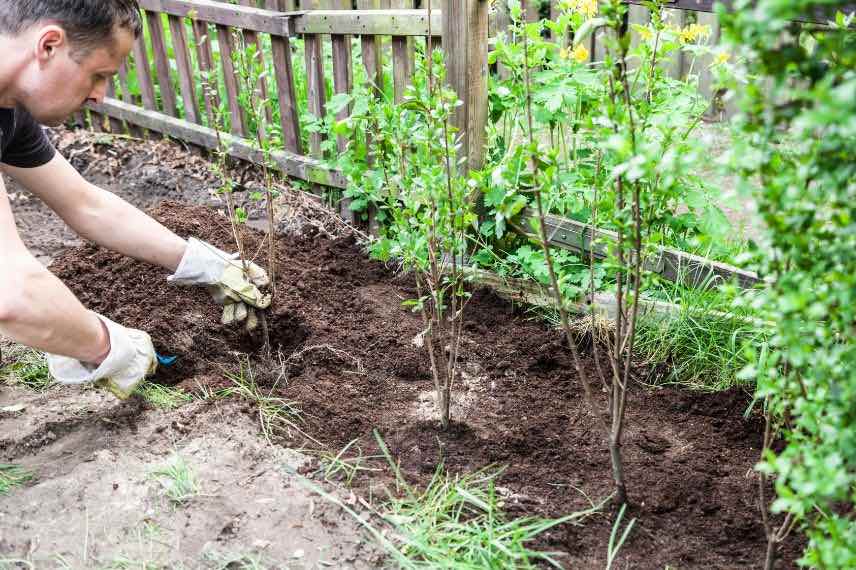
Planting hedge bushes
Pruning
Pruning laurel hedges is essential for maintaining their shape and density. The best time to prune is generally in spring or late summer, after the active growth period. However, in the first few years, allow the laurels to grow and thicken. Once the hedge is dense and thick, use sharp pruning shears to cut back new shoots and unwanted branches. You can shape the hedge using guides or simply by pruning to achieve the desired form. Remember to always prune slightly shorter at the top than at the bottom to allow light to penetrate evenly.
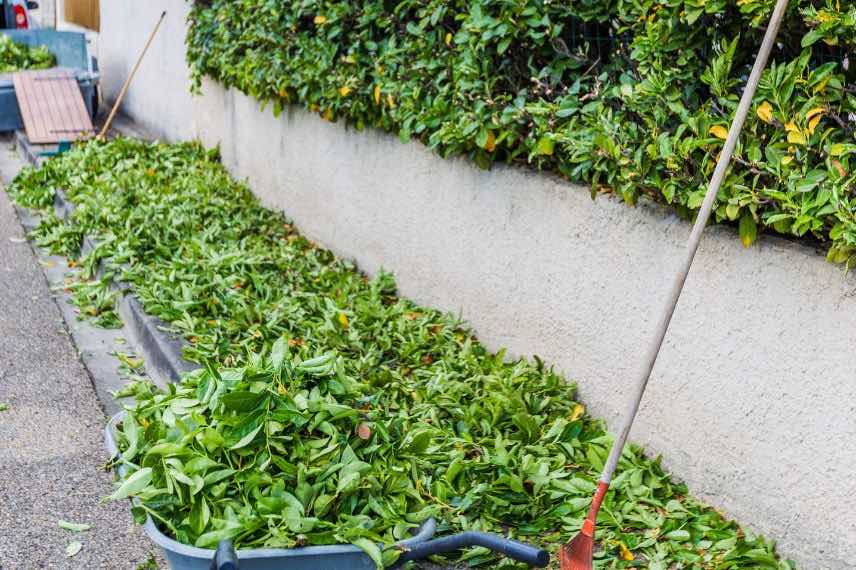
A pruned cherry laurel hedge
Maintenance and care
Regarding general maintenance, bay hedges require regular watering during the first few years in dry periods. Keep the soil moist, but avoid excess standing water. Maintain a layer of organic mulch around the base of the plants to help retain moisture and suppress weeds. In autumn, feel free to enrich the soil at the base of the bushes by placing a thick layer of fallen leaves, compost, or well-rotted manure. Fertilise the hedge once a year in spring with a balanced fertiliser to promote healthy growth.
- Subscribe!
- Contents
Comments