





























Leptospermum: the most beautiful varieties
for an original garden or balcony
Contents
Still relatively unknown, Leptospermum, also known as Manuka or New Zealand myrtle, is a highly decorative evergreen bush with its small pink, red, or white flowers. Native mainly to Australia and sometimes to New Zealand, it is also nicknamed the “tea tree” because the leaves of Leptospermum scoparium were used in infusions by the Maoris for their high vitamin C content. This practice was adopted by Captain Cook and his crew to prevent scurvy. The small aromatic leaves of Leptospermum are adorned with beautiful flowering between March and July, depending on the varieties. Leptospermum thrives in well-drained, light, rather poor, acidic to slightly calcareous soil and prefers sunny exposures. It tolerates drought as well as sea spray, making it an interesting plant if you live by the sea. As it is moderately hardy (between -5 and -10 °C), it can be grown in the ground in regions with mild winters and in pots in colder areas. Discover our selection of the most beautiful varieties of Leptospermum.

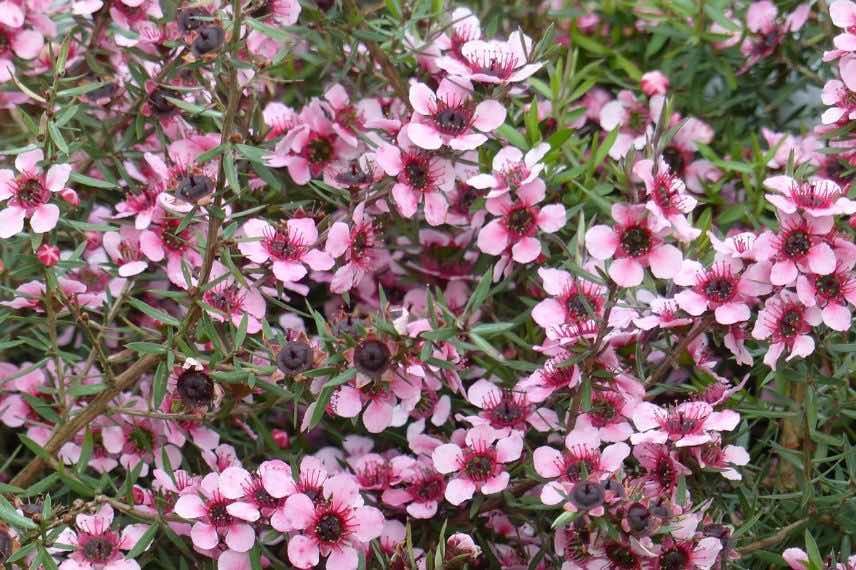
Leptospermum scoparium 'Martini': a spectacular old variety
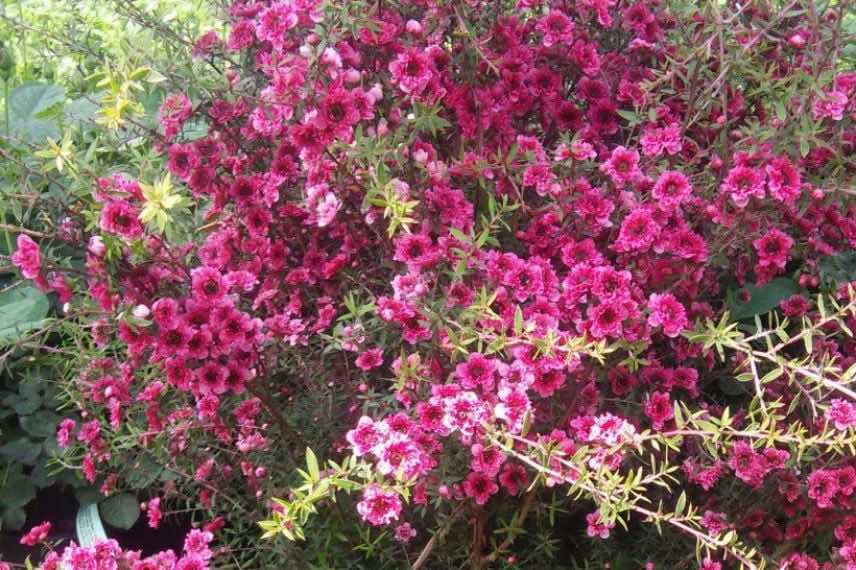
The Leptospermum scoparium ‘Martini’ is an old variety valued for its vigour and spectacular flowering. Its fine, silver foliage turning to green serves as a backdrop for small, single flowers with dark centres that bloom in a range of pink shades. It flowers from April to June and offers a lightly scented display, enhanced by the aromatic fragrances released from its leaves when crushed. It forms a bush that is wider than it is tall, reaching 1.5 m in height and 1.8 m in spread.
In a garden located by the sea or in a region with an oceanic climate, Leptospermum scoparium ‘Martini’ can be planted in a hedge alongside other shrubs native to Australia or New Zealand, such as Grevillea gracilis ‘Clearview David’, which produces bright red flowers.
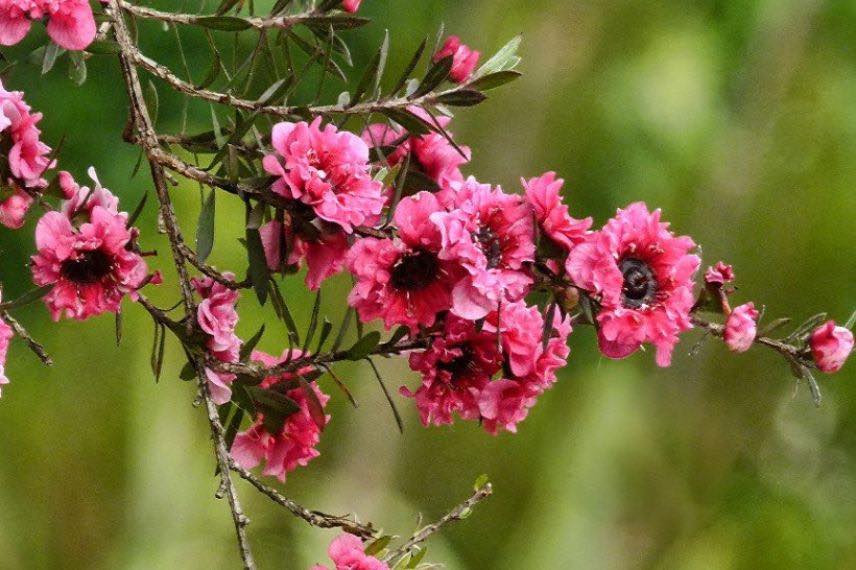
Leptospermum scoparium 'Red Damask': a crimson flowering
With its small, very double flowers in crimson shades and its fine dark green leaves, the Leptospermum scoparium ‘Red Damask’ offers a beautiful display in the garden. The dark-centred flowers appear from May to July against an evergreen foliage that highlights them beautifully. It reaches a height of up to 1.30 m at maturity in all directions. It can be grown both in the ground in a mild climate garden and in a pot.
In a seaside garden, it can be planted in a bed of ericaceous plants and paired with a white camellia, a red-leaved Japanese maple, and a rhododendron in similar tones.
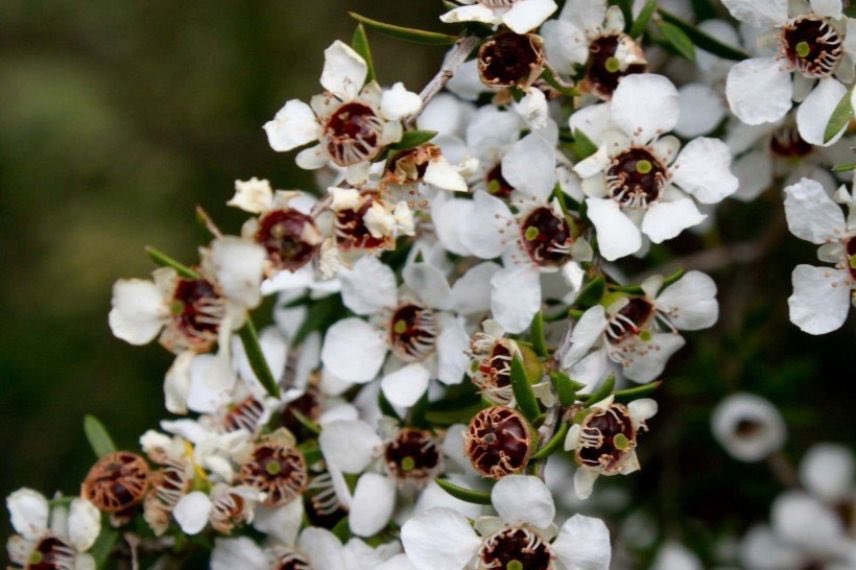
Leptospermum scoparium 'White': double white flowers
The Leptospermum scoparium ‘White’ produces small semi-double white flowers with a black centre, beautifully contrasted. Its flowering unfolds amidst dark green evergreen foliage with brownish and greyish reflections. This is a bush with a bushy habit and upright branches that can reach a height of 3 metres and a width of 2 metres. Slow-growing, this tea tree is a cousin of Mediterranean myrtles.
In a Mediterranean-style garden, you can plant it in a hedge with other Leptospermum featuring flowers of different colours. For example, pair it with the bicolour pink and white flowering of the Leptospermum lanigerum ‘Mesmer Eyes’, as well as the bright red of the Leptospermum scoparium ‘Nanum Kiwi’.
Read also
Pairing ideas with LeptospermumLeptospermum scoparium 'Wiri Kerry': for pot cultivation
The Leptospermum scoparium ‘Wiri Kerry’ has a small size of 90 cm in all directions at ripeness and a lovely rounded habit, making it a perfect plant for pot cultivation. A multitude of small red to purplish-pink flowers appear between May and July on purple-tinted stems adorned with evergreen bronze to dark green foliage. Highly melliferous, its flowers attract pollinating insects and emit a light fragrance.
On your balcony, use the Leptospermum scoparium ‘Wiri Kerry’ to create a Japanese-inspired atmosphere and place it next to a Japanese spiraea ‘Halward’s Silver’, which offers a profusion of cut flower arrangements in white from May to June.
Leptospermum 'Silver Sheen': a reliable choice
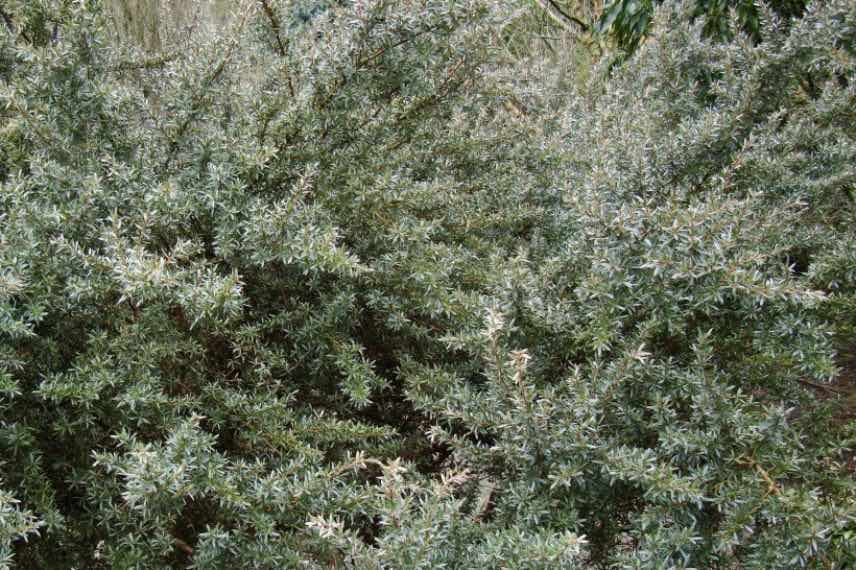
The Leptospermum ‘Silver Sheen’ is one of the easiest tea trees to grow. It adds elegance to a border with its fine silver foliage and small white flowers appearing from May to July. It is also known as the “wooly tea tree” because its green leaves are covered in silver bristles, giving it a woolly appearance. The centre of the white flowers is also green. The bush reaches a height of 1.70 m with a spread of 1.30 m.
To create a harmonious colour scheme, you can plant the South African bush Gomphostigma ‘White Candy’ next to the Leptospermum ‘Silver Sheen’, which also features white flowers with a green centre and silver foliage.
Leptospermum scoparium 'Crimson Glory': red flowers on brown foliage
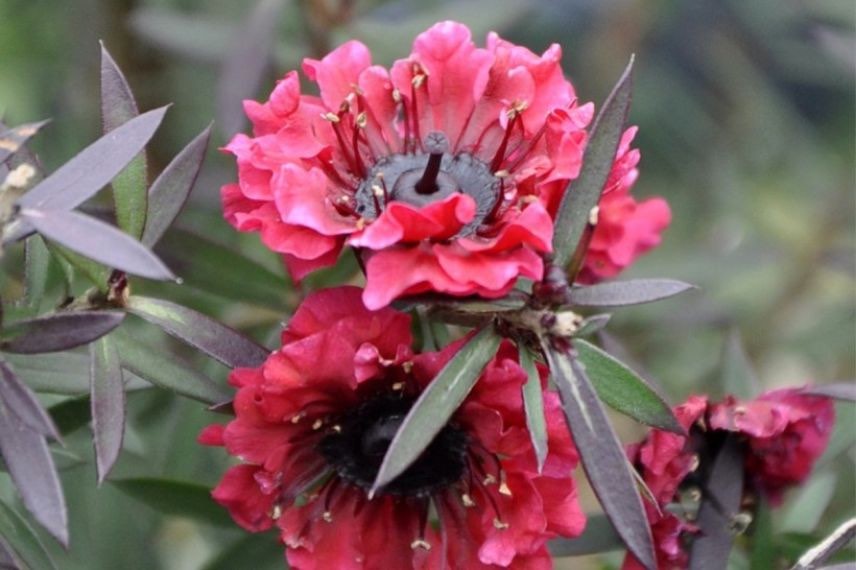
The Leptospermum scoparium ‘Crimson Glory’ is a bush with elegant red and brown tones. At a height of 1.5 m at ripeness and a spread of 90 cm, it features fine dark green foliage that turns brown. From May to July, it is adorned with a multitude of small double flowers in a bright pink that is almost red.
To highlight the brilliance of the flowers of Leptospermum scoparium ‘Crimson Glory’, it can be paired with white azaleas, such as the Japanese Azalea ‘Dorothy Heiden’.
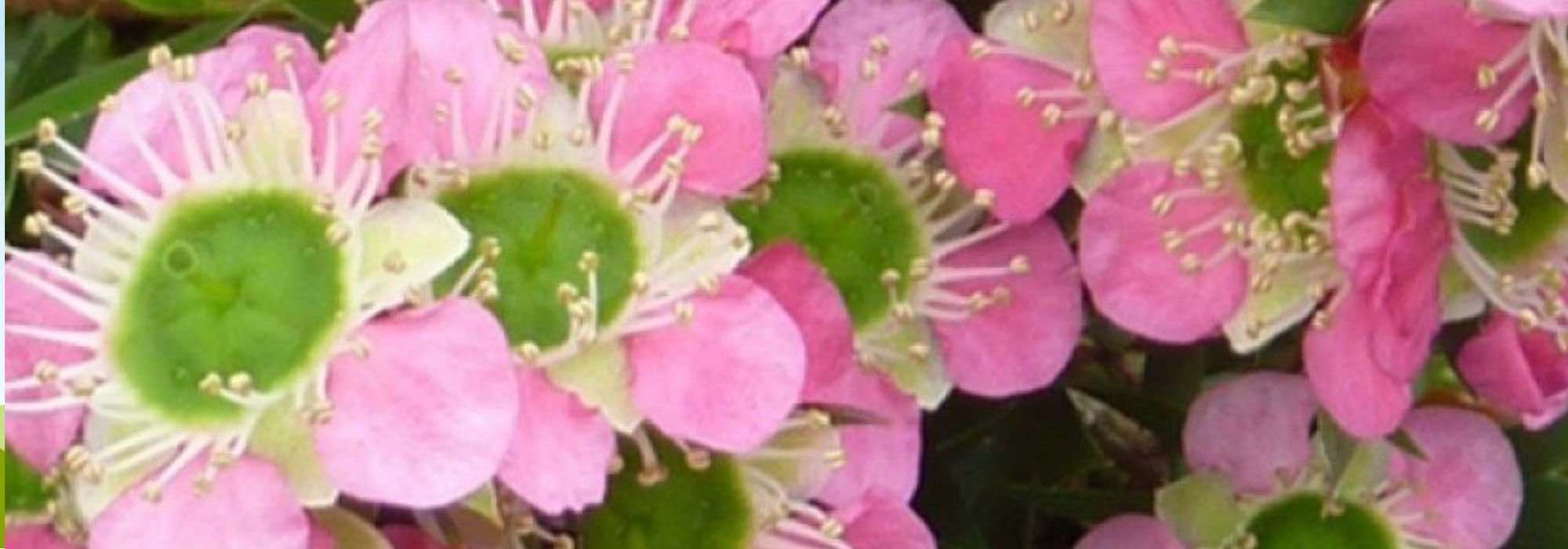
Leptospermum 'Karo Pearl Star': pink flowers with a green centre
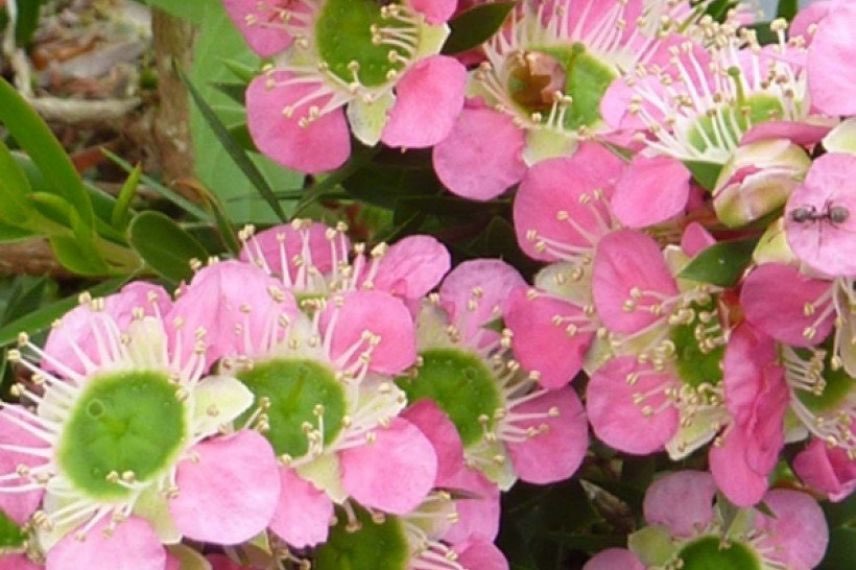
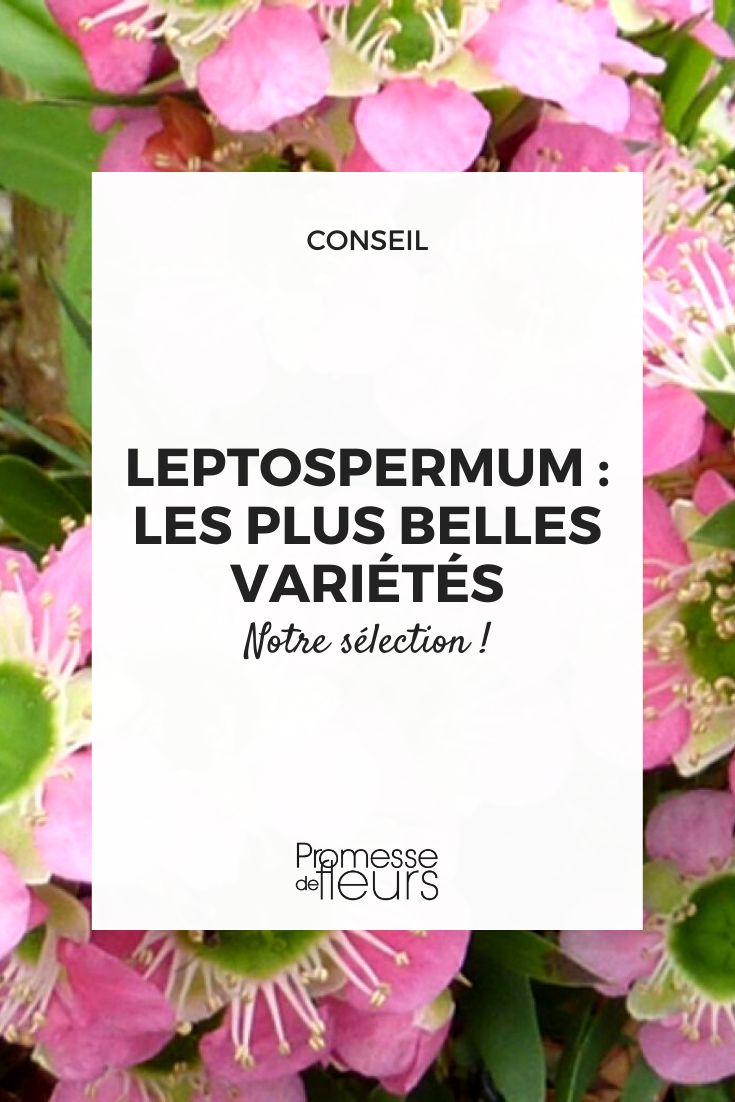
The Leptospermum ‘Karo Pearl Star’ is a bush reaching 1.5 m in all directions and produces pink flowers with an astonishing green centre. The foliage is also soft green. The bush is covered in flowers from May to July.
It can be paired with other Leptospermum with different flowering times, such as the Leptospermum ‘Coral Candy’ with pink flowers and a black centre, or the Leptospermum ‘Copper Sheen’ with yellow to cream flowers on dark purple foliage.
- Subscribe!
- Contents
Comments